AI Won't Steal Your Job—Someone Using AI Will
Artificial Intelligence isn't replacing everyone overnight. The real competition is people who know how to use AI better than you. Learn why adapting to AI is the key to staying relevant.
AI Won't Steal Your Job—Someone Using AI Will
Artificial Intelligence has become the hottest topic in the world.
Every day, headlines warn that AI is replacing writers, programmers, designers, teachers, customer support agents, marketers, and even doctors.
It's enough to make anyone anxious.
But here's a more accurate way to think about it:
AI won't steal your job. Someone who knows how to use AI effectively might.
That single idea changes everything.
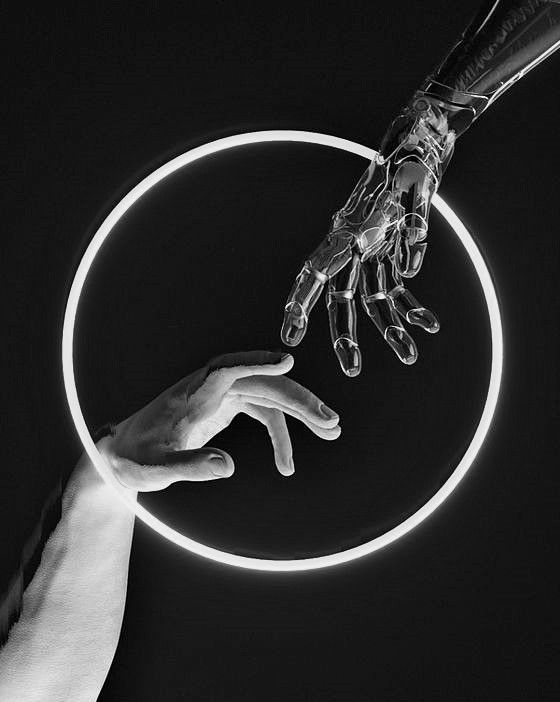
The future isn't a battle between humans and machines.
It's a partnership between humans who embrace AI and those who ignore it.
Every Major Technology Changed Work
History has seen this before.
When calculators became common, mathematicians didn't disappear.
When computers arrived, offices didn't vanish.
When the internet became mainstream, businesses didn't stop hiring.
Instead, the skills people needed evolved.
The same pattern is happening with AI.
Technology rarely eliminates every job in a profession. More often, it changes how the work gets done and rewards those who adapt first.
AI Is a Tool, Not a Replacement for Every Person
AI can write emails, summarize reports, generate ideas, translate languages, create images, and assist with coding.
These are impressive capabilities.
But AI still depends on human judgment.
It doesn't truly understand your goals, your audience, your values, or the context behind every decision.
Someone has to ask the right questions, review the output, correct mistakes, and decide what should be published or acted upon.
That's where human expertise matters.
The Real Competitive Advantage
Imagine two content writers.
The first refuses to use AI because they fear it.
The second uses AI to brainstorm ideas, organize research, improve grammar, and create first drafts before adding original insights and personal experience.
Who is likely to finish more high-quality work in less time?
The second writer.
The difference isn't talent alone.
It's productivity.
The same principle applies to software developers, marketers, researchers, accountants, customer service teams, and entrepreneurs.
People who combine their expertise with AI often become faster and more efficient.
AI Rewards People Who Learn
The biggest mistake isn't avoiding AI forever.
It's assuming you have plenty of time to learn it later.
Industries are already changing.
Companies increasingly value employees who know how to use AI responsibly to improve workflows, solve problems, and increase efficiency.
Learning AI today is similar to learning how to use email or spreadsheets decades ago.
At first, it seemed optional.
Eventually, it became a basic workplace skill.
Human Skills Matter More Than Ever
Ironically, AI is making certain human abilities even more valuable.
These include:
- Critical thinking
- Creativity
- Leadership
- Emotional intelligence
- Communication
- Ethical decision-making
- Problem-solving
- Collaboration
AI can generate ideas.
Humans decide which ideas are meaningful.
AI can create text.
Humans decide whether it is accurate, useful, and trustworthy.
The future belongs to people who combine technical tools with uniquely human strengths.
Don't Fear AI—Understand It
Fear often comes from uncertainty.
Many people imagine AI replacing entire professions overnight.
Reality is usually more gradual.
Some repetitive tasks may become automated.
Some job roles may change.
New careers will also emerge.
Prompt engineers, AI trainers, AI auditors, automation specialists, AI policy experts, and many other roles barely existed a few years ago.
Technology creates opportunities as well as disruption.
Continuous Learning Is Your Safety Net
The world changes quickly.
The people who thrive aren't necessarily the smartest.
They're often the most adaptable.
Make learning part of your routine.
Read about AI developments.
Experiment with AI tools.
Take online courses.
Practice using AI to solve real problems in your work.
The more comfortable you become, the more valuable your skills become.
AI Cannot Replace Your Character
AI cannot replace integrity.
It cannot replace trust.
It cannot replace genuine relationships.
People still choose to work with professionals who are reliable, honest, and capable of understanding their needs.
Technology may improve efficiency, but reputation is still built by human actions.
Your Mindset Determines Your Future
There are generally two ways to respond to AI.
One person says:
"AI is coming. My career is over."
Another says:
"AI is here. How can I use it to become better at what I do?"
Both people face the same technology.
Only one is preparing for the future.
Mindset often shapes outcomes more than circumstances.
Final Thoughts
Artificial Intelligence is transforming the way we work.
Ignoring it won't stop that transformation.
Learning to use it can help you stay competitive, solve problems faster, and create more value.
Rather than asking,
"Will AI replace me?"
Ask a better question:
"How can I become the person who knows how to work effectively with AI?"
That shift in thinking could become one of the most valuable career decisions you ever make.
The future doesn't belong exclusively to AI.
It belongs to people who keep learning, keep adapting, and keep using new tools wisely.
Because in most cases, AI won't steal your job.
Someone using AI more effectively than you just might.
Me llamó la atención el ejemplo de los dos redactores, donde el que usa IA para los borradores termina más productivo—la diferencia se nota de inmediato. Eso es práctico porque muestra cómo combinar la intuición humana con la velocidad de la IA. Esta visión de colaboración, no de sustitución, es genial 😊