From the Brink of Extinction The Remarkable Comeback of America's Bald Eagle
My dear American Steem community friends, I was watching a program on TV yesterday when I saw a video about the bald eagle. Since then, I started learning about bald eagles on the internet. After much research, I have shared the information I found with you in an article.
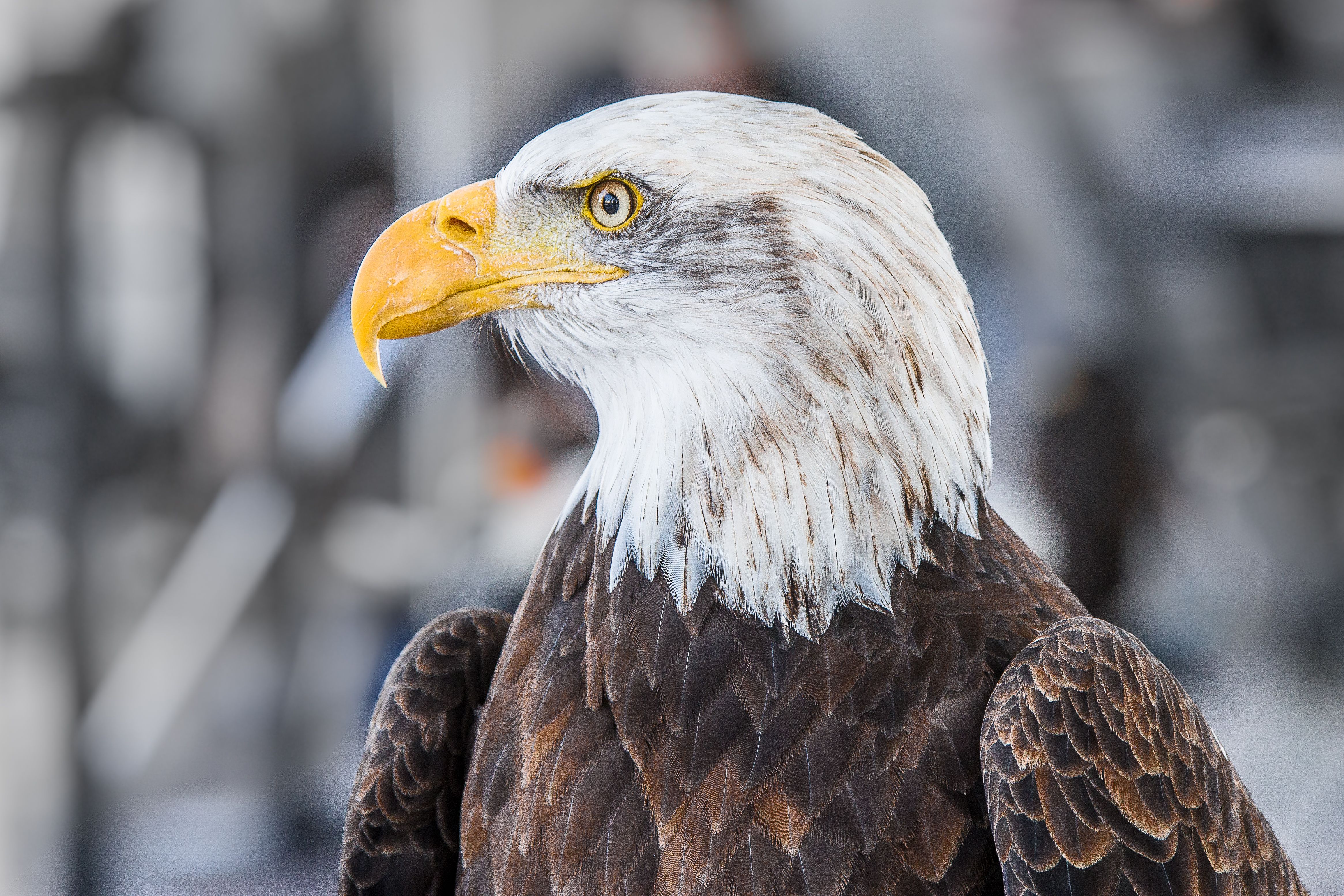
There are wildlife stories that inspire hope, and then there is the story of the bald eagle — a comeback so dramatic that it stands as one of the greatest conservation achievements in United States history.
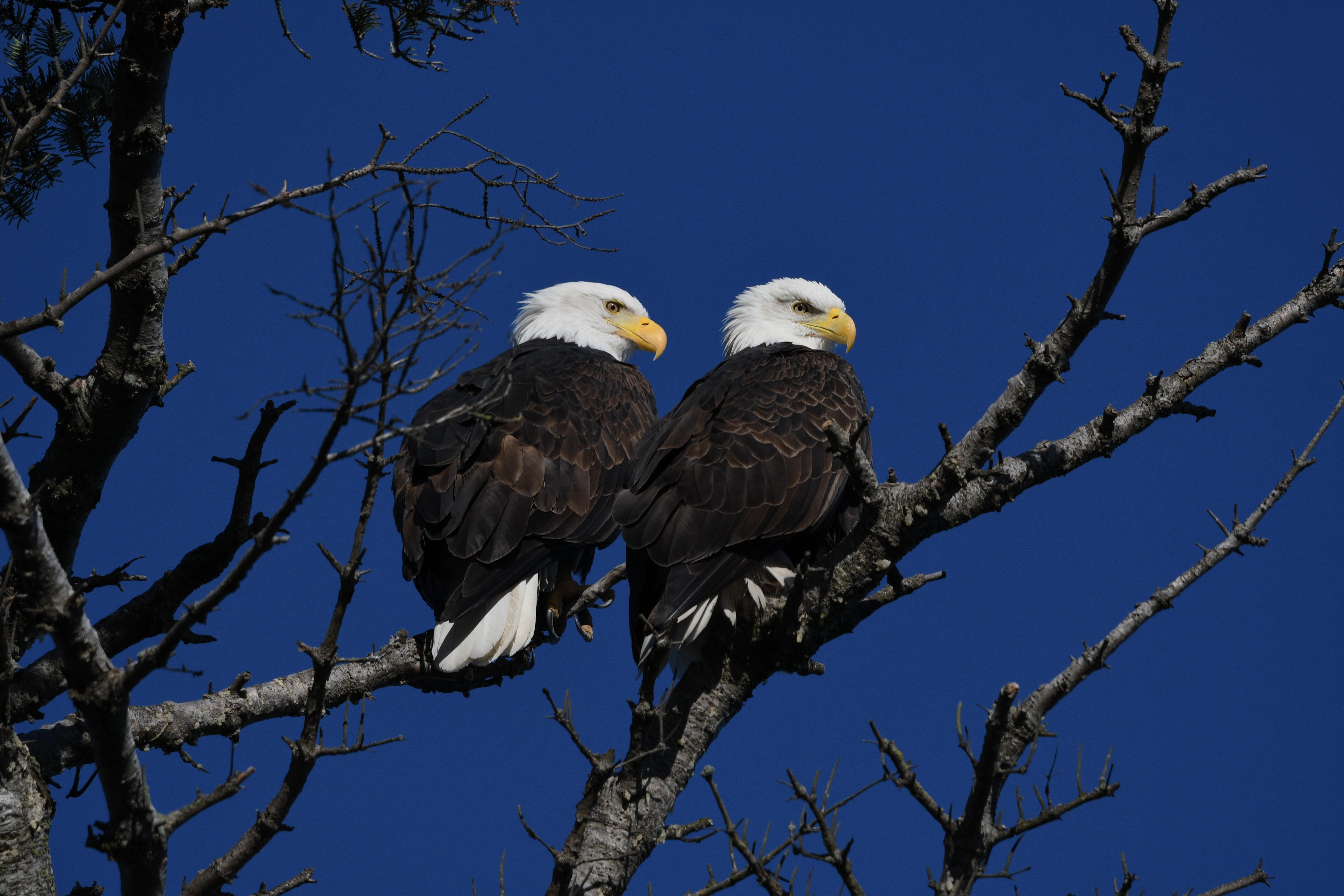 | 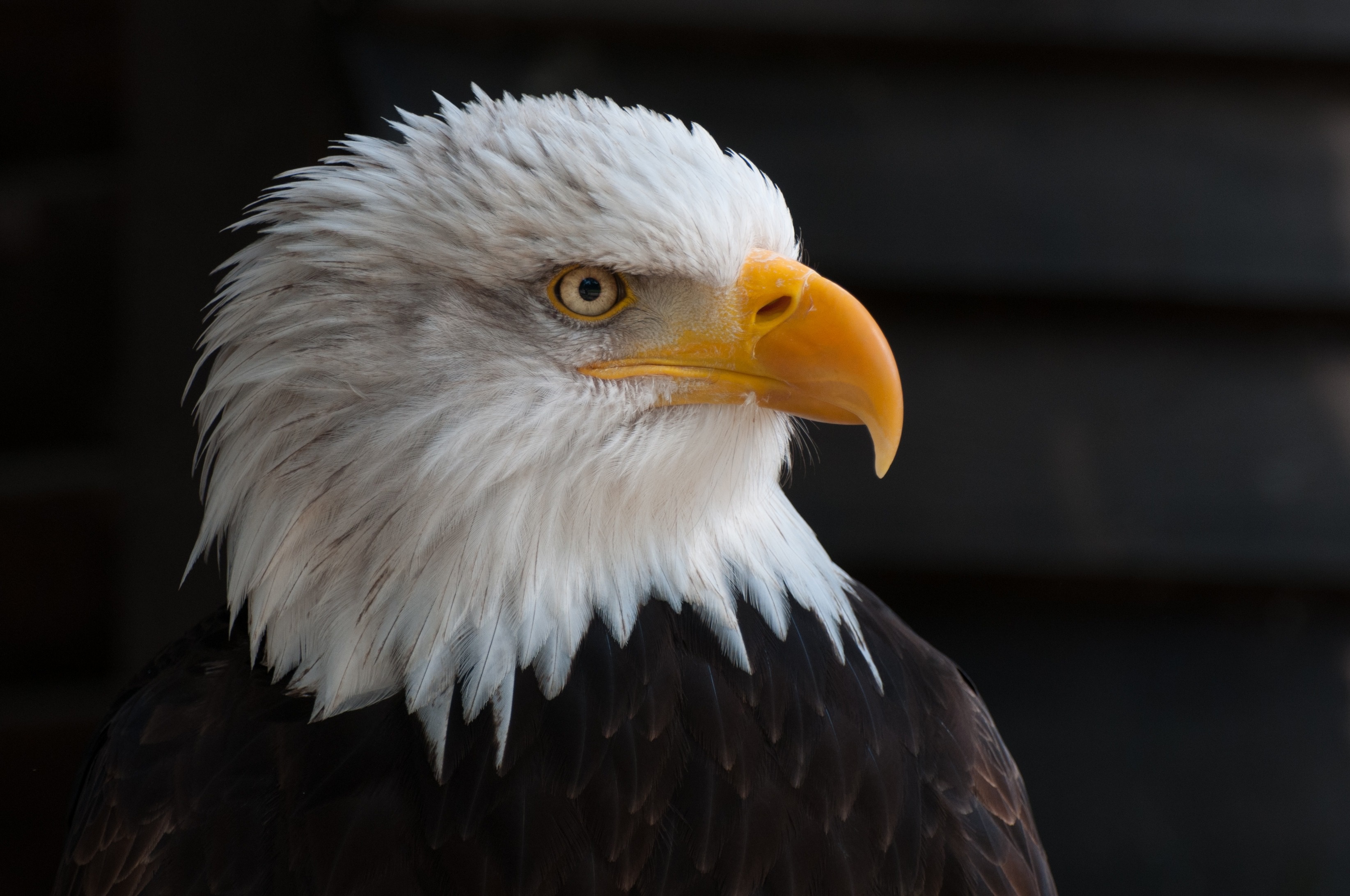 |
| A mated pair, perched side by side | A species that came back from the edge — and a reminder of what patient conservation can achieve. |
A National Symbol on the Verge of Disappearing
It's hard to imagine today, but there was a time when spotting a bald eagle in the wild was a rare event for most Americans. By 1963, only 417 known nesting pairs remained across the lower 48 states. The bird chosen in 1782 to represent the young nation's strength and freedom was quietly vanishing from the skies it once ruled.
The causes were not a single villain, but a combination of pressures: habitat loss as wetlands and forests gave way to development, direct killing by hunters and farmers who viewed eagles as threats to livestock, and — most devastatingly — the widespread use of the pesticide DDT. This chemical worked its way up the food chain into the eagles' diet of fish, causing females to lay eggs with shells too thin to survive incubation. Entire breeding seasons failed silently, nest after nest.
Turning the Tide
Recovery began with a series of decisive actions. The pesticide DDT was banned nationwide in 1972, removing the single largest threat to the species' reproduction. The bald eagle was placed under federal protection, first listed as endangered across most of the lower 48 states, then reclassified as threatened in 1995 as numbers began climbing steadily.
Public conservation programs, habitat protection along rivers and coastlines, and decades of monitoring by wildlife agencies all played a role. Population growth accelerated at an average pace of nearly 8 percent per year during parts of this period — a remarkable recovery curve for a large, slow-reproducing raptor.
By 2007, with over 10,000 breeding pairs confirmed in the lower 48 states, the bald eagle was formally removed from the Endangered Species List altogether.
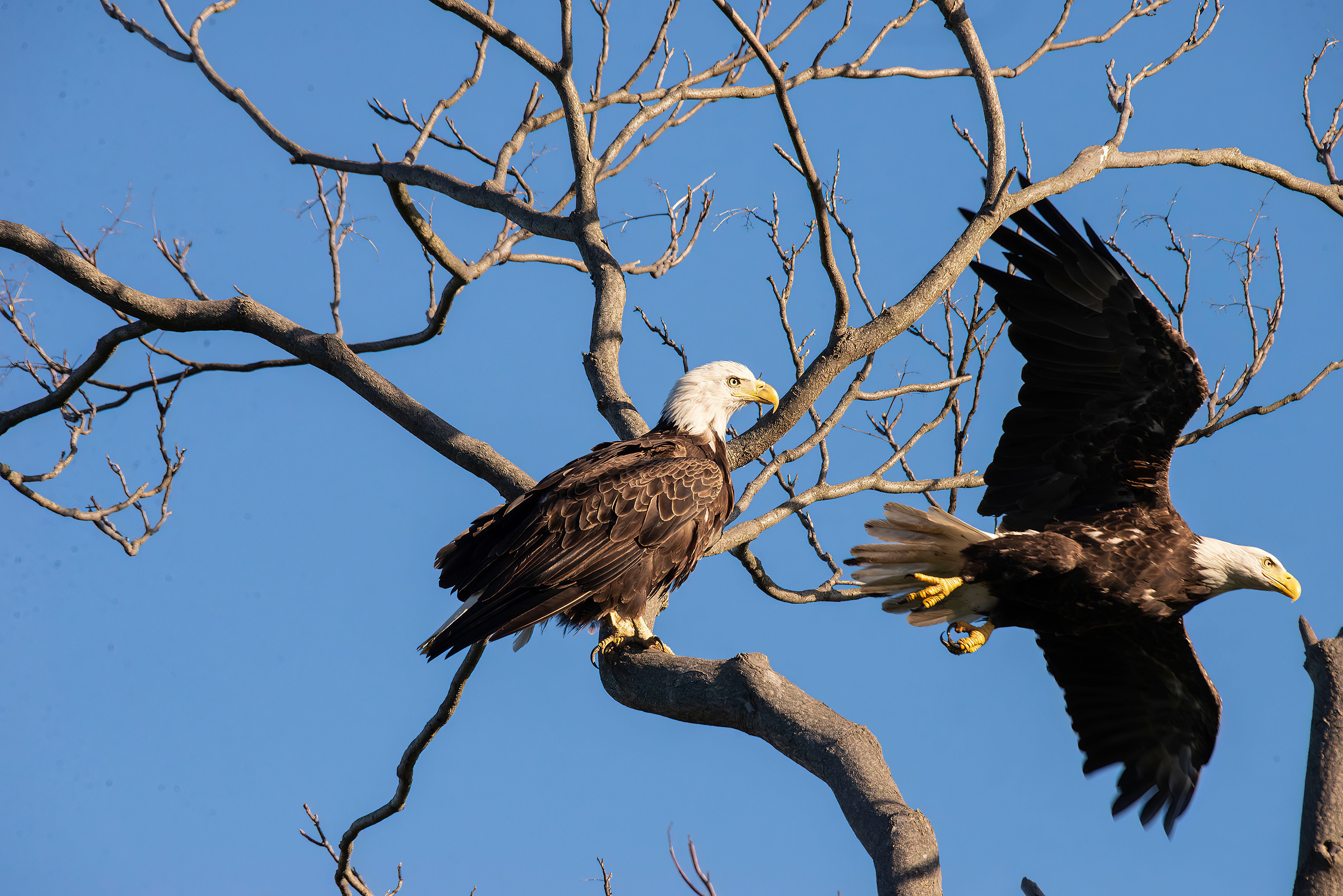 | 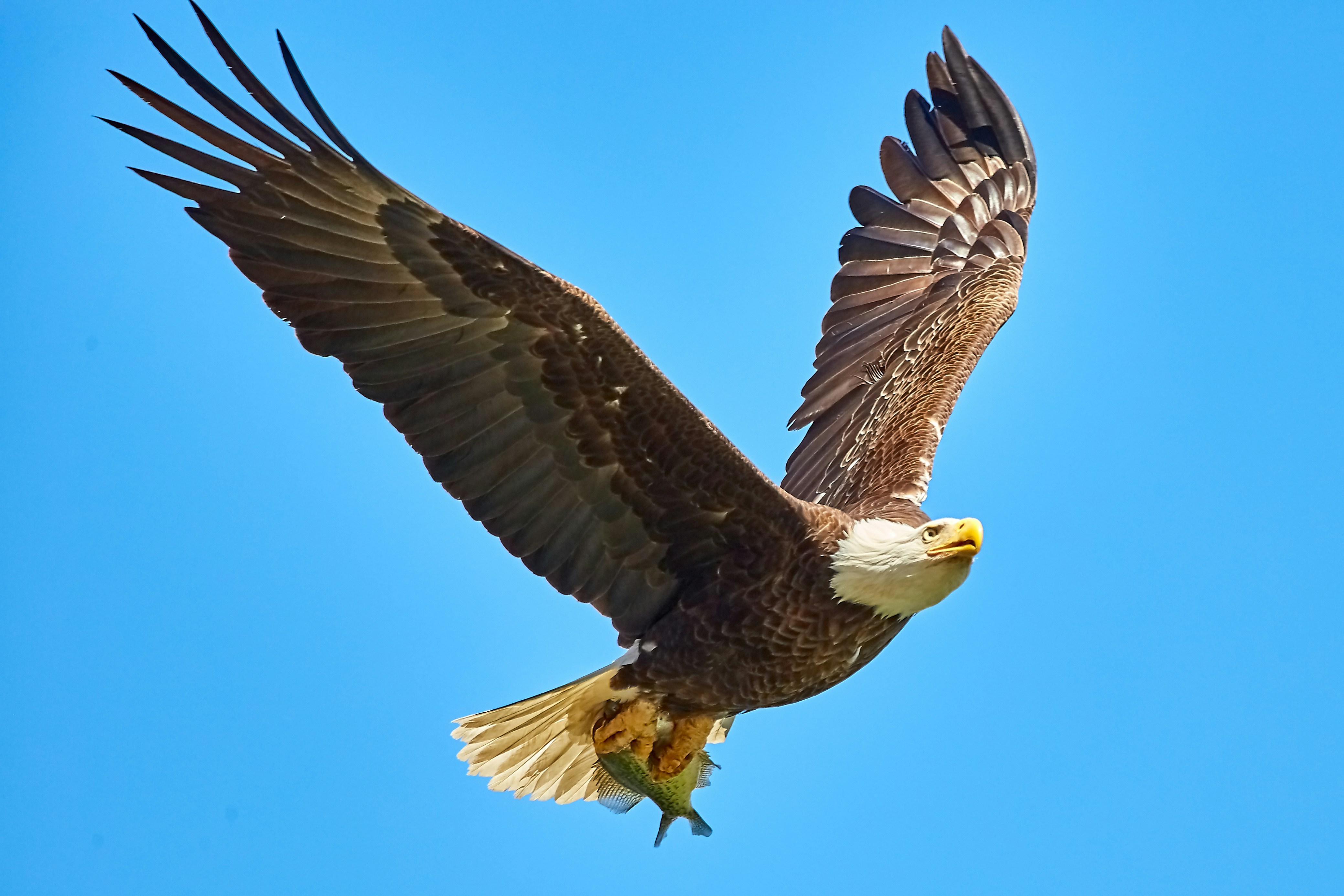 |
| One eagle holds its perch while another lifts off | A successful catch — proof of a healthy, fish-rich habitat |
Where the Numbers Stand Today
The most recent comprehensive federal survey, conducted by the U.S. Fish and Wildlife Service using 2018–2019 data, placed the population at an estimated 316,700 individual bald eagles across the lower 48 states, including roughly 71,400 breeding pairs. That figure represents a fourfold increase since a similar count taken in 2009 — a pace of growth few conservationists expected to see in a single decade.
Some regional strongholds stand out. Minnesota alone hosts close to 9,800 breeding pairs, while Alaska's population (counted separately from the lower 48) is estimated at around 30,000 birds. Florida and Wisconsin have also become reliable strongholds, each supporting healthy resident populations that draw birdwatchers from across the country.
Protection Doesn't End at Recovery
Delisting from the Endangered Species Act did not mean the bald eagle lost its legal protections. The species remains covered under federal law, which generally prohibits killing, capturing, or disturbing eagles, their nests, or their eggs without special authorization.
That continued protection matters, because new and ongoing threats have taken the place of DDT. Lead poisoning from ingested ammunition fragments, collisions with vehicles and power lines, electrocution, and habitat disturbance near nesting sites all continue to claim eagles every year. Conservationists are quick to point out that a recovered population is not the same as a population no longer at risk — ongoing vigilance is what keeps the comeback story from reversing.
Why This Story Matters
The bald eagle's recovery offers a rare, tangible example of environmental policy working exactly as intended. A banned chemical, a protected habitat, and decades of patient monitoring turned a species on the edge of disappearing into one that now soars over rivers, lakes, and coastlines in nearly every state in the union.
For anyone who has had the chance to watch a bald eagle circle overhead or perch atop a riverside tree, the sight carries a little more weight knowing how close the country came to losing it entirely — and how deliberate, sustained effort brought it back.
Sources: U.S. Fish and Wildlife Service (Bald Eagle Population Size: 2020 Update), U.S. Department of the Interior, American Eagle Foundation.
Are you American? I notice your account is new on Steemit. How do you know how to place two pictures next to another?
Did you translate this text? Why posting in this community)
Hi, thanks for asking! Yes, I am American and English is my native language, though I am currently outside the United States. I recently discovered Steemit and decided to join because I really enjoy the type of content and activities hosted in the American Steem community. As for the formatting, I learned how to place images side-by-side by reading basic Markdown and HTML syntax guides on the platform. Since English is my first language, I wrote all the content directly myself without using any translation tools. Hope this clarifies everything, and I’m glad to be a part of this community!
Thank you for taking the time to reply and explain. You are smarter than I. It took me years and the best of all is I can rarely tell the difference on my phone unless the pictures are smaller than a stamp.
Welcome to Steemit, I wish you a lot of fun and great contacts.
Thank you ❤️
Hay algunas cosas a destacar de este artículo:
Aparte de esto, sería interesante leer de este autor, algunas cosas más sencillas, como viajes, experiencias en el país donde actualmente reside, las razones por las cuales dejó los Estados Unidos, círculo social, a qué se dedica, cosas más relacionadas a las compartidas en una red social común y corriente, pero con la intención de mejorar en la escritura y en la redacción de artículos.
오늘날 지구상에서 사라진 동물들이 많이 있습니다.