How Markets Are Different Around the World
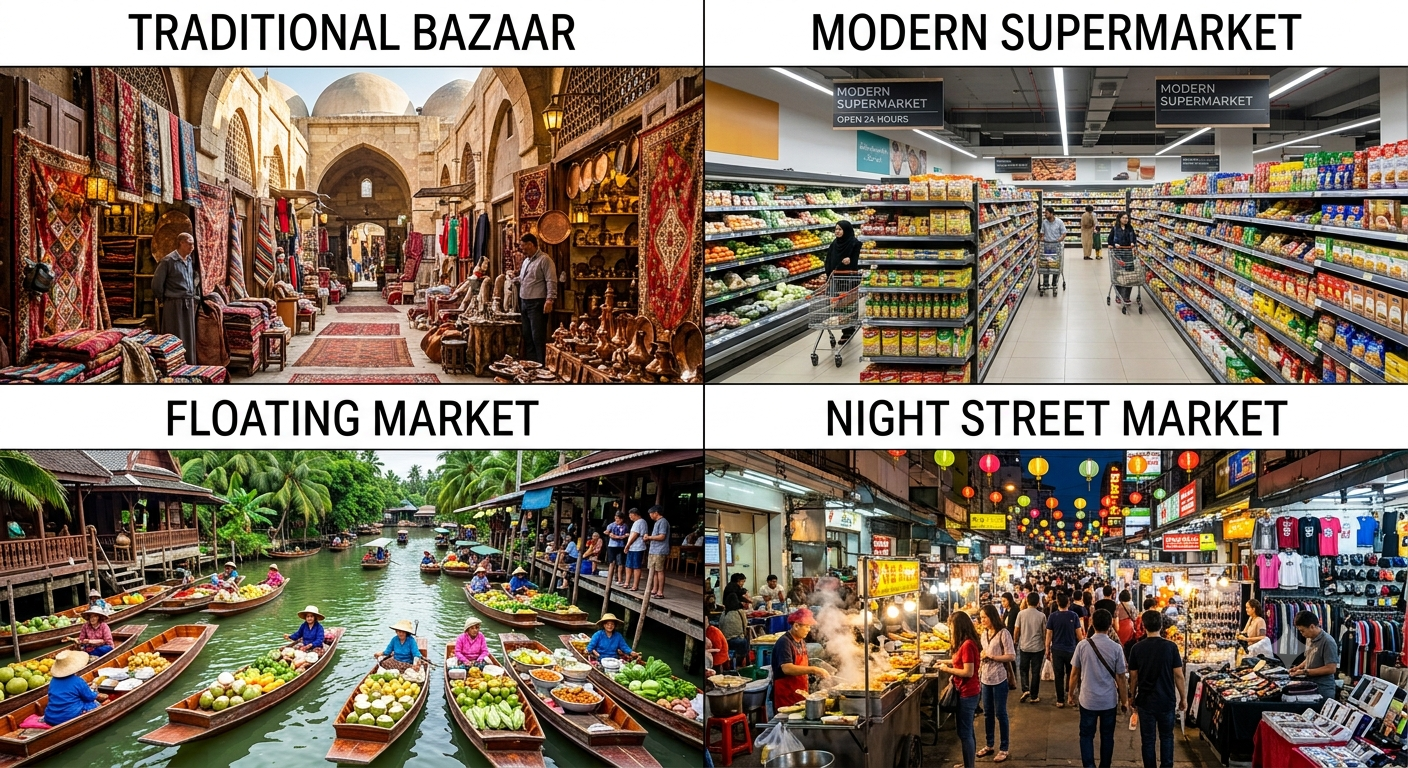
Markets are found almost everywhere in the world. They may look completely different from one country to another, but they all have something in common: they bring people together to buy, sell, discover, and exchange goods.
A traditional market can tell us a lot about the culture of a place. In some countries, markets are crowded streets filled with colorful fruits, vegetables, spices, clothes, handmade products, and small food stalls. In other places, markets may be organized inside large modern buildings with fixed prices and carefully arranged products.
One of the most interesting differences is the way sellers and customers communicate. In some traditional markets, bargaining is a normal part of shopping. Customers may ask for a lower price, while sellers explain why their product is worth the amount they are asking. The conversation itself can become part of the shopping experience.
In other markets, bargaining is uncommon. Prices are clearly displayed, and customers simply choose what they want and pay at the counter. Neither system is necessarily better. They simply reflect different shopping cultures.
Food markets are especially interesting. A local market may offer products that are closely connected to the region. Coastal markets often have fresh seafood, while markets in farming areas may have fresh vegetables, fruits, grains, or dairy products. Spices can also reveal the history of a region because many ingredients traveled across countries through old trade routes.
The atmosphere of a market can be just as important as the products. Some markets are quiet and organized, while others are loud and energetic. Sellers may call out to customers, people may stop to chat, and the smell of cooking food can fill the streets.
Markets also create opportunities for small businesses. A person who makes clothes, jewelry, food, furniture, or handmade decorations can sell directly to customers without needing a large store. This makes markets an important part of local economies.
Technology has changed markets too. Today, many traditional sellers use smartphones, digital payments, and social media to reach more customers. A small shop or market stall can sometimes attract buyers from far outside its local area.
Despite these changes, physical markets still have something that online shopping cannot completely reproduce. You can touch products, smell fresh food, talk to sellers, watch things being made, and experience the atmosphere of the place.
Perhaps this is why markets continue to survive in a world filled with shopping apps and online stores.
A market is not simply a place where money changes hands. It is also a meeting place, a source of local identity, and a window into everyday life.
If you want to understand a new city or country, visiting its local market can be one of the easiest and most interesting ways to start.
Congratulations!
Your post has been selected and upvoted by the SteemPro Team 🚀
Explore more on SteemPro:
🌐 https://www.steempro.com
🎮 Play SteemHeights: https://www.steempro.com/games/steem-heights
💬 Join our Discord: https://discord.gg/Bsf98vMg6U
💪 Supporting the growth of the Steem ecosystem together.
🟩 Vote for witness faisalamin:
https://steemitwallet.com/~witnesses
https://www.steempro.com/witnesses#faisalamin
This is an automated message.