Interpretation
It's amazing how quickly things have changed, especially now that it's easy to look up the meaning of words and even translate between different languages. Right now, communication between different societies, tribes, and communities is much easier. Many factors have helped, especially the fact that most people now understand at least a bit of English, even if not all of it. Unfortunately, it's still a step-by-step process, and we don't always have our phones in hand to start checking meanings of unfamiliar words. How would you even translate a Chinese word you can't spell—unless you've got a voice translator on standby?
I called a friend of mine one time and said, "How far? I'm coming to visit you this weekend." He replied, "Wait, why now? I've got some things to do on Saturday. I would've loved it if it were the week after." But I had something to do in that state—it was a big conference, and Saturday was the only day I'd be free to visit. "Come on, can't you clear the desk a little for a friend? It's been years," I said.
"If you insist, I'll clear some time so you can visit," he replied, and I was satisfied.
Finally, the agreed day came. I put on my native Yoruba dress with my fìlà. It was as if I was going to a billionaire's party. When I left the room provided by the company for us to stay during the conference, my other staff companions were hailing me like I was a movie actor. I boarded public transport and headed to his house.
It was a fully built building, although the floor hadn't been plastered and the walls had no paint yet. Still, it was a home, and I loved the environment—especially the flowers that beautified the low fence. He saw me from afar and said,
"Ada mi da, ọta mi dé," which from my perspective meant, "Where is my cutlass? My enemy has come."
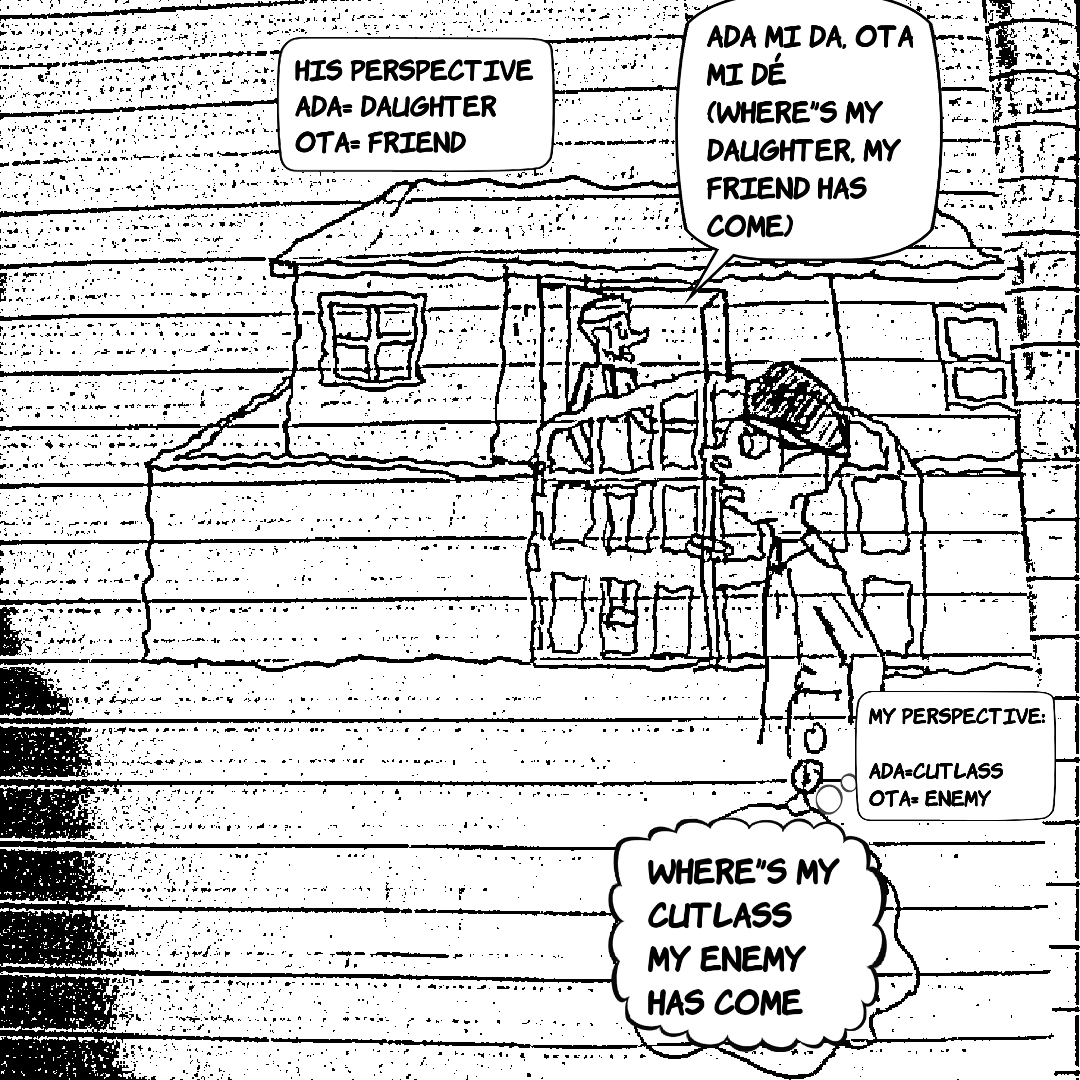
That phrase gave me instant trauma, and I started moving backwards as my friend approached. He soon noticed that the words bothered me, since we both schooled in a Yoruba society. He explained that ada meant "daughter" in their language, and ọta meant "friend." I could do nothing but blame the Tower of Babel—we might have ended our friendship that day.
Not to mention my cousin's second-born naming ceremony, when a name given by his mother-in-law was announced and everyone laughed. It was in a Yoruba town, and the Benin name's pronunciation sounded like "Hot Neck." I still don't know the spelling till now, and I'm still scared to ask because my cousin definitely saw me smiling and gave me a frown that activated my survival instinct.
It's even said that if you say "My shoe shall shine" very fast in English, you've successfully spoken Chinese—even though you don't understand what you've just said, until a real Chinese speaker tells you if it even has any meaning 😂.
Languages are fun to learn, especially when relating them to your own language—and even more so when you don't quite get it yet. But if you're not careful, it might offend someone.
I've been using the Translate app for the longest time where I would either copy paste the word or just snap a picture. It's so convenient.
It is
We would've had much trouble reading people's post if not for that.
Yeah. We can easily read post from anywhere in world now
Upvoted! Thank you for supporting witness @jswit.
This BOOMING vote is yours and well deserved!
❤️🍀