Why Decentralization Matters More Than Speed
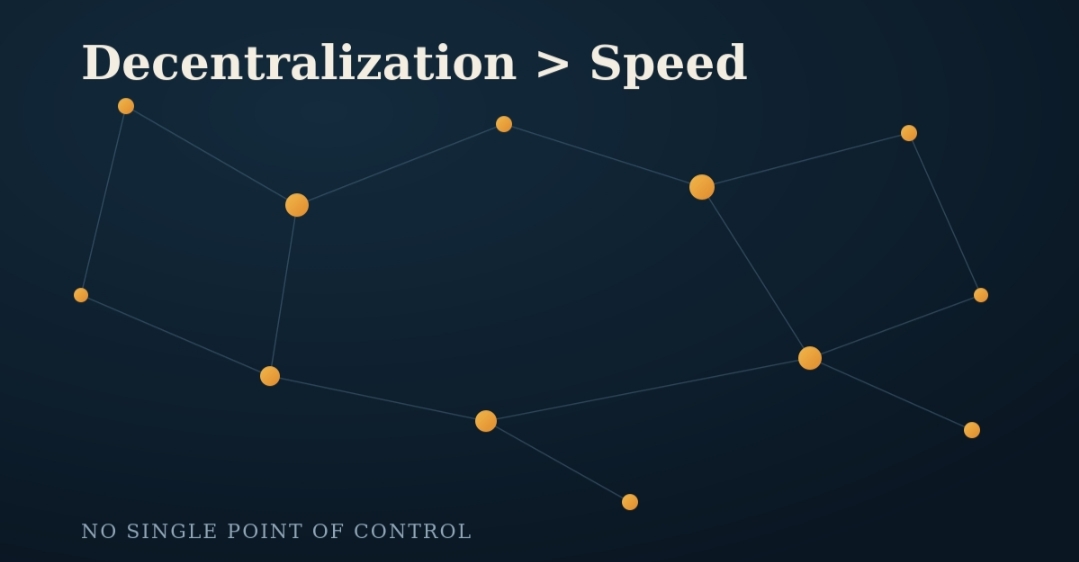
Every few months, a new blockchain project claims the title of "fastest chain in crypto," boasting thousands of transactions per second and near-instant finality. It's an easy metric to market, and an even easier one for newcomers to latch onto. But speed alone was never the point of blockchain technology. The entire premise behind decentralized ledgers was to remove the need for a trusted middleman — a bank, a government, a corporation — from the process of verifying and recording value.
When a network sacrifices decentralization to achieve blazing speed, it often ends up looking suspiciously similar to the centralized systems it was meant to replace. If only a handful of validator nodes control consensus, then technically the chain is fast, but functionally it's just a database with extra steps. The real engineering challenge — the one serious projects are still trying to solve — is finding the sweet spot between throughput, security, and genuine decentralization. That balance, often called the "blockchain trilemma," is far harder to achieve than raw speed, and it's the metric that actually determines whether a network can be trusted long-term.