August wildlife in southeastern Pennsylvania: First encounters and some small birds
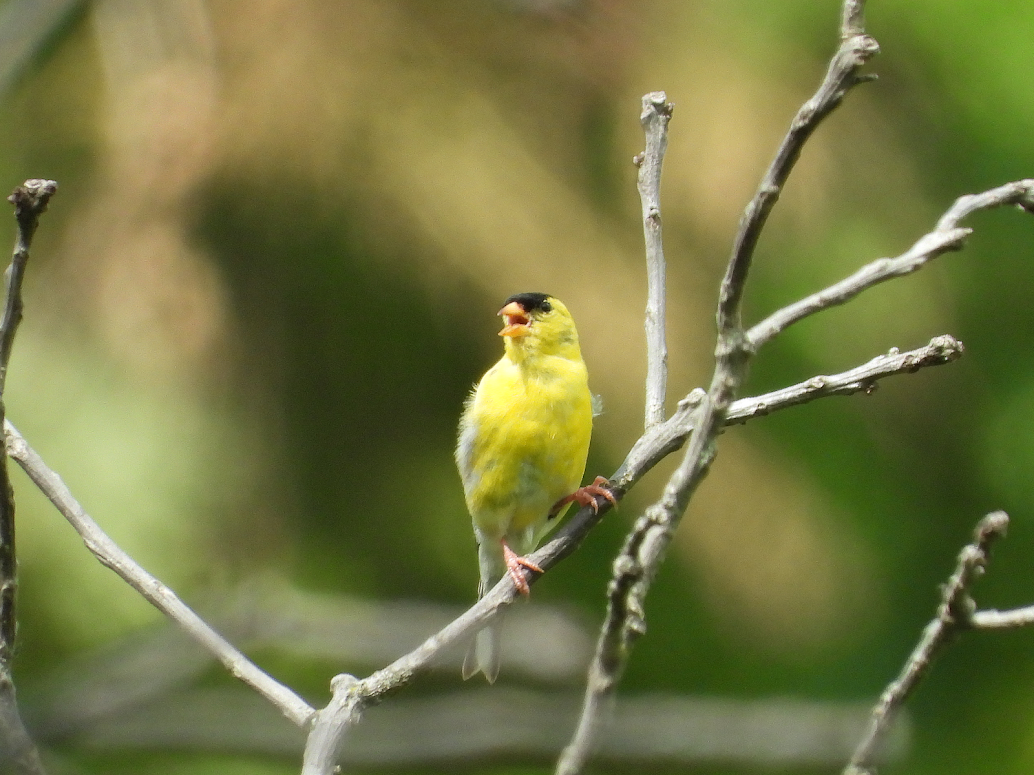
Welcome to the second post covering my backyard photography practice in Chester County, PA, during the month of August. This post will focus on small birds and a couple butterflies, including 6 animals that I hadn't seen from my yard before the month of August. This post also has the first photos that I have taken at the Gordon Natural Area and the Stroud Preserve, both in West Chester, Pennsylvania.
I have included 10 species with 19 observations in this post along with many more photos than I had expected. August encounters included more harassing behavior from the Eastern Kingbird, along with several juvenile birds (European Starlings, American Crows, and the American Goldfinch).
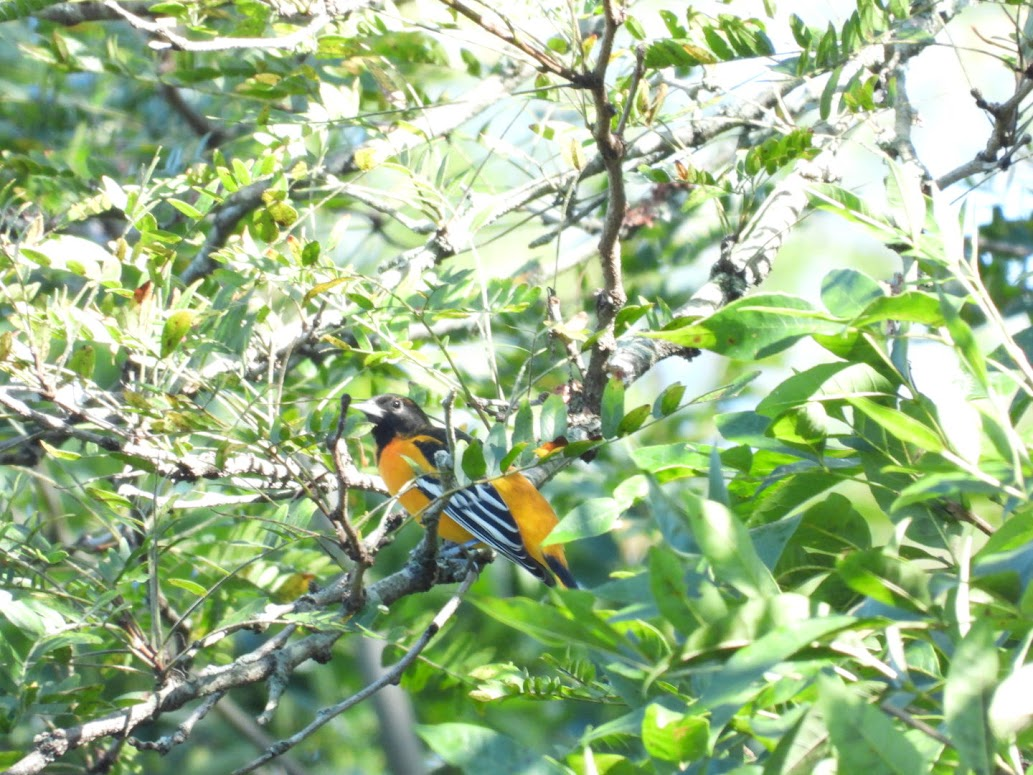
It also includes a couple species that Merlin identified by sound in my yard far more frequently than I have managed to find them by sight (American Goldfinch, and Baltimore Oriole).
As usual, let's start with the summary table. Of course, because I don't submit all of my photos to iNaturalist, the dates in the summary table may differ from the photograph dates.
| common_name | Total | First | August | Links |
|---|---|---|---|---|
| American Crow | 5 | 04/28/26 | 3 | 08/16/26 08/23/26 08/28/26 |
| Eastern Kingbird | 6 | 05/15/26 | 2 | 08/12/26 08/18/26 |
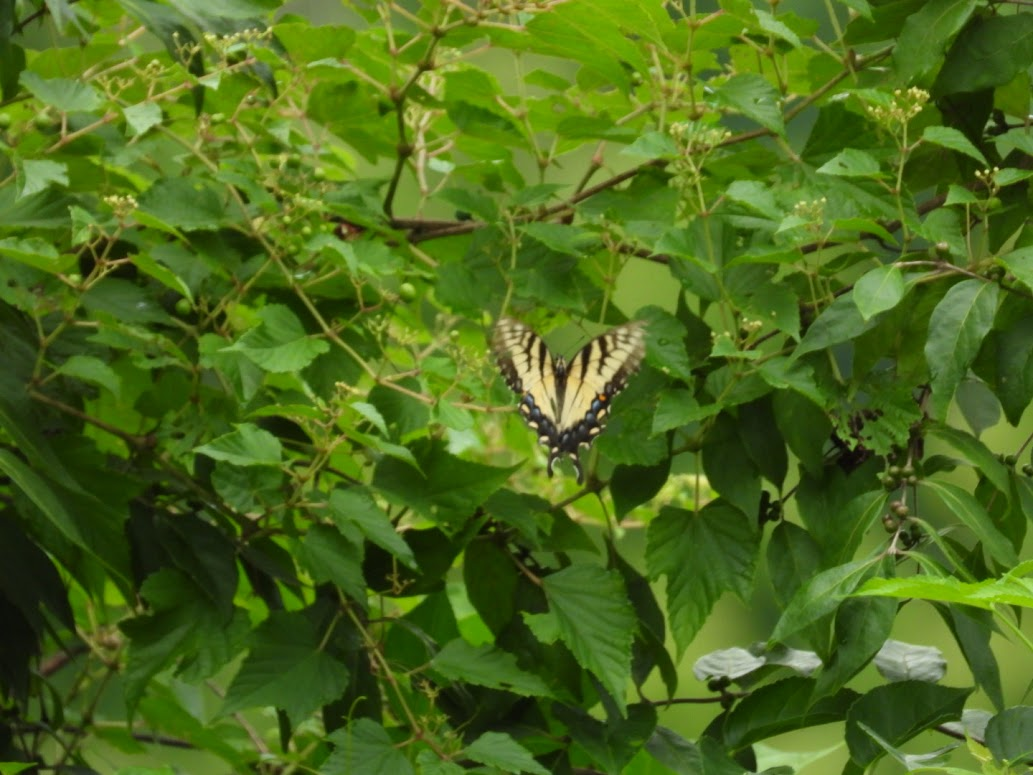
| Eastern Tiger Swallowtail | 3 | 08/10/26 | 3 | 08/10/26 08/20/26 08/29/26 |
| European Starling | 5 | 05/12/26 | 3 | 08/01/26 08/06/26 08/14/26 |
| American Goldfinch | 2 | 08/23/26 | 2 | 08/23/26 08/29/26 |
| Eastern Wood-Pewee | 2 | 08/16/26 | 2 | 08/16/26 08/22/26 |
| Baltimore Oriole | 3 | 05/17/26 | 1 | 08/25/26 |
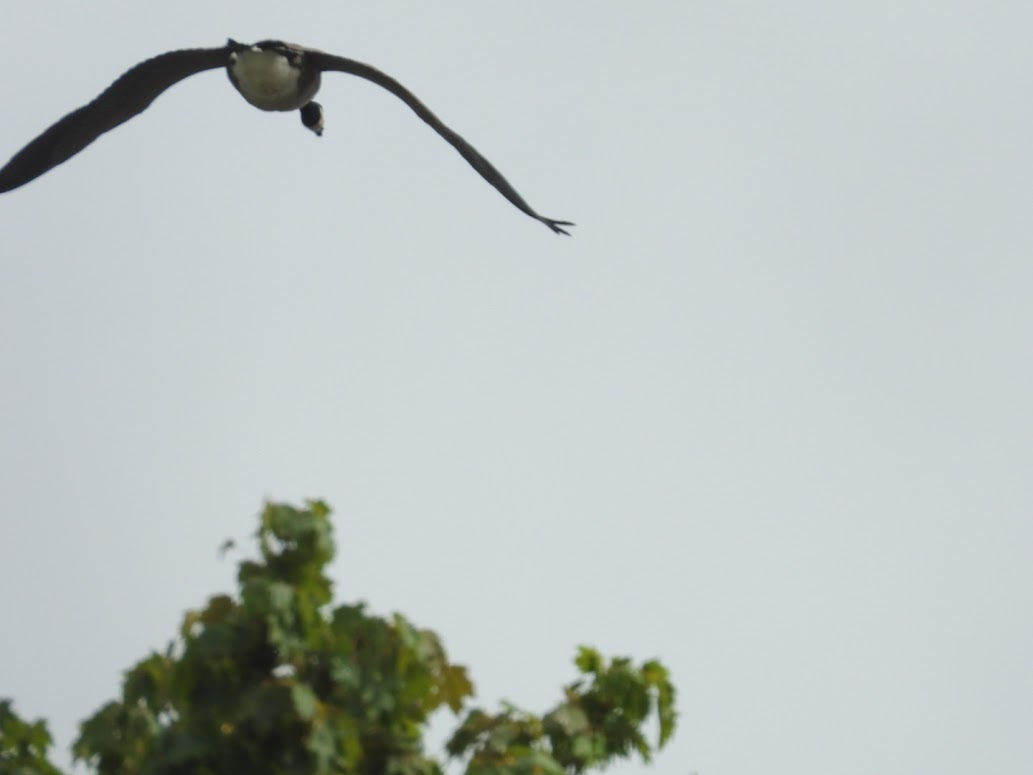
| Canada Goose | 1 | 08/17/26 | 1 | 08/17/26 |
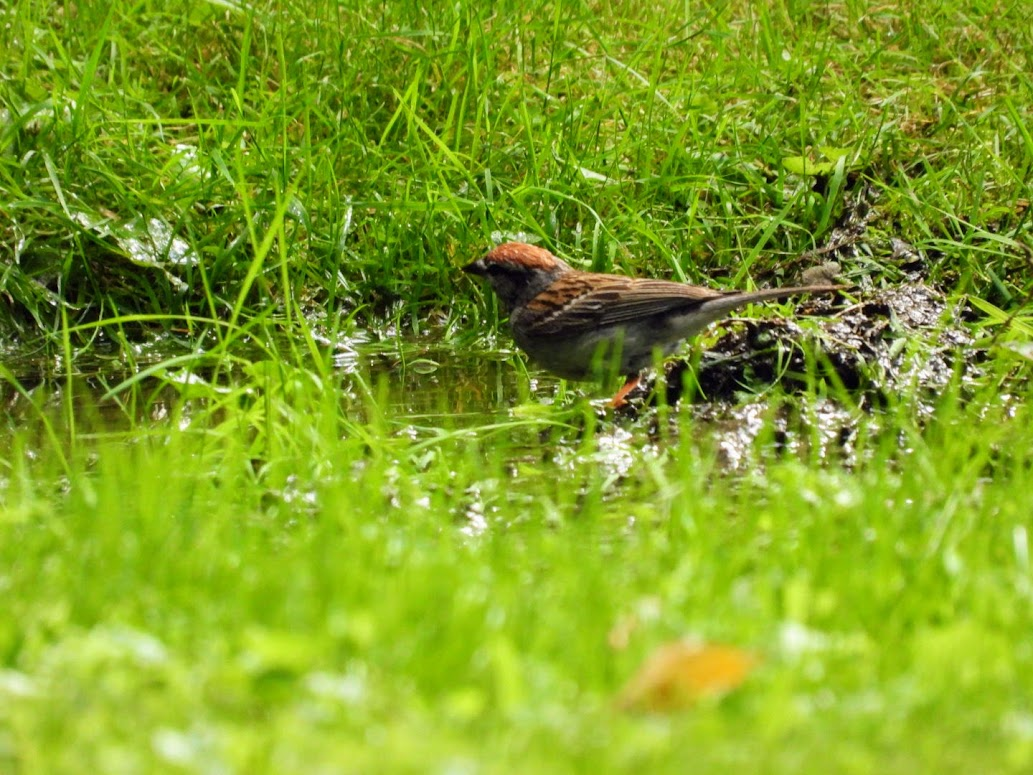
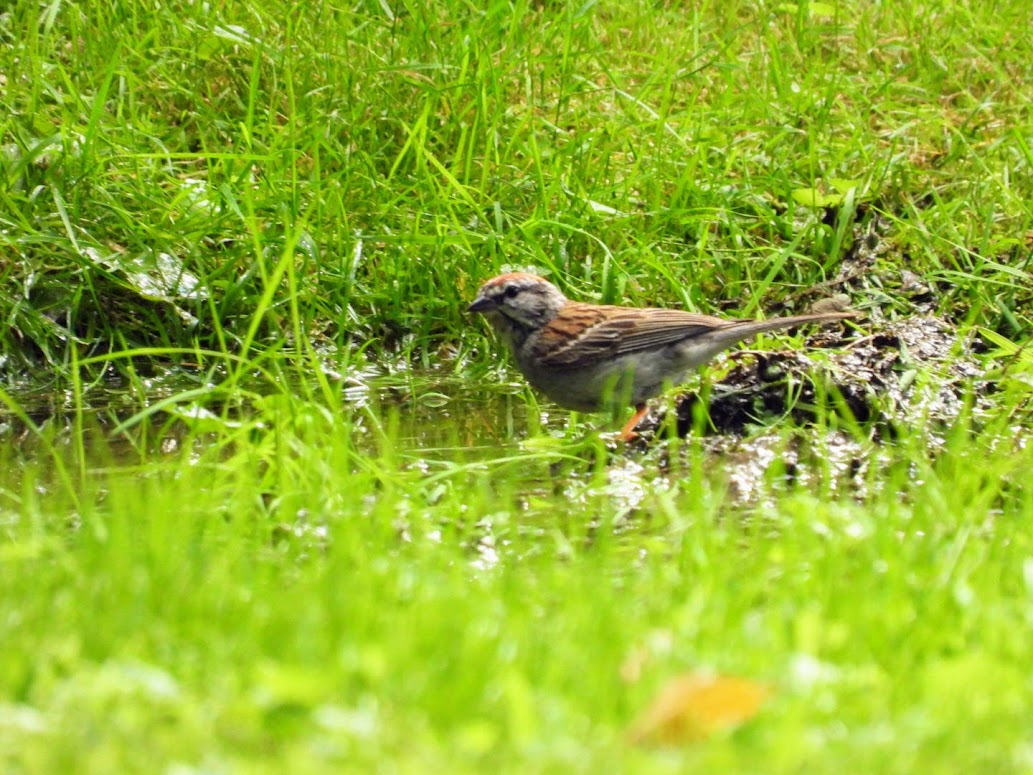
| Chipping Sparrow | 1 | 08/04/26 | 1 | 08/04/26 |
| Spicebush Swallowtail | 1 | 08/29/26 | 1 | 08/29/26 |
American Crow
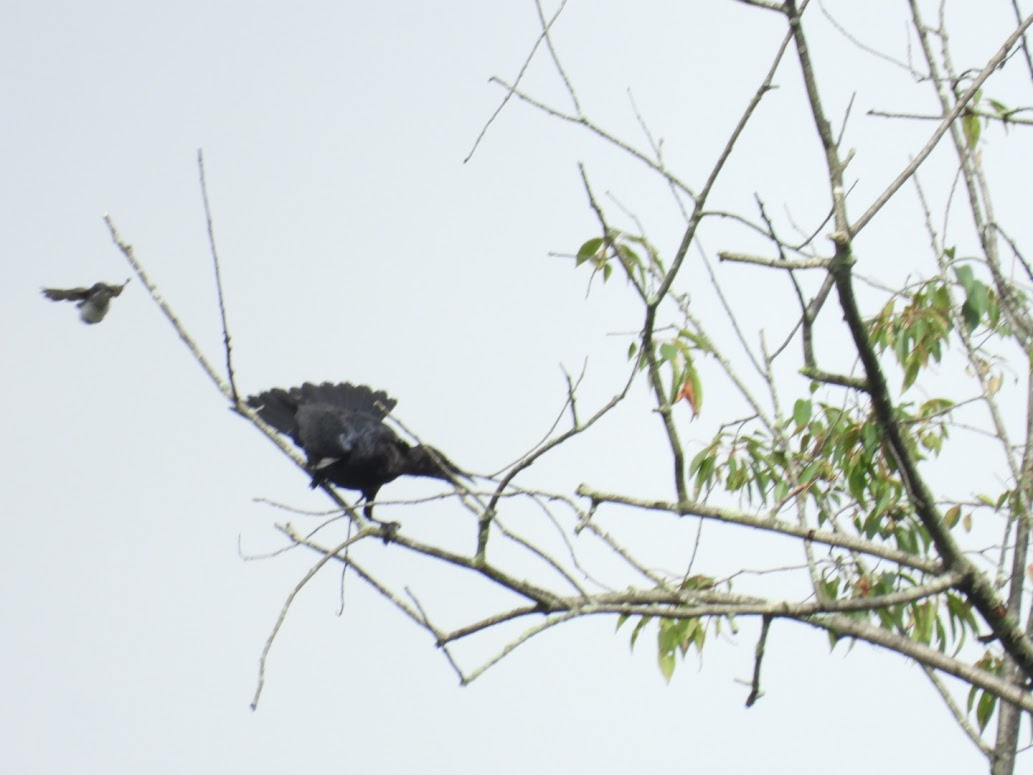
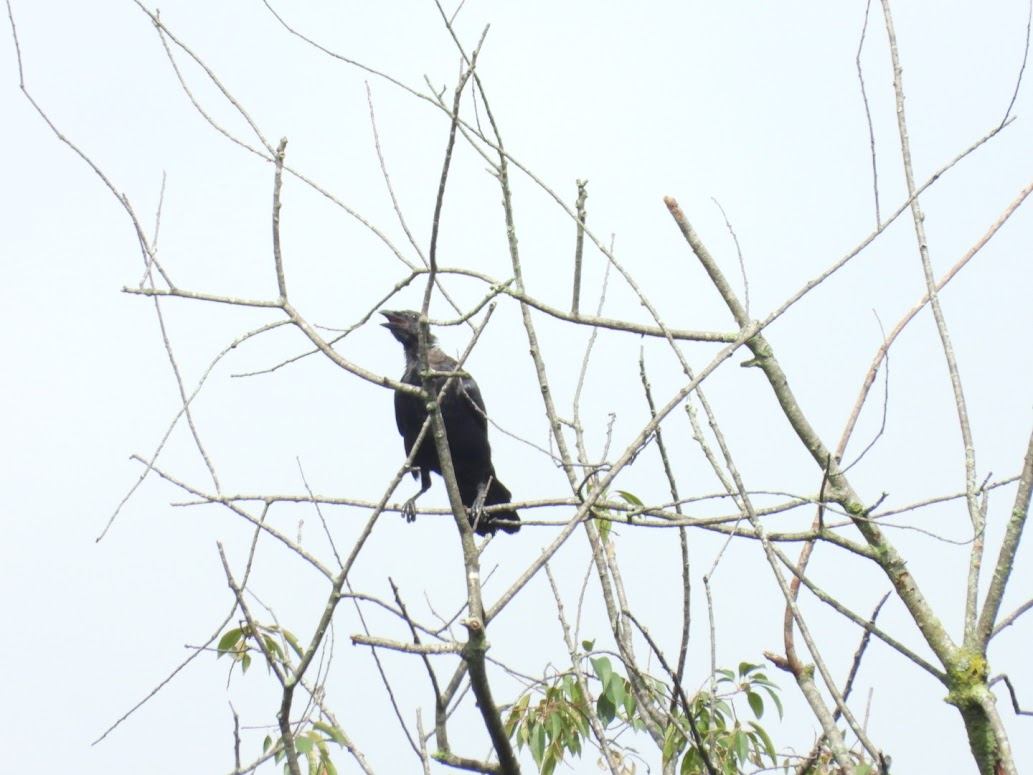
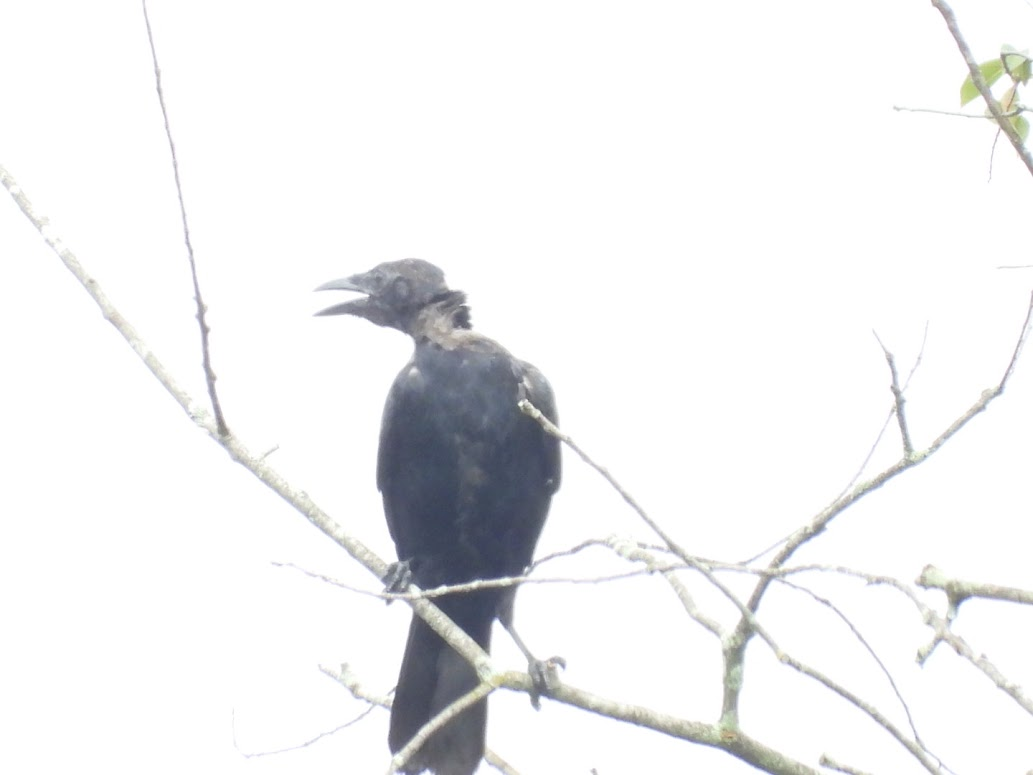
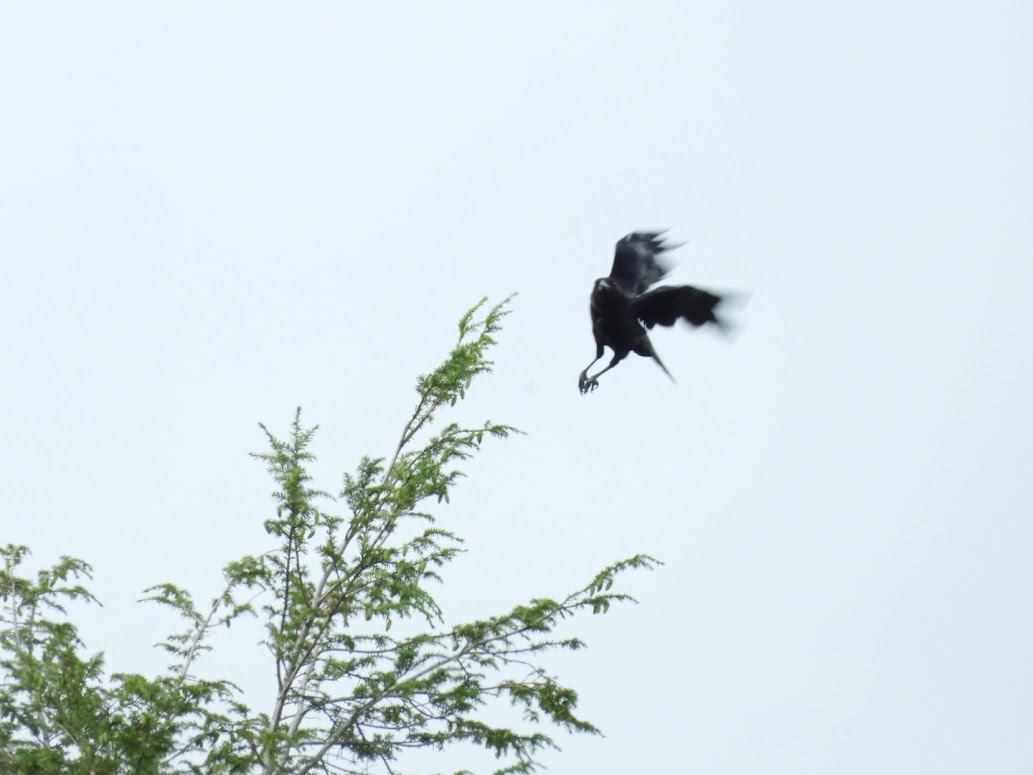
I'm pretty sure that every American Crow in these photos is a juvenile. This can be seen by the brown and uneven feathering on their heads and necks. The only one that doesn't look like an obvious juvenile is the one that I photographed on August 28. Even with that one, though, you can see some uneven coloring on the chest and neck. Additionally, it was the one that I could observe the best and it seemed to struggle when getting into the air, as if it was still a little bit awkward at flying.
The American Crow ranges through most of the continental United States, and it migrates into parts of Canada during the breeding season. Visually, it's hard to distinguish these crows from the Fish Crow, but the two birds have distinctive calls. I have never heard the Fish Crow anywhere near my house, so it's easy to conclude that the ones I'm seeing in the yard are American Crows.
Basically, there are four different sightings here. On August 16, I saw a pair of juveniles in a particular tree that I always check when I'm on my walks. Often during August, that tree was a gathering place for European Starlings, but I happened to see these crows there on the 16th and 17th. I mentioned that tree in previous blog posts as being wicked-hard to photograph - because of distance and backlighting. This is still true.
The sighting on the 17th was unique because the juvenile crow was being harassed by an Eastern Kingbird. Based on the photos below, the crow was probably not very happy about this, and we'll see in the next section that the Kingbird seemed to get the better of the exchange.
The bird on the 23rd was in a different tree, on the opposite side of a highway that's close to my property. It sat in the tree for a while, but then made off with a couple others. I'm assuming that the tree was a meetup place for some sort of family unit.
Finally, on August 28, we have the only one that I was able to photograph without some difficult backlighting. Based on timestamps, the bird was in the tree for about 5 minutes. It was jumping around the tree branch in a way that had me puzzled until I looked at the photos on the computer. As with the Northern Cardinal last month, I think it was hunting Spotted Lantern Flies. You can see a Lantern Fly in the last photo of the section. Eventually, it flew off, which is when I noticed that it still seemed to have some fledgling awkwardness when it took wing.
I'm pretty sure I also saw some Fish Crows in August at the Stroud Preserve (near the East Branch Brandywine Creek), but I didn't manage to get any photos.
| August 16 | August 16 |
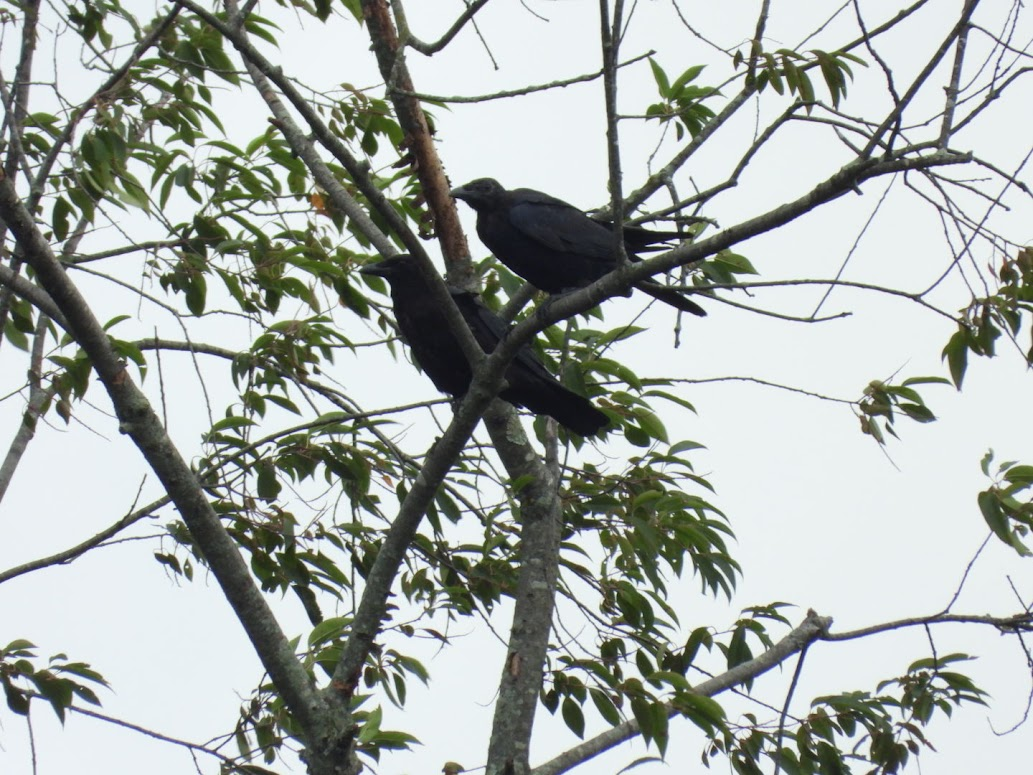 | 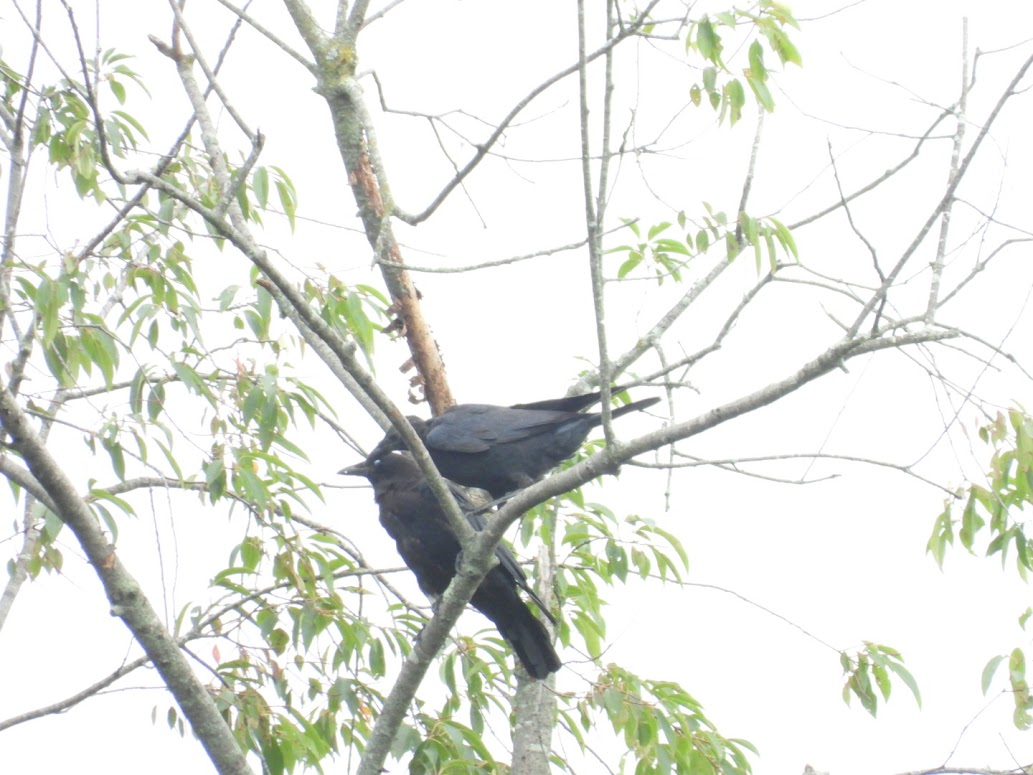 |
| ƒ/8, 1/250, ISO400, 539mm (3002mm equiv, 125.1X) | ƒ/8, 1/125, ISO800, 539mm (3002mm equiv, 125.1X) |
| August 16 | August 17 |
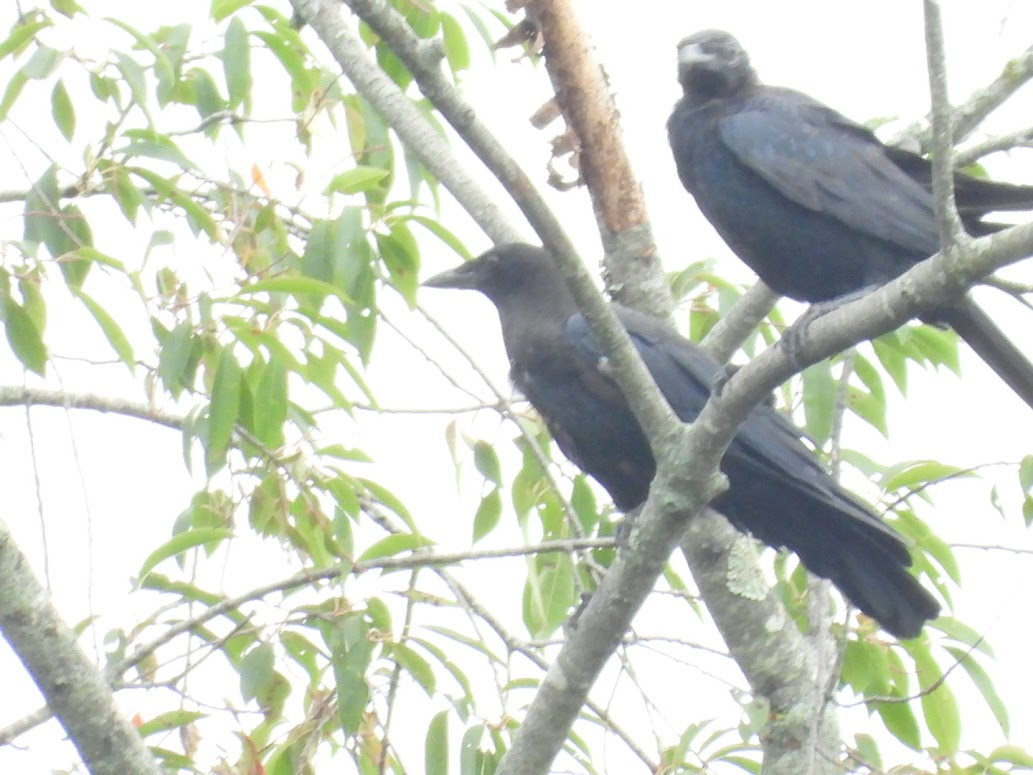 |  |
| ƒ/8, 1/100, ISO800, 1078mm (6004mm equiv, 250.2X) | ƒ/8, 1/500, ISO320, 539mm (3002mm equiv, 125.1X) |
| August 17 | August 17 |
 |  |
| ƒ/8, 1/500, ISO400, 539mm (3002mm equiv, 125.1X) | ƒ/8, 1/200, ISO400, 1078mm (6004mm equiv, 250.2X) |
| August 23 | August 23 |
 | 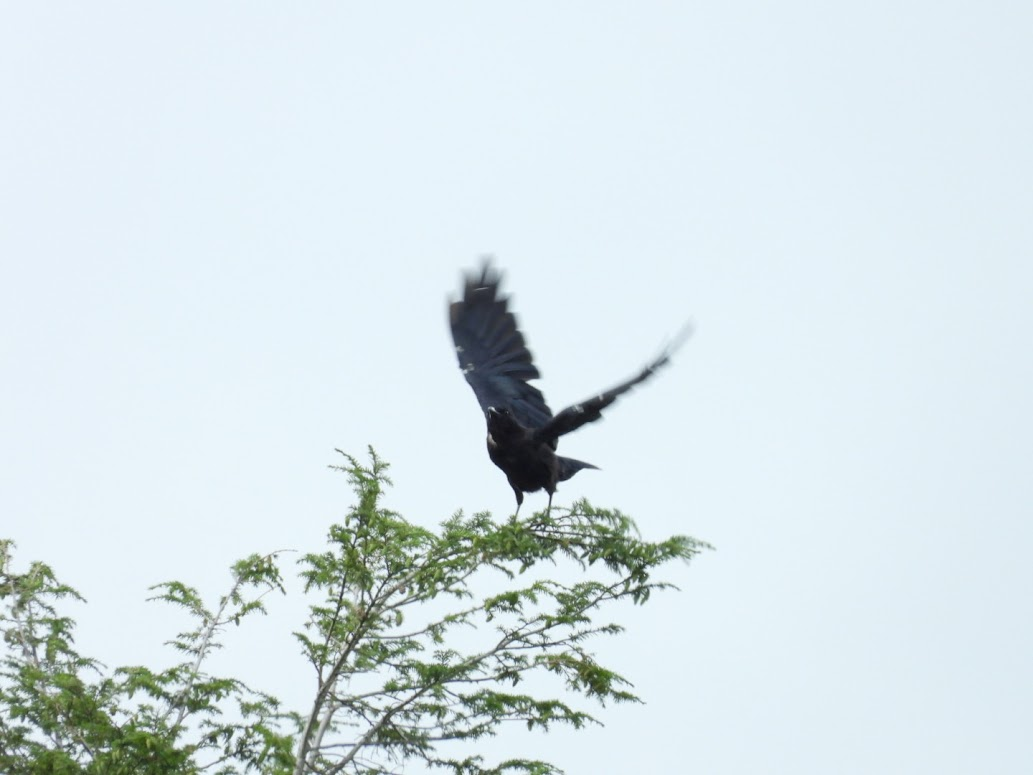 |
| ƒ/7.1, 1/320, ISO400, 395mm (2200mm equiv, 91.7X) | ƒ/7.1, 1/320, ISO400, 395mm (2200mm equiv, 91.7X) |
| August 23 | August 28 |
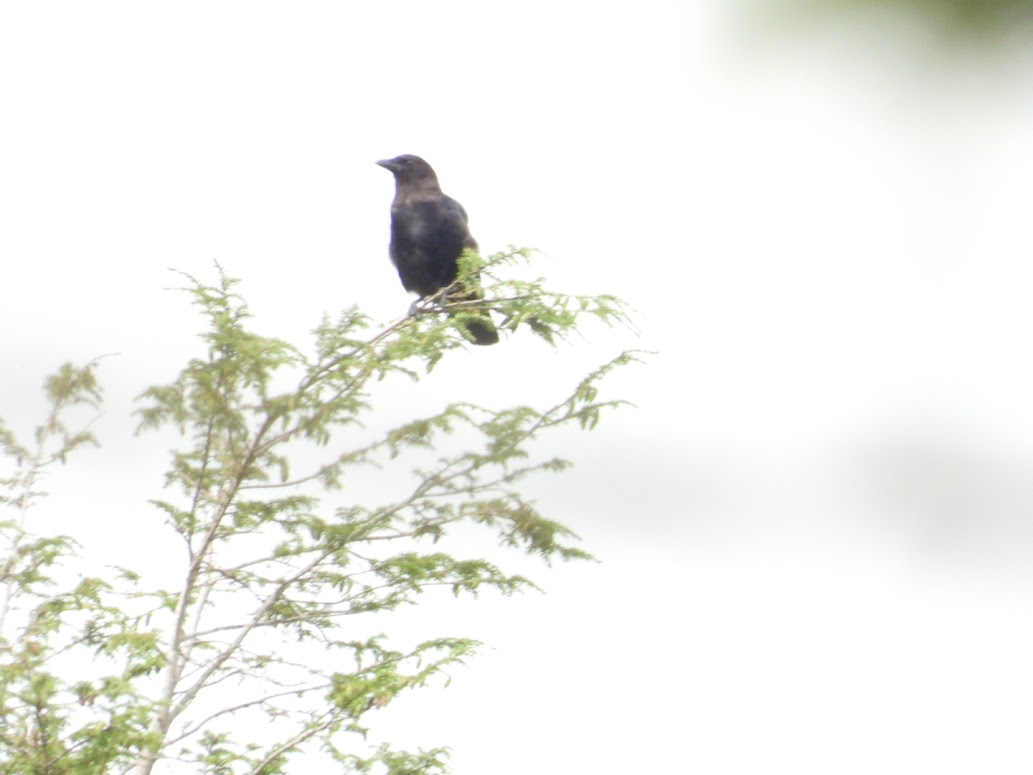 | 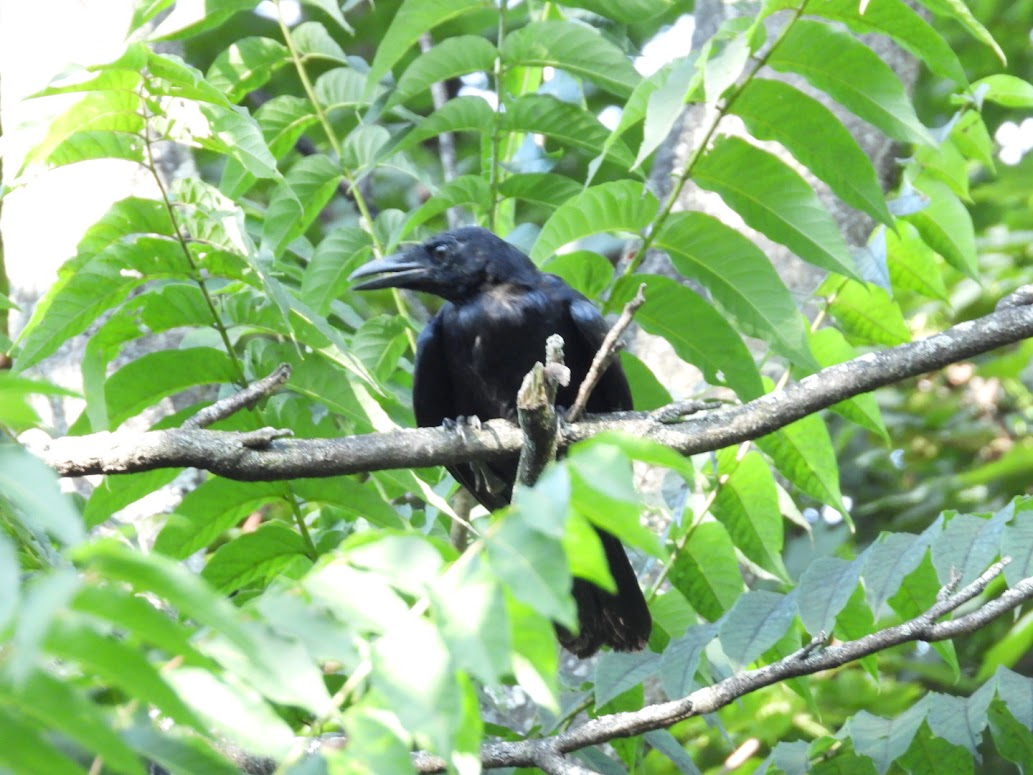 |
| ƒ/7.1, 1/320, ISO400, 395mm (2200mm equiv, 91.7X) | ƒ/5.6, 1/100, ISO800, 180mm (1003mm equiv, 41.8X) |
| August 28 | August 28 |
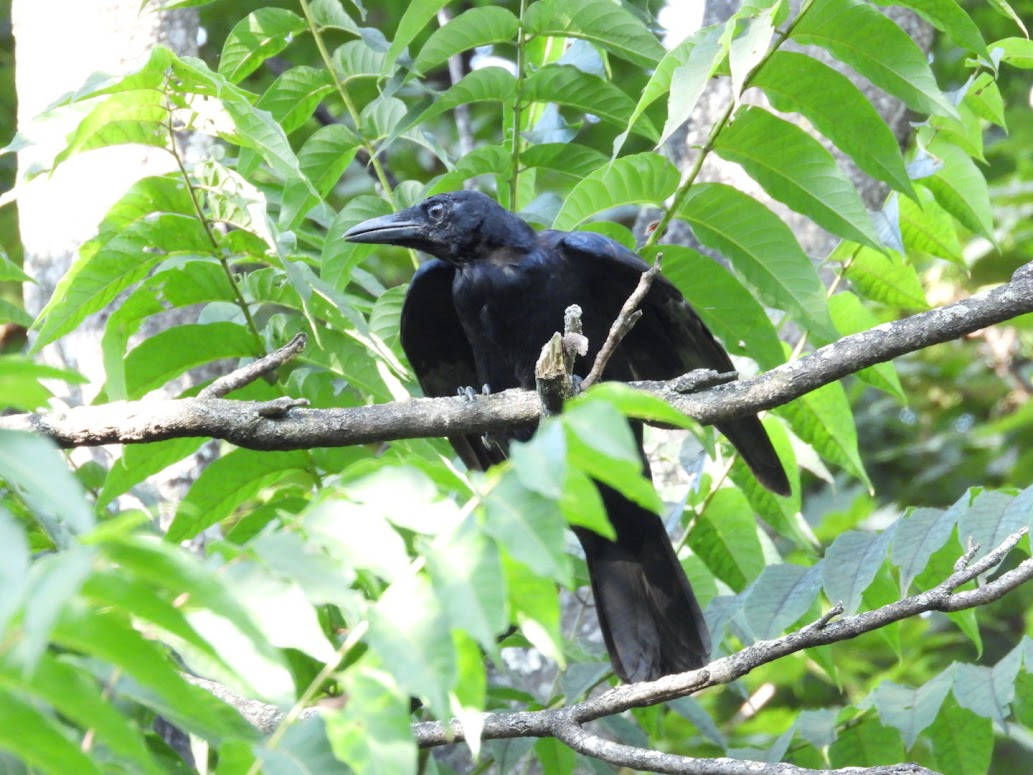 | 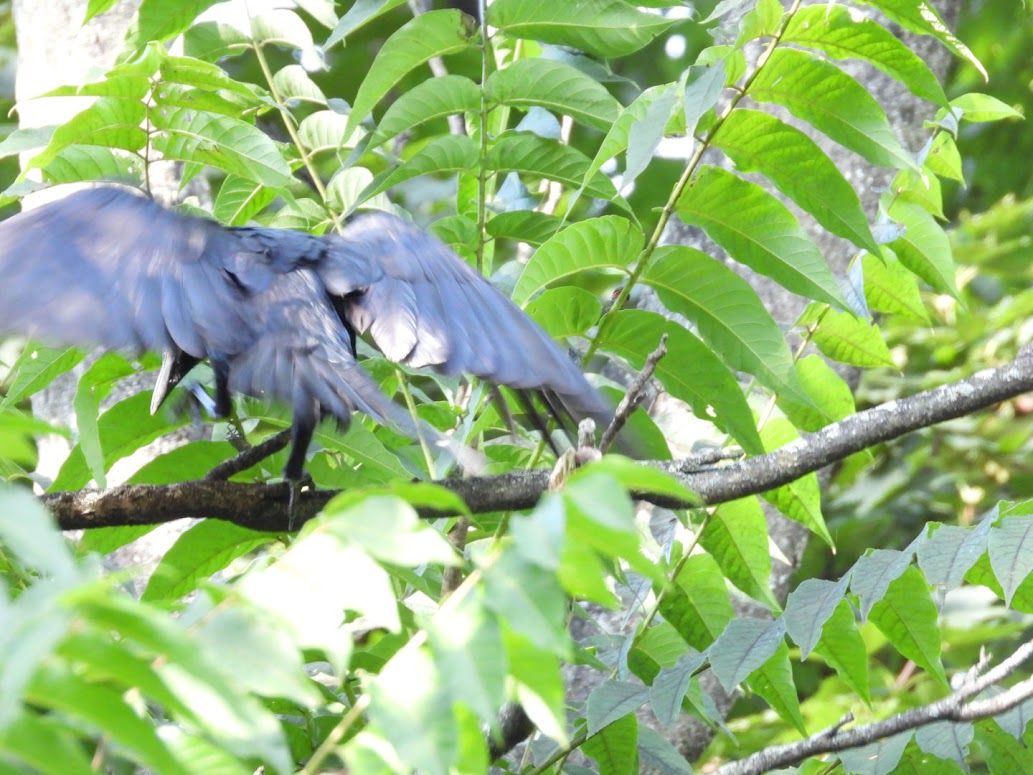 |
| ƒ/5.6, 1/100, ISO800, 180mm (1003mm equiv, 41.8X) | ƒ/5.6, 1/100, ISO800, 180mm (1003mm equiv, 41.8X) |
| August 28 | |
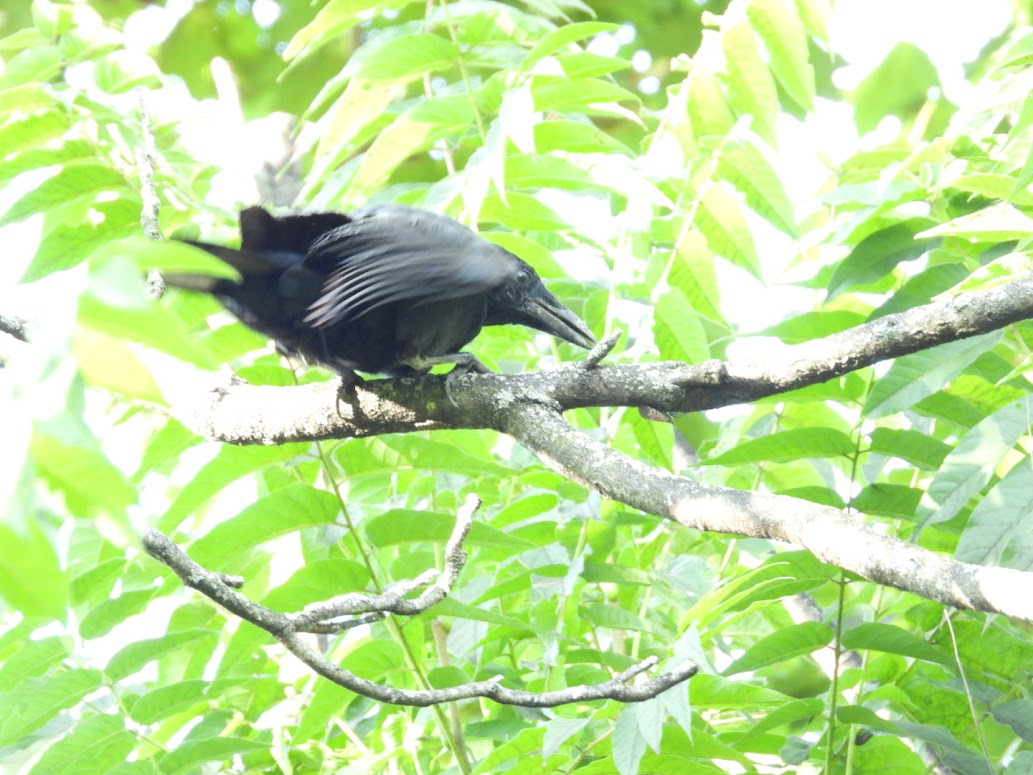 | |
| ƒ/5.6, 1/60, ISO800, 180mm (1003mm equiv, 41.8X) | |
Eastern Kingbird
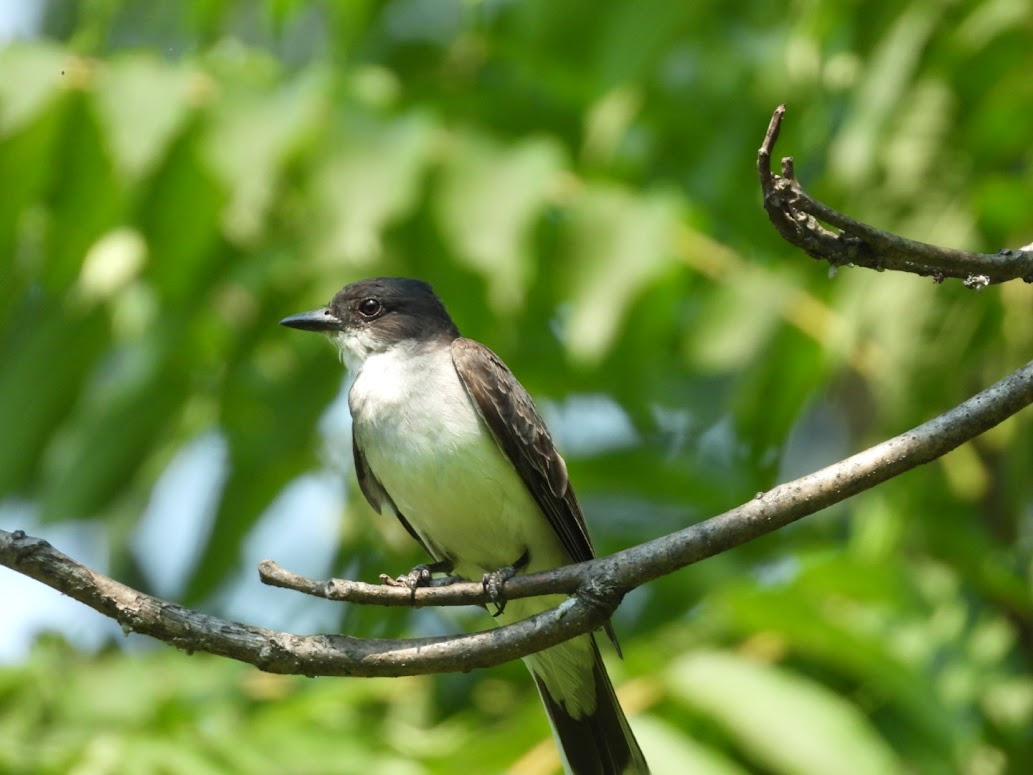
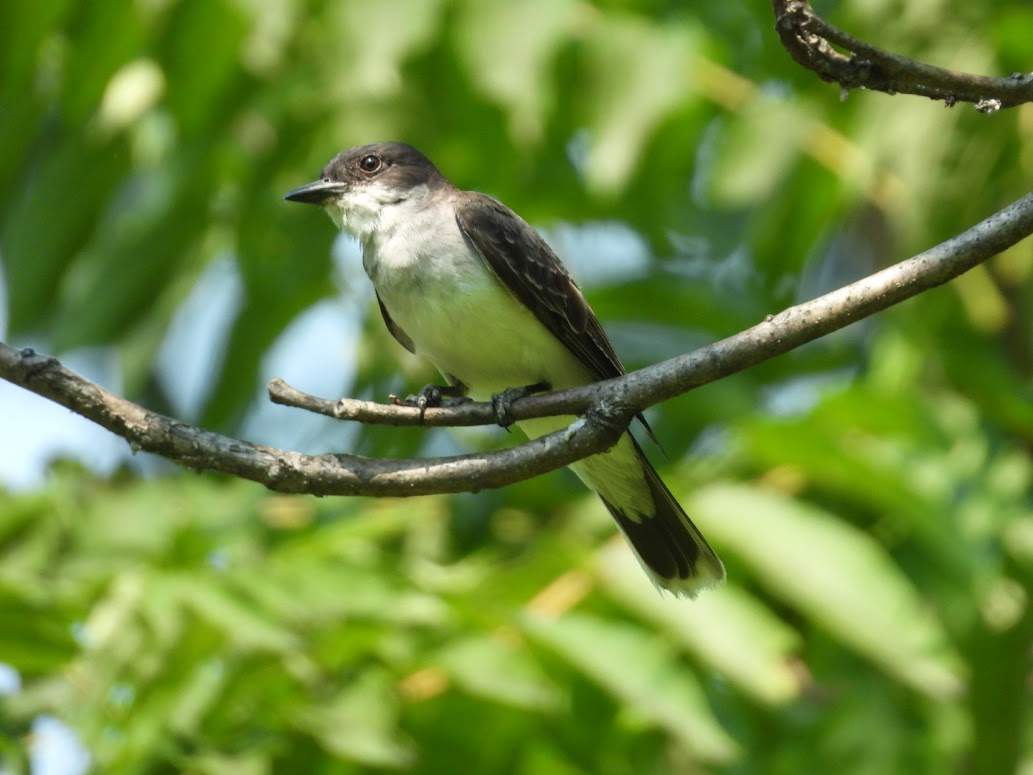
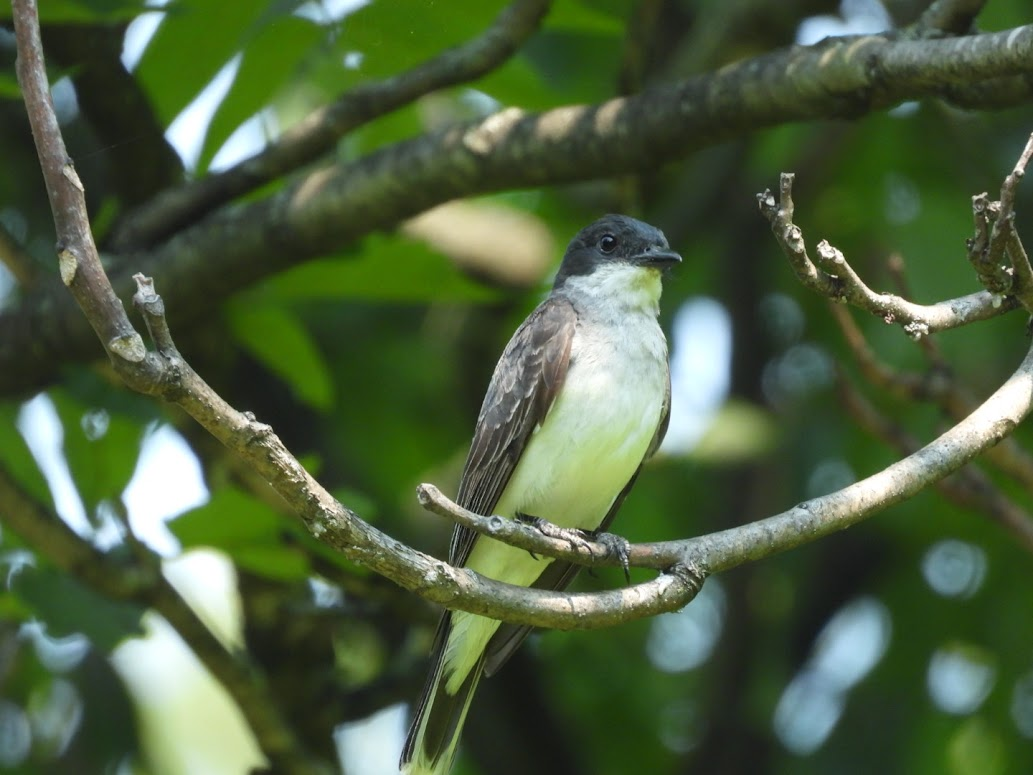
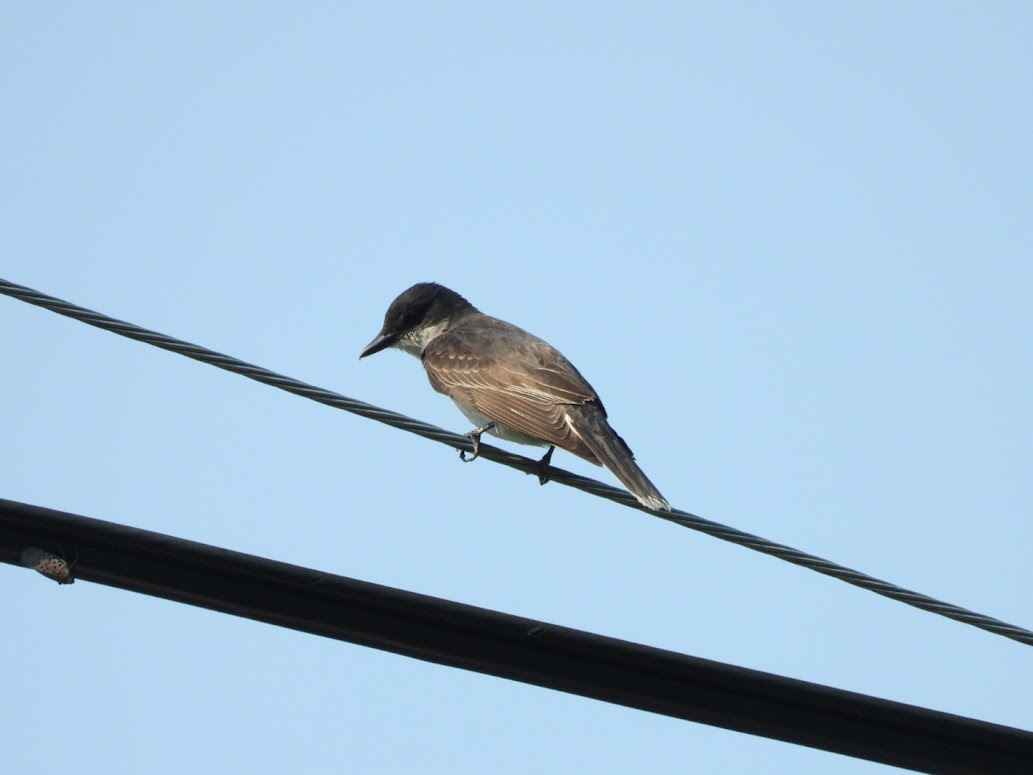
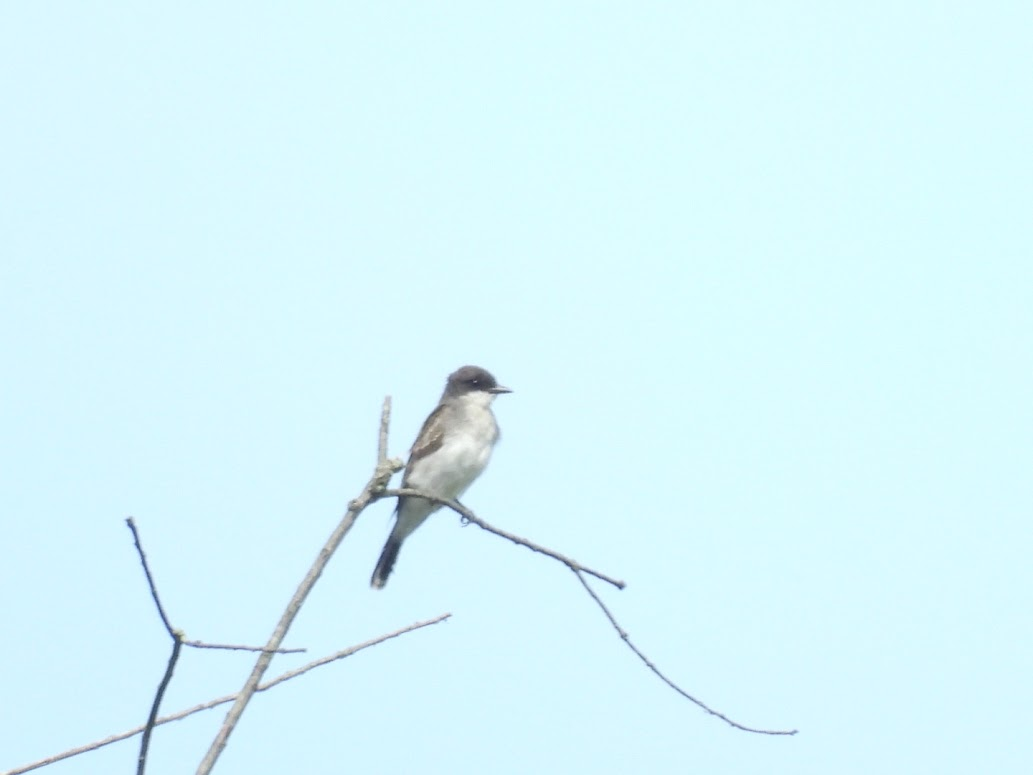
In posts covering June and July photos, I mentioned that the Eastern Kingbird is well-known for harassing hawks & crows, and we see that again on August 17, with a Kingbird harassing the juvenile American Crow.
On the 17th, before the crows arrival, we see the Kingbird sharing that same tree with a European Starling. Then, the Crow arrived and the Kingbird flew into action. Finally, with the Crow evicted, the Kingbird returned to perching in the tree.
Earlier in the month, I had also taken some photos of the Kingbird where I had better lighting conditions and a shorter distance. On August 14, we have photos of a Kingbird launching into flight from a nearby utility wire.
Apparently, there is no conservation risk for these birds, but their population has declined by about 41% during the last 60 years. They're only in the US and Canada during the breeding season. They migrate through Central America and northern South America, then spend the winter in South America. So, I guess August might be my last photos of these birds for a while.
| August 12 | August 12 |
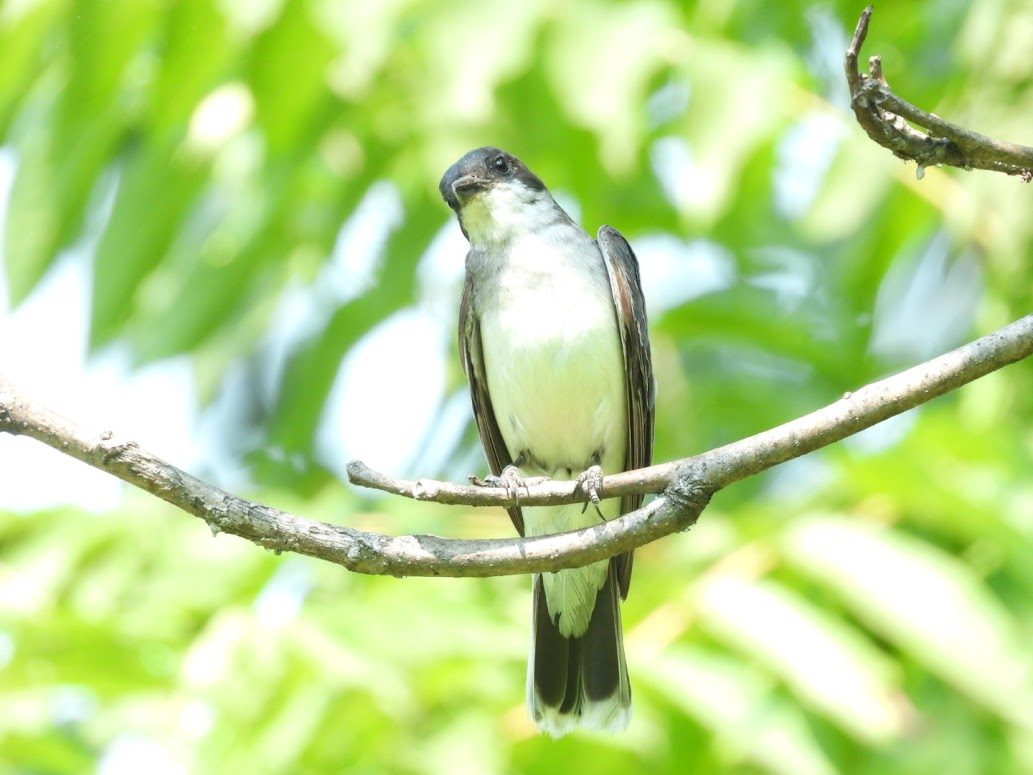 | 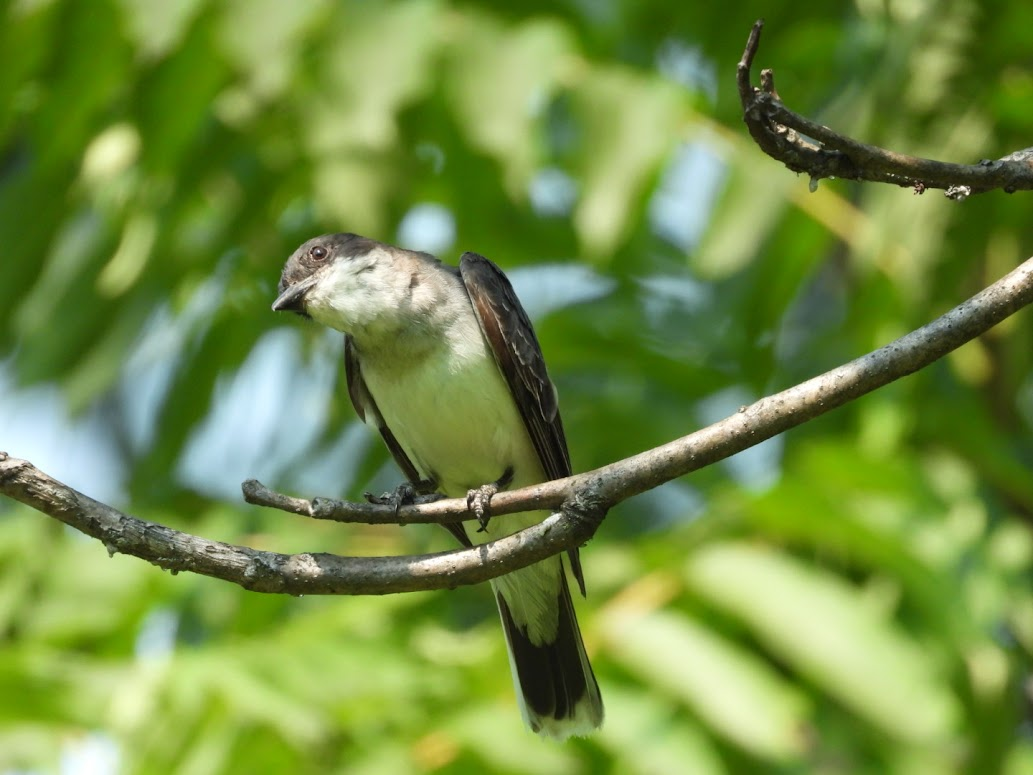 |
| ƒ/6.3, 1/160, ISO400, 288mm (1603mm equiv, 66.8X) | ƒ/6.3, 1/400, ISO400, 288mm (1603mm equiv, 66.8X) |
| August 12 | August 12 |
 |  |
| ƒ/6.3, 1/400, ISO400, 288mm (1603mm equiv, 66.8X) | ƒ/6.3, 1/400, ISO400, 288mm (1603mm equiv, 66.8X) |
| August 12 | August 14 |
 |  |
| ƒ/6.3, 1/250, ISO400, 306mm (1703mm equiv, 71.0X) | ƒ/7.1, 1/500, ISO250, 395mm (2199mm equiv, 91.6X) |
| August 14 | August 14 |
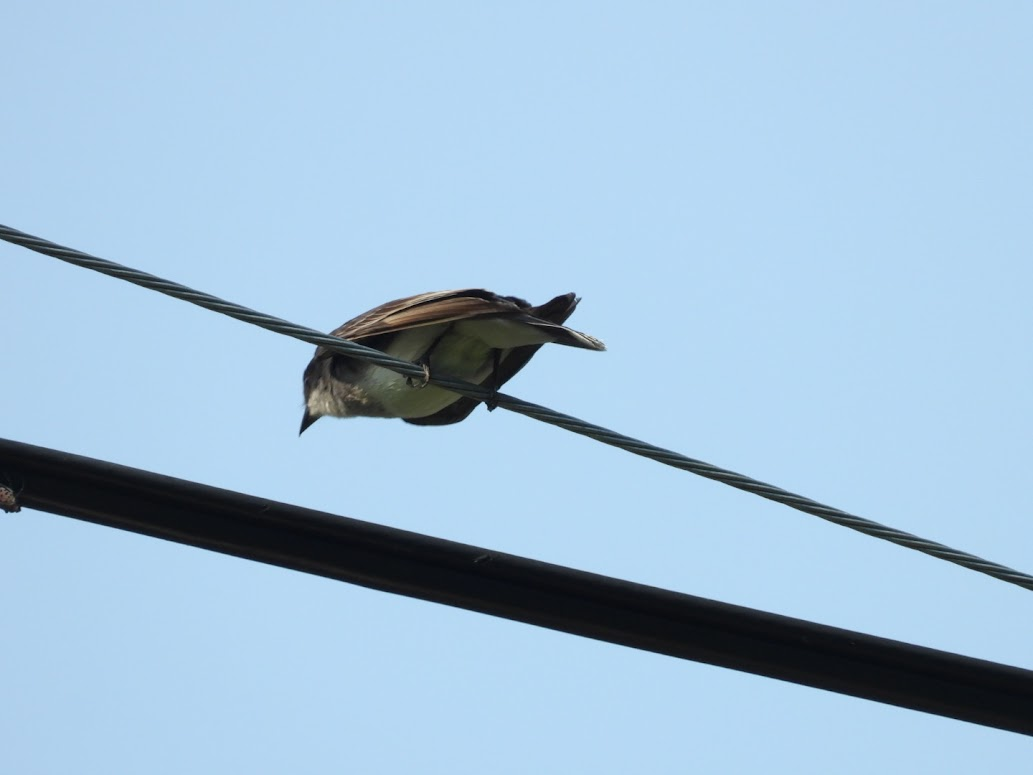 | 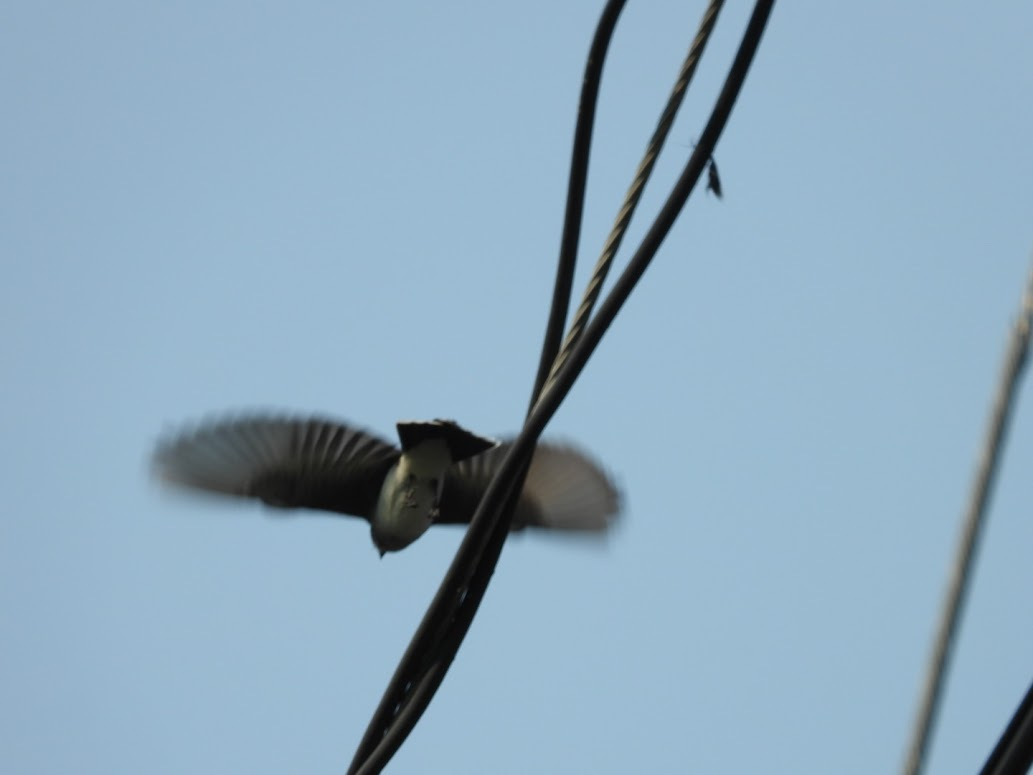 |
| ƒ/7.1, 1/500, ISO250, 395mm (2199mm equiv, 91.6X) | ƒ/5.6, 1/500, ISO100, 270mm (1503mm equiv, 62.6X) |
| August 17 | August 17 |
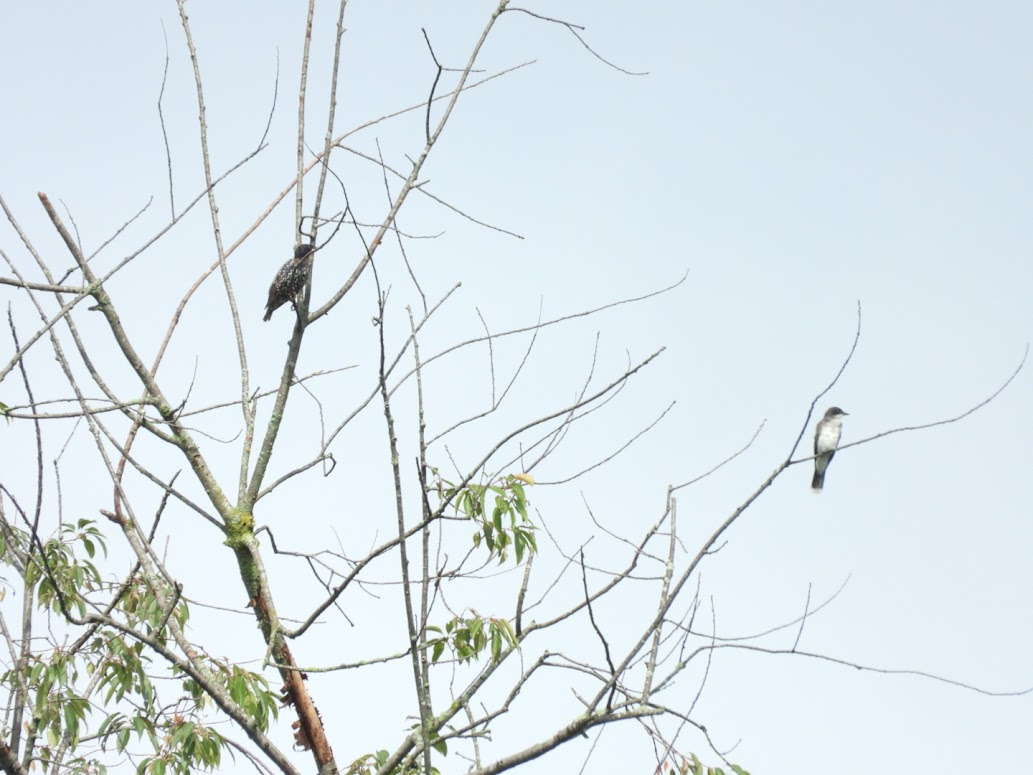 | 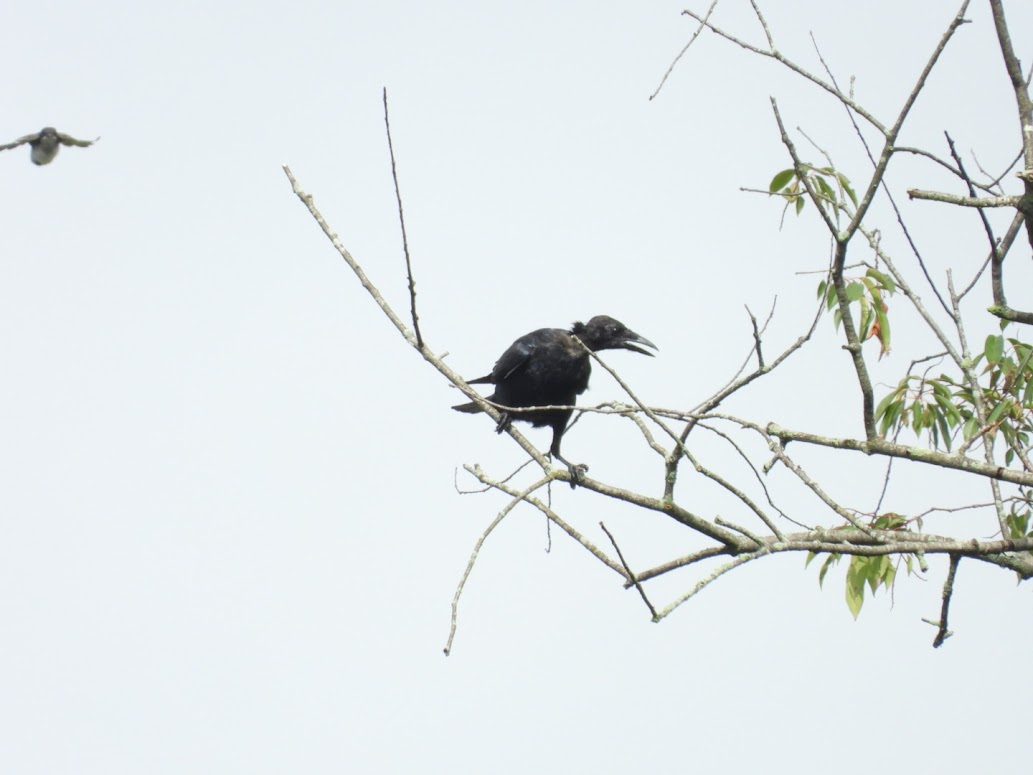 |
| ƒ/6.3, 1/500, ISO200, 359mm (1998mm equiv, 83.3X) | ƒ/8, 1/500, ISO320, 539mm (3000mm equiv, 125.0X) |
| August 17 | |
 | |
| ƒ/8, 1/500, ISO400, 1078mm (6000mm equiv, 250.0X) | |
Eastern Tiger Swallowtail
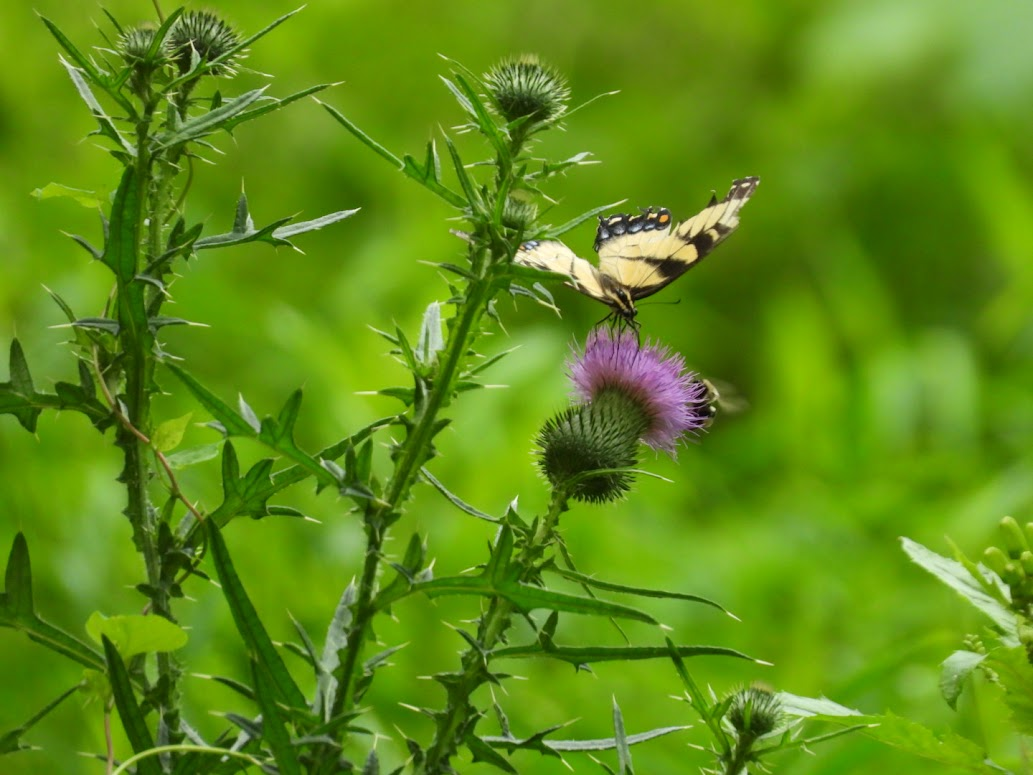
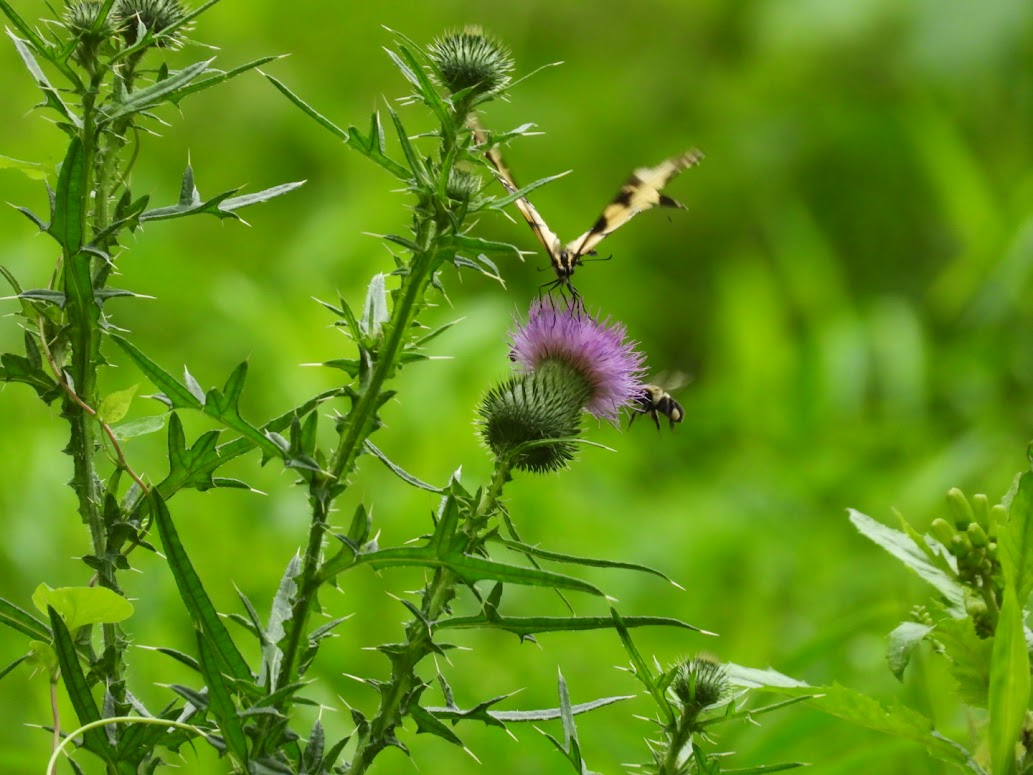
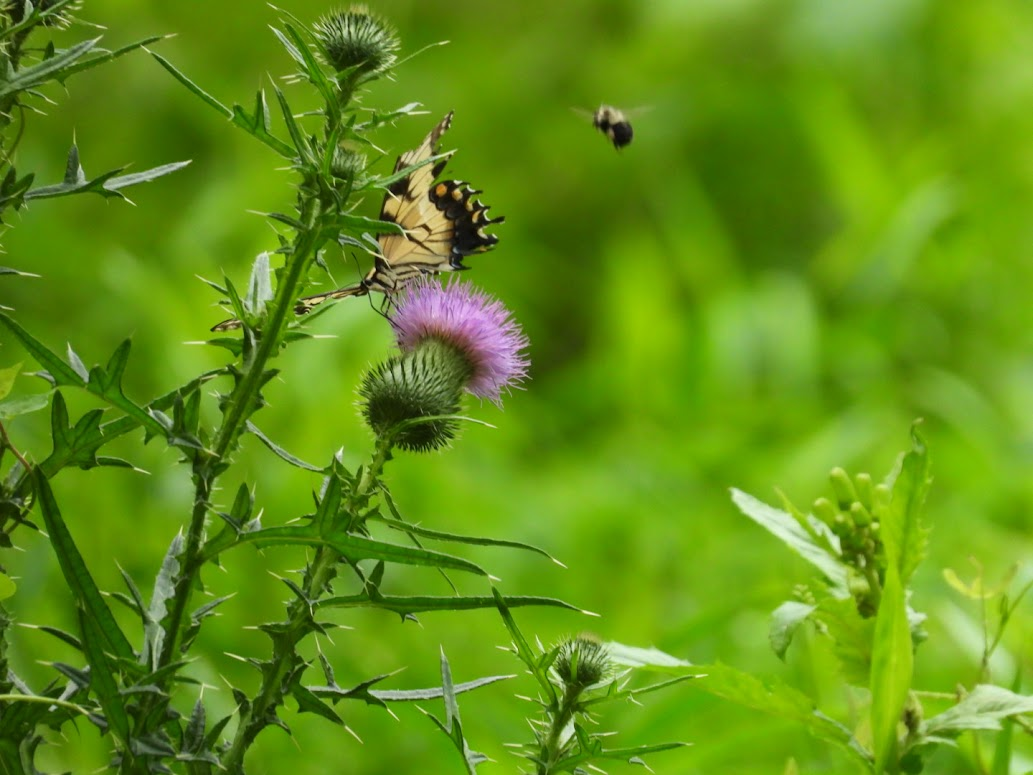
The Eastern Tiger Swallowtail is "one of the most common eastern butterflies", and its range also extends into the Midwest and south to parts of Mexico.
I didn't know that states have "state butterflies", but apparently they do, and the Eastern Tiger Swallowtail is the state butterfly of "Alabama, Delaware, Georgia, and South Carolina". These photos were taken, maybe, 10-20 miles from the Delaware border.
And of course, now I need to know what Pennsylvania's state butterfly is? Answer: There is none, but the state insect is the firefly (aka "lightning bug").
Also in these photos, the butterfly is pollinating a Bull Thistle flower, and keeping company with a Common Eastern Bumblebee.
| August 10 | August 10 |
 |  |
| ƒ/6.3, 1/200, ISO400, 359mm (1998mm equiv, 83.3X) | ƒ/6.3, 1/200, ISO400, 359mm (1998mm equiv, 83.3X) |
| August 10 | August 20 |
 |  |
| ƒ/6.3, 1/200, ISO400, 359mm (1998mm equiv, 83.3X) | ƒ/6.3, 1/400, ISO400, 306mm (1703mm equiv, 71.0X) |
| August 29 | |
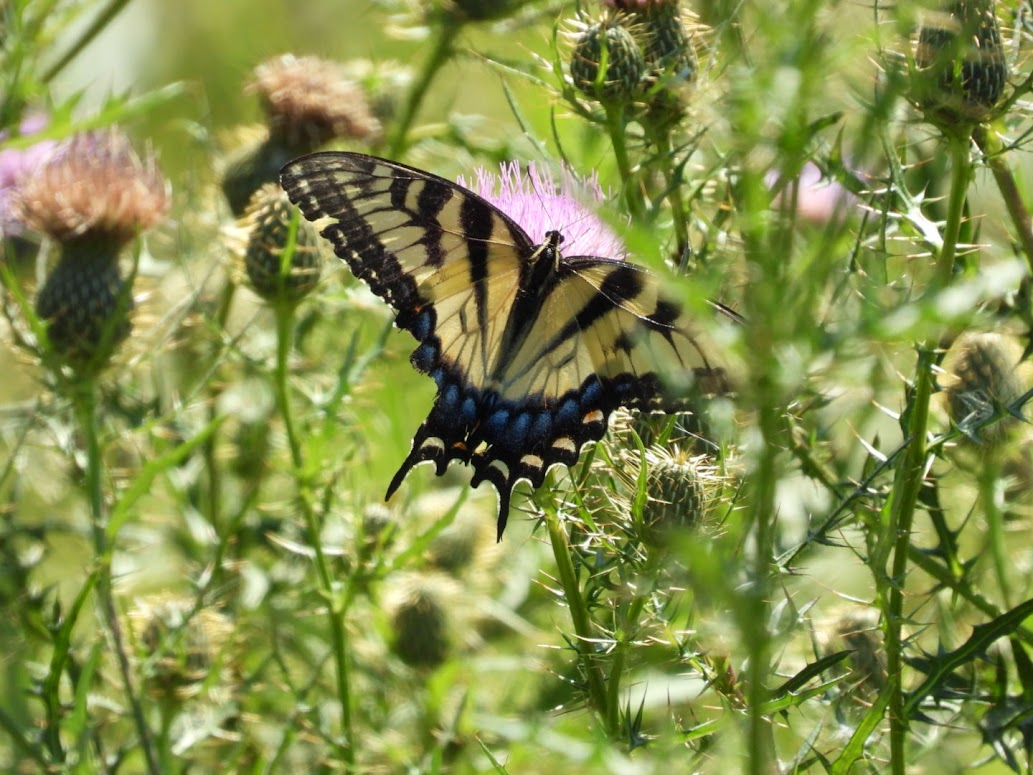 | |
| ƒ/7.1, 1/500, ISO320, 432mm (2404mm equiv, 100.2X). At the Gordon Natural Area | |
European Starling
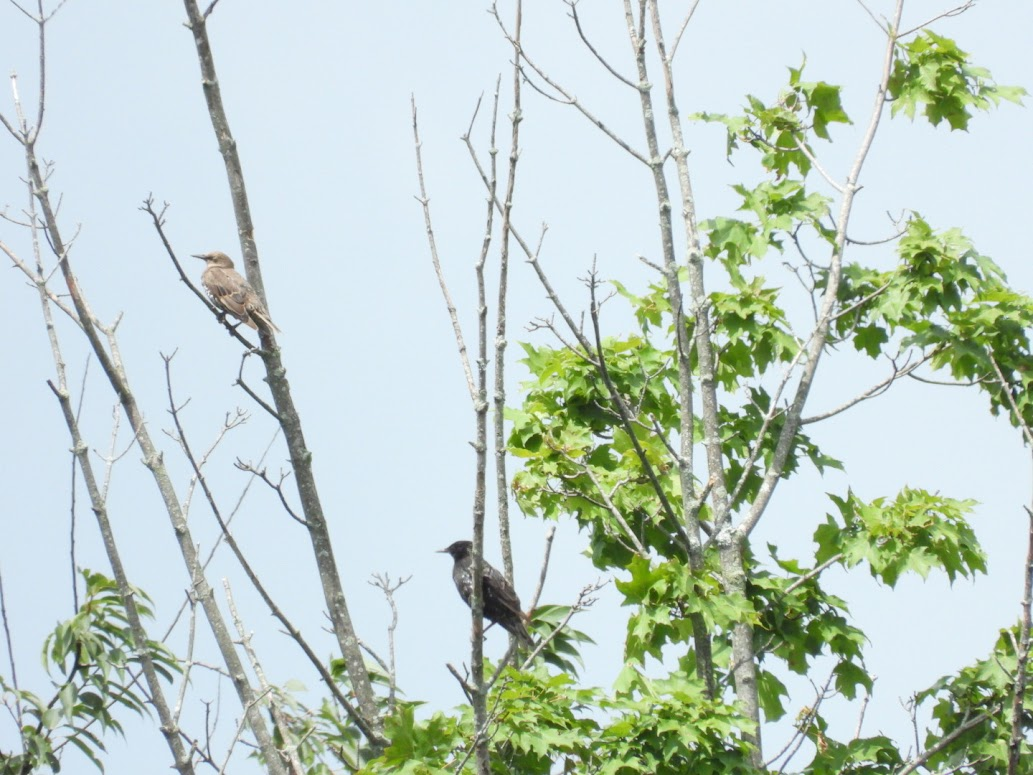
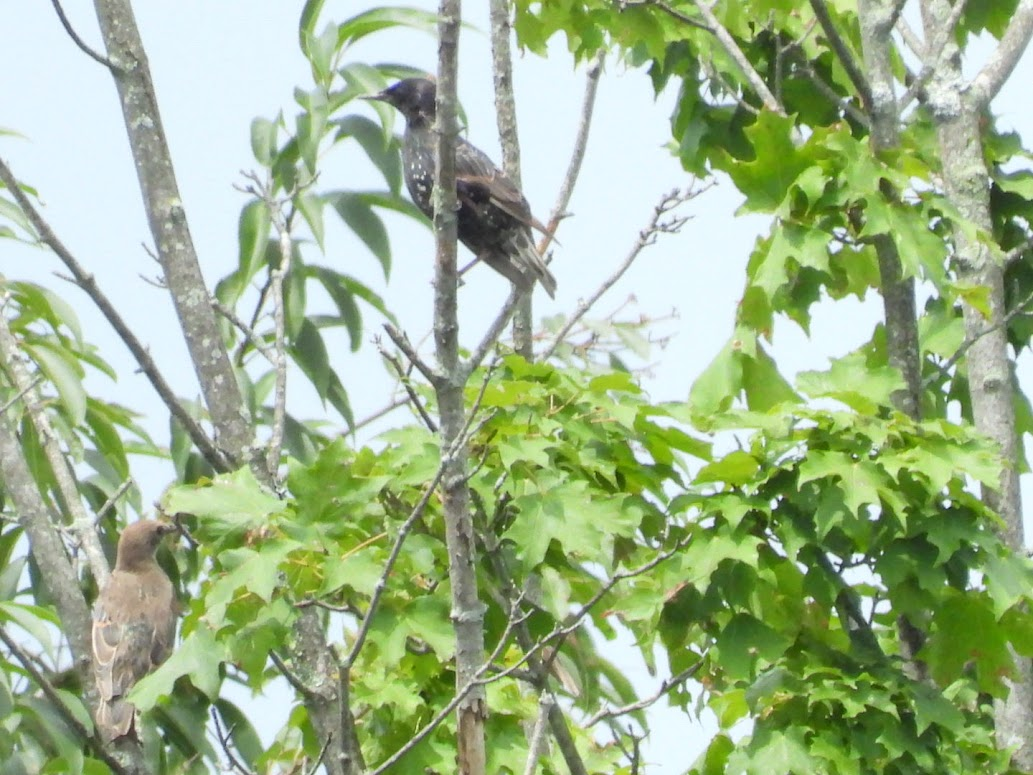
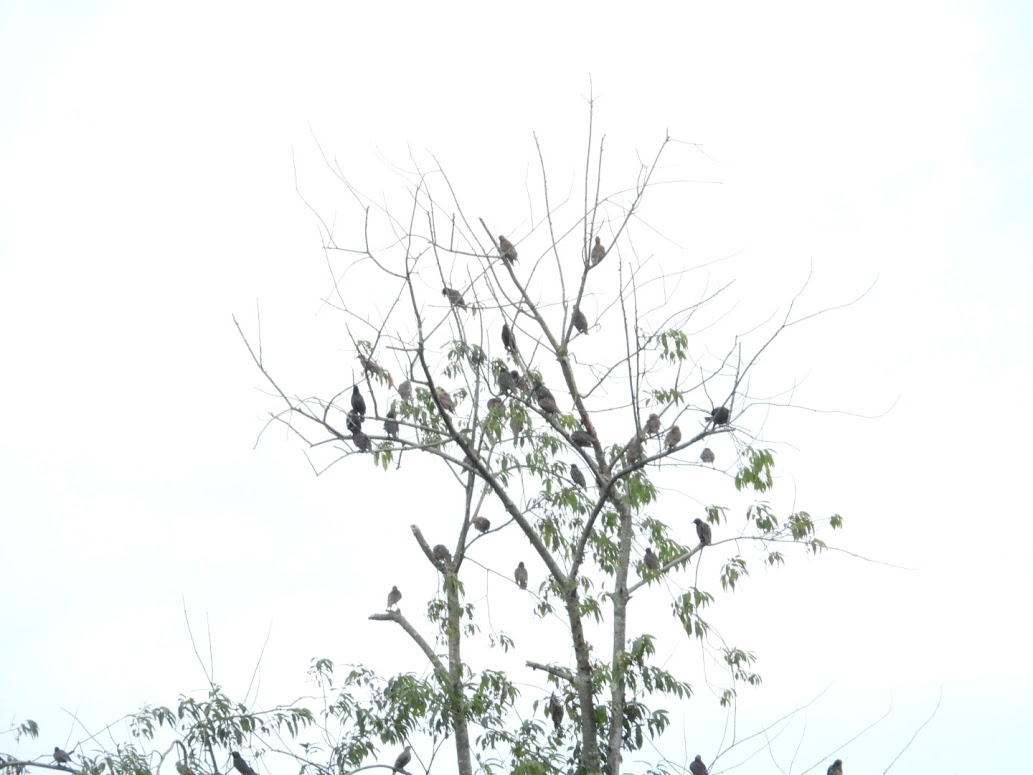
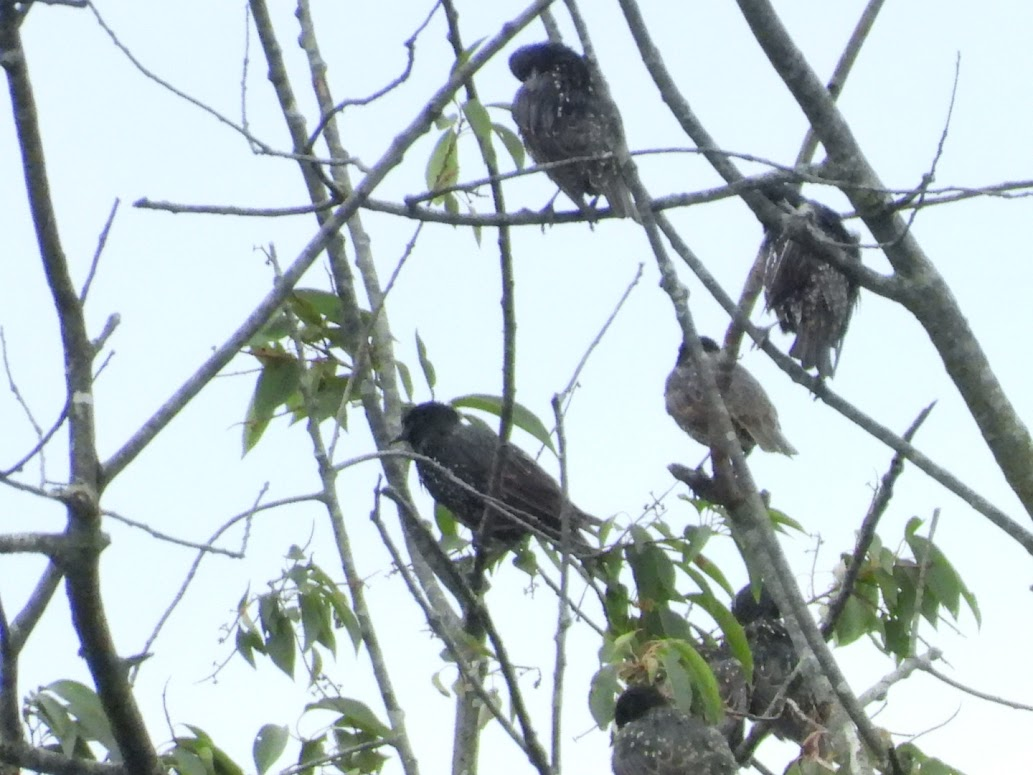
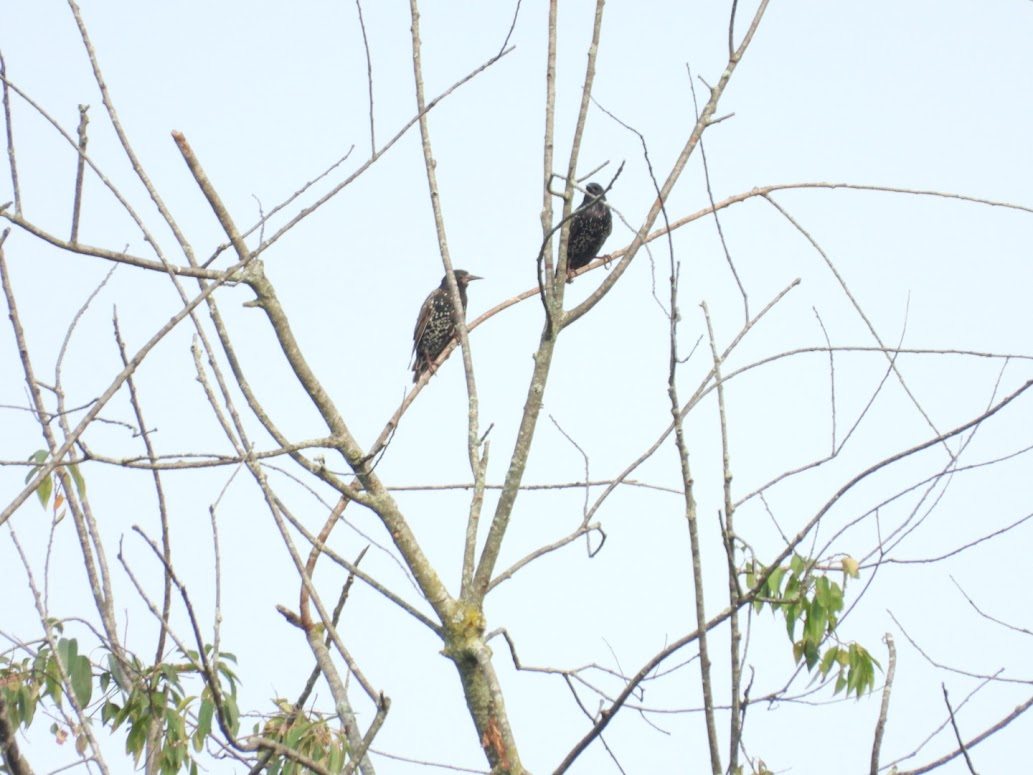
I think I mentioned in last months posts that I was seeing European Starlings in this tree almost daily for a stretch of time in July and August. These birds are an invasive species that was intentionally introduced to New York's Central Park during the 1800s and spread throughout all of the continental US and into Mexico. As with the Kingbirds, they have no conservation concerns, but the population has declined by about 50% since the 1960s.
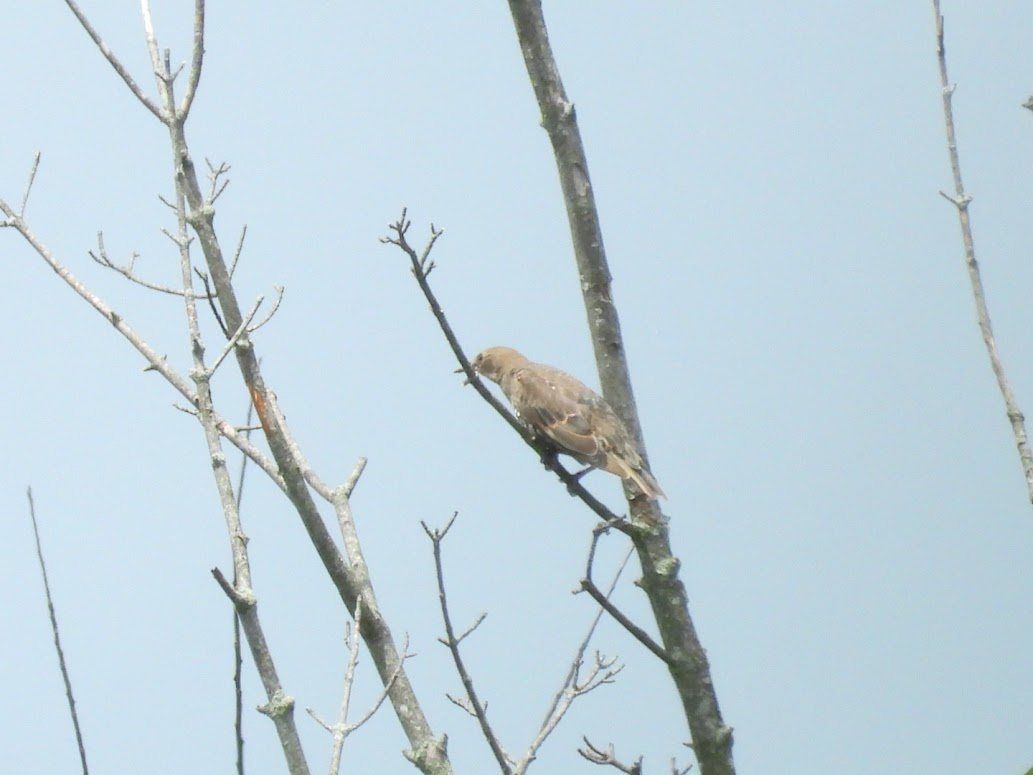
In the spring, I had seen a couple isolated European Starlings, but in July and August I started seeing them gathering more regularly and in larger numbers. August 3 was the first time I saw a juvenile.
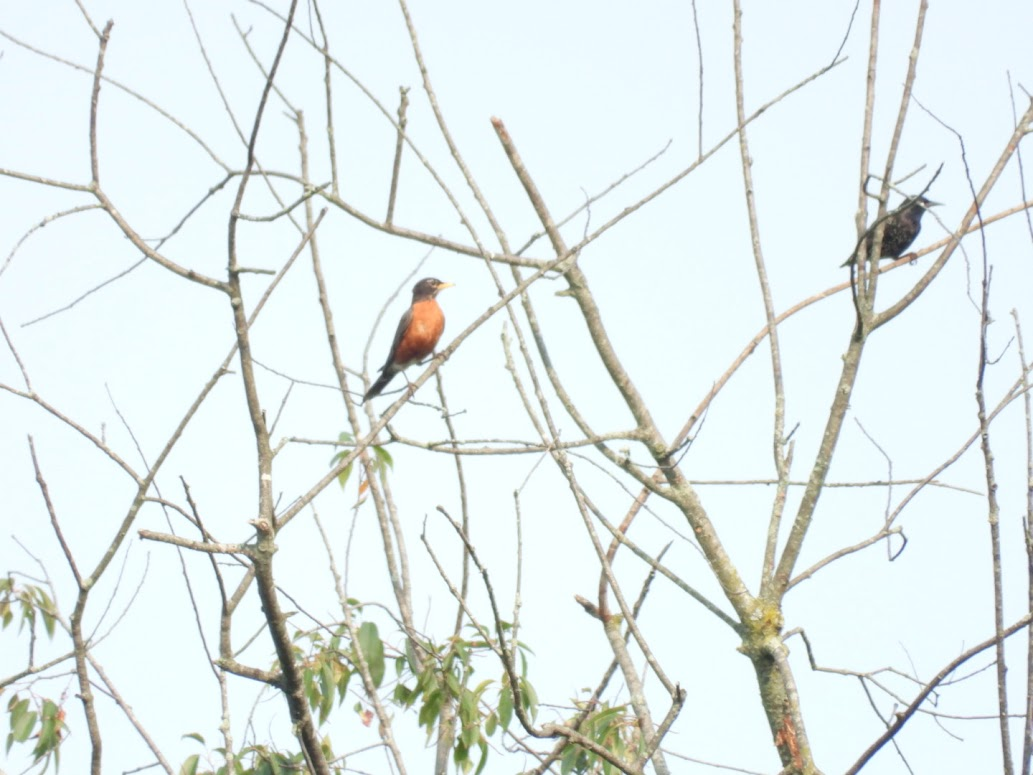
In one of the August 14 shots, we see a European Starling sharing that hard-to-shoot tree with an American Robin.
| August 3 / Adult & Juvenile | August 3 / Juvenile |
 |  |
| ƒ/8, 1/800, ISO640, 539mm (3000mm equiv, 125.0X) | ƒ/8, 1/800, ISO500, 1078mm (6000mm equiv, 250.0X) |
| August 3 / Adult & Juvenile | August 3 |
 |  |
| ƒ/8, 1/800, ISO900, 1078mm (6000mm equiv, 250.0X) | ƒ/5.6, 1/1600, ISO900, 144mm (801mm equiv, 33.4X) |
| August 3 | August 14 |
 |  |
| ƒ/8, 1/1600, ISO1600, 1078mm (6000mm equiv, 250.0X) | ƒ/8, 1/250, ISO400, 539mm (3000mm equiv, 125.0X) |
| August 14 | |
 | |
| ƒ/8, 1/250, ISO400, 539mm (3000mm equiv, 125.0X) | |
American Goldfinch
By the middle of August, Merlin had been telling me for weeks that it heard an American Goldfinch during many of my walks in the yard, but I had been unable to find any.
With a population above 40 million, these are common birds that range across most of the continental US into parts of Mexico and southern Canada. The year-round range covers the northern and central US states (not counting Alaska). They expand into Canada during the summers and into the southern US and Mexico during the winters.
Despite being common and widespread, they are apparently good at staying hidden. I was starting to think that Merlin was mistaken, but one day I finally saw one. It flew away before I could get a photo, though.
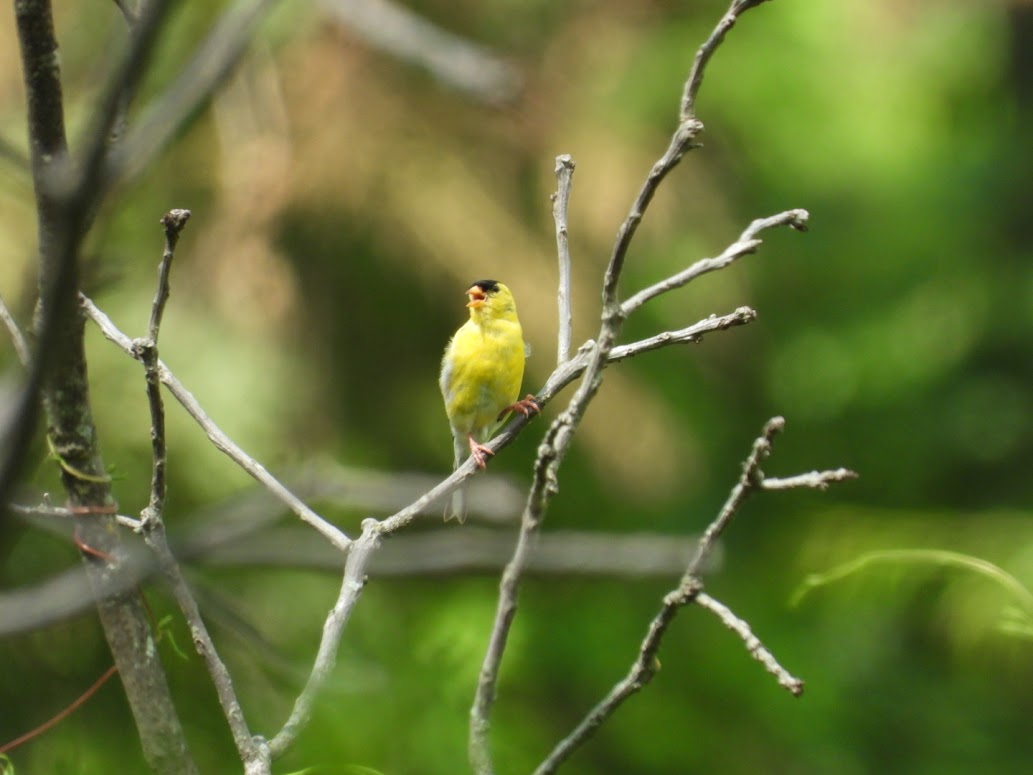
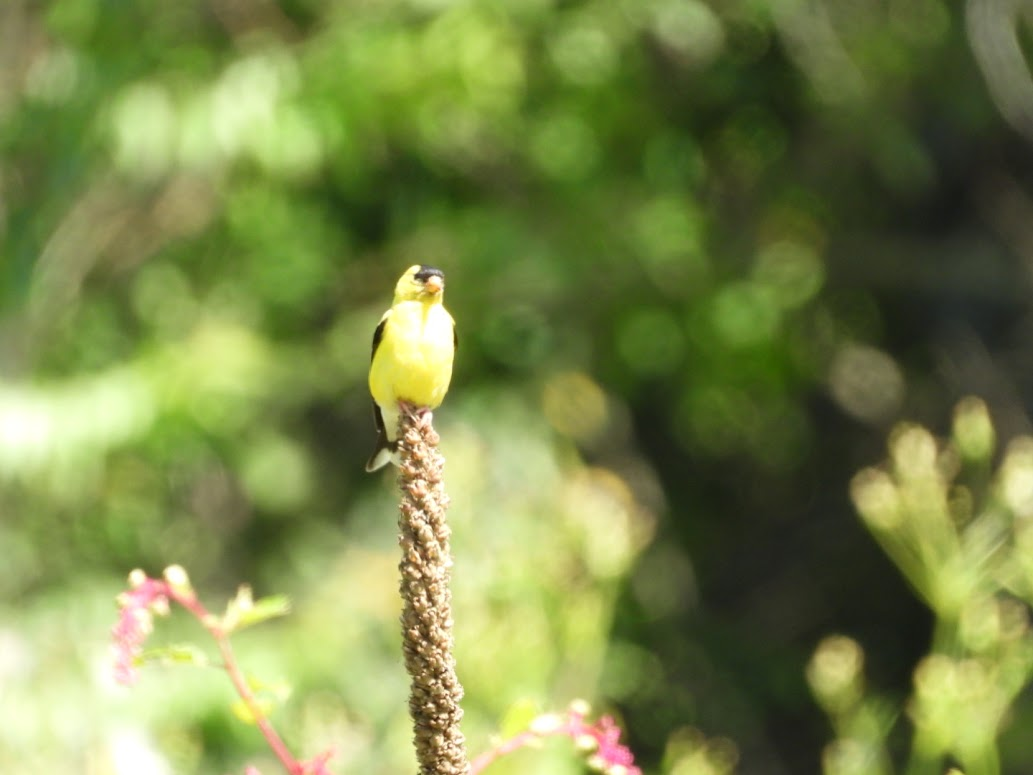
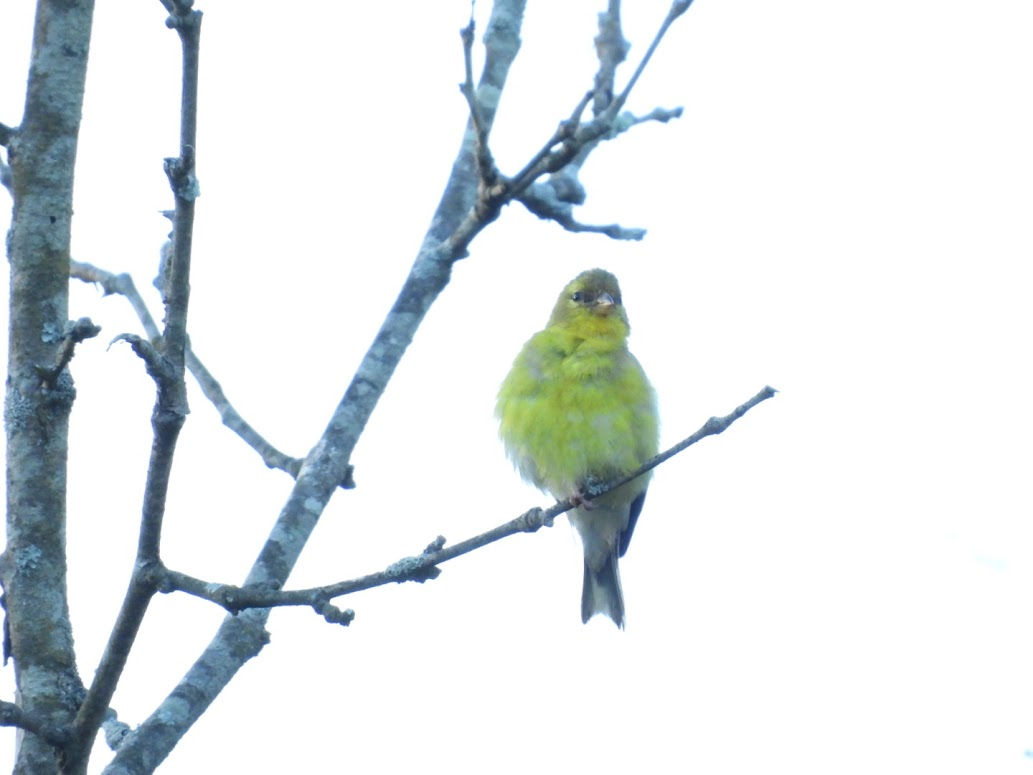
Finally, on August 23 I managed to get my one and only photo burst of an adult American Goldfinch from my back yard. Then, on August 29, I visited the Gordon Natural Area and photographed another adult. I also visited the Stroud Preserve, and ran into a juvenile just as the Sun was going down.
| August 23 / Original | August 23 / Cropped |
 | |
| ƒ/8, 1/250, ISO400, 539mm (3000mm equiv, 125.0X) | ƒ/8, 1/250, ISO400, 539mm (3000mm equiv, 125.0X) |
| August 29 | August 29 |
 |  |
| ƒ/6.3, 1/250, ISO400, 306mm (1703mm equiv, 71.0X). At the Gordon Natural Area | ƒ/7.1, 1/200, ISO800, 432mm (2404mm equiv, 100.2X). At the Stroud Preserve |
| August 29 | |
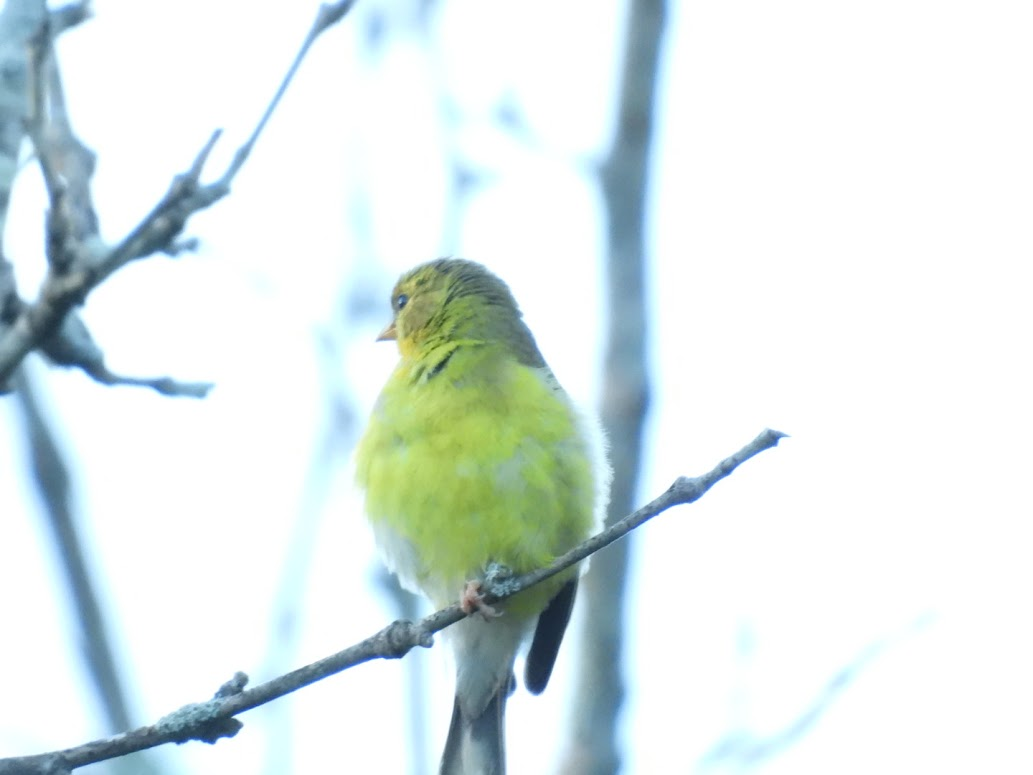 | |
| ƒ/8, 1/200, ISO1600, 539mm (3000mm equiv, 125.0X). At the Stroud Preserve | |
Eastern Wood-Pewee
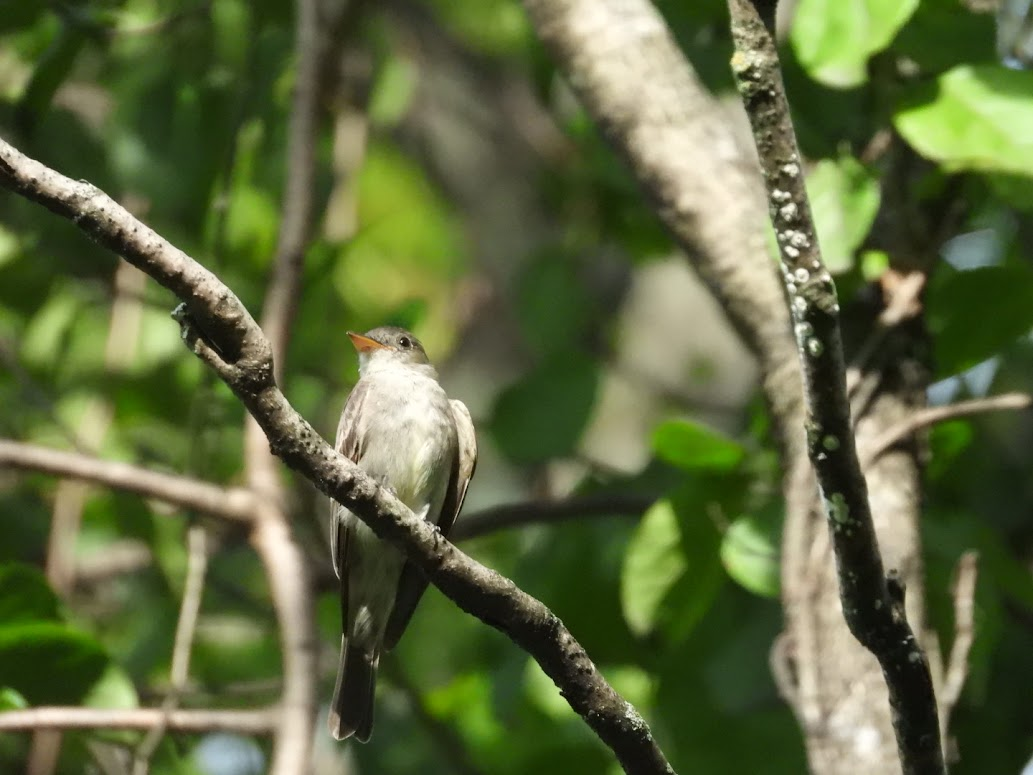
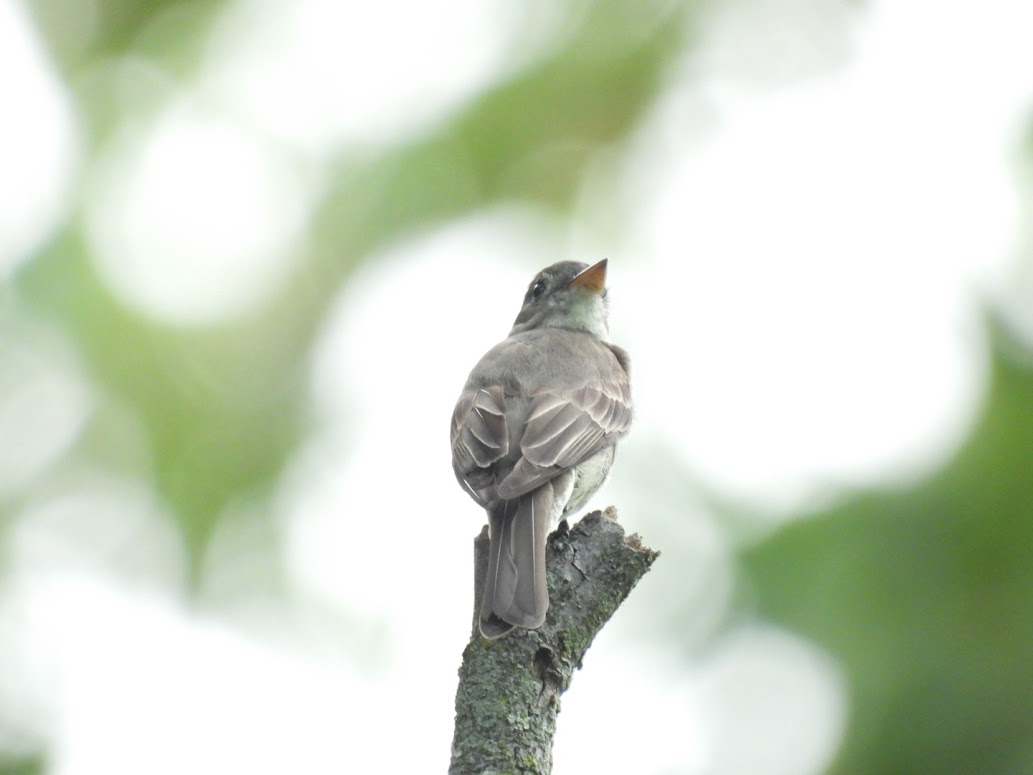
The Eastern Wood-Pewee is another animal that I saw in August for the first time, and that I had never even heard of before I started this photography hobby. It has a population of about 6.5 million, and its range map looks very similar to the Eastern Kingbird's. It has a summer presence in the continental US, migrates through Mexico and Central America, and winters in South America. I guess these August photos might be my last for the year.
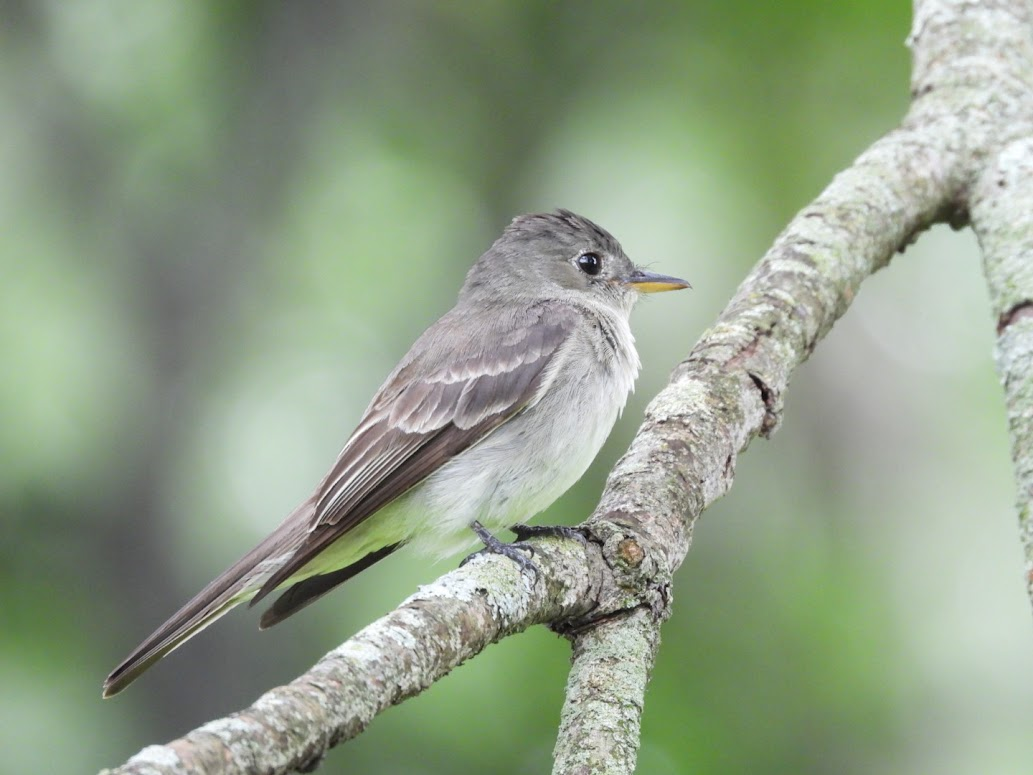
The first two times I encountered one, the bird was sitting at the top of a tall tree, so I was only able to get high-zoom shots with extreme backlighting. Later, I was able to get some photos with it closer to the ground and without the glaring background.
In one encounter with the bird, it spent about 10 or 20 minutes flying back and forth between perches on two trees that are about 30 feet apart. This included short flights where it would take off from the branch, loop around, and land right back where it started from.
In a later encounter, I discovered the bird because it left a branch as I was walking past, flew right in front of me, and then flew back to its branch again. At first I thought that this was some sort of "mobbing" behavior directed at me, as a perceived threat, but I watched it for a while and it kept launching itself off the branch, flying in different directions and then landing back on the branch again.
In later discussions with Meta AI, I concluded that this behavior was because it was chasing insects (its main diet).
One note about the Eastern Wood-Pewee and the American Crow on iNaturalist is that observations of these birds seem less likely to get matching identifications from the community than observations of most other species that I've encountered. I suppose that's because it's really hard to visually distinguish between these species and others like the Eastern Phoebe or the Fish Crow. From what I've learned so far, it seems like the main distinguishing feature for the Eastern Wood-Pewee is the yellow beak, but if the lighting or the angle is wrong, that will be hard to see.
| August 16 | August 17 |
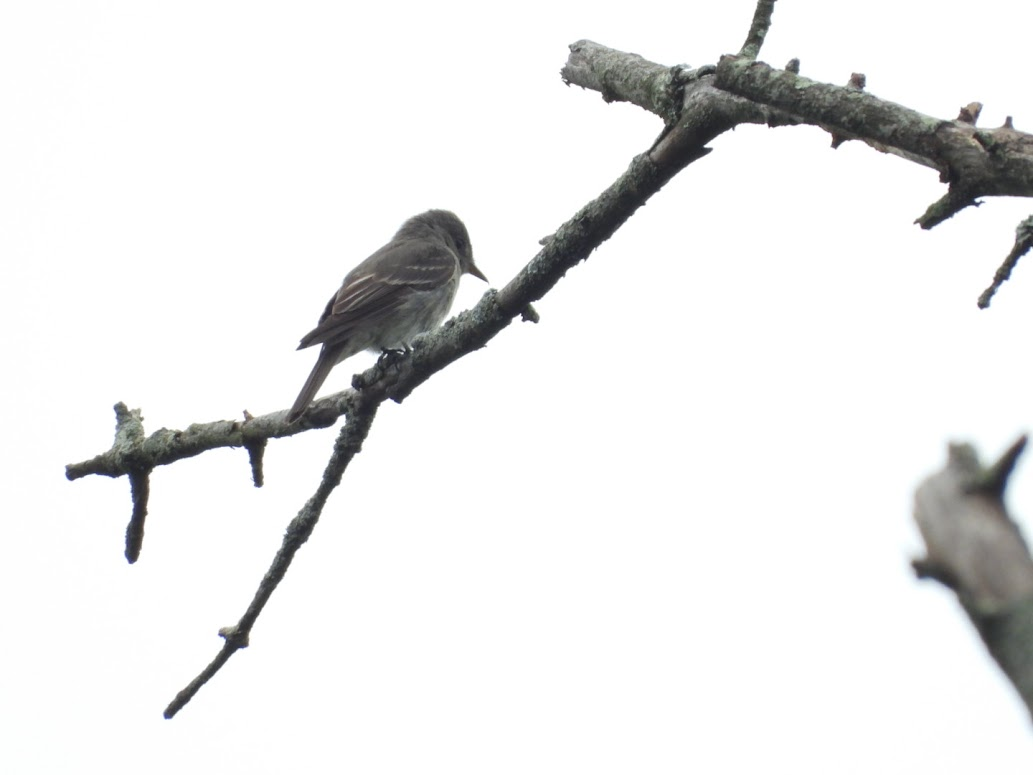 | 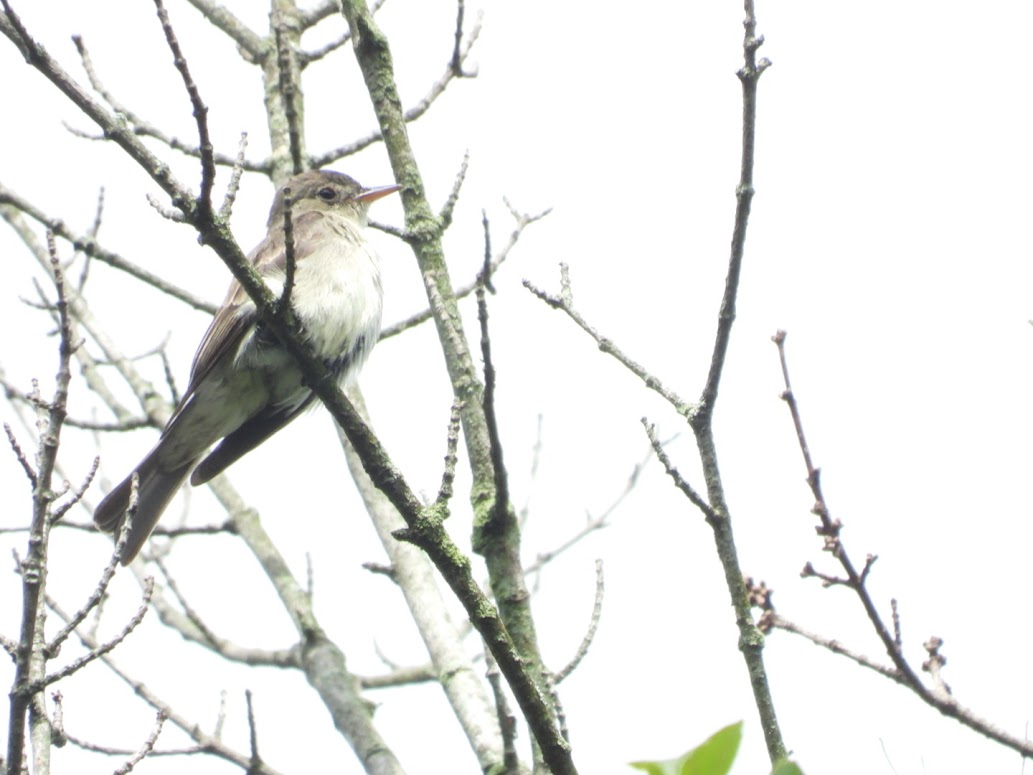 |
| ƒ/8, 1/200, ISO400, 539mm (3000mm equiv, 125.0X) | ƒ/8, 1/320, ISO400, 539mm (3000mm equiv, 125.0X) |
| August 17 | August 17 |
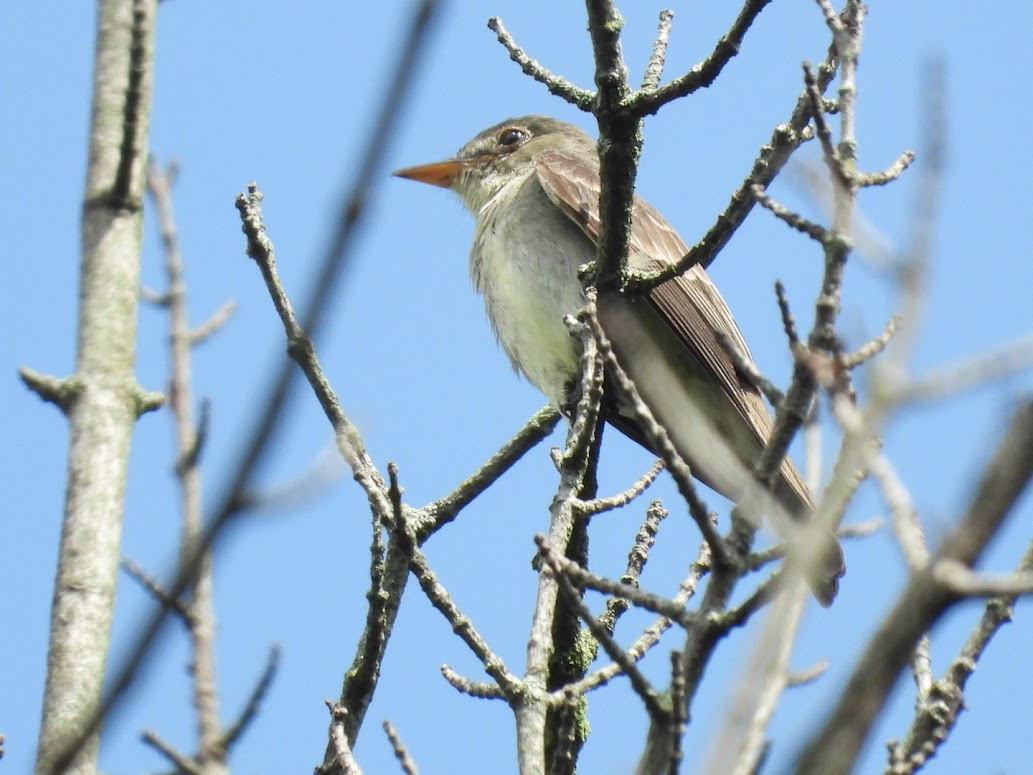 |  |
| ƒ/8, 1/500, ISO360, 862.4mm (4800mm equiv, 200.0X) | ƒ/5.6, 1/1250, ISO1600, 270mm (1503mm equiv, 62.6X) |
| August 17 | August 22 |
 |  |
| ƒ/8, 1/125, ISO800, 539mm (3000mm equiv, 125.0X) | ƒ/5.6, 1/100, ISO800, 252mm (1403mm equiv, 58.5X) |
Baltimore Oriole
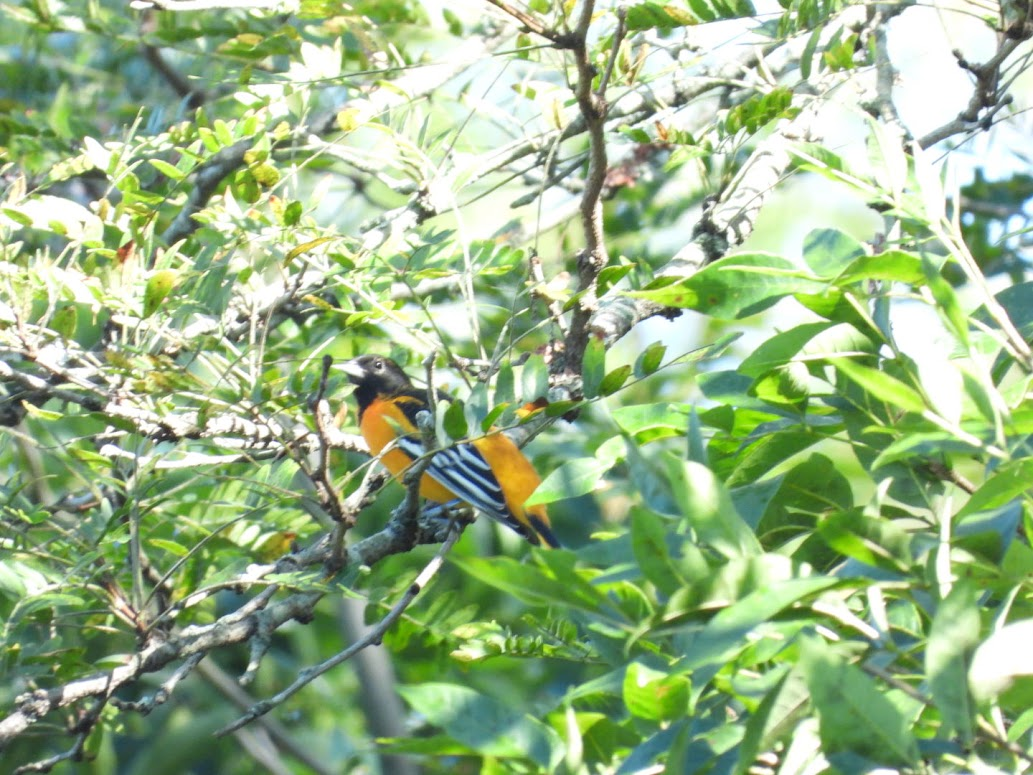
The Baltimore Oriole is a summer bird in Pennsylvania. It's breeding season range spans across the northern parts of the continental US and southern parts of Canada. In the winter, it migrates through the southern US (except Florida), Mexico, and Central America, and it winters in Florida, South America, and the Caribbean islands.
Like the American Goldfinch, Merlin reports hearing these birds quite frequently, but I've only rarely been able to find them and photograph them.
| August 25 | August 25 |
 |  |
| ƒ/8, 1/125, ISO720, 539mm (3000mm equiv, 125.0X) | ƒ/8, 1/125, ISO720, 539mm (3000mm equiv, 125.0X) |
Canada Goose
Definitely one of North America's most successful conservation stories, the Canada Goose is back from the edge of extinction in the early-mid 20th century to a population of about 7 million. It has a year round presence in Pennsylvania and the mid-latitude states in the US. It winters in the southern US, and it's one of the few birds I've seen that migrates as far north as Alaska.
During migrations, these birds are commonly seen (and heard) flying far overhead in V-shaped formations.
Despite being a common species, I have never seen them from my own yard before (or since). This bird just flew from somewhere behind me, passed not far above my shoulder, and disappeared quickly to the north. With no time to prepare the camera, I was lucky to even get one shot with (nearly) the whole bird in the frame.
I see now that there's some other little bird in the distance, too, but I don't remember seeing it at the time, and I have no idea what type it might be. Maybe an Eastern Kingbird getting ready to give chase?
| August 17 | |
 | |
| ƒ/5.6, 1/1250, ISO220, 252mm (1403mm equiv, 58.5X) | |
Chipping Sparrow
Yet another first encounter that I hadn't heard of before. The Chipping Sparrow's range also extends as far north as Alaska, throughout the US and Canada, and as far south as Central America.
This is another species splashing around in the same air-conditioner condensation puddle where we saw the Song Sparrow back in July.
| August 4 | August 4 |
 |  |
| ƒ/7.1, 1/125, ISO720, 467mm (2599mm equiv, 108.3X). Lighting adjusted in Google Photos | ƒ/7.1, 1/125, ISO720, 467mm (2599mm equiv, 108.3X). Lighting adjusted in Google Photos |
Spicebush Swallowtail
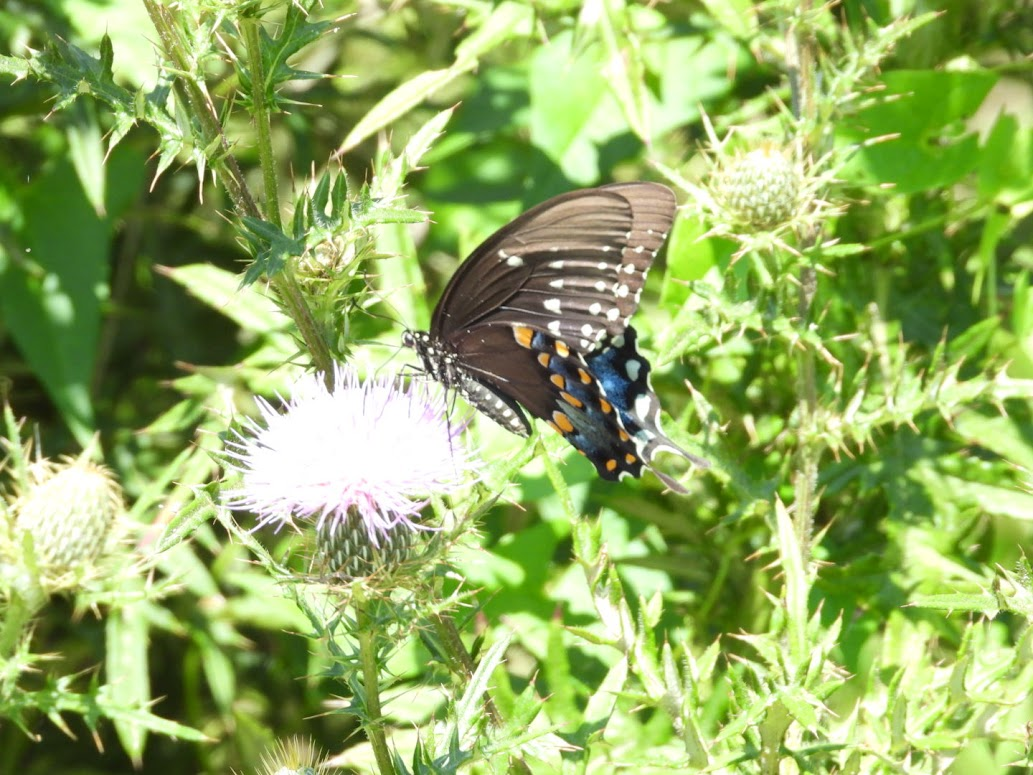
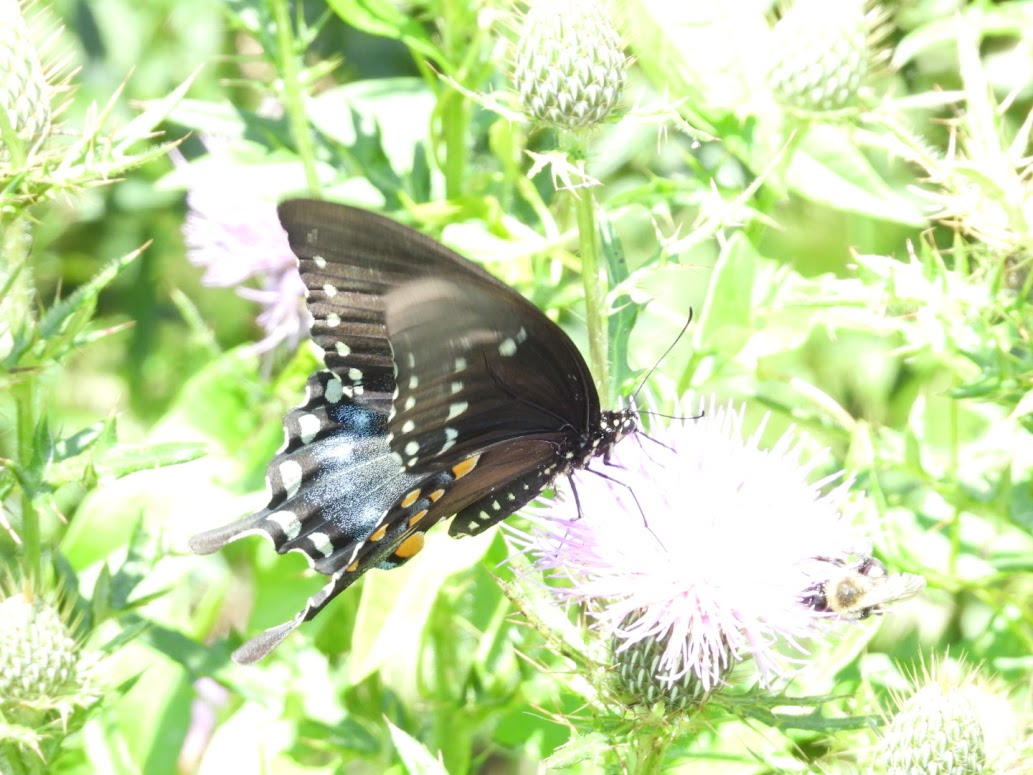
The Spicebush Swallowtail can be found through most of the central and eastern continental US. The southern range is bounded between Texas and Florida, and the northern edge extends north to the Great Lakes region and New England.
As with the Eastern Tiger Swallowtail, the butterfly is pollinating a Bull Thistle, and a Common Eastern Bumblebee can be seen in the second picture at the lower right.
| August 29 | August 29 |
 |  |
| ƒ/5.6, 1/320, ISO400, 180mm (1002mm equiv, 41.8X). At the Gordon Natural Area | ƒ/6.3, 1/200, ISO400, 288mm (1603mm equiv, 66.8X). At the Gordon Natural Area |
Wrap-up
One of the highlights from these encounters was the inclusion of six first-encounters (for me), including four birds and two butterflies. Another highlight was competition for a tree branch between an Eastern Kingbird and a young American Crow, where the Kingbird got the upper hand. A third highlight was the presence of juvenile Goldfinches, Crows, and European Starlings. Finally, I made my first visits to the Gordon Natural Area and the Stroud Preserve. Two wildlife conservation sites that are within about 10 or 15 minutes of my home.
Thank you for taking the time to visit this article. I hope you enjoyed some of the writing and photography.
Appendix
A full index of my posts about wildlife photography is here: wildlife photography index
Notes on the use of AI
As previously noted, I use AI for the following purposes in creating this series:
- Wildlife identification (Merlin, iNaturalist, Meta AI, Claude, Gemini)
- Formatting iNaturalist observations, photographs, dates, and camera settings into markdown tables (Claude)
- Proof-reading and editorial advice (Claude, Gemini, Meta AI, ChatGPT, Grok)
Thank you for your attention!
Unless otherwise specified in the text, all photos above were taken by me with a (handheld) Nikon P1000 camera. I'm sharing them under the CC BY 4.0 license (share & adapt freely with attribution to the original source).
Mirá, la foto del cuervo de agosto 28 que describís como juvenil, ¿la capturaste en pleno vuelo o con la cámara en mano? Pensá que la diferencia de plumaje en los juveniles es clave, la vida misma. ¿Te sorprendió la cantidad de cantos de Baltimore Oriole que Merlin detectó antes que tus ojos?
0.00 SBD,
0.13 STEEM,
0.13 SP
I saw it flying when it landed on the tree branch, and again when it flew away, but I didn't manage to get a photo either time.
I agree. It's amazing how much the juvenile birds differ from the adults. I was unaware of this before this year.
Yeah, it's frustrating. It's not just the Baltimore Oriole and the Goldfinch. Merlin "hears" lots of birds that I have never seen.
0.00 SBD,
0.18 STEEM,
0.18 SP