How to Display Social Proof That Actually Builds Trust
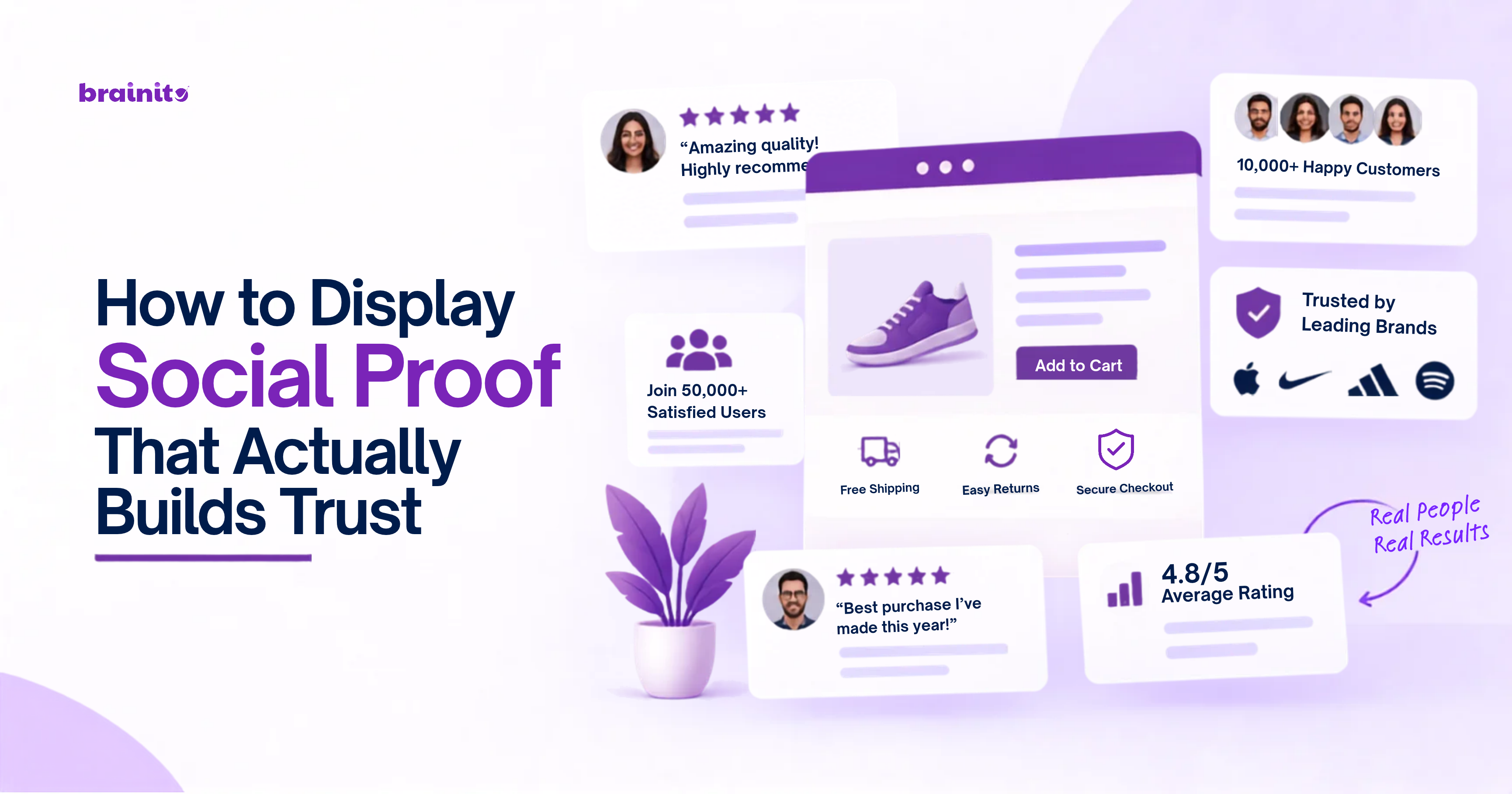
Social proof is arguably one of the best trust signals one can implement on a website. However, merely throwing testimonials, a five-star rating, or customer logos will not convince people that they can trust your brand. After all, bad social proof can be counterintuitive.
The point is not to add as much proof as possible but rather to build a set of relevant trust signals that can help website visitors make a decision that requires some context.
Here are some tips on how to make social proof trustworthy and impactful.
- Choose the Proof According to the Decision the Visitor Makes
Depending on the customer, one should select the most compelling proof. Some visitors may want to know if other people use the product or service, while those who are closer to making a decision may care about identifying with similar companies or people who have had positive results.
Firstly, think about what a potential customer may be considering at a certain point. Then, compile the necessary trust signals that would alleviate the concerns of these people.
- Opt for Specific Rather Than Generic Testimonials
“Great product!” is a pretty vague testimonial, as it does not specify what exactly is great about it. The best trust signals are those that describe a specific scenario, the problem it solved, and the actions taken.
It is also good to ask for permission to use the customer’s name, profession, company, or any other identifying signs with the testimonials. Besides, one can always use statistics, such as the percentage increase or time saved, for a more objective approach.
- Use Similar Customers as Referral Points
It is normal for people to compare themselves with others. In that sense, using recognizable companies or people as proof may do more harm than good. While a testimonial from a well-known brand may seem like a good idea, it is better to use similar customers as the trust signals.
Similar customers can be from the same industry or field of work or represent companies of a comparable size. In any case, visitors will relate to testimonials from people or businesses they consider similar to themselves.
- Display the Proof Near Relevant Sections
While having a separate page with testimonials, reviews, and similar customers’ experiences is fine, it is better to place these trust signals near relevant sections in which the customer may need them.
For example, one can add quotes above the pricing plan or near the key features, depending on the product or service. In any case, testimonials should be used to prove claims and not act as a standalone element.
- Add Context to Numbers
Statistics are an excellent way of showcasing achievements that a company has made. However, simply writing “10,000+” satisfied customers or above-average ratings will make little difference to the audience. Instead, add some context to these numbers, as well as clarify the conditions if necessary.
The same goes for testimonials, as it is important to mention if the rating is based on recent visitors’ opinions or if these customers were not referred to the page. In short, all the necessary proof should be transparent about its specifics and requirements.
- Add a Combination of Varying Social Proof Elements
While testimonials, reviews, and similar customer logos are the most common trust signals, one can utilize other elements, depending on the company and its offerings.
For instance, businesses can use media mentions, user-generated content, endorsements, case studies, and other relevant elements. It is better to use a combination of different social proof elements since each piece will target a specific concern.
However, not every aspect of the website must have a trust signal. Instead, make sure that each element answers a critical question about the brand. At the same time, it is important not to overload the website with logos, testimonials, or anything else.
- Make the Origin of the Proof Easily Accessible
Finally, it is important to make the origin of testimonials easily accessible. In other words, make sure that each element is legit and transparent. For instance, provide links to the full case study or research if the testimonials mention specific events.
It is also good to indicate the source of the review, the customer’s position, and other identifying details. By doing so, the company shows that it does not fake any information. Most importantly, one should never make up testimonials, reviews, or any other statistics.
- Keep the Social Proof Fresh and Up-to-Date
Finally, one should keep the social proof fresh and up-to-date. As far as testimonials are concerned, it is better to keep the latest ones and remove the old ones. After all, if everyone keeps mentioning the same product or service that the company no longer offers, it may seem like the business is outdated.
In general, reviewing the social proof from time to time is necessary to ensure that all the testimonials, reviews, and logos are relevant. Doing so allows the company to maintain a credible image and keep the trust of the audience.
Looking over and interpreting testimonials, reviews, and similar customers’ logos may take some time, especially if one has multiple websites or online stores. The Brainito Social Proof Analyzer is a useful tool that covers all the aspects of social proof, making it easier to highlight the weak spots and fix them.
Written by:
Brainito Intelligence
www.brainito.com