During this season, whenever a Man Goes out he brings Mangoes in!
Namaste and Hello to you all!
I hope that wherever you all are, you are happy and healthy. :-)
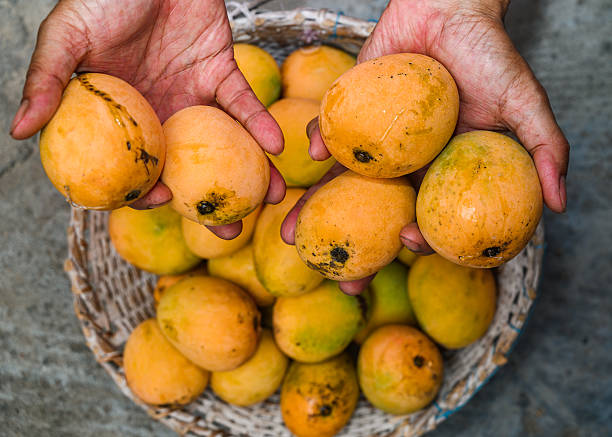
The mango season has been underway for quite some time now, and we have already enjoyed various types of mangoes dozens of times this season. Even now, whenever I go out—especially on the two days a week I fetch vegetables—I almost invariably bring back two kilograms of mangoes along with other vegetables. There was a time when fruits and vegetables used to be absolutely fresh, but nowadays, almost every fruit and vegetable reaches the consumer days after being harvested. This is particularly true for fruits that are picked before they ripen and are subsequently artificially ripened using chemicals while sealed in crates. This process is nothing new—it happened in the past as well—but people used to be reluctant to acknowledge it; generally, everyone would insist that their fruit was completely fresh and chemical-free.
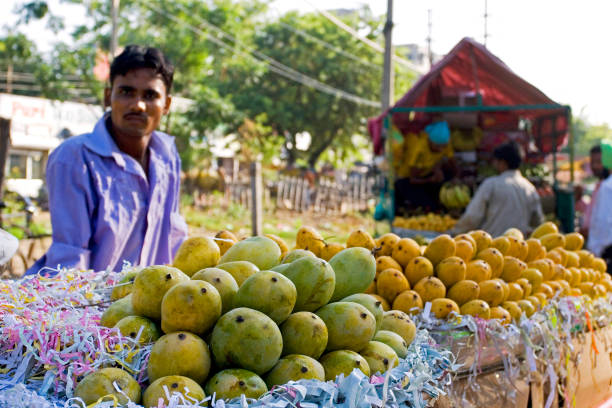
I wonder how many of you are aware that ripening fruits using chemicals has become quite common these days; what is even worse, however, is that people have started taking pride in this practice of artificial ripening instead of feeling any shame or hesitation about it. Just last week, I noticed something interesting: a weekly vegetable market is held in my area on Monday evenings, where street vendors sell not only fruits and vegetables but also various small household essentials. As usual, I bought my vegetables first and then stopped at a mango vendor's stall to ask the price; he quoted ₹100 for 1.5 kg. The price was surprisingly good, but upon inspecting a few mangoes, I found most of them to be rather mushy, so I decided against buying from him and moved on. A short distance away, there was another mango vendor whose fruit looked cleaner, fresher, and larger. I asked for his price, and he quoted ₹100 for 1.25 kg. Although this was slightly more expensive than the previous vendor's rate, the mangoes appeared fresh both to the eye and to the touch, so I decided to buy from him and began picking out the ones I wanted.
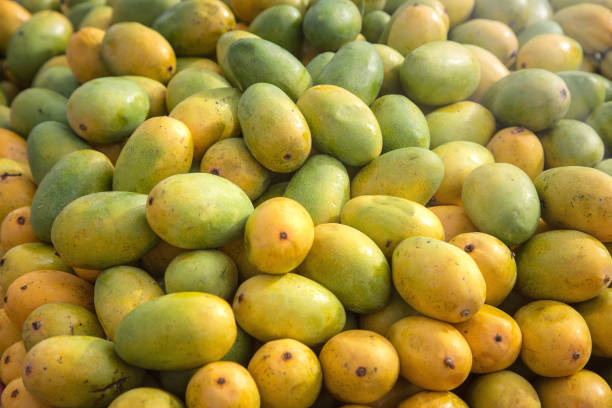
Just then, an elderly man arrived and began questioning the vendor about the mangoes' variety and quality; I was completely taken aback by the vendor's reply. He said, "Oh, Uncle, these mangoes are absolutely top-notch—I bring them home and ripen them myself."... For a moment, I froze, unable to process what had just happened. Had the vendor really boasted about artificially ripening the mangoes with chemicals? I asked myself, and my inner self confirmed, "Yes, that is exactly what just happened."
The elderly man didn't seem particularly surprised by this either. It made me feel like I was the last person unaware of how commonplace artificial fruit ripening has become—to the point where people take pride in how well they have managed the process. I was aware that fruits are artificially ripened—and that this is somewhat necessary—but the practice is inherently wrong. Why would anyone glorify a wrongful act, especially one involving harmful and illegal methods rather than safe, legal ones?
Upon researching this, I discovered that there is indeed a safe and legal method: ripening fruits using controlled amounts of ethylene gas, which mimics the natural ripening process. However, most people opt for cheap, harmful, and illegal methods, such as using calcium carbide to ripen the fruit.
This is truly concerning because consuming such fruits causes more harm than good; the damage might not be immediately apparent, yet internally, we may be getting sicker by the day.
If you have read my thought this far, thank you! I hope you all have a wonderful day!