The Raptors of July in Southeastern Pennsylvania: Vultures, Hawks, and a Bit of Excitement
As August is coming to a close, this will be my last blog post with July photography. As usual, the month ends with raptors. During July, the raptors included Black Vultures, a Cooper's Hawk, Red-tailed Hawks, and Turkey Vultures.
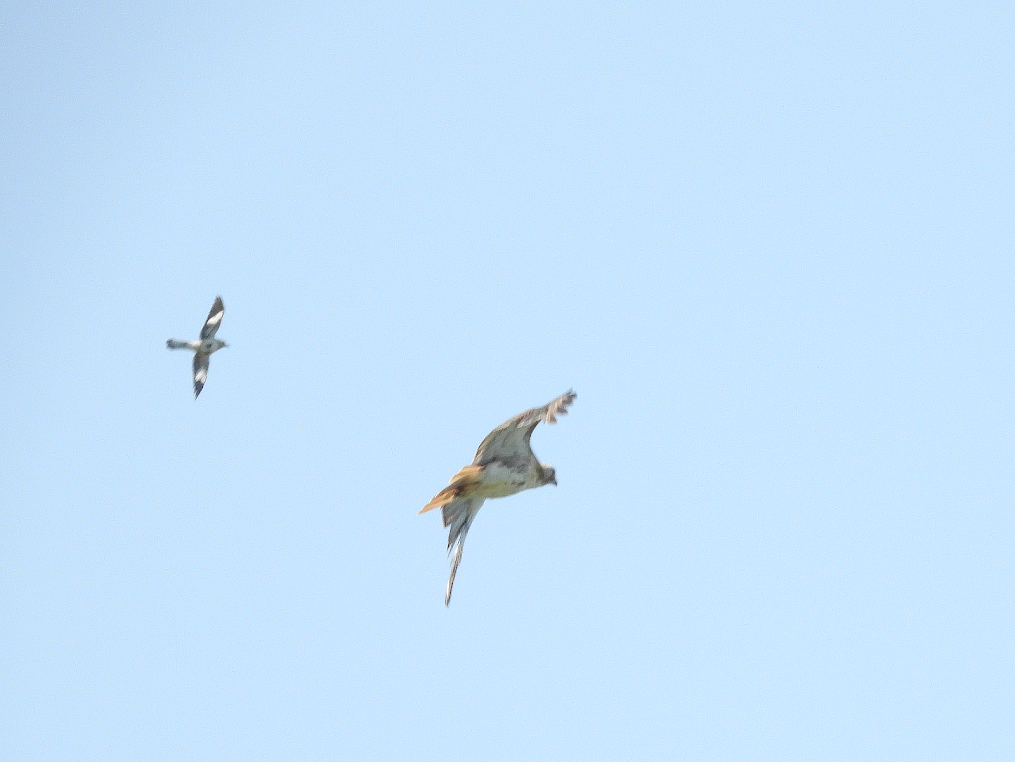
ƒ/5, 1/1000, ISO280, 108mm (602mm equiv, 25.1X). Cropped and sharpened
There were no new raptors in July and the lion's share (as usual) was made up of Red-tailed Hawks, Turkey Vultures, and Black Vultures. A Cooper's Hawk also made an appearance, but it's a very small image of the bird - just barely large enough to identify.
I've mentioned in previous posts that it seems like animals were moving in and out of cover (behind leaves & trees) more quickly during July and August, and this has been true of the raptors, too. In the spring, it felt like I could spend time to really zoom and focus on the soaring hawks & vultures. In July and August, they seemed much more prone to weaving between tree cover and open skies. This is why many of the photos in the post below are cropped. I had less time for zooming, so the photos I got were ok, but the subject was frequently too small. Cropping gets rid of the unneeded background and acts as a sort of digital zoom after the fact.
As far as iNaturalist goes, the July raptor count was 4 species with 12 observations. In reality, there were many more observations because I mostly limited my reporting of any single species back to once per week. As a result, many of the photos below may not correspond with iNaturalist observations.
| Common Name | Total Observations | July Observations | First Seen | Observed On |
|---|---|---|---|---|
| Red-tailed Hawk | 32 | 4 | 2026-03-19 | 2026-07-01, 2026-07-08, 2026-07-19, 2026-07-25 |
| Turkey Vulture | 34 | 4 | 2026-03-24 | 2026-07-08, 2026-07-15, 2026-07-23, 2026-07-30 |
| Black Vulture | 8 | 3 | 2026-05-03 | 2026-07-08, 2026-07-20, 2026-07-26 |
| Cooper's Hawk | 3 | 1 | 2026-04-26 | 2026-07-14 |
Red-tailed Hawk
With a global population near 2 million and a range from Central America up to Canada and Alaska, the Red-tailed Hawk is North America's most common hawk. In the spring, it seemed like I had been seeing these birds from my yard on a near-daily basis. During July and August, it seems much less common.
Two of the July sightings come with stories, though. First, July 19: I was standing in the western side of my property in a section of the yard that my wife and I now refer to as "Raptor Alley" because it has the widest gaps (best visibility) between tall trees that surround much of my yard and block the sky. In this case, however, I didn't see the hawk at first. I heard it. First, I heard it to the west, then to the northwest, then to the northeast, and finally I heard it to the south. (The sound of the Red-tailed Hawk is unmistakable.) As I heard it calling, I started walking towards the sound, then shortly afterwards two Red-tailed Hawks flew through a large clearing where I could get a couple of photos. I assume the bird was calling so that the two could find each other. Unfortunately, the two birds were flying out of the sun and fast, so the pictures aren't great.
And the highlight of the month was definitely July 25. Again on this day, I heard the birds before seeing them. Then, very quickly, a Northern Mockingbird chased a Red-tailed Hawk from behind some trees into a patch of brush that borders my yard. They actually wheeled around each other, squawking, a few times right in front of me before flying off in different directions. They were only there for a few seconds, so no time for zoom or focus, but as you can see below, I did manage to snap a couple of shots of the excitement.
In the July 26 photos, it's easy to see where the species gets its name.
| July 1 | July 1 |
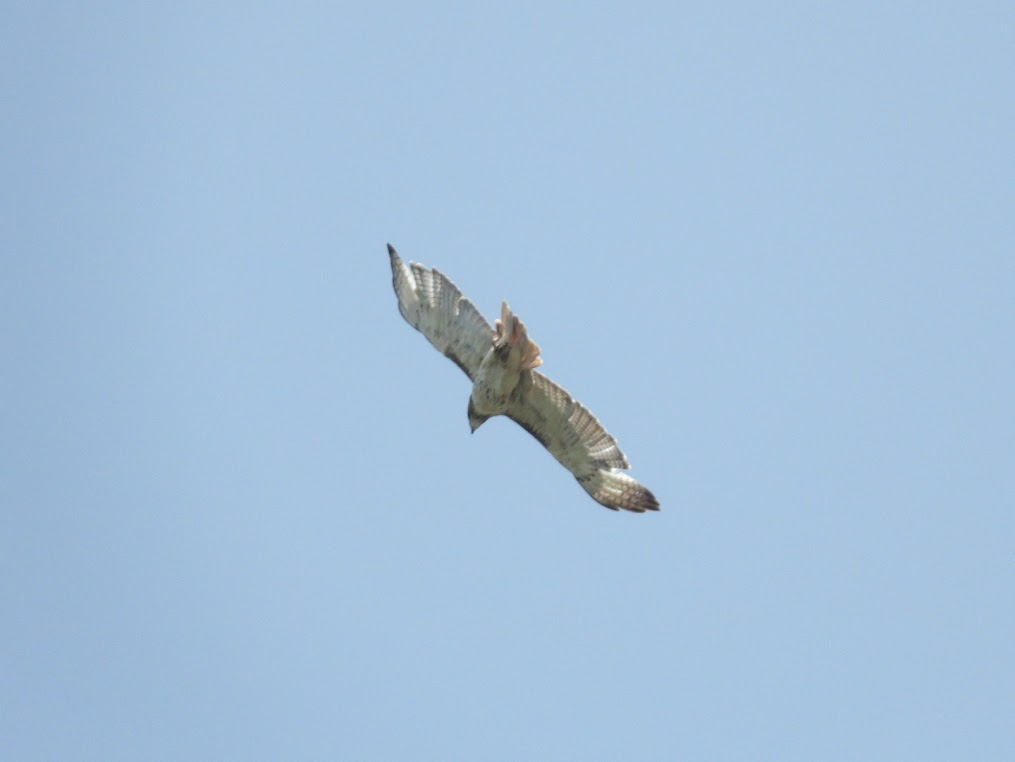 | 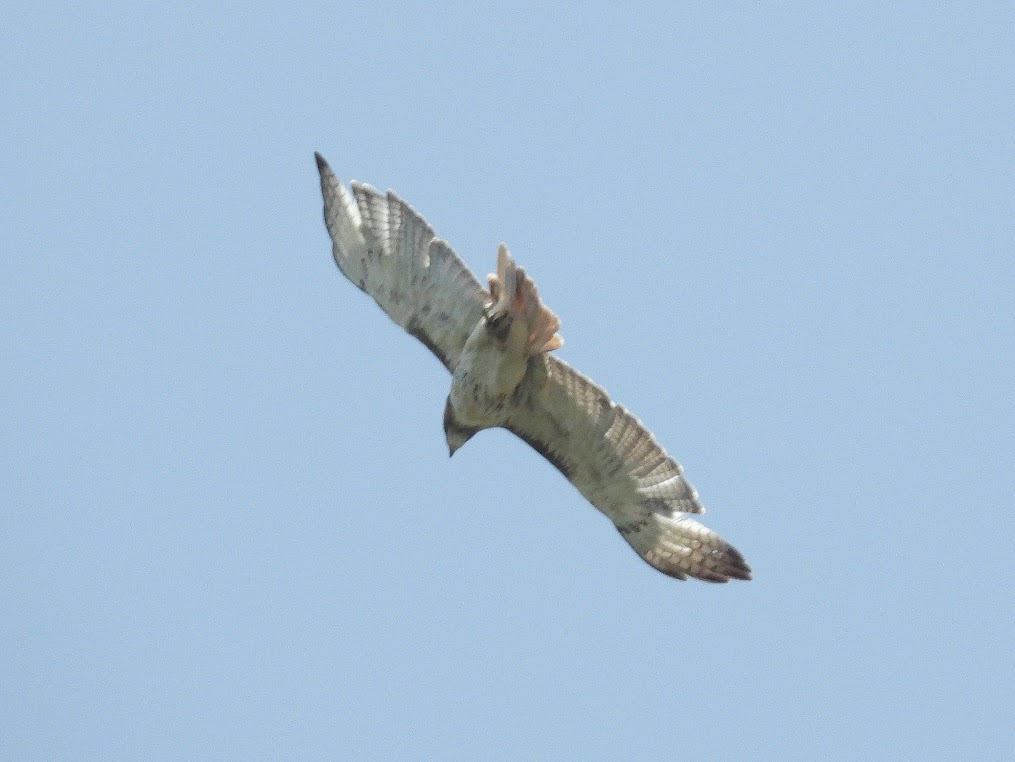 |
| ƒ/5.6, 1/2000, ISO640, 216mm (1203mm equiv, 50.1X). Original | ƒ/5.6, 1/2000, ISO640, 216mm (1203mm equiv, 50.1X). Cropped and sharpened |
| July 8 | July 19 |
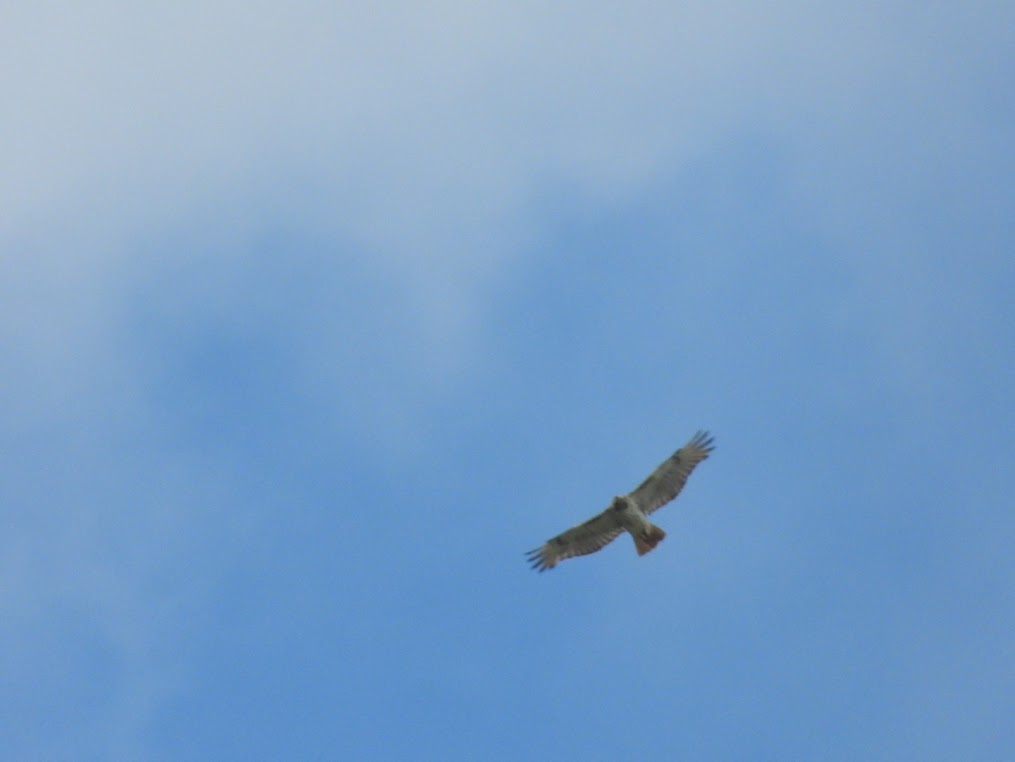 | 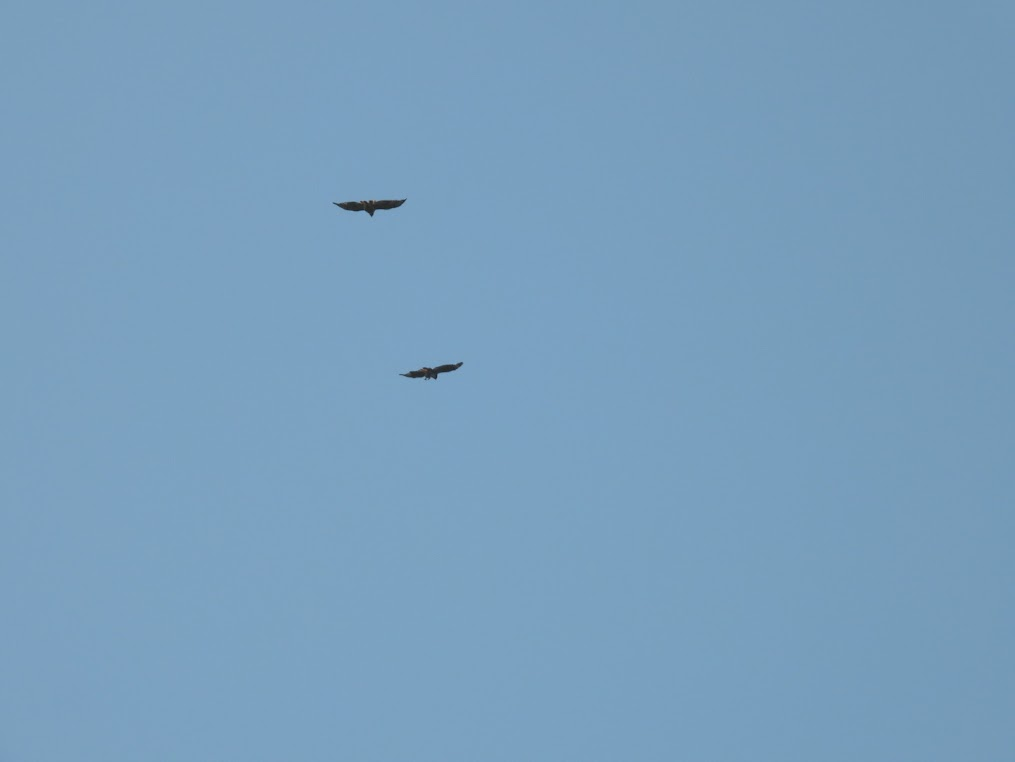 |
| ƒ/8, 1/2500, ISO800, 395mm (2200mm equiv, 91.7X) | ƒ/6.3, 1/1250, ISO100, 89.9mm (501mm equiv, 20.9X) |
| July 25 | July 25 |
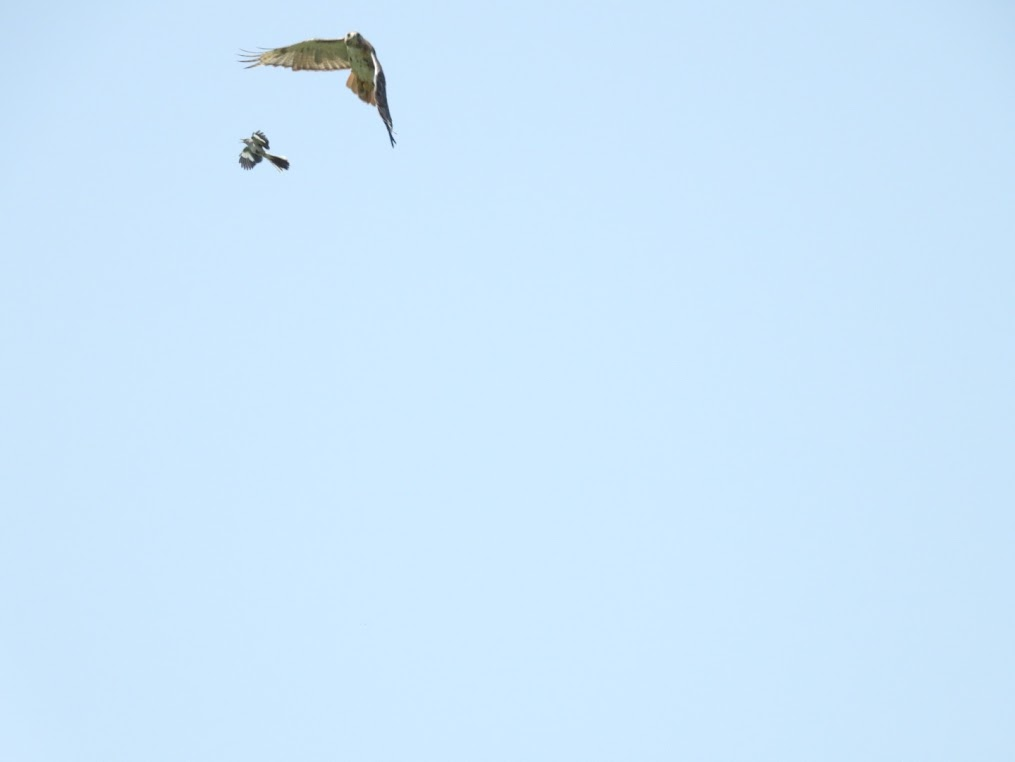 | 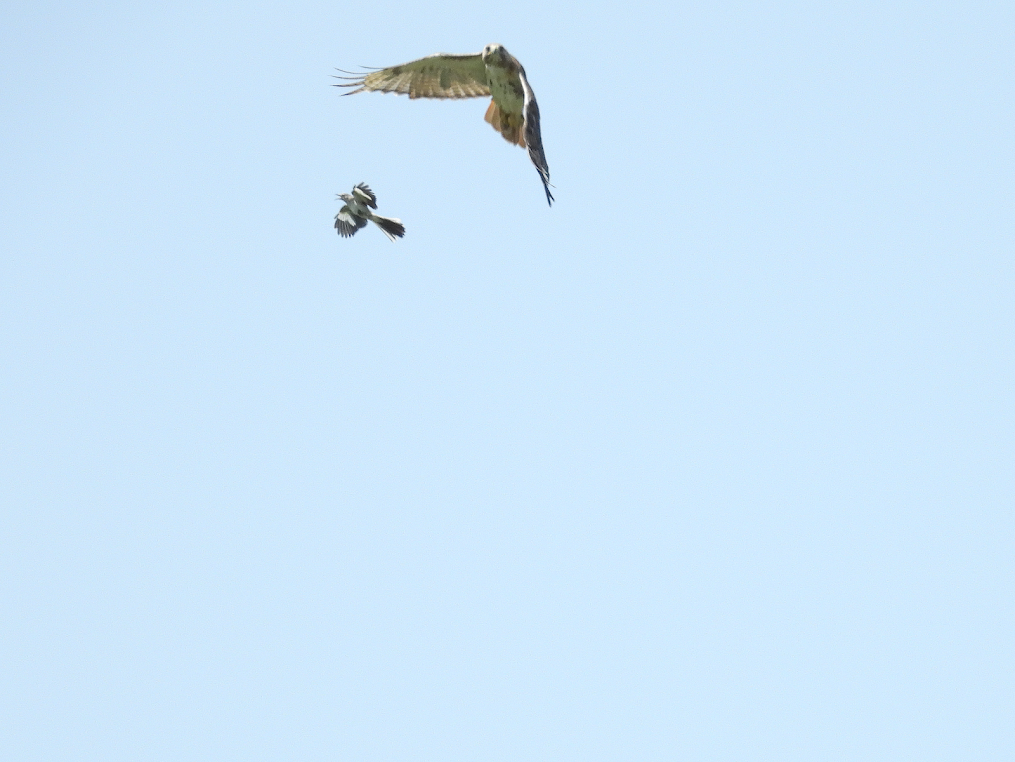 |
| ƒ/5, 1/1000, ISO280, 108mm (602mm equiv, 25.1X). Original | ƒ/5, 1/1000, ISO280, 108mm (602mm equiv, 25.1X). Cropped and sharpened |
| July 25 | July 25 |
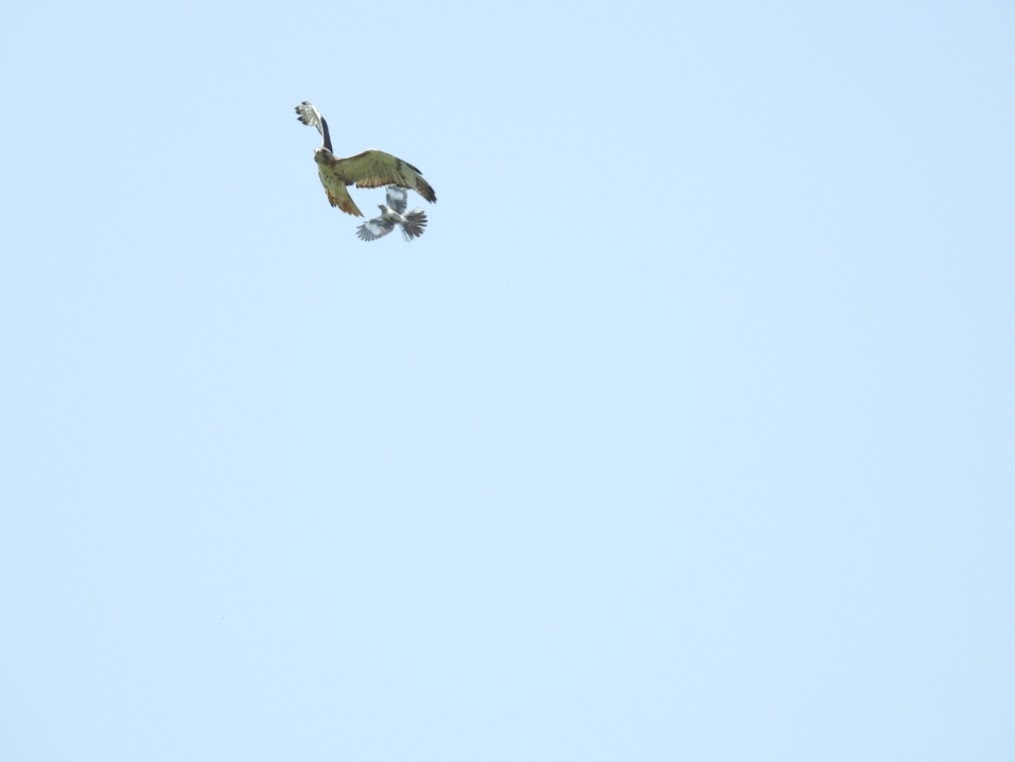 | 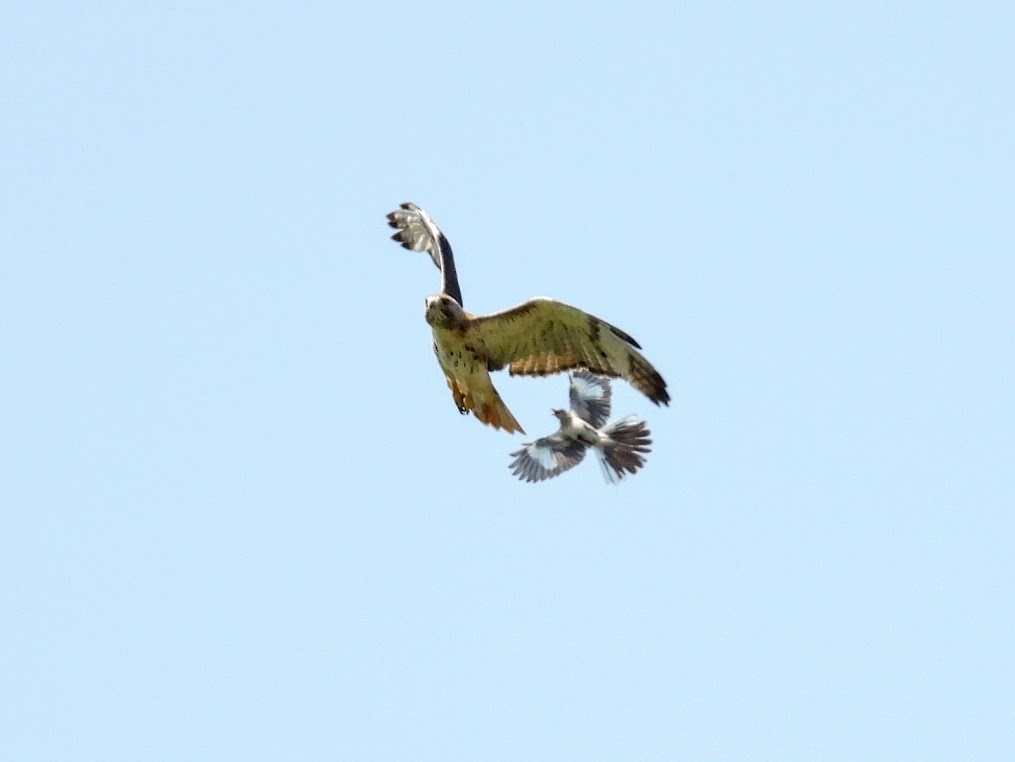 |
| ƒ/5, 1/1000, ISO280, 108mm (602mm equiv, 25.1X). Original | ƒ/5, 1/1000, ISO280, 108mm (602mm equiv, 25.1X). Cropped, sharpened, and lighting adjusted |
| July 25 | July 25 |
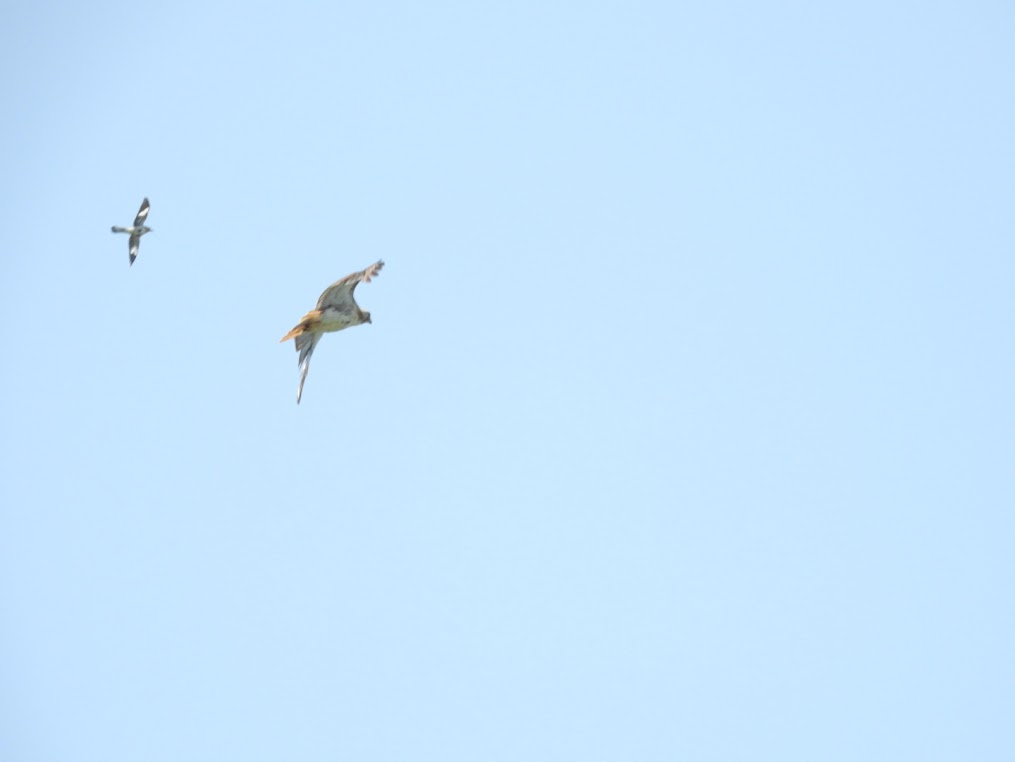 | 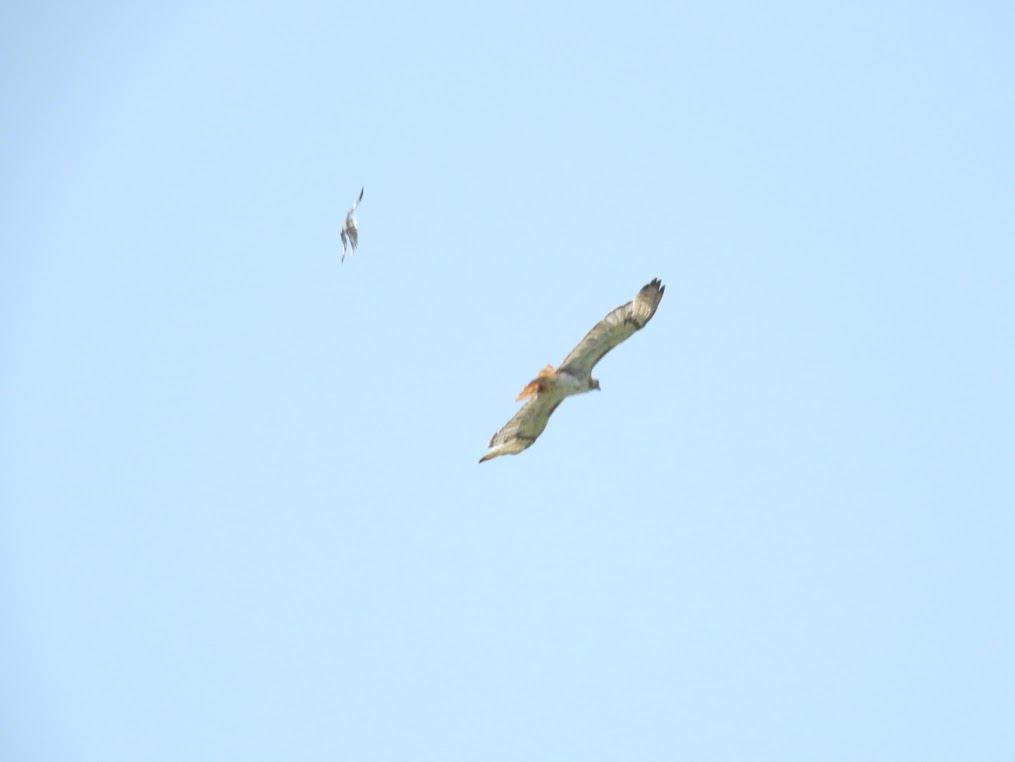 |
| ƒ/5, 1/1000, ISO360, 108mm (602mm equiv, 25.1X) Original used for thumbnail (top-right of post) | ƒ/5, 1/1000, ISO360, 108mm (602mm equiv, 25.1X) |
| July 26 | July 26 |
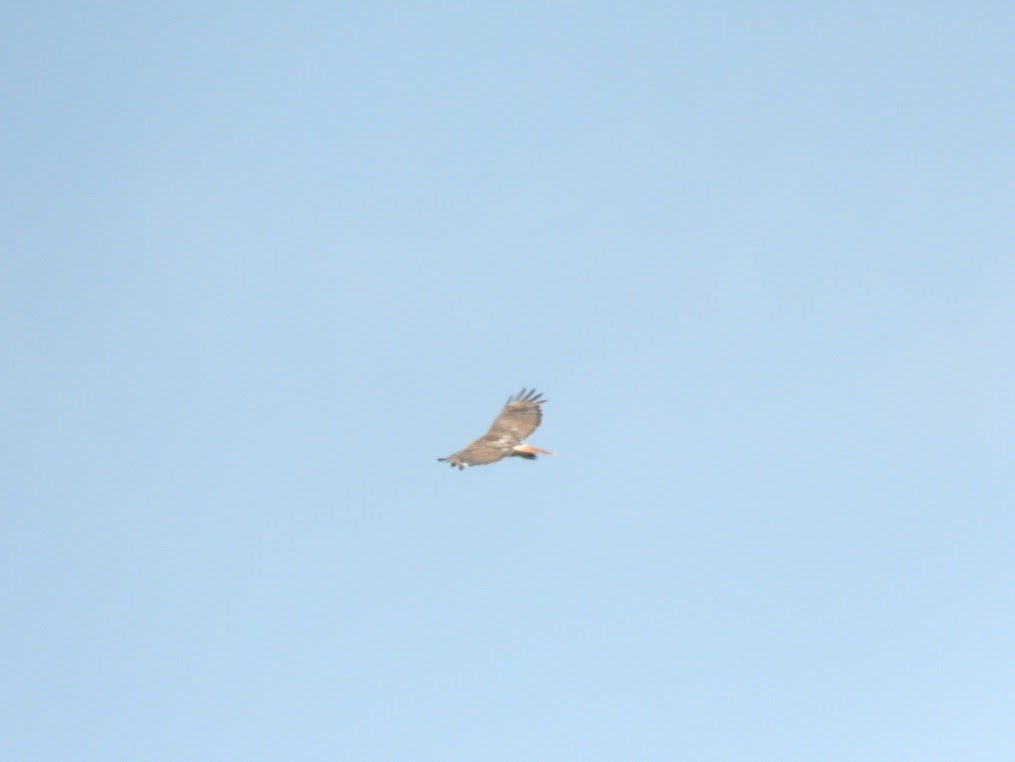 | 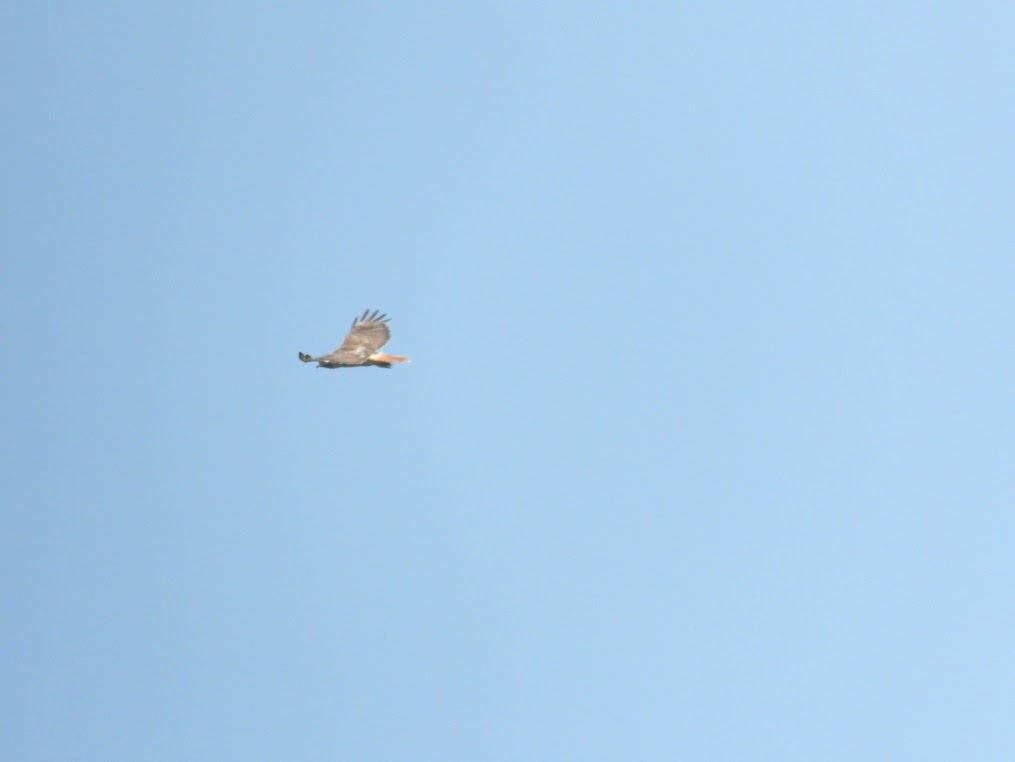 |
| ƒ/7.1, 1/2000, ISO800, 395mm (2200mm equiv, 91.7X) | ƒ/7.1, 1/2000, ISO800, 395mm (2200mm equiv, 91.7X) |
Turkey Vulture
Behind the American Robin, I suspect that the Turkey Vulture was my most commonly sighted animal during July. This bird can be found year-round across most of North and South America.
The dark coloring makes the species a very challenging photographic subject when seen against the open sky (at least for me). So many shots turn out as silhouettes, especially when they have clouds behind them (even on sunny days).
Something unusual about the Turkey Vulture is that its head is featherless. Apparently, this is because they are scavengers and it helps the vulture to keep itself clean and infection-free, despite having its head exposed to the decaying flesh of the animals that it eats. Adult Turkey Vultures have red heads. Juveniles have gray heads until they're 12-18 months old. As a beginner photographer, bringing out the red head coloring on a "bird-in-flight" shot is especially challenging for me.
Fortunately, I saw them enough times during July that I was able to get some photos that came out ok, and included a sampling here. July 20 was definitely the highlight of the month for these birds. I actually saw Red-tailed Hawks, Black Vultures, and Turkey Vultures, all flying together. I could have posted several other Turkey Vulture photos from July 20, but I tried to limit it to unique angles. The July 20 photo of two Turkey Vultures together is probably my favorite from the month.
| July 1 | July 8 |
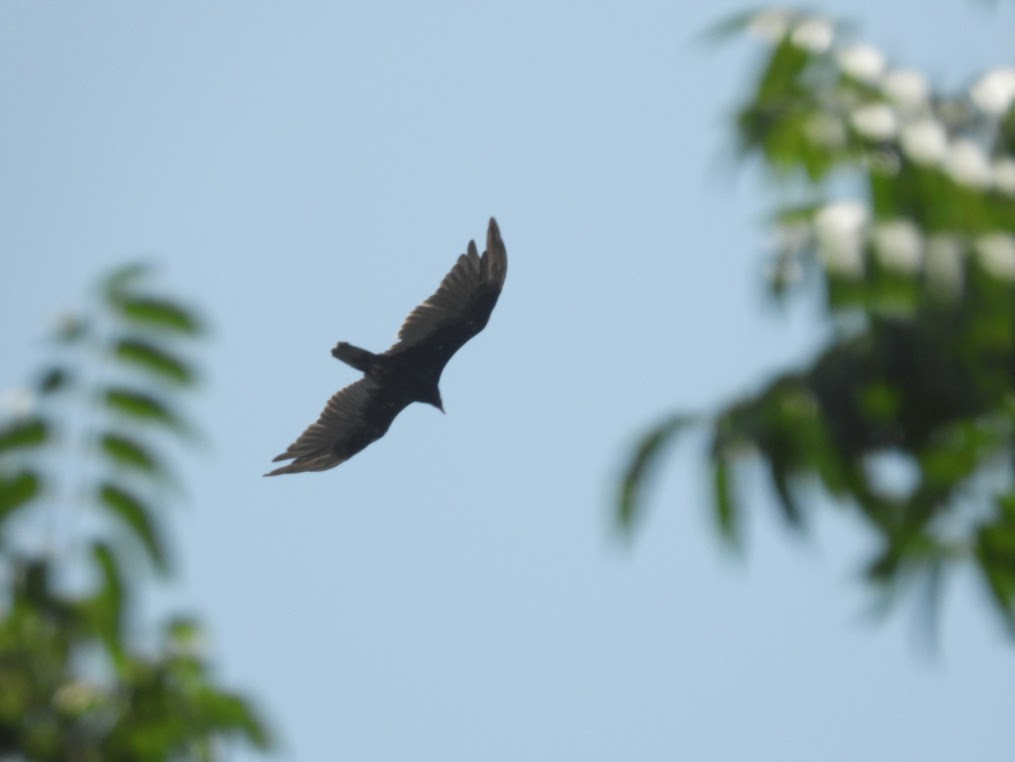 | 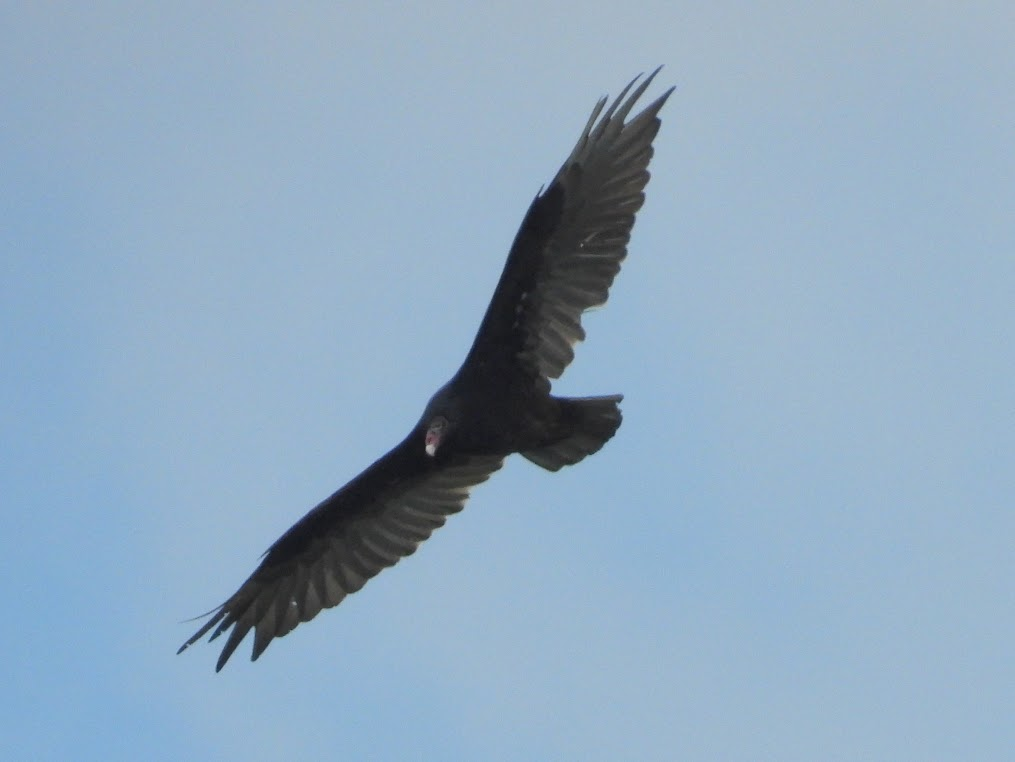 |
| ƒ/5.6, 1/2000, ISO360, 216mm (1203mm equiv, 50.1X) | ƒ/8, 1/2500, ISO800, 395mm (2200mm equiv, 91.7X). Cropped |
| July 20 | July 20 |
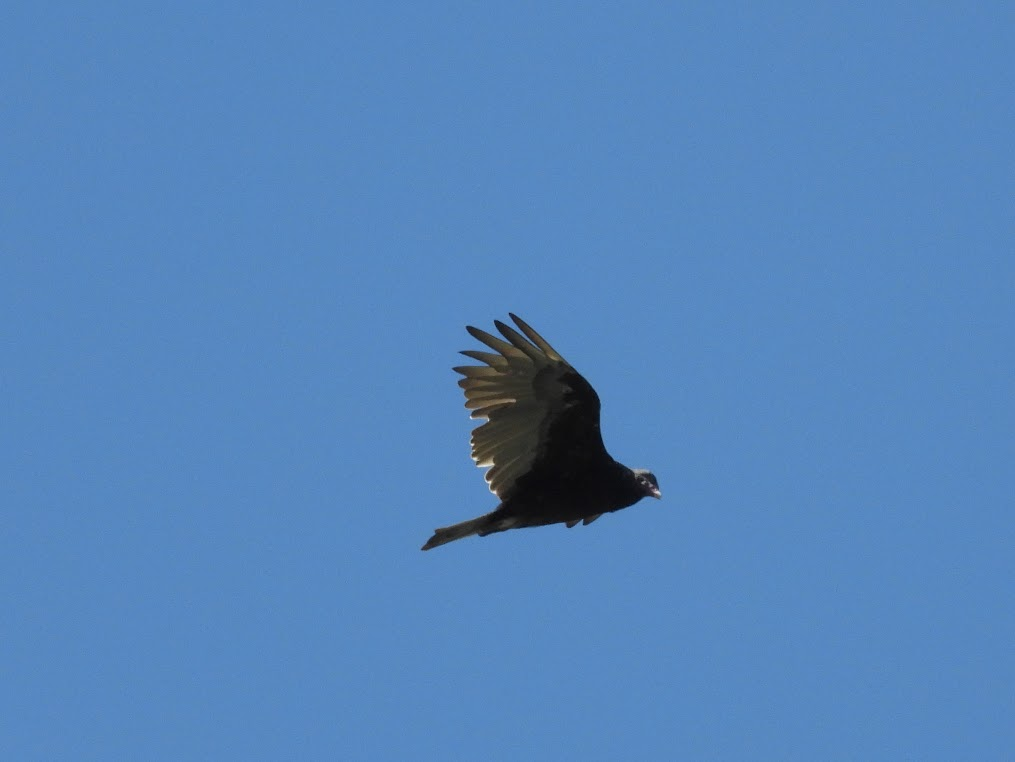 | 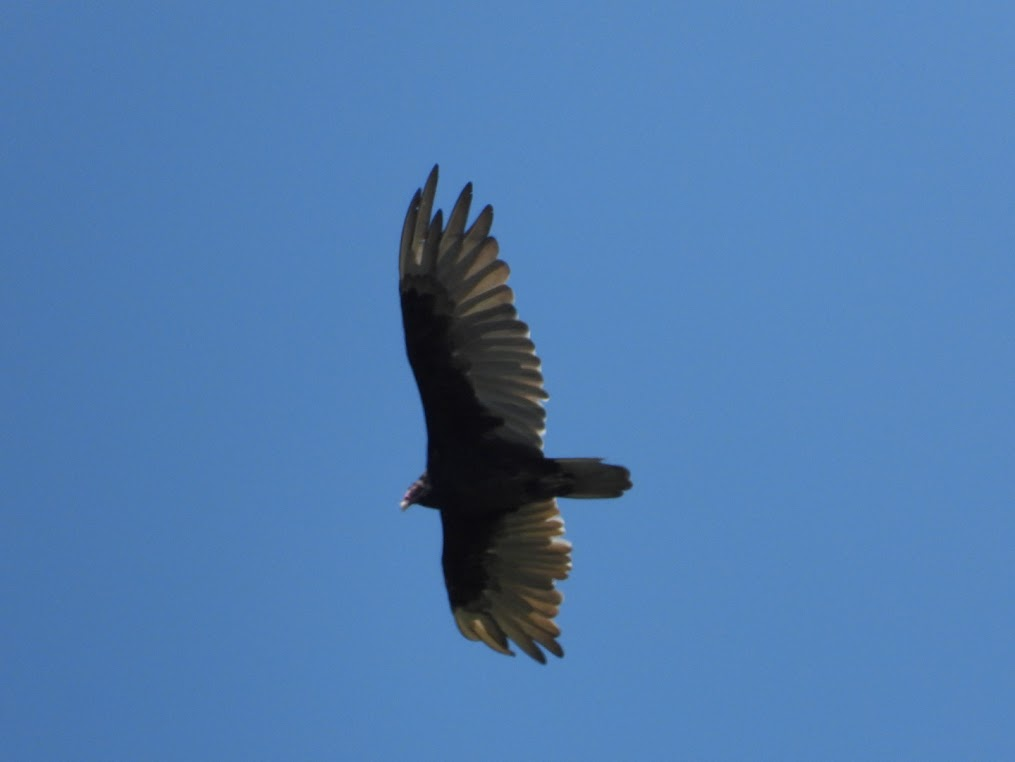 |
| ƒ/5.6, 1/1600, ISO360, 216mm (1203mm equiv, 50.1X). Cropped | ƒ/7.1, 1/1600, ISO450, 395mm (2200mm equiv, 91.7X) |
| July 20 | July 23 |
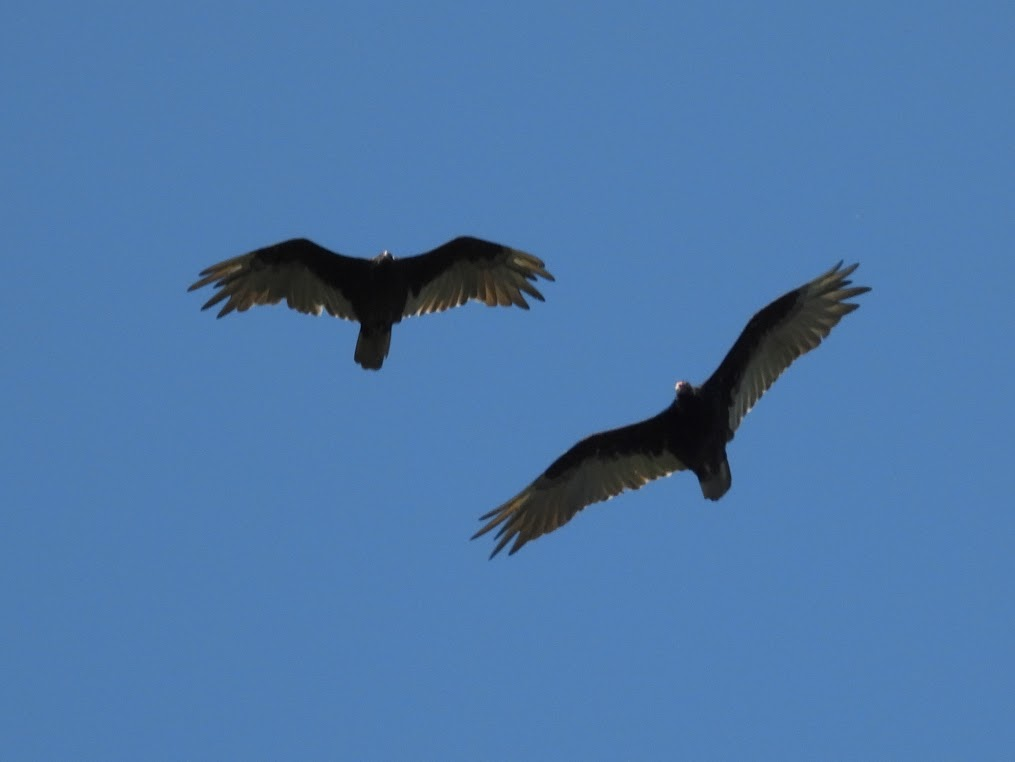 | 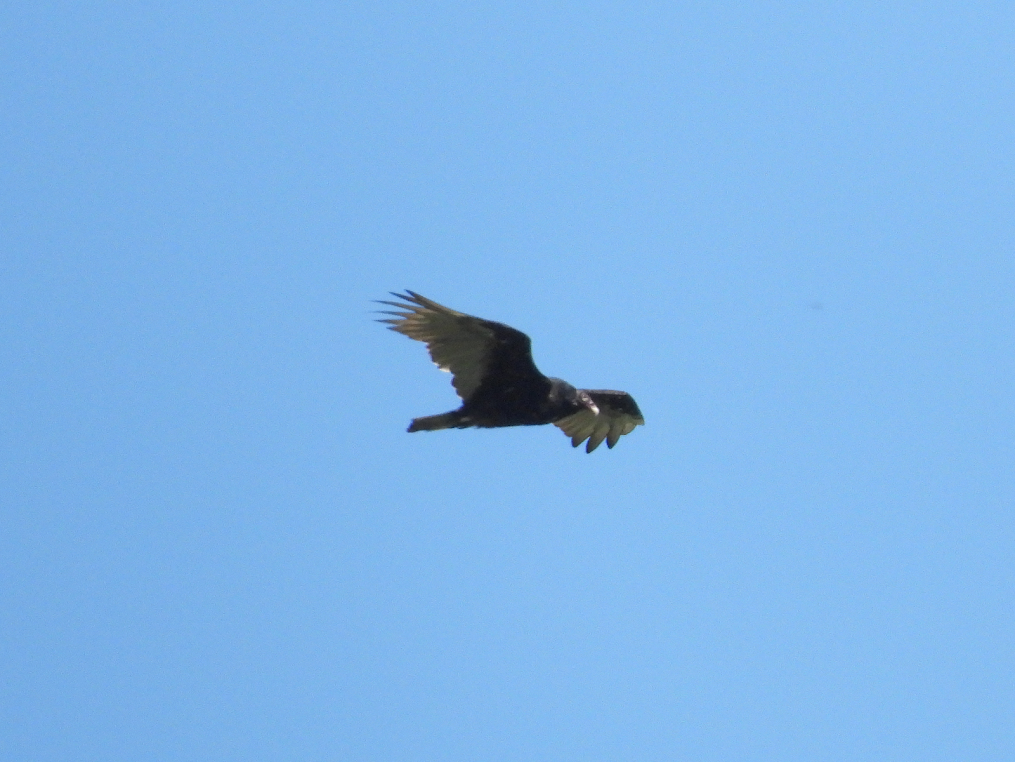 |
| ƒ/5, 1/1600, ISO220, 89.9mm (501mm equiv, 20.9X). Cropped | ƒ/7.1, 1/1600, ISO800, 395mm (2200mm equiv, 91.7X). Cropped and sharpened |
| July 26 | July 30 |
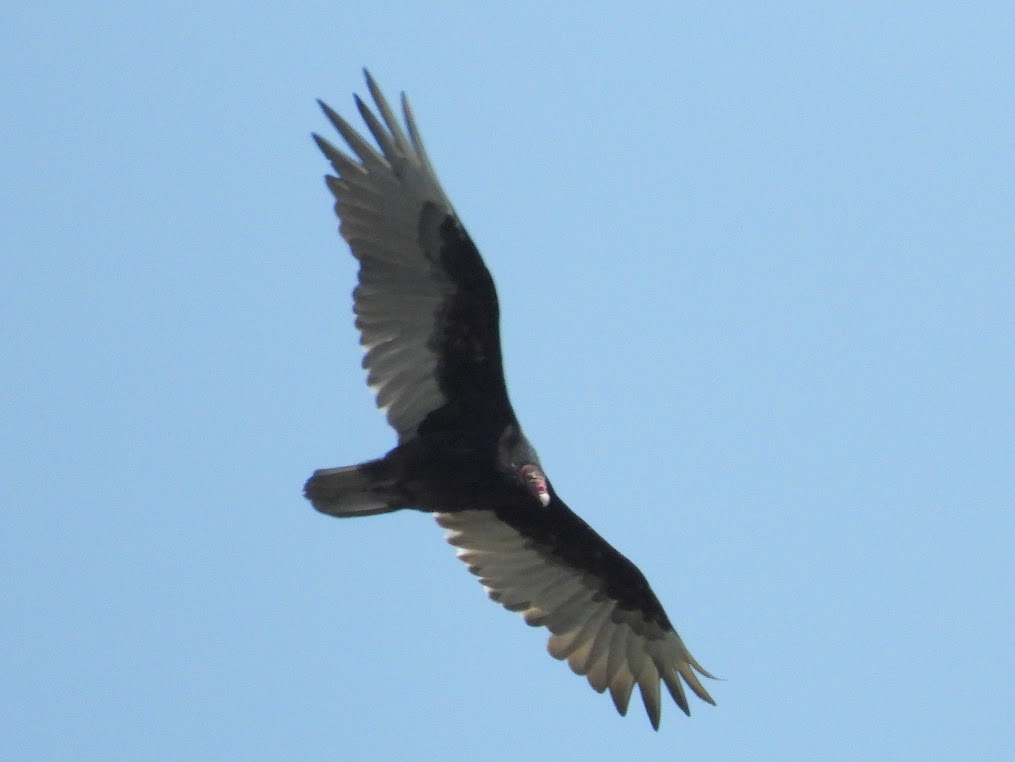 | 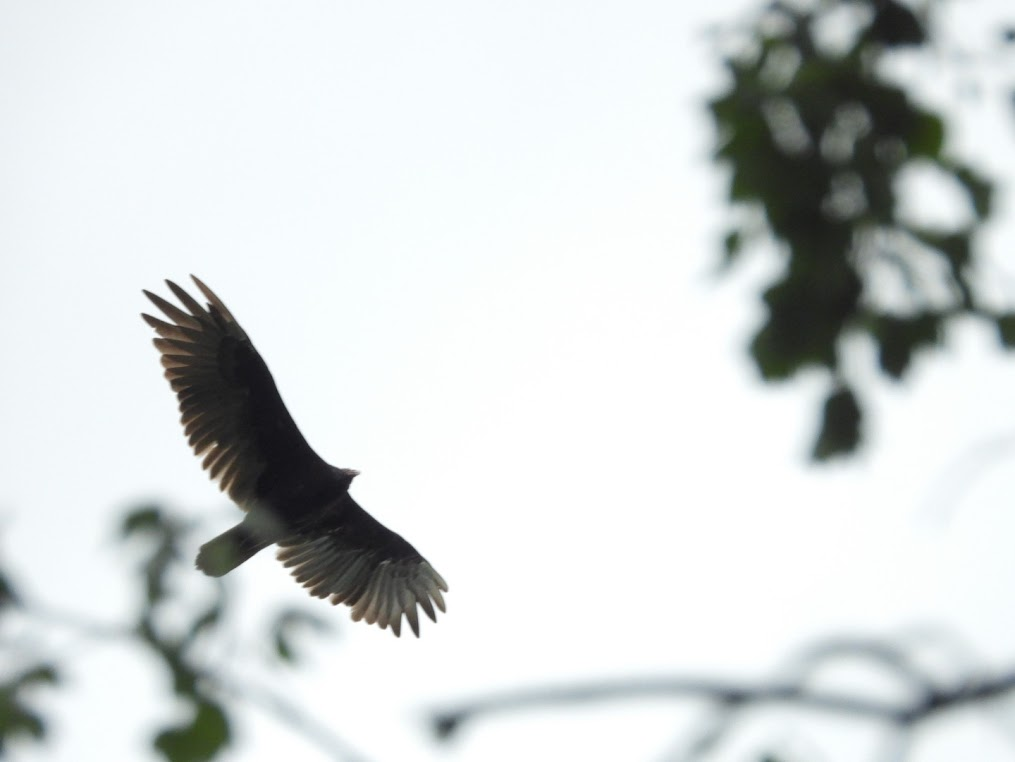 |
| ƒ/7.1, 1/2000, ISO800, 395mm (2200mm equiv, 91.7X). Cropped and sharpened | ƒ/5.6, 1/1250, ISO640, 144mm (802mm equiv, 33.4X) |
Black Vultures
The Black Vulture is another bird that's difficult to photograph without having the image collapse to silhouette (as you can see below), especially when it has clouds behind it. This is another very common vulture that ranges from South America north into much of the central and eastern United States. Eyeballing the range map, it appears that the northern edge of its range runs through NJ, PA, and Ohio.
These birds have distinctive-looking heads and tails that make it fairly easy to distinguish them from Turkey Vultures, and they also have white patches on their wingtips.
As with the Turkey Vulture, their dark coloring makes them a difficult photography subject, and it seems like they also tend to fly higher - which adds to the challenge.
| July 8 | July 8 |
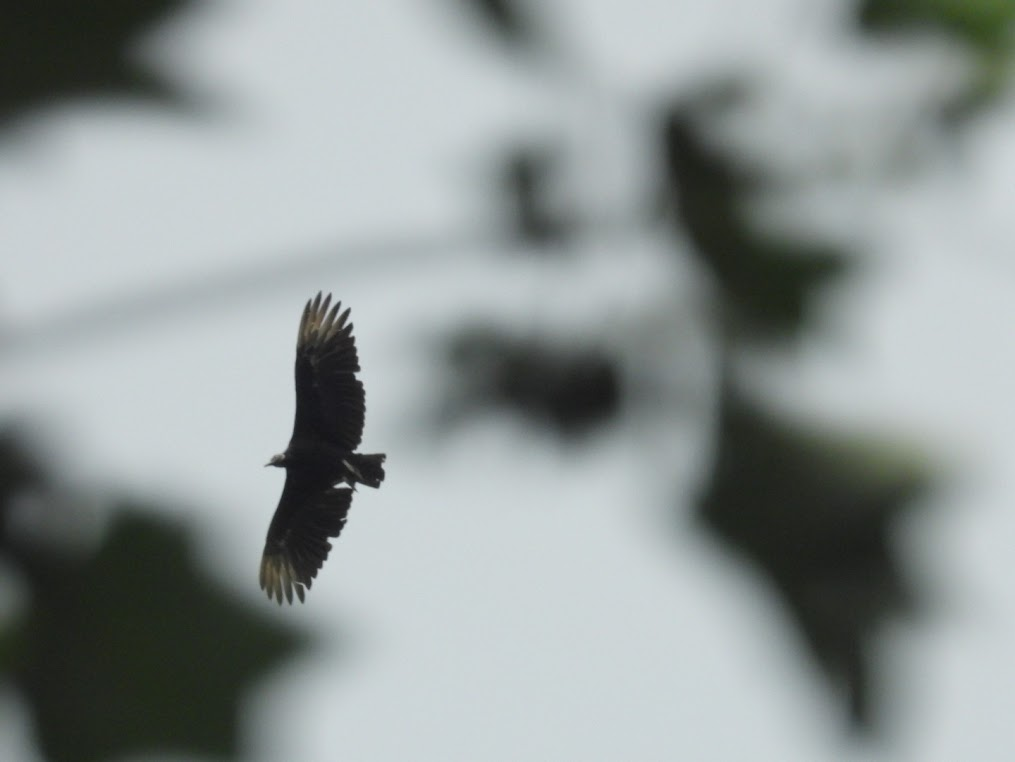 | 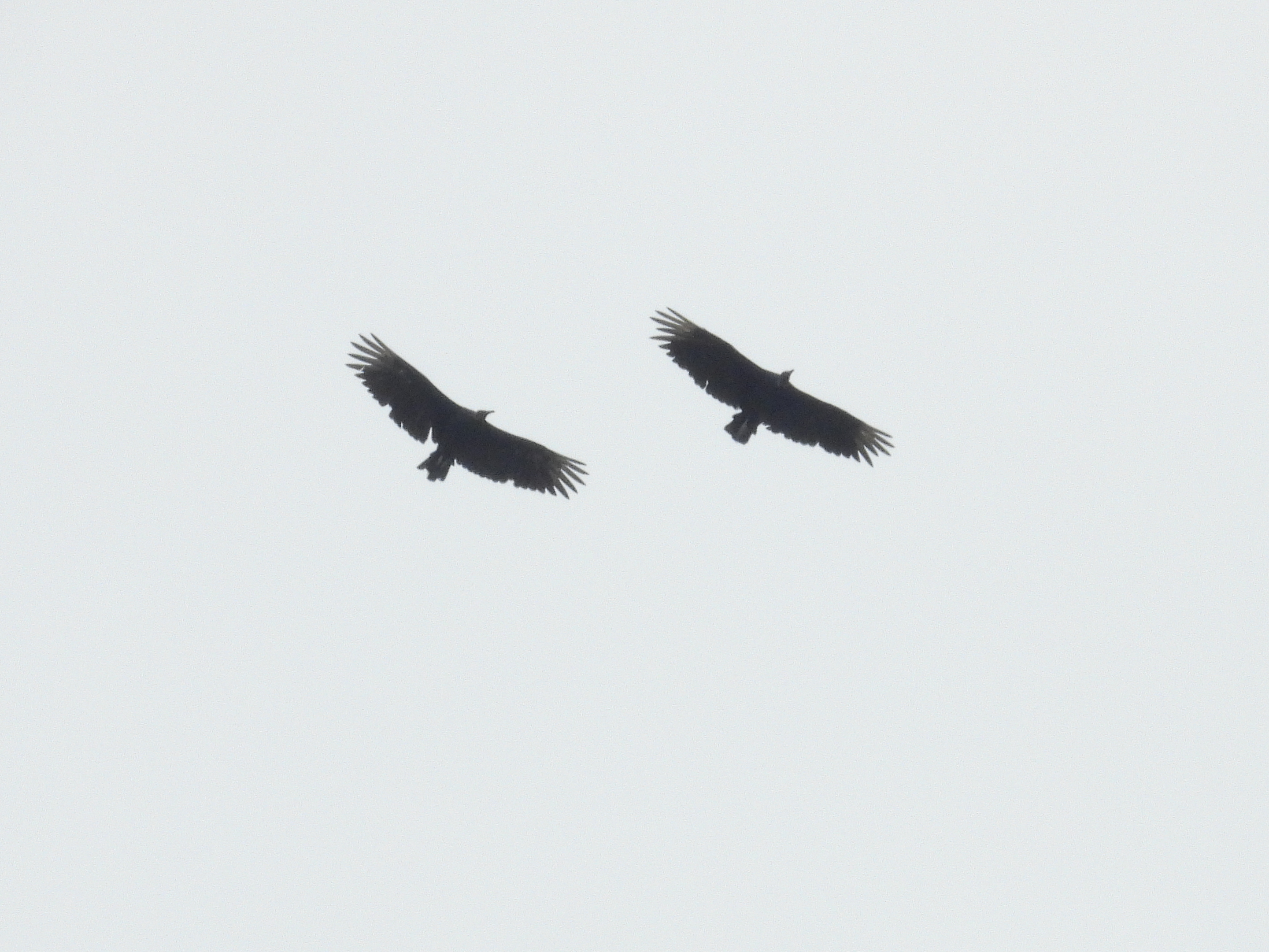 |
| ƒ/7.1, 1/2500, ISO800, 216mm (1203mm equiv, 50.1X) | ƒ/7.1, 1/2500, ISO720, 216mm (1203mm equiv, 50.1X). Cropped |
| July 20 | July 26 |
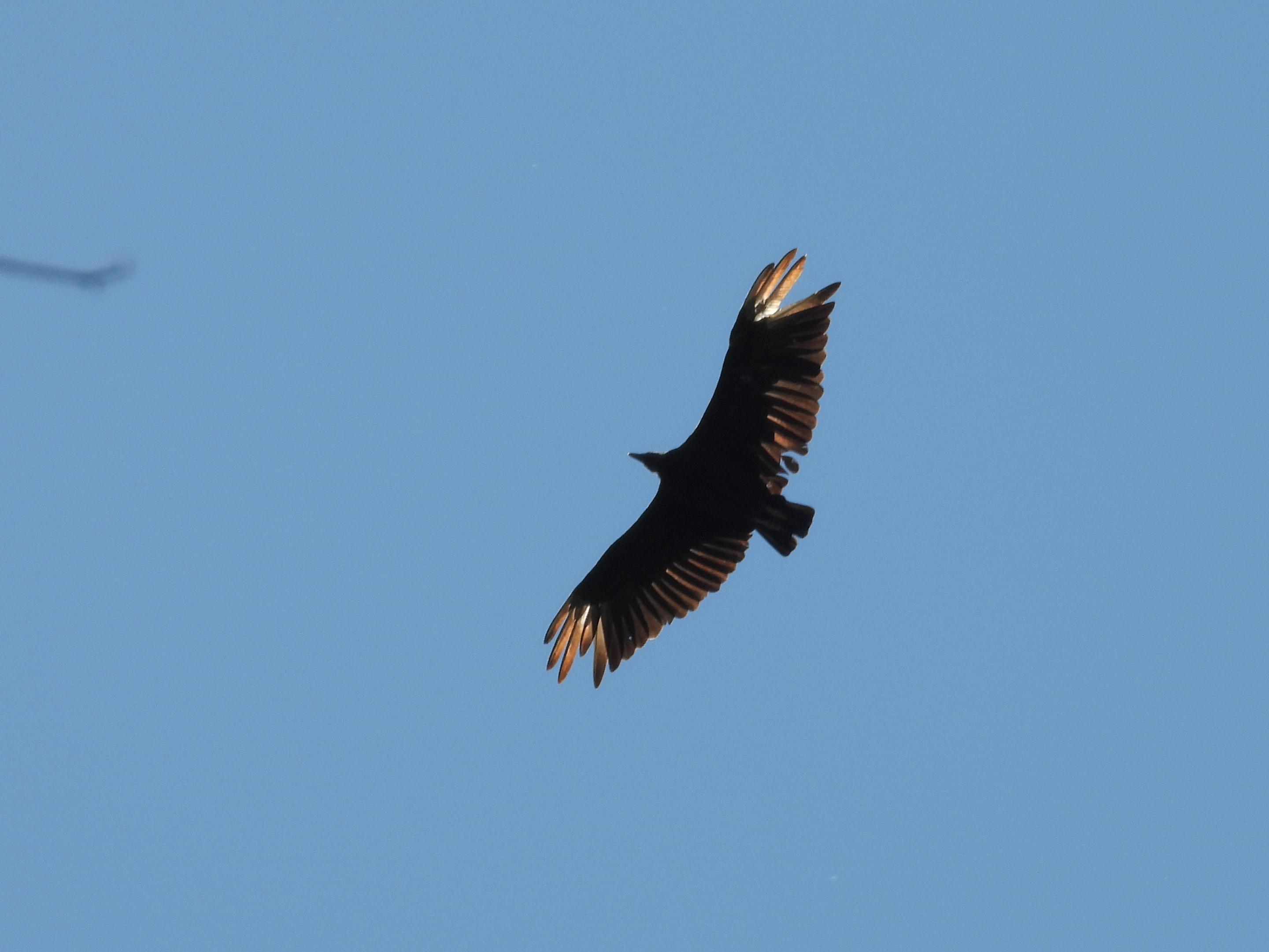 | 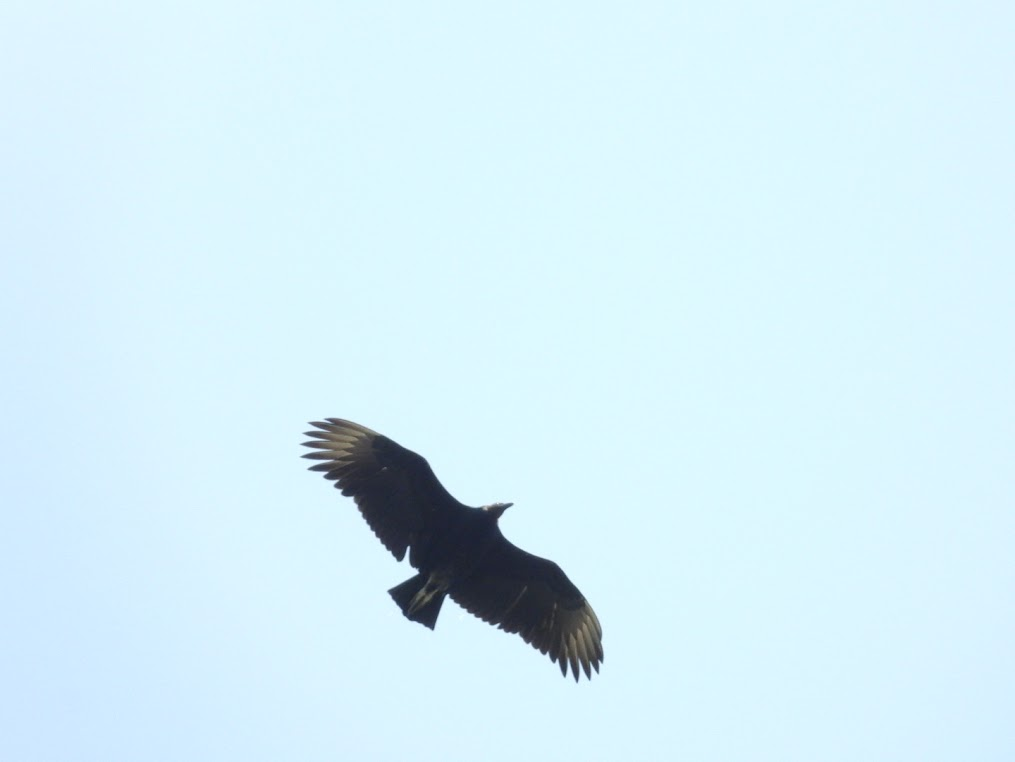 |
| ƒ/5.6, 1/1600, ISO110, 89.9mm (501mm equiv, 20.9X). Cropped | ƒ/5.6, 1/2000, ISO720, 216mm (1203mm equiv, 50.1X) |
| July 29 | July 29 |
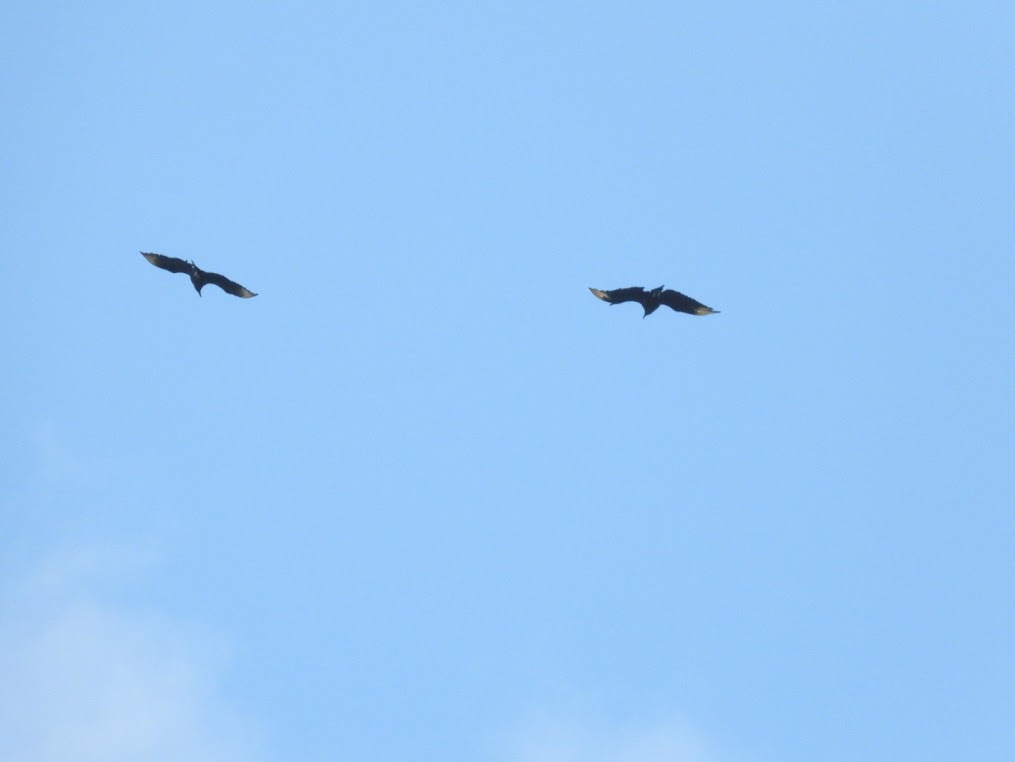 | 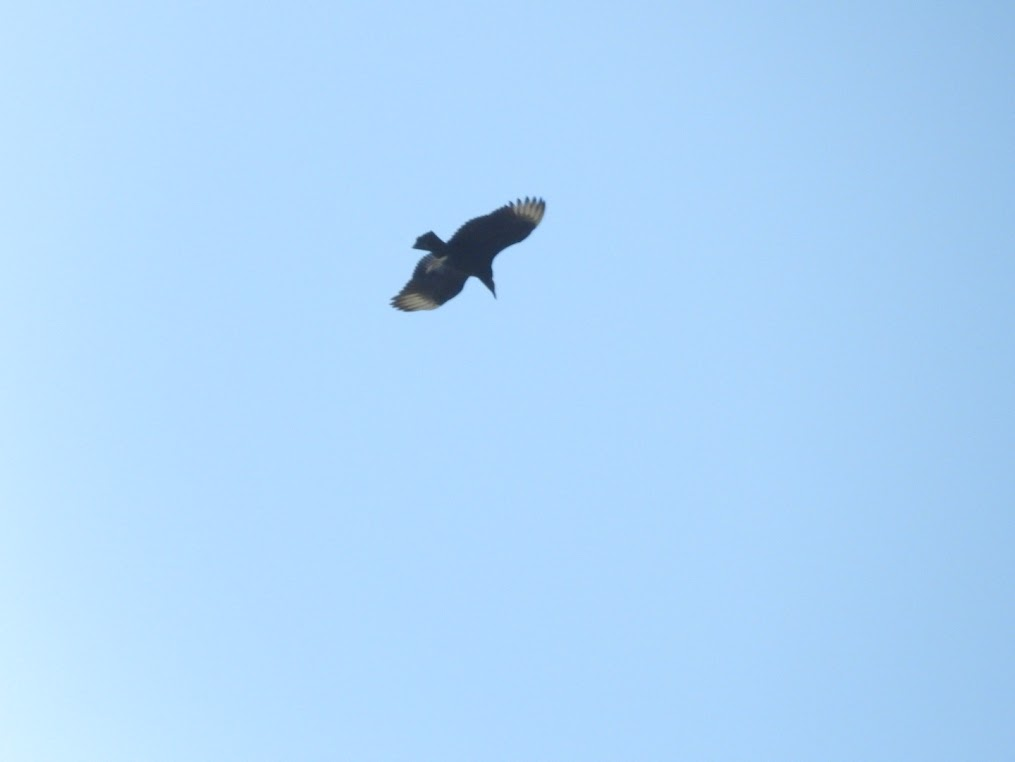 |
| ƒ/5.6, 1/2000, ISO800, 252mm (1404mm equiv, 58.5X) | ƒ/5.6, 1/2000, ISO800, 252mm (1404mm equiv, 58.5X) |
Cooper's Hawk
Not much to say about the Cooper's Hawk. It's another common hawk species that can be found throughout much of the US, Mexico, and Canada.
Their diet consists of small birds, and I mentioned before that these birds have turned the modern American birdfeeder into their hunting ground. I don't have a bird feeder, though, and I rarely see them.
I think this is only the third one from this year, and it was just a lucky break that I managed to get it into a photo where it could even be identified. This is another case where I had less than a few seconds to try for a shot.
| July 14 | July 14 |
 | 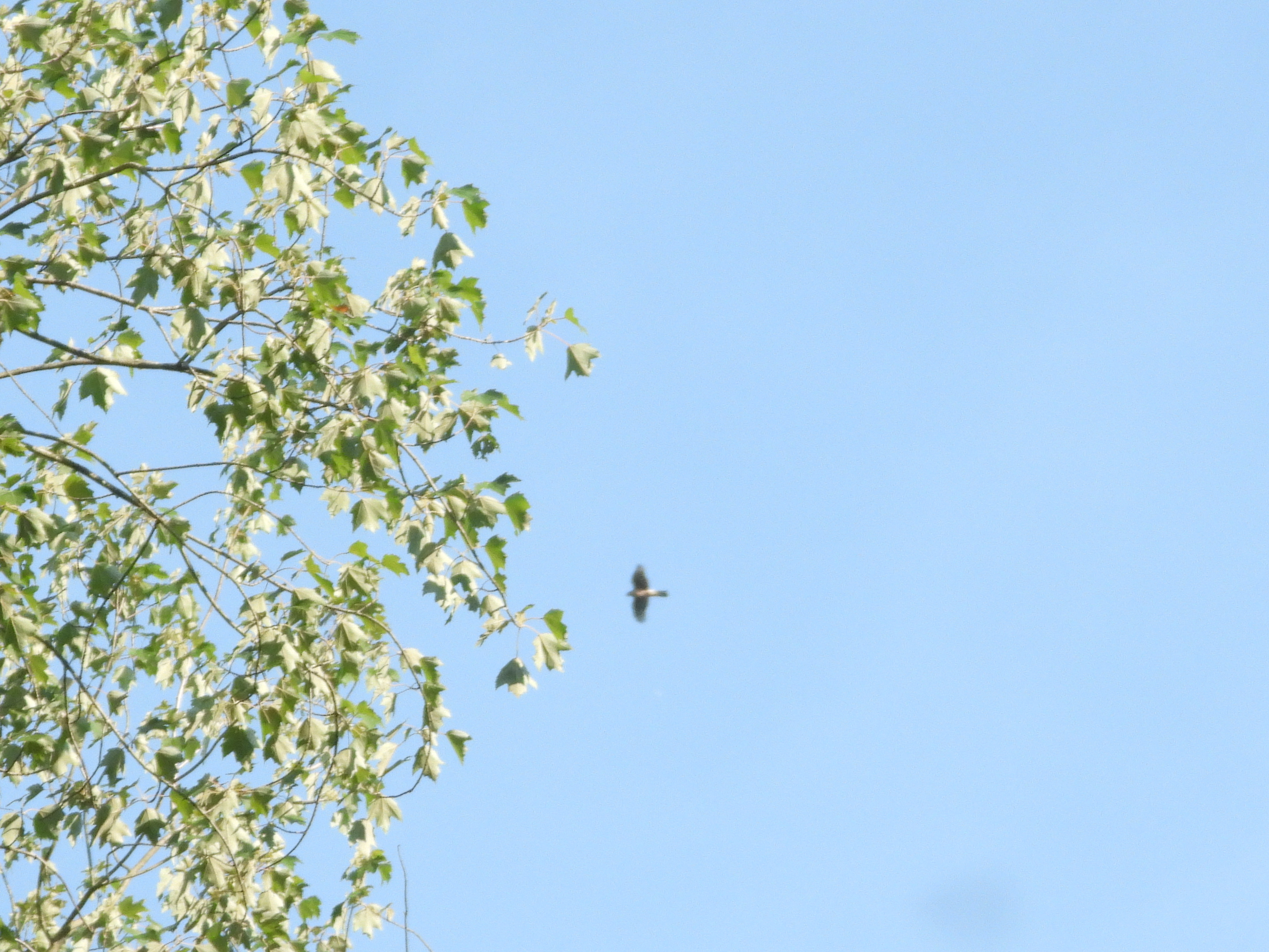 |
| ƒ/4, 1/1250, ISO450, 24.3mm (135mm equiv, 5.6X). Original | ƒ/4, 1/1250, ISO450, 24.3mm (135mm equiv, 5.6X). Cropped |
Wrap-up
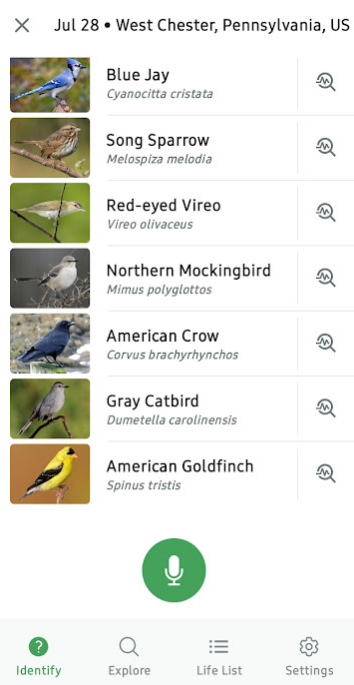
Screenshot from the Merlin application
And that's it for the July raptors and probably for July photography, altogether. I had hoped to start writing about the birds that Merlin hears while I'm outside, but I don't think that's going to work out on a monthly basis unless/until I find an efficient way to organize and track the birds that are identified in the screenshots.
I will just note that I started using Merlin during my wildlife walks in July, and it often reports hearing birds that I don't see with my eyes at all. This includes a number of birds that I have never seen (multiple varieties of Vireo, for example). In two cases (the American Goldfinch and the Chipping Sparrow), I eventually saw one, but Merlin heard them first.
In other cases, Merlin has helped me to find a bird in a tree or in the brush by telling me what sort of bird I should be looking for when I heard it singing.
Looking back over my photography practice for the entire month of July, although it seemed slow, there were still some good highlights. These included my first observations of four species and exciting dust-ups between Northern Flicker fledglings and between a Northern Mockingbird and a Red-tailed Hawk.
Looking ahead to the August photography, it's a lot like July. Things have been slow, but there have also been some surprises and some pictures that turned out pretty well.
Appendix
A full index of my posts about wildlife photography is here: wildlife photography index
Notes on the use of AI
As previously noted, I use AI for the following purposes in creating this series:
- Wildlife identification (Merlin, iNaturalist, Meta AI, Claude, Gemini)
- Formatting iNaturalist observations, photographs, dates, and camera settings into markdown tables (Claude)
- Proof-reading and editorial advice (Claude, Gemini, Meta AI, ChatGPT, Grok)
Thank you for your attention!
Unless otherwise specified in the text, all photos above were taken by me with a (hand held) Nikon P1000 camera. I'm sharing them under the CC BY 4.0 license (share & adapt freely with attribution to the original source).
Hello @remlaps, congratulations on making it to the STEEM TOP 75 list. We’re upvoting a post from one of the authors we selected from this list. Thank you for your valuable contributions to the platform with your successful work.