How to Improve Reaction Time? 10 Ways That Actually Work
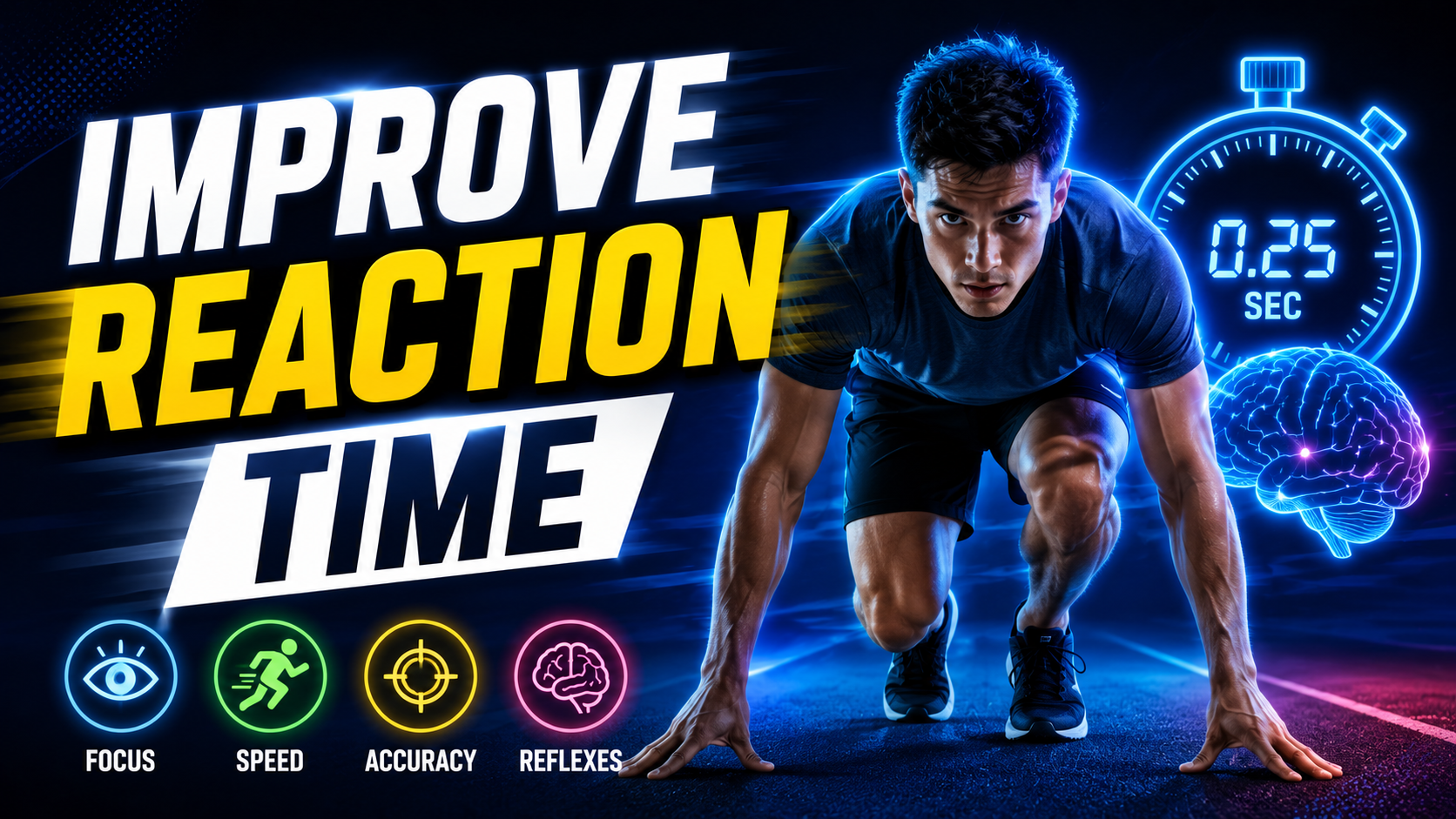
Do you feel like you are slow to respond when something happens? Reaction time is an important skill that helps you notice a signal and take action. It can be useful when driving, playing sports, enjoying video games, or handling everyday situations.
The good news is that your response speed can change with practice and healthy habits. Sleep, focus, exercise, stress, and your daily routine can all affect how quickly you respond. By working on these areas, you can improve your alertness, coordination, and ability to make quick responses.
What Is Reaction Time?
Reaction time is the amount of time between noticing a signal and starting a response. For example, imagine a ball flying toward you. Your eyes notice the ball, your brain understands where it is going, and your body tells your hand to move. The time between seeing the ball and starting that movement is part of your response speed.
Your brain and body work together during this process. First, one of your senses receives information. Your brain then processes that information and decides what action is needed. Your nervous system sends signals to the muscles, which then create the movement.
Different signals can lead to different response speeds. You may need to react to a sound, flashing light, moving object, touch, or another signal. The type of signal, your focus, and how familiar you are with the task can all affect how quickly you respond.
10 Ways to Improve Your Response Speed
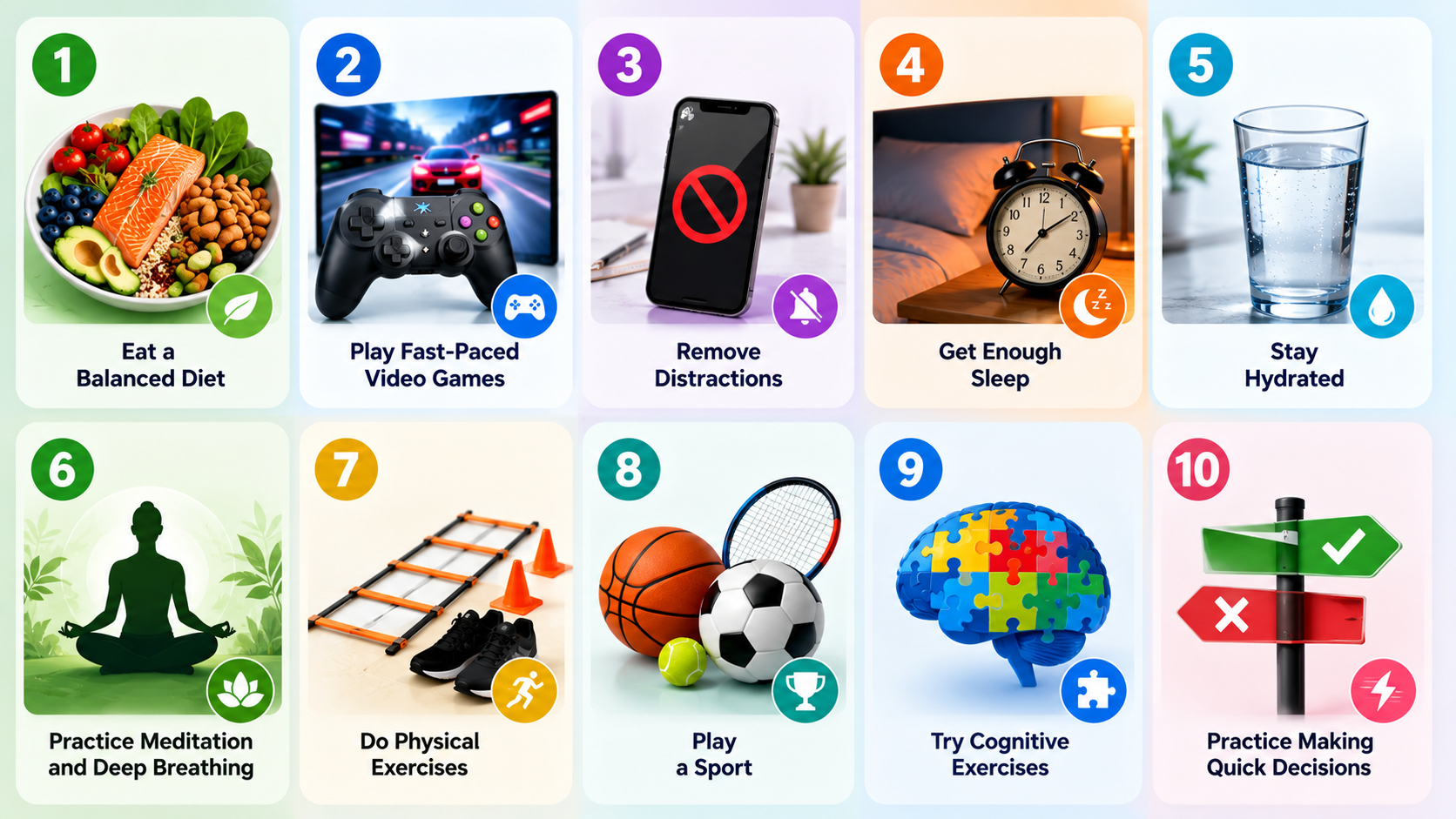
There are many simple habits that can help you work on your reflexes and mental alertness. You do not need to change everything at once. Start with a few methods that fit easily into your daily routine.
1. Eat a Balanced Diet
Your brain needs proper nutrients and energy to work well. Include fruits, vegetables, whole grains, protein, nuts, seeds, and healthy fats in your meals. Foods like berries, fish, eggs, and leafy vegetables can be part of a healthy diet.
Avoid eating too many processed foods and sugary drinks. A balanced diet will not make you faster instantly, but it supports your brain, muscles, and energy while you practice other skills.
2. Play Fast-Paced Video Games
Some video games require you to watch moving objects, find targets, and make quick choices. These games can help you practice visual attention, hand-eye coordination, and fast decision-making.
You do not need to play for many hours. Short and focused gaming sessions can be useful. Take regular breaks and choose games that include timing, movement, aiming, or quick actions.
3. Remove Distractions
Distractions can make it harder to notice important information. When your attention is divided, you may respond more slowly or make more mistakes. Find a quiet place when practicing a reflex test and put your phone away.
Reducing distractions is also important when driving, studying, working, or playing sports. Focusing on one task allows your brain to process information more clearly and respond more effectively.
4. Get Enough Sleep
Good sleep supports attention, memory, learning, and mental performance. When you are tired, it can be harder to stay alert and respond quickly. Try to follow a regular sleep schedule and get enough rest each night.
Most adults need around seven to nine hours of sleep, although needs can vary by age. If you test yourself when you are tired, your score may be lower than usual. Rest well before practicing.
5. Stay Hydrated
Water helps your body and brain work properly. Not drinking enough fluids may make you feel tired and make it harder to concentrate. Keep water nearby and drink throughout the day.
Your water needs can change based on exercise, weather, food, and other factors. Staying hydrated will not instantly improve your reflexes, but it can support normal physical and mental performance.
6. Practice Meditation and Deep Breathing
Stress and a busy mind can make it harder to focus. Meditation and slow breathing can help you relax and pay more attention. Start with five to ten minutes a day and focus on slow, steady breathing.
Meditation is not a direct speed exercise, but better focus can help during timed activities. The goal is to build a calm and focused mind instead of rushing every action.
7. Do Physical Exercises
Physical exercise can improve coordination, balance, movement control, and overall fitness. Try ladder drills, agility exercises, jumping movements, or drills that require you to change direction quickly.
You can also ask a partner to call “left” or “right” while you move in that direction. Start with simple movements and increase the difficulty as you become more comfortable.
8. Play a Sport
Sports are a fun way to practice quick responses and coordination. Activities such as tennis, basketball, and soccer require you to watch what is happening and react to the ball, teammates, or opponents.
You do not need to start with a difficult sport. Throwing and catching a ball, playing table tennis, or doing simple movement drills can be a good start. Regular practice can make these movements feel more natural.
9. Try Cognitive Exercises
Your brain needs practice just like your body. Puzzles, memory games, pattern activities, and timed challenges can help keep your mind active and challenge attention and decision-making.
Try remembering objects, finding patterns, identifying changing shapes, or completing simple tasks against the clock. Use different activities instead of relying on only one game to challenge different thinking skills.
10. Practice Making Quick Decisions
Quick responses often require your brain to decide what to do before your body can act. Practice making simple everyday choices without spending too much time overthinking them.
Timed games and tests can also help you practice identifying a signal and choosing an action quickly. However, the goal is not to rush important decisions. Practice being comfortable with simple choices when time is limited.
Conclusion
Improving your reflexes takes time, practice, and patience. There is no magic trick that can make you respond faster overnight. The best approach is to build healthy habits while regularly challenging your brain and body.
Good sleep, balanced nutrition, enough water, physical activity, sports, cognitive exercises, focused gaming, and fewer distractions can all support better performance.
Start with a few methods that fit your daily routine. Practice regularly, record your results, and focus on your long-term trend instead of one good or bad score. With consistent effort, you can build better focus, coordination, and faster responses.