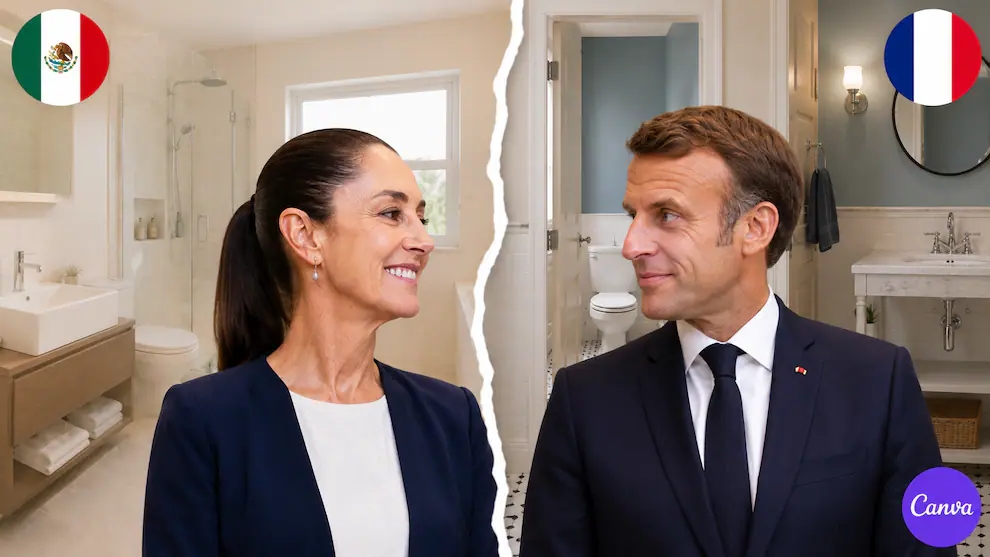
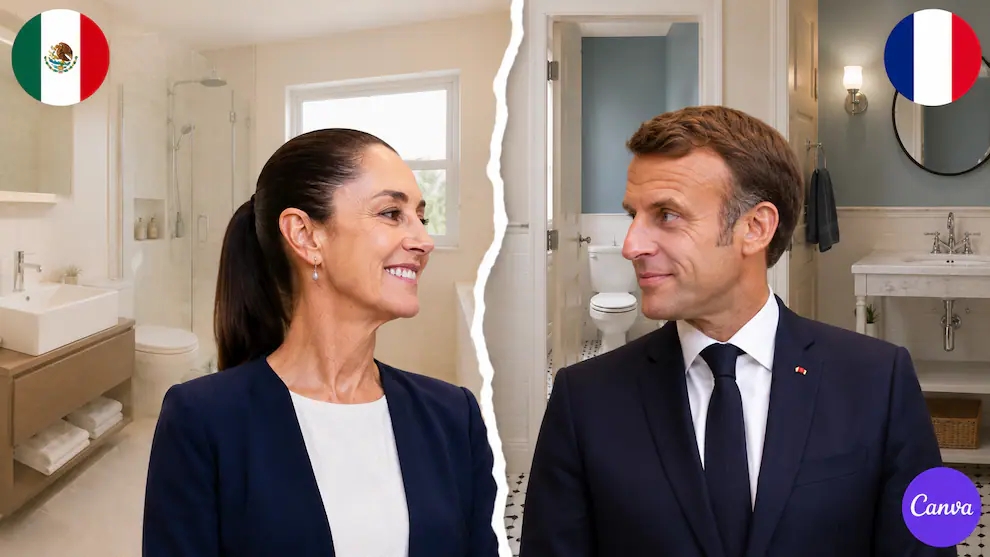
In Mexico, bathrooms have a toilet, sink, and shower in the same room, but in France it is different: they prioritize hygiene and privacy

Why Bathrooms Are Different in Mexico and France: Hygiene, Privacy, and Culture
Bathrooms may look like a simple part of everyday life, but their design can reveal interesting differences between countries. One example is the way toilets, sinks, showers, and bathtubs are arranged in homes in Mexico and France.
In many Mexican homes, the toilet, sink, and shower are commonly located together in one bathroom. In France, however, it is common to find the toilet in a separate small room, while the shower or bathtub and sink are located in another room.
The Mexican Approach: One Complete Bathroom
In Mexico, combining the toilet, sink, and shower in one room is a practical and widely used arrangement. Having everything together can make efficient use of available space, particularly in apartments and smaller homes.
It can also simplify plumbing and construction because water and drainage connections are concentrated in one area. This makes the design convenient for many households.
Importantly, having all the fixtures in one room does not automatically mean lower hygiene standards. Cleanliness depends heavily on regular cleaning, ventilation, maintenance, and personal hygiene habits.
The French Approach: Separate the Toilet
France is well known for a different bathroom arrangement. In many homes, the WC—or toilet—is placed in a separate room, while the sink and shower or bathtub are located in the bathroom.
This arrangement offers an important practical advantage: two people can use the facilities at the same time. For example, one person can shower while another uses the toilet. French home-design sources also highlight privacy and comfort as reasons for separating the WC.
French regulations also recognize that a toilet and bathroom can sometimes be combined, so a separate toilet is common but not an absolute requirement in every home.
Is a Separate Toilet More Hygienic?
There is a hygiene argument for separating the toilet from the area used for bathing and personal grooming. Toilet flushing can contribute to the spread of droplets and microorganisms within the surrounding area, which is one reason some bathroom designers recommend separating the toilet from sinks and other personal-care areas.
However, bathroom layout alone does not determine whether a home is hygienic. Regular cleaning, proper ventilation, handwashing, closing the toilet lid when appropriate, and maintaining surfaces are all important.
Privacy and Everyday Comfort
Privacy is another major reason for separate toilet rooms. Imagine one family member taking a shower while another needs to use the toilet. With separate rooms, both activities can happen without interrupting each other.
This can be particularly useful in larger families or homes with several residents. It can also make guests feel more comfortable because the toilet can be used privately without occupying the main bathroom.
Two Designs, Different Priorities
The difference between these bathroom layouts reflects different approaches to home design.
Mexico: A combined bathroom can provide a practical way to use limited space and keep plumbing fixtures together.
France: A separate WC can provide greater privacy, allow simultaneous use of bathroom facilities, and separate toilet functions from bathing and grooming.
Neither design is universally better. Both can work well when the bathroom is properly designed, ventilated, cleaned, and maintained.
Conclusion
The bathroom is more than just a functional room—it can reflect culture, architecture, available space, and everyday habits.
In many Mexican homes, having the toilet, sink, and shower together provides a convenient and space-efficient solution. In many French homes, separating the toilet from the bathing area emphasizes privacy and allows different people to use the facilities simultaneously.
Ultimately, good hygiene depends more on cleanliness and maintenance than on the layout alone. These differences simply show how different cultures can organize the same everyday space according to their own priorities and traditions.