🖼️Goodrich Castle | Where Stone Reveals Its Details
Goodrich Castle | Where Stone Reveals Its Details
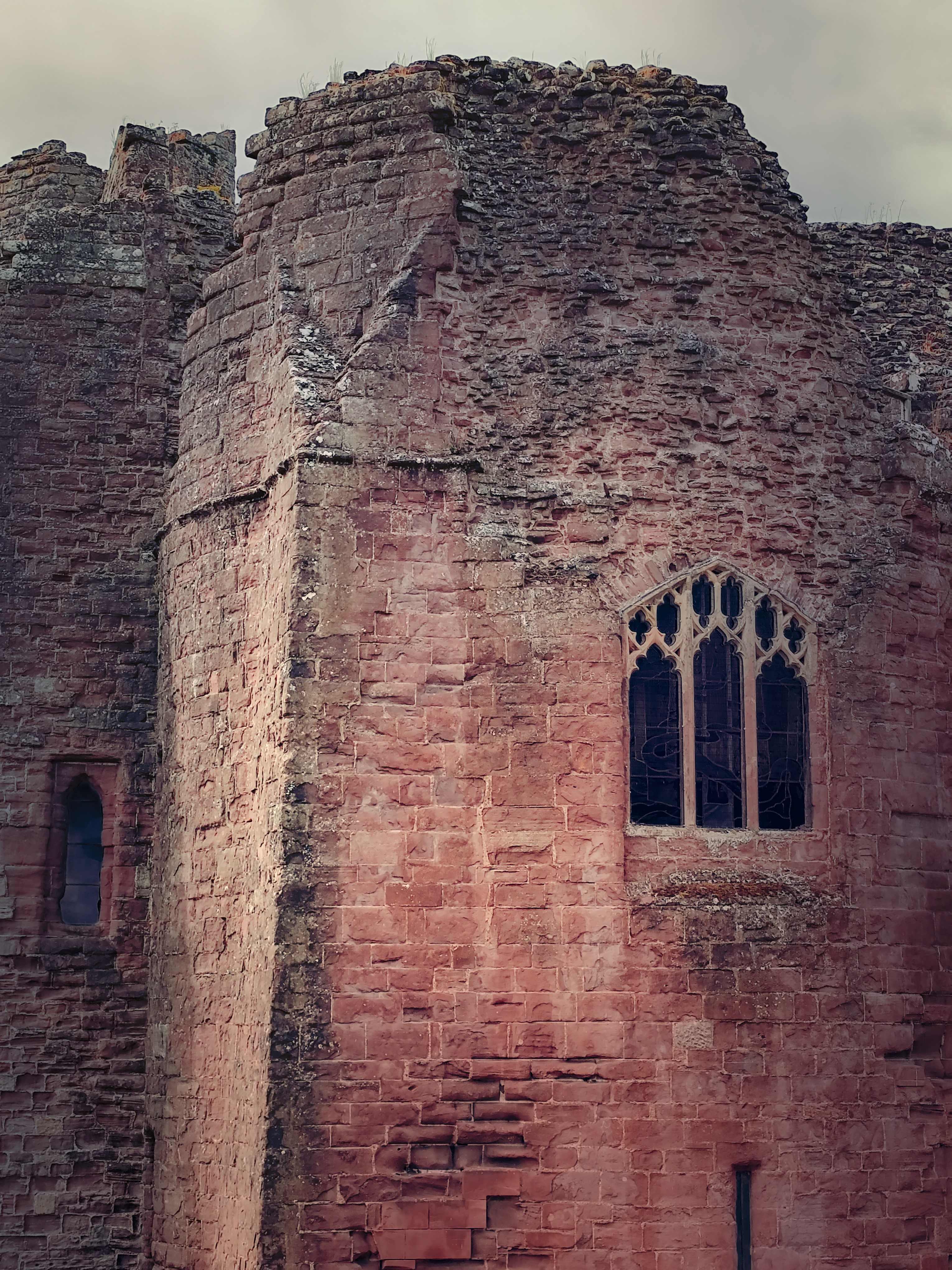
Continuing my series on Goodrich Castle, this photograph moves away from the castle as a whole and towards something much more intimate: the stone itself.
From a distance, Goodrich is a powerful mass of towers, walls and ruins. Up close, another story emerges.
The surfaces are irregular, weathered and full of contrasts — and among them, a beautifully shaped Gothic window still survives.
A Medieval Fortress with a Different Side
Goodrich was designed as a defensive stronghold, but it was also a place where people lived.
Much of the castle visible today was rebuilt in the late 13th century under William and Joan de Valence, creating a sophisticated combination of military defences and residential buildings. English Heritage describes the castle as an unusual combination of a strongly defended fortress and a high-status residence.
That distinction is particularly interesting in this photograph.
The massive masonry suggests strength and protection, while the elegant window introduces another architectural language altogether.
The Window in the Wall
The Gothic window immediately draws attention.
Its pointed arches and delicate stone tracery are remarkably refined when compared with the rough masonry surrounding it. It is a reminder that medieval castles were not simply dark military machines.
Goodrich contained chapel and residential spaces, with architectural details intended for people rather than weapons.
The chapel itself formed part of the sophisticated late-medieval complex, and its surviving features include Gothic windows that contrast strongly with the defensive character of the surrounding towers.
Here, centuries of weathering have transformed the original contrast even further.
The carefully worked stone remains recognisable, while much of the surrounding wall has become a textured surface of fractured blocks, repairs and exposed layers.
Reading the Ruins
This is perhaps what I enjoy most about photographing castles.
A photograph can isolate a small element that would easily disappear when looking at the monument as a whole.
A window.
A change in masonry.
A blocked opening.
A line where one phase of construction meets another.
At Goodrich, these details help reveal that the castle was not built all at once. Its surviving architecture represents different periods of construction, adaptation and repair, from the medieval keep to the major rebuilding of the late 13th century and later alterations. :
The ruin is therefore almost an architectural document — one written in stone rather than on paper.
📷 Photo Notes
Location: Goodrich, Herefordshire, England
Site: Goodrich Castle
Architectural detail: Medieval Gothic window and defensive masonry
Period: Mainly 12th–13th century fabric
Photographic approach: Architectural detail / colour
Series: Goodrich Castle, Wye Valley
“History is sometimes easier to read when we stop looking at the whole building.”
📷Architectural detail
| Category | #momentsinfocus |
| Photo taken at | Wales |

@marcoteixeira
Upvoted! Thank you for supporting witness @jswit.
I love how you zoom into the weathered stone and highlight the Gothic window—does the texture change when you shoot at different angles or times of day? 🌄🔍
Miren esto, la ventana gótica que se abre entre la piedra erosionada es como una lágrima de luz en medio del tiempo, ¡increíble! ¿Sabían que William y Joan de Valence la remodelaron a finales del siglo XIII, dejando esa sutil mezcla de fortaleza y elegancia?
La ventana gótica bajo la restauración de William y Joan de Valence me dejó con la mochila lista para explorar el detalle en Goodrich, porque esas texturas de piedra valen cada peso del presupuesto. ¿Alguien conoce alguna ruta guiada que enfoque ese contraste de fortaleza y residencia? 😊