E-Skin Technology: The Artificial Skin That Can Feel Touch
Human skin is one of the most advanced sensing systems in nature. It allows us to feel pressure, temperature, and even the slightest touch. Inspired by this incredible ability, scientists are developing electronic skin, commonly known as E-Skin. This ultra-thin, flexible material is designed to imitate the functions of real human skin by using tiny electronic sensors. Although the technology is still developing, researchers believe it could completely transform healthcare, robotics, and wearable devices in the coming years. What once seemed like science fiction is now becoming a real scientific achievement.
E-Skin contains microscopic sensors that can detect pressure, heat, movement, and sometimes even humidity. These signals are converted into digital information that can be understood by computers or robotic systems. Scientists are testing E-Skin for advanced prosthetic hands, allowing people with artificial limbs to feel objects more naturally. Doctors are also studying wearable versions that continuously monitor body temperature, heart rate, and other health conditions without bulky medical equipment. As the technology improves, electronic skin may become thinner, more comfortable, and even capable of repairing small damage by itself.
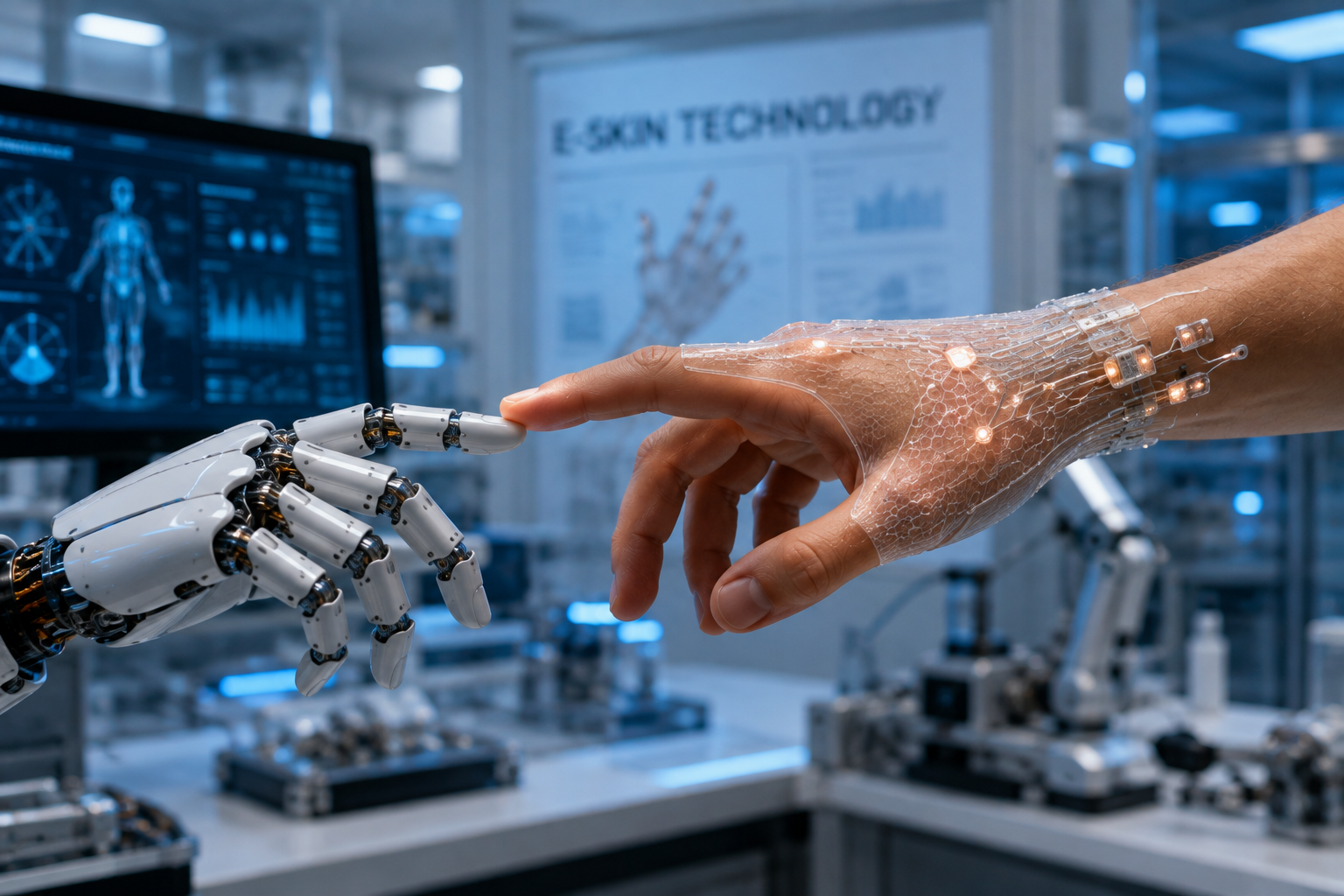
The future possibilities of E-Skin are remarkable. Robots equipped with electronic skin could safely work alongside humans because they would be able to detect gentle touch and avoid harmful contact. Athletes might use wearable E-Skin to monitor muscle performance during training, while patients with chronic illnesses could benefit from continuous health monitoring without frequent hospital visits. Although researchers still face challenges such as durability, battery life, and production costs, rapid progress in materials science is bringing this technology closer to everyday use.
Personally, I think E-Skin is one of the most exciting innovations being developed today. It shows how technology can imitate nature while improving the quality of human life. As research continues, electronic skin could become an important part of future medicine, robotics, and smart wearable devices, opening the door to possibilities that once existed only in imagination.
What Are Your Thoughts?
Thank you for reading! I'd love to hear your opinion in the comments. If you enjoyed this article, your support and feedback would be greatly appreciated.