Self-Healing Concrete: Can Buildings Repair Their Own Cracks?
Imagine a building that could repair tiny cracks in its walls without workers, tools, or expensive repairs. Scientists are developing a fascinating technology called self-healing concrete, which is designed to repair certain cracks automatically. Concrete is one of the most widely used construction materials in the world, but small cracks can develop over time because of weather, pressure, and repeated changes in temperature. If these cracks become larger, they can allow water to enter and gradually damage the structure.
Researchers have developed different approaches to make concrete capable of healing itself. Some experimental types contain special bacteria, capsules, or other materials that become active when cracks allow water to enter. In some designs, the bacteria can produce minerals that help fill the crack. Other methods use special chemicals or polymers that react when the concrete is damaged. The goal is to create concrete that can automatically repair small cracks before they become serious problems.
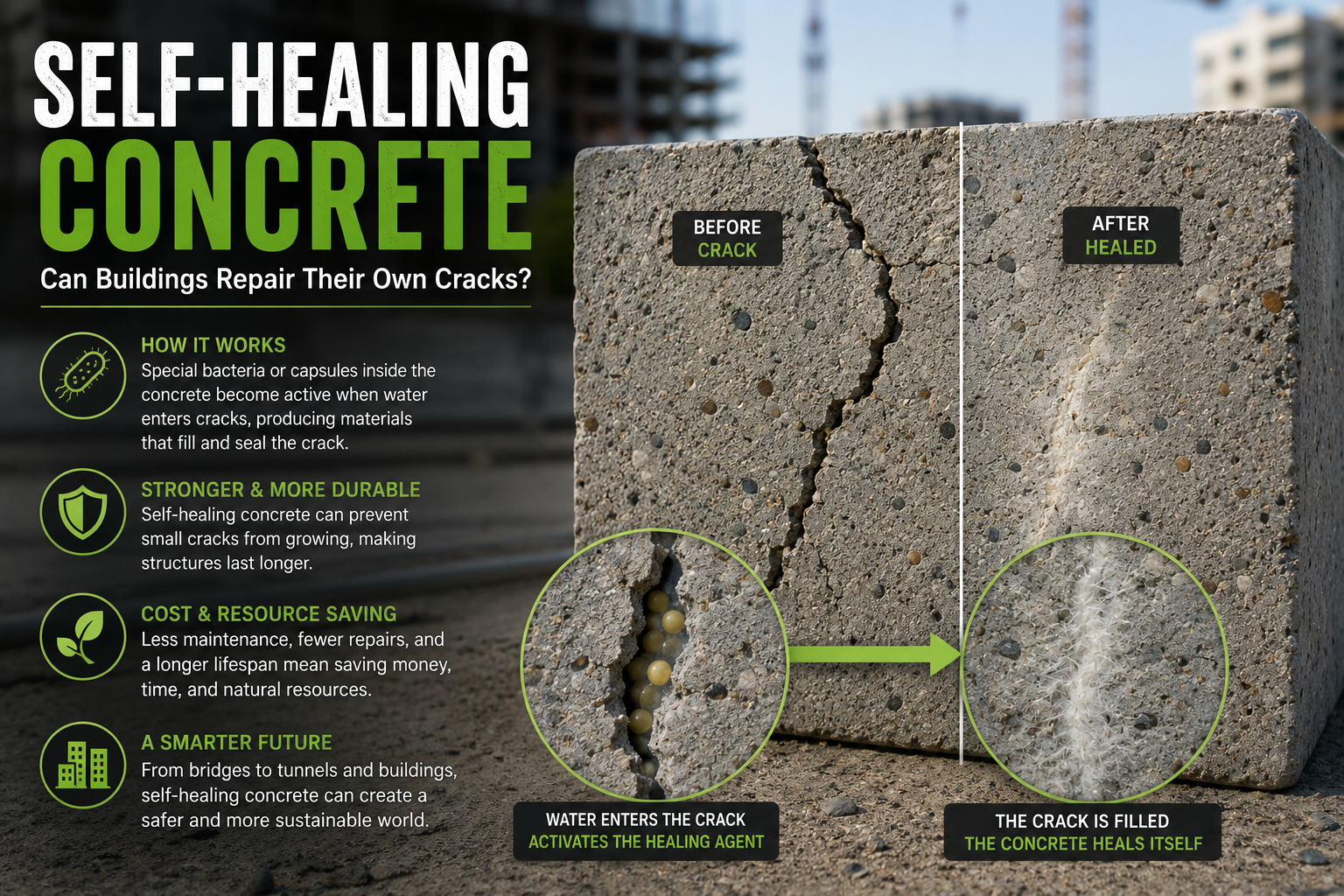
Self-healing concrete could have many useful applications in the future. It could potentially make bridges, tunnels, roads, buildings, and other structures more durable while reducing the need for frequent maintenance. This could save materials, time, and money over the long term. However, researchers still need to improve the technology, reduce its cost, and make sure it works reliably under different environmental conditions.
Personally, I think self-healing concrete is a great example of how technology can learn from nature. Instead of constantly repairing damaged structures after problems appear, future buildings might be designed to respond to damage themselves. If scientists can make this technology affordable and reliable, it could change the way we construct and maintain buildings around the world.
What Are Your Thoughts?
If you enjoyed this article, your support through an upvote would mean a lot to me. Thanks for reading and supporting my work!
Me llamó la atención que los investigadores usan bacterias que producen carbonato de calcio al contacto con agua; eso es genial porque el proceso es totalmente autogenerado. La diferencia se nota cuando comparas ese método con los polímeros tradicionales, que requieren activación externa. Si logran bajar el costo, será práctico para nuestras infraestructuras.