# Self-Healing Materials: The Future of Buildings That Repair Themselves
Imagine a world where a cracked road repairs itself after heavy traffic or a damaged building fixes small cracks without any human intervention. It may sound impossible, but scientists are developing self-healing materials that can repair their own damage. These advanced materials are designed to react when a crack appears, using special chemicals, bacteria, or tiny capsules hidden inside the material. When damage occurs, these components are released and automatically fill the crack before it grows larger. Researchers believe this technology could make buildings, bridges, roads, and even smartphones much stronger and longer-lasting, reducing repair costs and improving safety for millions of people.
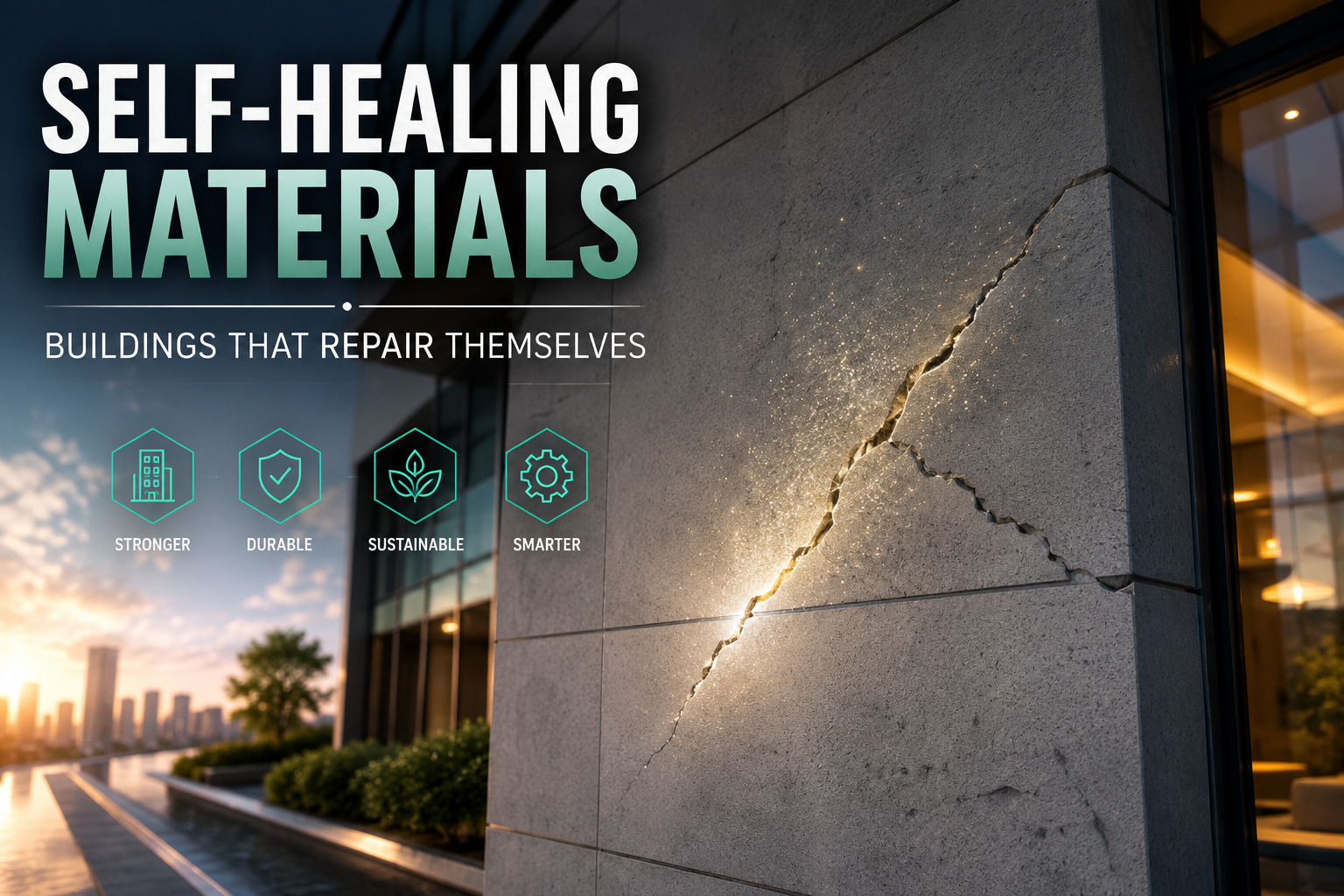
One of the most exciting examples is self-healing concrete. Some types contain bacteria that become active when water enters a crack. These bacteria produce limestone, naturally sealing the damaged area. Scientists are also developing self-healing plastics, protective coatings, and materials for aircraft and space missions. Although this technology is still developing and remains expensive, experts believe it could save billions of dollars in maintenance costs while making infrastructure safer. Imagine driving on roads that repair themselves after damage or living in homes that automatically fix small cracks before they become serious problems.
Personally, I believe self-healing materials could become one of the most useful inventions of the future. Instead of constantly repairing damaged structures, people could rely on smarter materials that last much longer and reduce waste. This technology could also help protect the environment by reducing the need for new construction materials and lowering maintenance costs. While more research is needed before these materials become common, the progress made so far is very promising. What do you think? Would you trust a building that could repair itself without human help? Share your opinion in the comments.