The Next Blood Moon

in Popular STEMyesterday

The Next Blood Moon


Souce


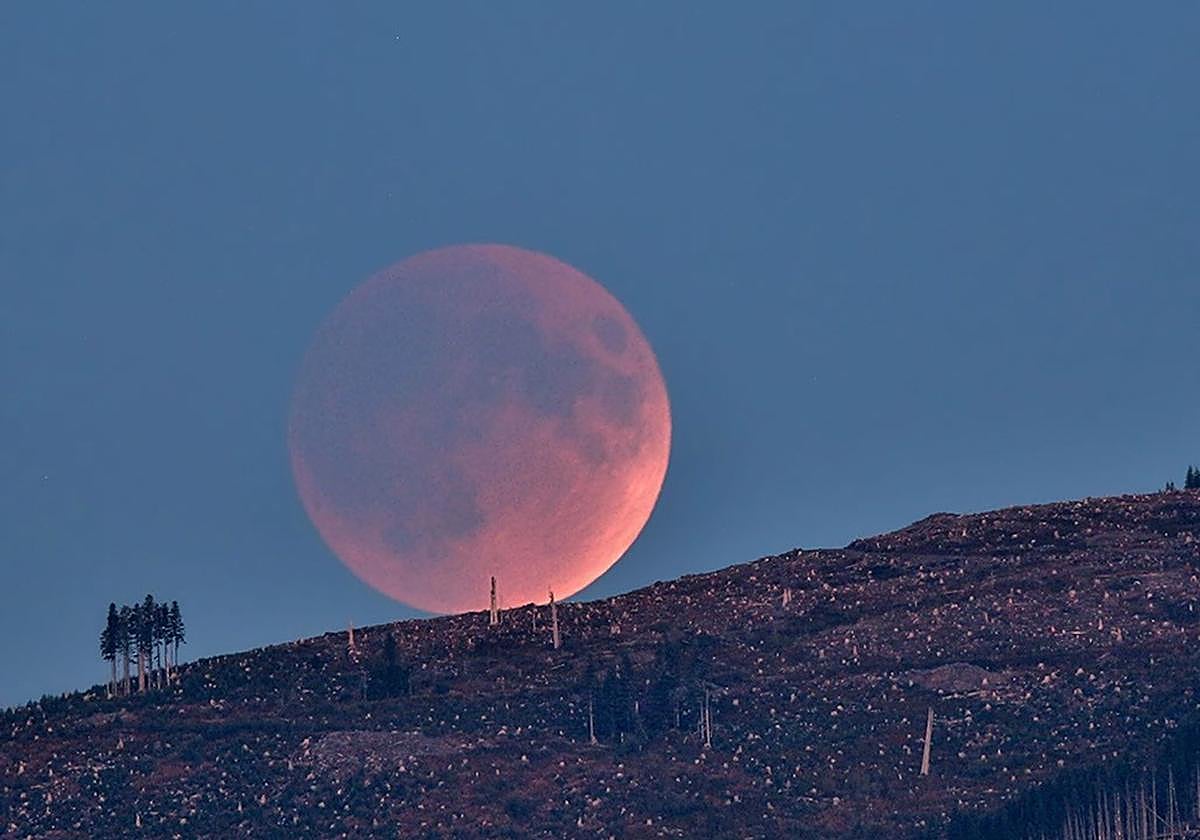
On August 28, 2026, there will be a lunar eclipse. It won't be a "blood moon" in the strict astronomical sense, but it will appear a very intense red or coppery color—we could call it a "copper moon," which has a nice ring to it. However, the media is starting to call it a "near-blood moon" because the term "blood moon" grabs more attention; personally, I prefer the "copper" description.
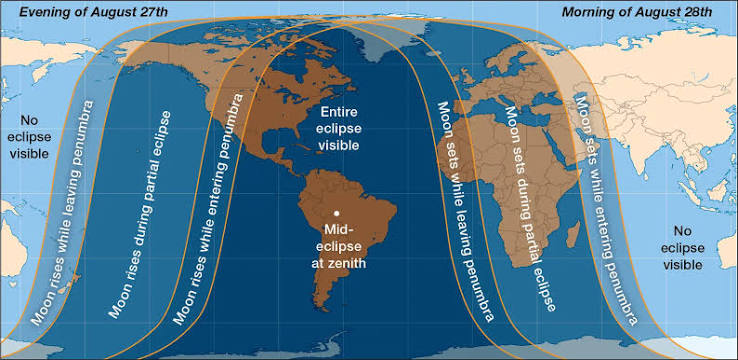

The key point is that this will be an eclipse visible primarily from the Americas; the lighter area you see on the map is where the view will be best, whereas visibility in Europe will be mediocre. It will be an eclipse seen mainly across North America—specifically the eastern United States and Canada—as well as all of South and Central America.


Why won't it be a full blood moon? Because the Earth will cover between 93% and 96% of the Moon's diameter—not the entire thing. Even so, the Moon will still receive light from Earth. The reddish hues seen during blood moons are caused by sunlight passing through Earth's atmosphere—since Earth doesn't emit its own light, but rather reflects it—so the effect comes from that sunlight filtering through the atmosphere and the light reflected by the Earth itself.


Souce


It is as if we were seeing a projection of all of Earth's sunsets and sunrises at that moment reflected on the Moon. On the Iberian Peninsula in Spain, the eclipse will begin at 3:23 a.m., though the visible partial phase will start at 4:33 a.m. and reach its absolute peak at 6:12 a.m.


Although it won't be a total eclipse—it doesn't reach totality—no special glasses are required; there is no risk of moonlight damaging your eyes, especially during an eclipse.


It will look more or less like the image, though with a slightly more visible reddish hue; it isn't an intensely deep red "blood moon." Blood moons are truly impressive, and it makes sense that they once struck fear into people. In fact, I am almost convinced that great ancient astronomical observatories—like Stonehenge and others—were designed not so much for eclipses (which were rarer events) but specifically to track blood moon eclipses, as these must have been awe-inspiring moments. And, as you can see, a lunar eclipse covers a much wider area and is generally easier to view than a solar eclipse, where the path of totality is just a narrow strip. There are many theories regarding the placement of stones in megalithic monuments and how they were used to determine the positions of the stars, the Moon, and so on.


The images without reference were created with AI
Thank you for visiting my blog. If you like posts about #science, #planet, #politics, #rights #crypto, #traveling and discovering secrets and beauties of the #universe, feel free to Follow me as these are the topics I write about the most. Have a wonderful day and stay on this great platform :) :)


! The truth will set us free and science is the one that is closest to the truth!