They want to commercialize sunlight.

in Popular STEM3 days ago

They want to commercialize sunlight.


Souce


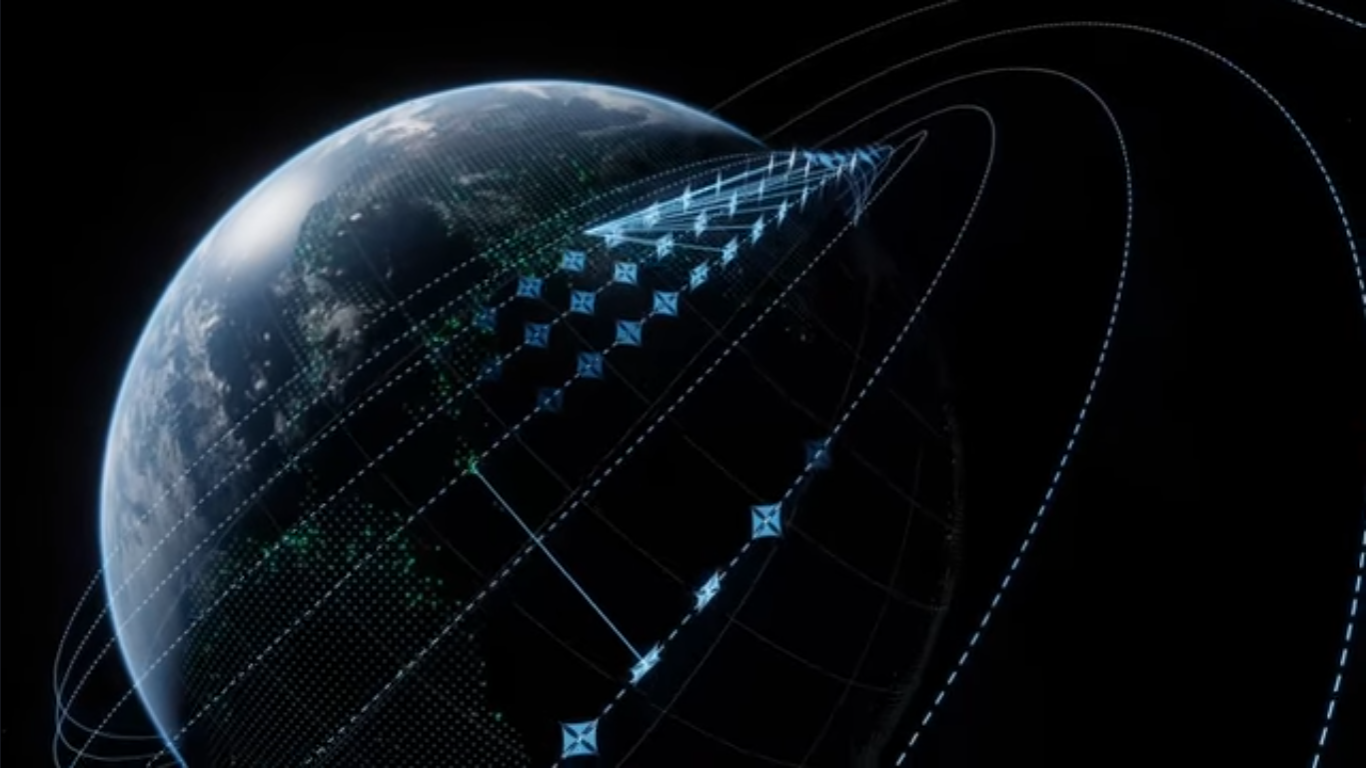
The company Reflect Orbital aims to use 50,000 satellites equipped with massive orbiting mirrors to turn night into day; it has just secured permission to launch its "AN Deal 1" prototype into space to test whether the company can actually sell sunlight for $2,000 an hour. It’s somewhat reminiscent of Mr. Burns’s sinister scheme to block out the sun with a giant mechanical sunshade—only in reverse.


Naturally, this raises significant concerns; the very idea of ​​eliminating nighttime sounds macabre. It seems that every modern tech project has to be dystopian these days—otherwise, what’s the point? But is what the company promises actually feasible? I first came across a report on this project about two years ago, but I didn't even bother to look into the details. Upon reading the headline, my gut reaction was, "Hmm, that’s impossible; it’s probably a scam." However, given the growing buzz—especially after they got the green light from the U.S. Federal Communications Commission (FCC) on July 9th to launch their prototype—I felt compelled to investigate the project thoroughly so I could form an informed opinion.


Reflect Orbital is a company founded in 2021—a "startup," in entrepreneur-speak—that seeks to place a constellation of 50,000 satellites into orbit. These satellites would feature massive mirrors capable of reflecting sunlight and directing it to any location on Earth, with the company charging around $2,000 an hour for the service. They had to sell this vision to potential investors with absolutely nothing to show for it—no product, no prototype, just an appealing idea.


Convincing investors is paramount because, without their money, there is simply no product—and Reflect Orbital struggled with that hurdle for years. In 2024, the company consisted of literally just three people, yet they must have done something right, as they suddenly received $20 million in 2025 from Luxe Capital, a venture capital firm that funds tech projects—or, to put it plainly, a company dedicated to dazzling wealthy individuals with spectacular projects to secure their money based on the vague promise that their investment will multiply once the project succeeds. *Once it succeeds!* After all, had you bought Amazon stock back in 1997—when it was just a modest online bookstore—it would be a different story.


Since the odds of becoming a millionaire by betting on an innovative idea aren't zero, some people take the plunge; and because this type of investment is venture capital, neither Luxe Capital nor Reflect Orbital is obligated to guarantee investors that their money won't be lost—which is precisely what is going to happen here. The founders of Reflect Orbital get to enjoy these funds while working on a project they know has no real-world applications, will never be profitable, and won't even recoup the invested capital—money that belongs to other people.


But how am I so sure this project is a fraud? Let me show you. Their website features a series of nonsensical AI-generated animations illustrating the project's supposed applications: illuminating disaster zones, search-and-rescue operations, crop fields, and solar power facilities at night.


Imagine lighting up a cornfield at night—thinking that if it gets twice the light, it produces twice the corn. No, my friend, that’s not how plants work. Plants wouldn't want to receive sunlight all the time—just as *you* wouldn't want to; you need to sleep. Plants use sunlight to create glucose through photosynthesis, but they need the night to utilize that stored chemical energy to grow and develop. Nighttime is just as necessary as daytime—but setting that absurdity aside, let’s move on to the other nonsensical aspects.


In 2024, they released a video showing what was supposedly a proof-of-concept test. They mounted a mirror on a hot-air balloon, raised it a few tens of meters, and reflected sunlight downward; they managed to aim the beam—albeit shakily—at solar panels located 242 meters away on the bed of a pickup truck. They were elated to confirm that the solar panels worked; the reflected light produced peaks of 200 W—enough to run a blender intermittently. This was intended to demonstrate, on a very small scale, that their project is viable—that they could beam sunlight from orbit to illuminate dark areas on Earth—but the numbers don't add up.

The plan calls for these satellites to orbit at an altitude of 625 km, featuring square mirrors with an area of ​​18 m². Let’s assume—optimistically, and likely unrealistically—that they can keep the mirror's reflective film perfectly flat and align its four segments for a flawless reflection. A square mirror measuring 18 meters on each side can receive a maximum of 1,361 W of solar energy per square meter while in orbit. Ignoring the gaps between segments, the 18-meter-square mirror has a total surface area of ​​324 m² and the capacity to capture and reflect 441,000 W of solar energy. However, that figure applies only if the mirror receives sunlight perpendicularly—in which case it couldn't direct the light toward Earth, as it would be reflecting it right back at the Sun.


The most useful angle for reflecting light onto the surface would be 45° relative to the sun; this reduces the energy received and reflected from the sun by approximately one-third—we can round this to 310,000 W. However, that energy still has to pass through the atmosphere. Even in the best-case scenario—entering perpendicularly to traverse the least amount of atmosphere—the energy would be reduced by 36%. In other words, instead of 310,000 W, we would be getting something like 200,000 W at the Earth's surface, provided there are no clouds (since, in that case, nothing gets through). Yet even under these ideal conditions, that 200,000 W is spread across a circle 5 km in diameter on the Earth's surface, because it is not a focused beam of light.


That covers more than 19 km². The energy is distributed over such a large area that the amount actually received by a crop, a solar panel array, or a search-and-rescue team would be practically undetectable; 200,000 W divided by 19,000,000 m² comes to 10 mW per square meter—that is nothing. Nothing. The little light bulb inside your refrigerator consumes 2,500 times more energy than that.


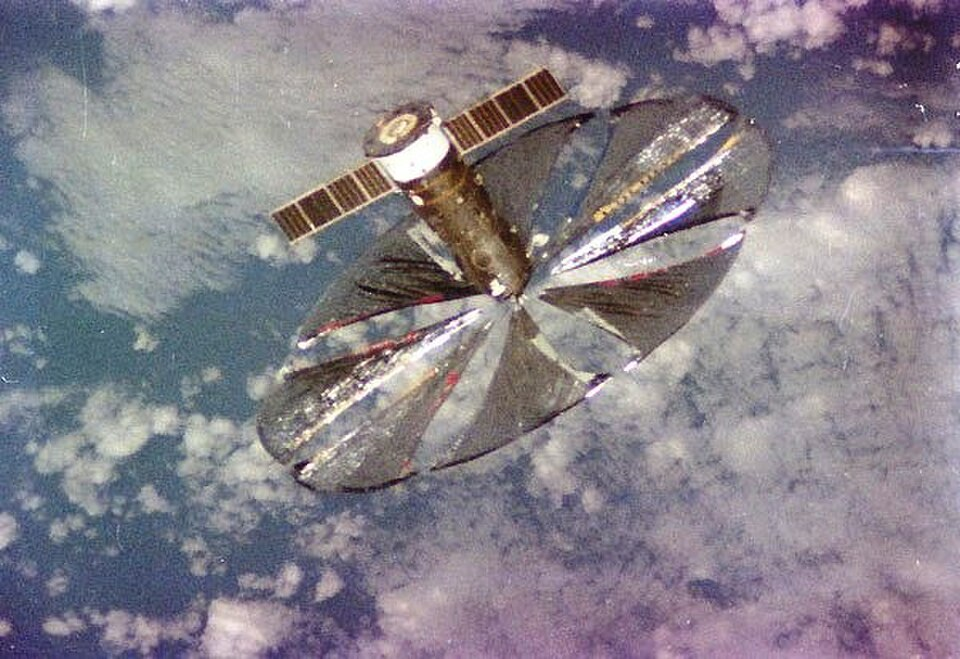
Znamya-2 Souce


One thing the company's website never mentions is that when the satellites move to Earth's night side, they receive no sunlight and obviously cannot reflect it. The only areas where they can reflect sunlight are in daylight—where the light isn't needed—or along a thin strip on the night side just beyond the terminator (the line between day and night). In other words, they are visible only shortly before dawn or shortly after dusk—the same times we can see sunlight reflecting off satellites and space stations in clear skies. Consequently, even if dozens of satellites from this constellation were passing overhead simultaneously, they could only provide illumination briefly before sunrise or after sunset.


This means the system cannot provide useful service to agriculture, solar farms, search-and-rescue teams, or disaster zones. There are other issues proving the unviability of these satellites as well; for instance, their large, lightweight mirrors act essentially as sails, creating significant atmospheric drag. Even at an altitude of 625 km, the atmosphere is dense enough to slow the satellites down, causing them to fall back to Earth relatively quickly. Beyond that, I cannot imagine anyone paying $2,000 for an hour of dim light—no brighter than moonlight—which is useless for the applications the company proposes.


There is no market for this product, so I predict that once the prototype is launched and the lack of practical applications becomes evident, the project will die just as other space mirrors have in the past. The Russians had already done this. In 1992, they launched the *Znamya-2* space mirror—the name means "banner." It deployed like petals opening via centrifugal force; with a diameter of 20 meters, it was able to reflect a faint beam of light—5 kilometers across—that swept from southern France to western Russia at a speed of 8 kilometers per second. It was proven 34 years ago that this idea is impractical and useless, yet for some reason, there are still naive people investing their money in it.


Official website


The images without reference were created with AI
Thank you for visiting my blog. If you like posts about #science, #planet, #politics, #rights #crypto, #traveling and discovering secrets and beauties of the #universe, feel free to Follow me as these are the topics I write about the most. Have a wonderful day and stay on this great platform :) :)


! The truth will set us free and science is the one that is closest to the truth!


Sort:  

Congratulations!

Your post has been selected and upvoted by the SteemPro Team 🚀

Explore more on SteemPro:
🌐 https://www.steempro.com
🎮 Play SteemHeights: https://www.steempro.com/games/steem-heights
💬 Join our Discord: https://discord.gg/Bsf98vMg6U

💪 Supporting the growth of the Steem ecosystem together.

🟩 Vote for witness faisalamin:
https://steemitwallet.com/~witnesses
https://www.steempro.com/witnesses#faisalamin

steempro-cover-black.png
This is an automated message.