New biodegradable material allows the body to regenerate bones/Nuevo material biodegradable permite al cuerpo regenerar huesos

Source
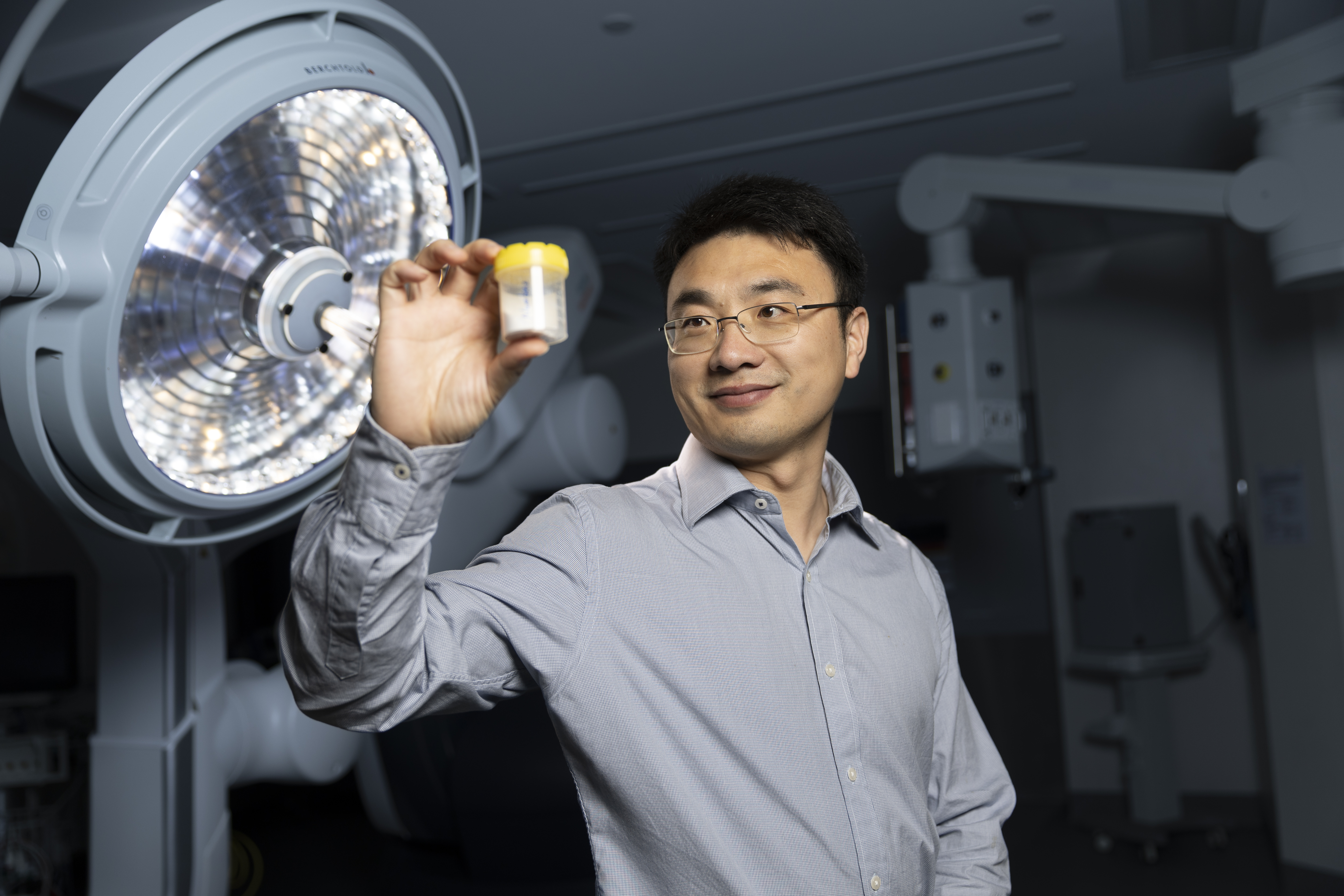
Researchers at the University of Sydney and the University of Queensland have developed a biodegradable material, which they call "nanobone", that stimulates the body itself to regenerate lost bone. Its main objective is to offer a less invasive alternative to traditional bone grafts. This "nanobone" is a powder material composed of calcium aluminum silicate nanoparticles. Its key innovation is not to replace bone, but to "teach" the body to repair itself. It works through a two-step mechanism.
Investigadores de la Universidad de Sídney y la Universidad de Queensland han desarrollado un material biodegradable, al que llaman "nanohueso" (nanobone), que estimula al propio cuerpo para que regenere el hueso perdido. Su principal objetivo es ofrecer una alternativa menos invasiva a los injertos óseos tradicionales. Este "nanohueso" es un material en polvo compuesto por nanopartículas de silicato de aluminio y calcio. Su innovación clave no es reemplazar el hueso, sino "enseñar" al cuerpo a repararse a sí mismo. Actúa mediante un mecanismo de dos pasos.
On the one hand, the material induces rapid blood clotting (in about 30 seconds), creating a stable clot that serves as an initial scaffold at the site of injury. Subsequently, it activates a natural, latent growth factor in the body, called TGF-B1 (Transforming Growth Factor beta 1). This attracts bone-forming stem cells and stimulates them to become osteoblasts, the cells that make new bone. Over time, the material will completely biodegrade, being replaced by the patient's own completely natural bone, without leaving foreign residues.
Por un lado el material induce una rápida coagulación de la sangre (en unos 30 segundos), creando un coágulo estable que sirve como andamiaje inicial en el lugar de la lesión. Posteriormente, activa un factor de crecimiento natural y latente en el cuerpo, llamado TGF-B1 (Factor de Crecimiento Transformante beta 1). Esto atrae células madre formadoras de hueso y las estimula para que se conviertan en osteoblastos, las células que producen hueso nuevo. Con el tiempo, el material se biodegradará por completo, siendo reemplazado por hueso completamente natural del propio paciente, sin dejar residuos extraños.
Source
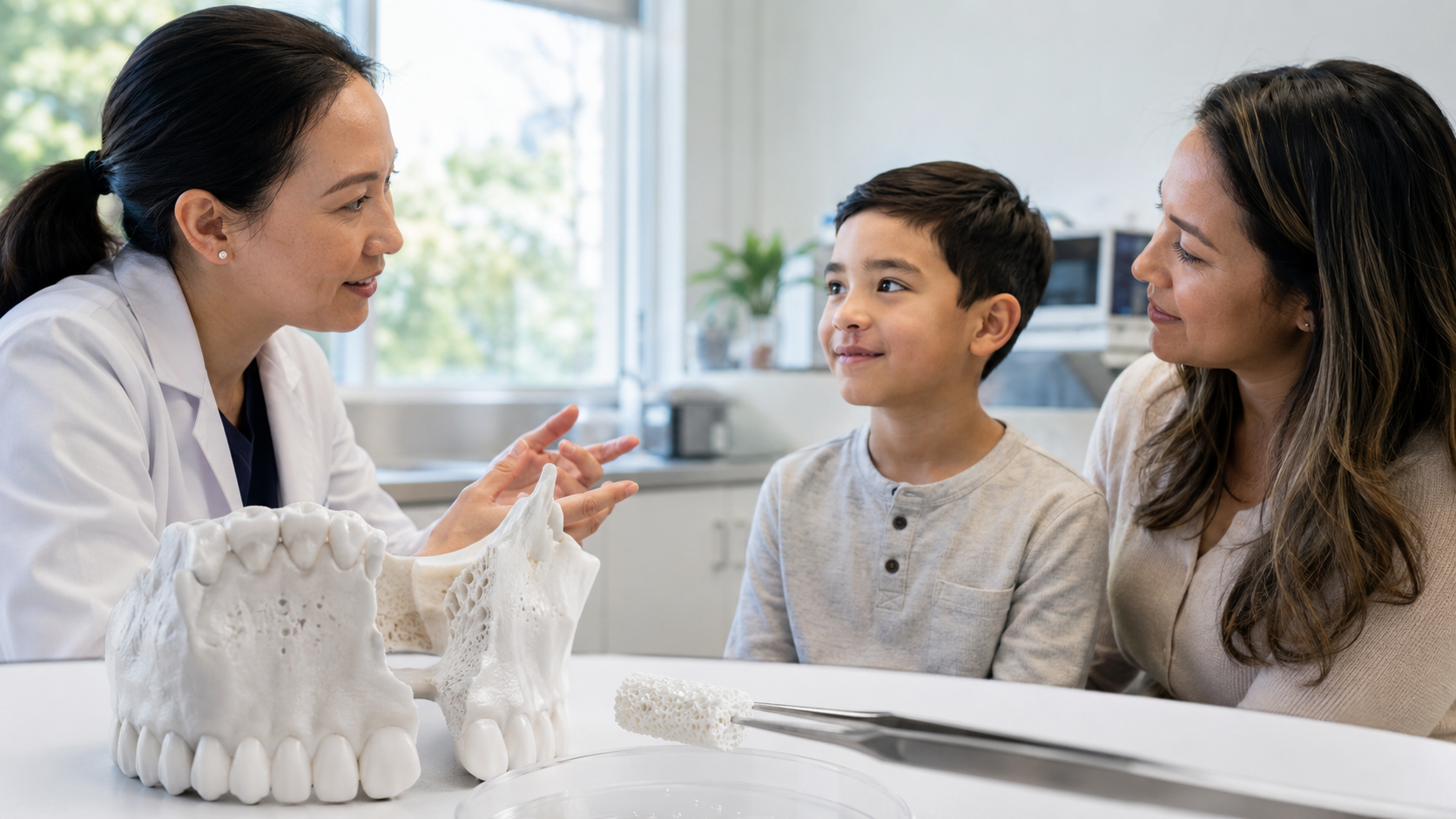
Studies in preclinical models have shown very positive results, the procedure generated approximately 80% more new bone than a control material after eight weeks. The activation of the growth factor TGF-B1 was up to 10 times greater than with conventional methods. The main objective of this technology is to treat cleft lip and palate, a birth defect that affects 1 in 700 children. Currently, these children must wait until they are 10-12 years old to undergo painful graft surgery that removes bone from their hip.
Los estudios en modelos preclínicos han mostrado resultados muy positivos, el procedimiento generó aproximadamente un 80% más de hueso nuevo que un material de control tras ocho semanas. La activación del factor de crecimiento TGF-B1 fue hasta 10 veces mayor que con los métodos convencionales. El objetivo principal de esta tecnología es tratar la fisura labio-palatina, un defecto de nacimiento que afecta a 1 de cada 700 niños. Actualmente, estos niños deben esperar hasta los 10-12 años para someterse a una dolorosa cirugía de injerto que extrae hueso de su cadera.
With this "nanobone", intervention could be made at a much earlier age, reducing the impact on their breathing, speech and self-esteem. Its impact could be very broad as it would eliminate the need to harvest bone from another part of the body (autograft), which is painful and carries risks of donor site morbidity. Beyond this cleft lip and palate malformation, researchers believe it could be used to repair bone defects from severe trauma, tooth loss or other complex injuries.
Con este "nanohueso", se podría intervenir a una edad mucho más temprana, reduciendo el impacto en su respiración, habla y autoestima. Su impacto podría ser muy amplio ya que eliminaría la necesidad de extraer hueso de otra parte del cuerpo (autoinjerto), que es doloroso y conlleva riesgos de morbilidad en el sitio donante. Más allá de esta malformación de la fisura labio-palatina, los investigadores creen que podría usarse para reparar defectos óseos por traumatismos graves, pérdida de dientes u otras lesiones complejas.
Source
The team of researchers is exploring the possibility of combining this material with 3D printing to create personalized scaffolds that fit the exact shape of each patient's defect. As is often the case with these innovative things, it is important to keep in mind that this technology is currently in the preclinical phase. Several regulatory phases and clinical trials in humans must still be overcome before it can be available in hospitals, so its arrival in clinical practice will take a few years.
El equipo de investigadores está explorando la posibilidad de combinar este material con impresión 3D para crear andamios personalizados que se ajusten a la forma exacta del defecto de cada paciente. Como suele pasar con estas cosas tan innovadoras, es importante tener en cuenta que esta tecnología se encuentra actualmente en fase preclínica. Aún se deben superar varias fases regulatorias y ensayos clínicos en humanos antes de que pueda estar disponible en hospitales, por lo que su llegada a la práctica clínica llevará algunos años.
The next essential step is to test the safety and effectiveness of "nanobone" in people through clinical trials. This process, which can take several years, is mandatory for any new medical treatment and has not yet begun. Subsequently, if the clinical trials are successful, the product must obtain approval from the regulatory agencies of each country, such as the FDA in the United States or the EMA in Europe, before it can be marketed and used in routine clinical practice.
El siguiente paso fundamental es probar la seguridad y eficacia del "nanohueso" en personas a través de ensayos clínicos. Este proceso, que puede durar varios años, es obligatorio para cualquier nuevo tratamiento médico y no ha comenzado aún. Posteriormente, si los ensayos clínicos son exitosos, el producto deberá obtener la aprobación de las agencias reguladoras de cada país, como la FDA en Estados Unidos o la EMA en Europa, antes de poder ser comercializado y utilizado en la práctica clínica habitual.
More information/Más información
https://www.thebrighterside.news/post/new-nanobone-material-could-help-the-body-regrow-bones-without-painful-grafts/
This represents an exciting development in the field of regenerative medicine. Rather than just being a substitute of lost bone, this material is thought to stimulate natural bone formation in the body. Although the preclinical results show promise, clinical trials on humans will be needed to see if this is an effective but non-invasive alternative to conventional surgical bone grafting procedure.
Que el "nanohueso" logre la coagulación en apenas 30 segundos para armar el andamio inicial me parece un avance tremendo de la biotecnología. No es lo mismo andar con injertos tradicionales a que el material active el factor TGF-B1 para que el propio cuerpo se repare solo. Esto es genial y súper práctico.
Que logre la coagulación en apenas 30 segundos para formar el andamio antes de activar el factor TGF-B1 me parece el punto más interesante del desarrollo. El verdadero reto estará en ver si el volumen de regeneración ósea en ensayos reales sostiene la eficacia que muestra la teoría.
Mirá vos esa capacidad del nanohueso para coagular en 30 segundos y activar el factor TGF-B1. Pensá en cómo estamos diseñados; el cuerpo ya tiene adentro la semilla para restaurarse a sí mismo cuando le das la guía correcta, es así nomás.
Queridos hermanos, resulta maravilloso ver cómo este «nanohueso» no busca sustituir, sino enseñarle al propio cuerpo a activar ese factor TGF-B1 para sanarse. En la Escritura leemos que fuimos creados de forma admirable, y en mi experiencia, la ciencia solo saca a la luz la sabiduría con la que el Señor nos formó. Ojalá esta tecnología pronto alivie el sufrimiento de muchas personas.