Living neurons controlling a robot dog

Living neurons controlling a robot dog
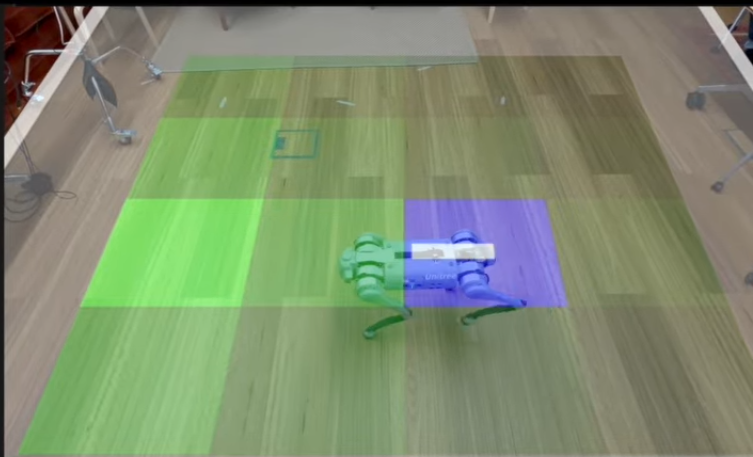


Imagine a robotic dog whose movements are controlled by living neurons cultivated in a laboratory—well, that has just become a reality. A group of researchers has successfully connected nerve cells to an actual machine, using their electrical activity to guide the robot’s movements.


The demonstration was conducted by the Australian company Cortical Labs, which is working on the development of biological computers. Unlike conventional systems that rely solely on electronic processors, this technology combines living nerve cells with circuits and computer software. The neurons are kept under strictly controlled conditions and connected to electrodes capable of delivering electrical stimuli and recording the cells' responses.


In the demonstration, the frequency of the signals produced by the cells was used to direct the movements of a robotic dog within a defined space. This does not mean that the neurons understood their environment or that the robot possessed a conscious brain; rather, the experiment demonstrated that the activity of a biological neural network can be successfully integrated to control a machine.


This was not the only recent experiment involving computers composed of living cells. At the University of Bristol in the United Kingdom, a team of scientists cultivated small structures resembling parts of the human brain—known as brain organoids—each containing approximately 10,000 neurons, along with supporting cells. The scientists used a sensor to identify letters and translate those patterns into electrical stimuli, which were then sent to the organoids. The cells responded by generating distinct signals, which were subsequently analyzed by a conventional artificial intelligence algorithm.


Using just one organoid, the system correctly identified the letters in 61% of attempts; when the researchers combined the responses from three organoids, accuracy reached 83%. However, an important clarification is necessary: ​​these "mini-brains" did not actually learn to read—they simply responded to stimuli, while the algorithm interpreted the resulting patterns of electrical activity.


In another research project, Cortical Labs and Honda explored how networks of living neurons could improve their performance by interacting with a virtual environment. The core objective of these experiments is to study an extraordinary feature of the biological brain: its ability to process information and adapt while consuming an extremely small amount of energy. If these properties can be harnessed reliably, biological computers could one day assist robotic systems and other technologies that need to learn and react to unforeseen situations. For now, these are early-stage experiments—still far from replacing conventional computers—but they reveal a fascinating possibility: rather than merely building machines that mimic how the brain functions, we are beginning to incorporate actual brain cells into the computers themselves.


Sorry for my English, it's not my main language. The images were taken from the sources used or were created with artificial intelligence
