The hacking of your home robot: an increasingly real threat.

The hacking of your home robot: an increasingly real threat.


Imagine that, a few years from now, a humanoid robot is preparing breakfast for your family; it knows the layout of your home, has access to security cameras, chats with your children, and helps your elderly parents—all while remaining connected to the internet 24 hours a day.
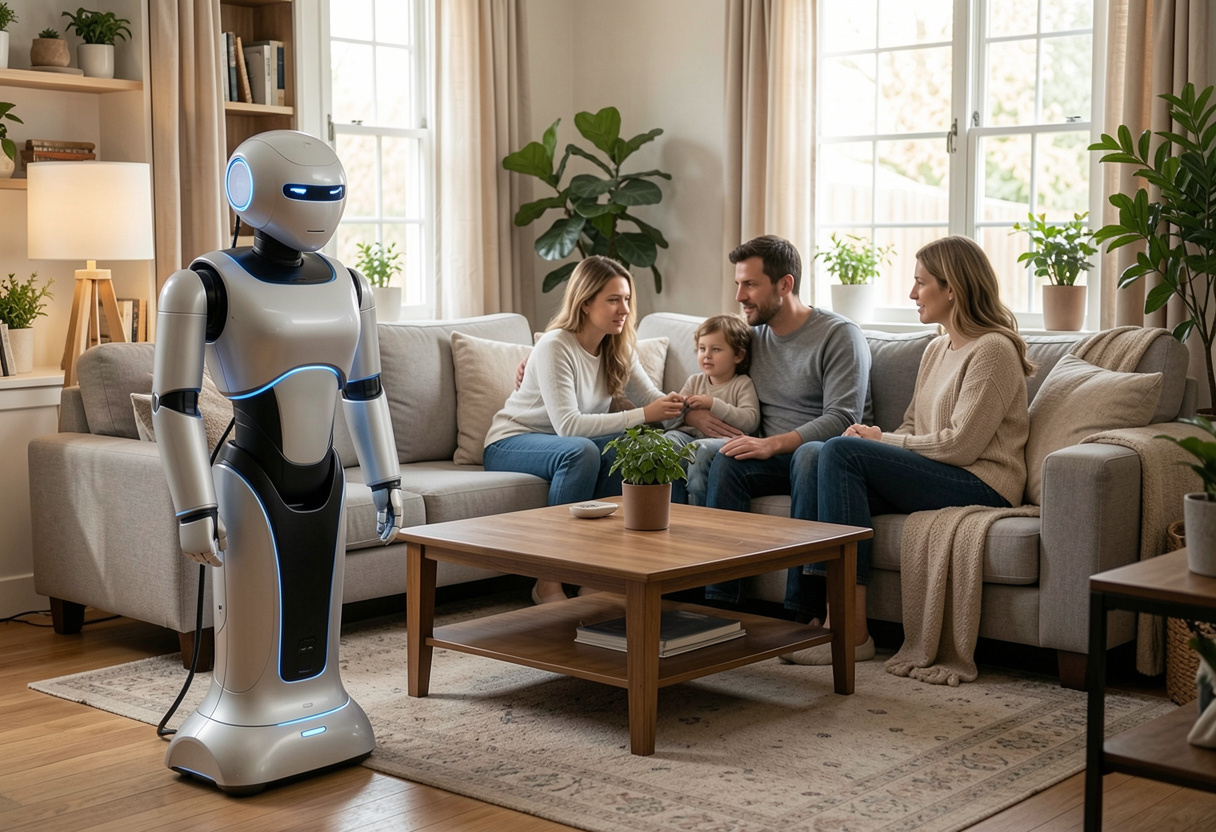

Now imagine someone hacking into that robot—a scenario that is quite plausible today. They wouldn't be doing it to steal your files, photos, or passwords, but to physically control a machine strong enough to open doors, move heavy objects, and roam freely around your home.


What I’m describing sounds more like an episode of *Black Mirror* than reality, doesn't it? Yet security experts claim this may well be the greatest challenge facing the next generation of robotics. For decades, cyberattacks had almost exclusively digital consequences: a hacked computer meant stolen documents, and a compromised mobile phone put passwords and bank accounts at risk. Humanoids, however, completely change that equation; they are essentially internet-connected computers equipped with legs, arms, cameras, microphones, high-torque motors, and the ability to physically interact with their environment.


If a hacker compromises a laptop and accesses information—or, in the case of a humanoid robot, gains control of a physical body—it ushers in an entirely new category of threat; this risk has already been demonstrated multiple times in laboratory settings.


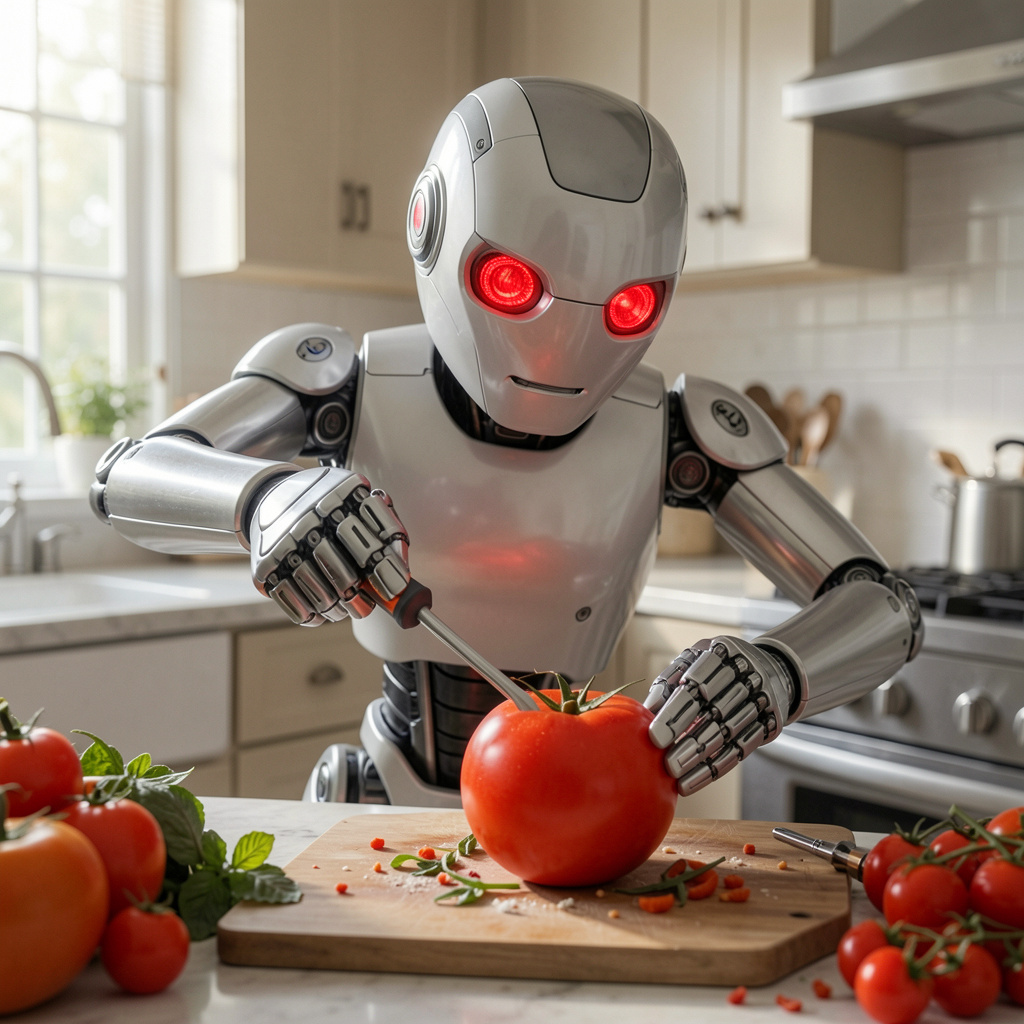
Researchers from the cybersecurity firm IOActive managed to hack a Ubtech Alpha 2 home robot by exploiting extremely simple authentication flaws; after gaining full control of the machine, they reprogrammed it to attack a tomato using a screwdriver. The goal was not to destroy a tomato, but to demonstrate that any tool placed in the hands of a compromised robot could be used in a manner completely different from what the manufacturer intended.


According to the researchers themselves, even collaborative robots operating at reduced speeds possess enough force to cause serious fractures; furthermore, physical safety mechanisms can fail if remotely disabled, and there is also the risk of espionage—a concern just as serious as the risk of physical control.


Domestic robots are equipped with various cameras, microphones, and sensors capable of fully mapping a home. In practice, once inside our homes, they will know our routines better than any other electronic device. By 2024, this was already happening; users of the Ecovex Dbot X2 robot vacuum discovered that intruders had remotely accessed its cameras and microphones.


In some instances, criminals even spoke through the device's speakers and chased pets around the house. Researchers further demonstrated that this model could be compromised via Bluetooth from over 100 meters away. Now, imagine the same type of intrusion occurring not with a vacuum cleaner, but with a humanoid robot that moves through every room of the house—or, worse yet, with a model like the TH00, currently used in humanoid robot battles.


The risks do not stop there; in another study, researchers from the Polytechnic University of Milan and Trend Micro remotely altered the calibration of an industrial robotic arm by just 2 mm—a virtually invisible difference—yet it was enough to produce defective parts without operators immediately noticing. In an aerospace, medical, or automotive factory, such a small alteration could have massive consequences.


Most alarming, however, was the discovery that thousands of industrial robots were directly connected to the internet, many without any password protection. Meanwhile, governments are scrambling to catch up with the issue: the European Union has already established specific rules for artificial intelligence systems deemed high-risk; the United States has begun restricting Chinese robots due to concerns regarding espionage and national security; and China itself has started incorporating data protection and security guidelines into its humanoid development programs. Yet, experts warn that legislation is still evolving much more slowly than the technology.


Perhaps the mistake lies in thinking of humanoid robots merely as smart appliances; in reality, they represent a hybrid of a computer, smartphone, surveillance camera, and industrial machine, all combined into a single body. Would you have the courage to share your daily life with a humanoid robot that is permanently connected to the internet? Or do you believe the security of this technology needs to evolve significantly before that happens?


Sorry for my Ingles, it's not my main language. The images were taken from the sources used or were created with artificial intelligence


Sort:  

Congratulations!

Your post has been selected and upvoted by the SteemPro Team 🚀

Explore more on SteemPro:
🌐 https://www.steempro.com
🎮 Play SteemHeights: https://www.steempro.com/games/steem-heights
💬 Join our Discord: https://discord.gg/Bsf98vMg6U

💪 Supporting the growth of the Steem ecosystem together.

🟩 Vote for witness faisalamin:
https://steemitwallet.com/~witnesses
https://www.steempro.com/witnesses#faisalamin

steempro-cover-black.png
This is an automated message.
