Two major medical breakthroughs thanks to AI

Two major medical breakthroughs thanks to AI
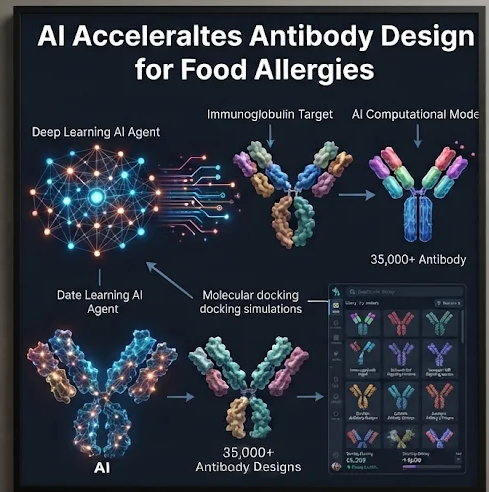


In just one month, an artificial intelligence helped scientists design nearly 35,000 versions of antibodies in the search for a new treatment for food allergies. In another laboratory, the same technology contributed to the creation of modified defense cells designed to better recognize cancer. These results were shared by Anthropic—the developer of the artificial intelligence Claude—in collaboration with biotechnology companies.

In the first experiment, researchers at Divergence Labs sought a more efficient way to combat allergic reactions. The challenge centers on a molecule called immunoglobulin, which triggers specific immune system responses; while some medications can neutralize this molecule when it is circulating freely in the body, removing it once it has already bound to defense cells is far more complex.


It was precisely this challenge that the researchers presented to the artificial intelligence. Using molecular modeling tools, Claude helped develop approximately 35,000 antibody designs, evaluating various structures and selecting candidates for laboratory testing. This process—which in similar projects had previously taken several months—yielded initial results in just a few weeks.


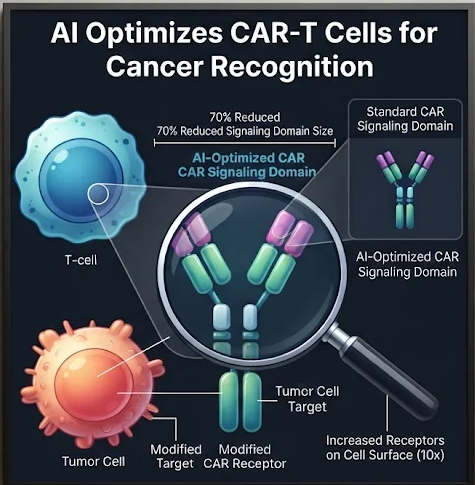
Some molecules have demonstrated the ability to detach immunoglobulin, though no drug is yet ready for use in patients. A second experiment proved equally compelling: researchers at Generate Biomedicines used Claude—along with other artificial intelligence tools—to modify a component of CAR-T cells. These cells are extracted from the immune system and genetically engineered to recognize and attack specific types of cancer.


The team succeeded in reducing the size of a region responsible for signal transmission within these cells by approximately 70%. In one test, this modification resulted in the cells displaying nearly 10 times more receptors on their surface, thereby increasing their potential to identify targets. Certain versions also demonstrated greater efficiency in eliminating tumor cells during laboratory experiments; however, this does not mean that artificial intelligence has discovered a cure for cancer.


These findings must still undergo further safety and efficacy studies before any clinical application. What these experiments highlight is a significant shift in medical research: artificial intelligence is beginning to contribute not only to data analysis but also to the design of molecules, the planning of experiments, and the development of new treatment strategies. Should these methods continue to evolve, they could enable scientists to explore a wider range of possibilities in less time—accelerating stages of the process that currently make drug development such a lengthy endeavor.


Sorry for my English, it's not my main language. The images were taken from the sources used or were created with artificial intelligence
