Which Planet Would I Wonder To for Refuge If Earth Gets Destroyed?
Greetings to everyone in this wonderful community! I hope we are all doing well and enjoying the gift of life. It is another beautiful opportunity to share our thoughts, learn from one another, and discover new things through this amazing platform.
First of all, I want to sincerely appreciate our dear contest host, @chiagoziee , for bringing up this interesting topic. Honestly, this is not the kind of question I answer every day. Most times, when I wake up in the morning, I think about what to eat, how to go about my daily activities, and how to make progress in life. I never knew that one day I would sit down and think about where I would run to if the whole Earth were destroyed!
Nevertheless, this is an interesting topic because it has made me think deeply about our planet and the possibility of living somewhere else. I also had to make some research to understand the different planets and what life might be like outside Earth. Please, join me as I share my thoughts on this interesting topic.
1. Which planet would I choose as my refuge if Earth were destroyed?
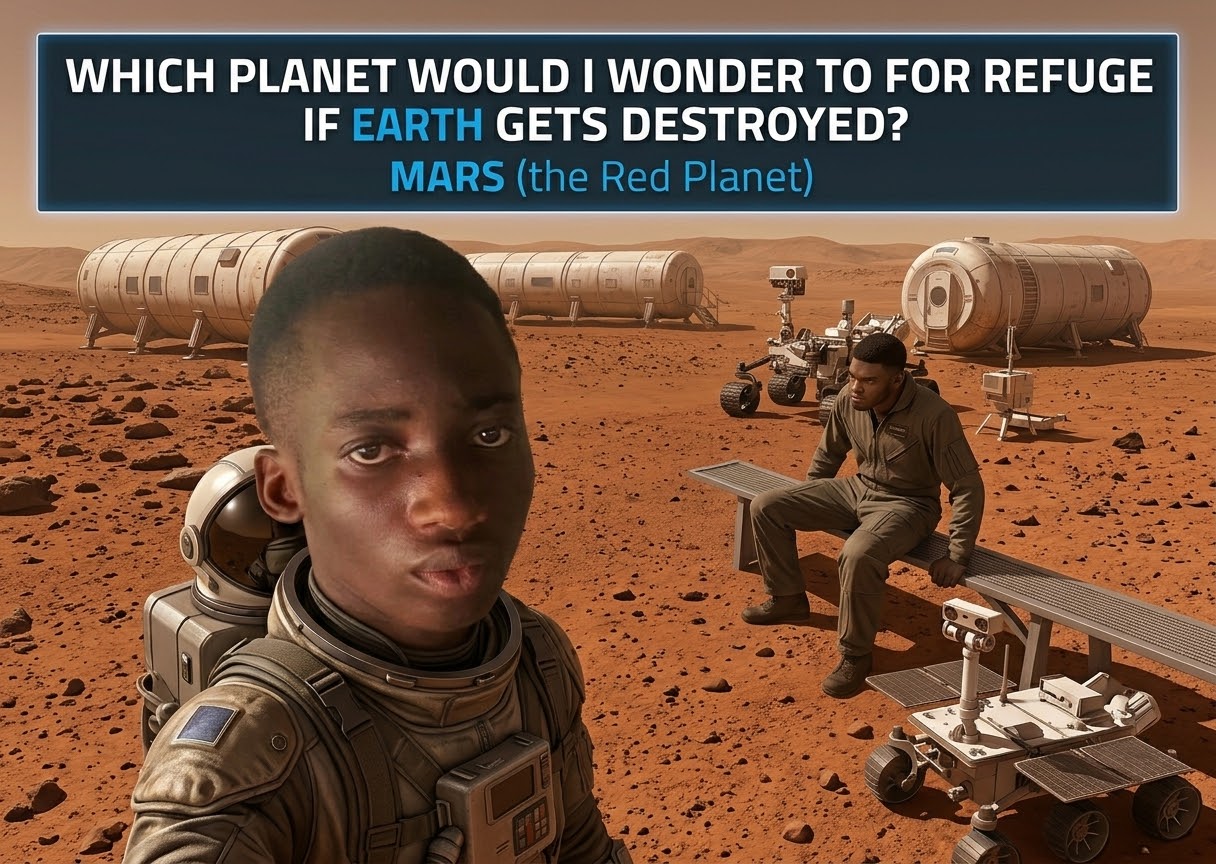
If I were given the opportunity to choose another planet as my refuge if Earth were destroyed, I would choose Mars, popularly known as the Red Planet.
I know some people might wonder why I would choose Mars when it is not as comfortable as Earth. Honestly, I also asked myself that question before making my decision. After considering the different planets and the possibilities of survival, I decided that Mars would be my choice.
I am not saying that Mars is already a comfortable place for human beings to live. Far from it! If I were to arrive there today without any protective equipment, I would quickly discover that I had made a very serious mistake. But if scientists could provide the necessary facilities, I believe Mars could become a possible home for human beings in the future.
My choice is based on the possibility of building a place where humans could live, grow food, and continue their lives with the help of science and technology.
2. Why did I choose Mars over the other planets in our Solar System?
As we know, there are eight planets in our Solar System: Mercury, Venus, Earth, Mars, Jupiter, Saturn, Uranus, and Neptune. Each planet has its own special features, but not all of them have the conditions needed for human survival.
For example, Mercury is extremely hot during the day and very cold at night. Venus is even hotter, with a thick atmosphere that makes its surface extremely dangerous. Jupiter, Saturn, Uranus, and Neptune are giant planets without an ordinary solid surface where humans could establish a settlement.
When I considered these conditions, Mars became my preferred choice.
One thing I find interesting about Mars is that it has a solid surface, and scientists have discovered water ice there. This gives us something to work with if humans ever decide to establish a settlement on the planet.
Another reason is that a day on Mars is approximately 24 hours and 37 minutes. This is close to the length of a day on Earth, so keeping a daily routine might be easier than on some other worlds.
I also considered the possibility of growing plants and keeping animals there. Of course, plants cannot simply be planted outside on Mars as we do here on Earth. They would need special greenhouses with suitable temperatures, water, light, and nutrients. Animals would also need protected places, food, and proper care.
I believe that, with the right technology, these things could be possible in the future. The cost of establishing a settlement would be very high, but I think Mars offers a more realistic starting point than the other planets I considered.
3. What do I know about the environment, temperature, atmosphere, and other features of Mars?
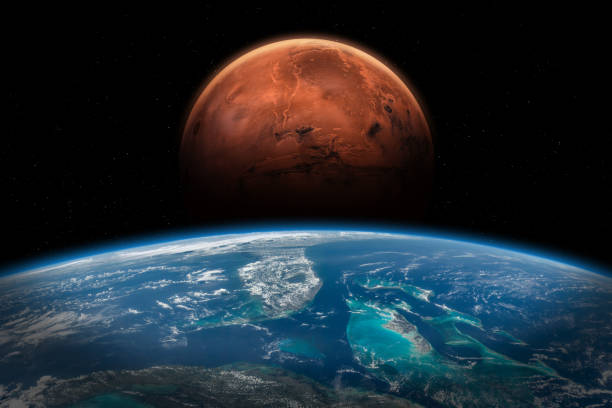
From what I have learned, Mars is a rocky planet with a reddish appearance. Its red colour comes mainly from iron minerals in its soil and rocks, which have become oxidised over time.
Unlike Earth, Mars has a very thin atmosphere, made mostly of carbon dioxide. This means that human beings cannot breathe the air there. Anyone travelling to Mars would need a supply of oxygen and a safe environment in which to live.
The planet is also very cold. Its average temperature is around minus 63 degrees Celsius, although temperatures can vary depending on the location and season. Imagine coming outside in the morning and discovering that the weather is colder than anything you have experienced in your life! That alone would teach me to appreciate the warm sunshine we sometimes complain about here on Earth.
Another interesting feature is that Mars has water ice, including ice near its poles and in other regions. This water could be useful for future missions if scientists can extract and purify it safely.
Mars also has dust storms, rocky landscapes, mountains, valleys, and craters. It is a fascinating world, but its environment is not suitable for humans to live in without protection.
Therefore, if I ever had the opportunity to travel there, I would need to live inside a properly designed shelter where the temperature, air, and pressure could be controlled.
4. What challenges do I think I would face while trying to survive on Mars?
To be honest, I believe surviving on Mars would not be an easy task. In fact, there would be many challenges to overcome.
The first challenge would be the lack of breathable air. On Earth, I can wake up, open my window, and breathe without thinking about where my oxygen comes from. On Mars, I would have to depend on special equipment to provide the air I need. If the equipment failed, it could become a life-threatening emergency.
The second challenge would be the cold weather. I would need a properly heated shelter and special clothing whenever I had to go outside. I would not want to wake up one morning and discover that the cold had turned my new home into a giant freezer!
Another challenge would be food and water. I could not simply walk to a nearby market to buy rice, garri, vegetables, or other things I enjoy eating. I would need to depend on stored supplies and carefully managed systems for producing food and obtaining clean water.
The cost of these requirements would also be a serious problem. Building shelters, producing oxygen, maintaining equipment, transporting supplies, and growing food would require a lot of money. Even a simple mistake could lead to expensive consequences.
Finally, I would have to deal with loneliness and separation from the familiar environment of Earth. I would miss my friends, the sound of people talking around me, our local food, and the ordinary things we sometimes take for granted.
5. If I could take five important things or people with me, what would I choose and why?
If I were given the opportunity to travel to Mars and could take only five important things or people with me, my choices would be based on love, survival, communication, and faith.
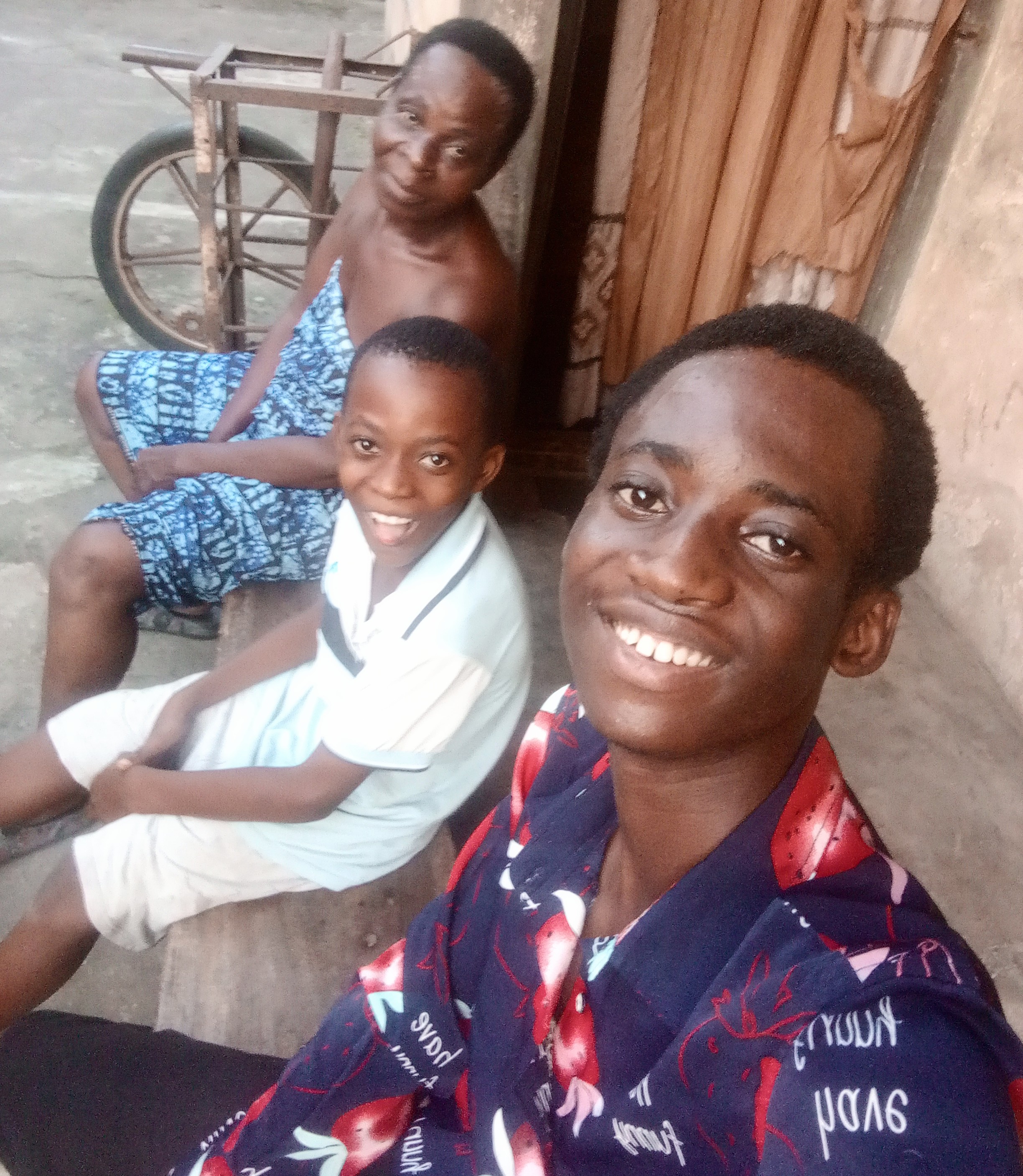
Number one: My family.
My family would be my first choice because they mean a lot to me. I would want my father, mother, and siblings to be safe with me rather than face such a frightening situation alone. I cannot imagine finding myself on another planet while constantly wondering what had happened to the people I love.
However, I understand that a real space mission would have strict limits on how many people could travel. My wish would be to keep my family safe, even if that meant that the journey had to be planned differently.
Number two: A huge amount of money.
I would also want to take a huge amount of money with me. Although money cannot solve every problem, it is important for obtaining the things people need. If money could be useful on Mars, I would need it to help provide supplies, equipment, and other necessities.
Number three: My phone.
My phone would also be among the things I would take. It would help me preserve pictures and memories of my family, keep important information, and communicate whenever the necessary communication systems were available.
Number four: My Holy Bible.
As a Christian, my Holy Bible would be very important to me. It reminds me of God's word and gives me encouragement when I face difficulties. In a strange environment where I might feel afraid, lonely, or uncertain about the future, reading the Bible and praying would help me remain hopeful.
Even if I found myself millions of kilometres away from Earth, I would still want to maintain my relationship with God. For me, changing my location would not mean abandoning my faith.
Number five: A survival kit.
My fifth choice would be a well-equipped survival kit containing essential medical supplies, emergency tools, and other items needed to support life. I would especially need reliable equipment for dealing with emergencies.
I know that a survival kit alone would not be enough to keep me alive on Mars. I would still need a pressurised shelter, oxygen, clean water, food, heating, and protection from radiation. Nevertheless, a carefully prepared kit would be an important part of staying safe.
These five choices represent the things I would value most: my family, resources, communication, faith, and survival. If I had to leave Earth, I would want to carry both the people and the things that would help me continue living with hope.
6. How would I adapt to life on Mars and make it feel like home?

I would also follow a daily routine. I would make time for prayer, work, rest, exercise, and other activities that would help me remain physically and mentally healthy. Living on another planet would require discipline because I would not have the same freedom I enjoy on Earth.
7. Do I believe humans could eventually live on another planet, or should protecting Earth remain our greatest priority?
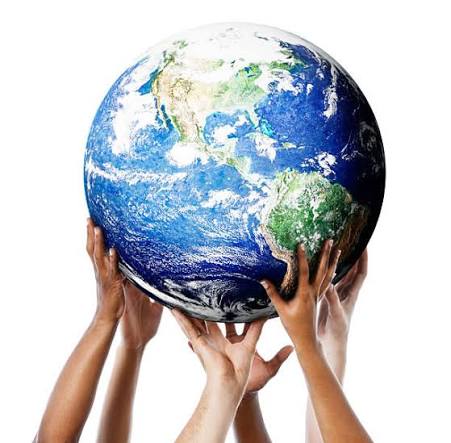
Personally, I believe that humans could eventually establish settlements on another planet. With continued scientific research and improvements in technology, we may one day be able to build places where people can live for extended periods outside Earth.
However, I do not believe that we should assume another planet will soon become a perfect replacement for our home.
After researching this topic for the contest, I came to understand that none of the eight planets in our Solar System currently offers the natural conditions that human beings, animals, and plants enjoy on Earth. Mars may be a possible destination for future settlement, but it would require artificial habitats and a lot of support from technology.
At the same time, I strongly believe that protecting Earth should remain our greatest priority. We should not destroy our forests, pollute our water, misuse our natural resources, or damage our environment simply because we imagine that another planet might save us one day.
Earth already provides the air we breathe, the water we drink, the food we eat, and the natural environment in which countless living things survive. We should value these gifts rather than take them for granted.
Conclusion
In conclusion, Mars would be my choice if I had to select another planet as a possible refuge after Earth. I chose it because its solid surface, water ice, and potential for protected settlements make it an interesting candidate for future human exploration.
However, I also understand that surviving there would require a great deal of planning, money, scientific knowledge, and cooperation. It would not be a simple journey where I could pack my bags today and begin a new life tomorrow!
Finally, I want to sincerely appreciate our dear host, @chiagoziee, for organising this wonderful contest. This topic has encouraged me to think beyond my everyday experiences and learn more about our Solar System.
I believe many participants have had to do serious research before writing their entries.
My invitations to
CC.
@chiagoziee