Blockchain-Based Voting Systems: Opportunities and Challenges
One of the most crucial elements of a democracy is a vote. It provides people an opportunity to elect their leaders and decide how their country, state or community is governed. But there are many voting systems in existence that still have significant issues. Problems can involve election fraud, ballot manipulation, missing votes, long counting processes, lack of trust and poor transparency. Due to these issues, there has been a push towards considering new technologies that would make the electoral process safer and more reliable. One of these technologies is blockchain.
Blockchain is a digital records-keeping system that keeps records securely and in an orderly fashion. Information is stored in blocks and each block is linked to all other blocks to create a chain. After the information is added in the blockchain, it is very difficult to alter or remove it. This is one of the primary reasons why blockchain is being considered for voting systems. A blockchain voting system is a solution that involves disseminating the voting records using blockchain technology and recording votes digitally.
Blockchain voting offers one significant benefit: improved security. In regular elections, there are times when the paper balloons are lost or damaged, altered, or miscounted. If not adequately protected, electronic voting machines can be attacked. Blockchain technology allows each vote to be recorded in a manner that it's hard to alter. If it is changed after the vote is added to chain, this would involve changing numerous related records. This can make it much more difficult to manipulate the elections.
Transparency is another key advantage. Many people are distrustful of elections as it is hard to see how the votes are counted. Blockchain can enable a more transparent, open voting process. They can be guaranteed that their ballots were counted, without knowing who had cast ballots for other people. Blockchain records also can be consulted by election officials during the counting process. I believe this can contribute to increasing the confidence of citizens in election bodies.
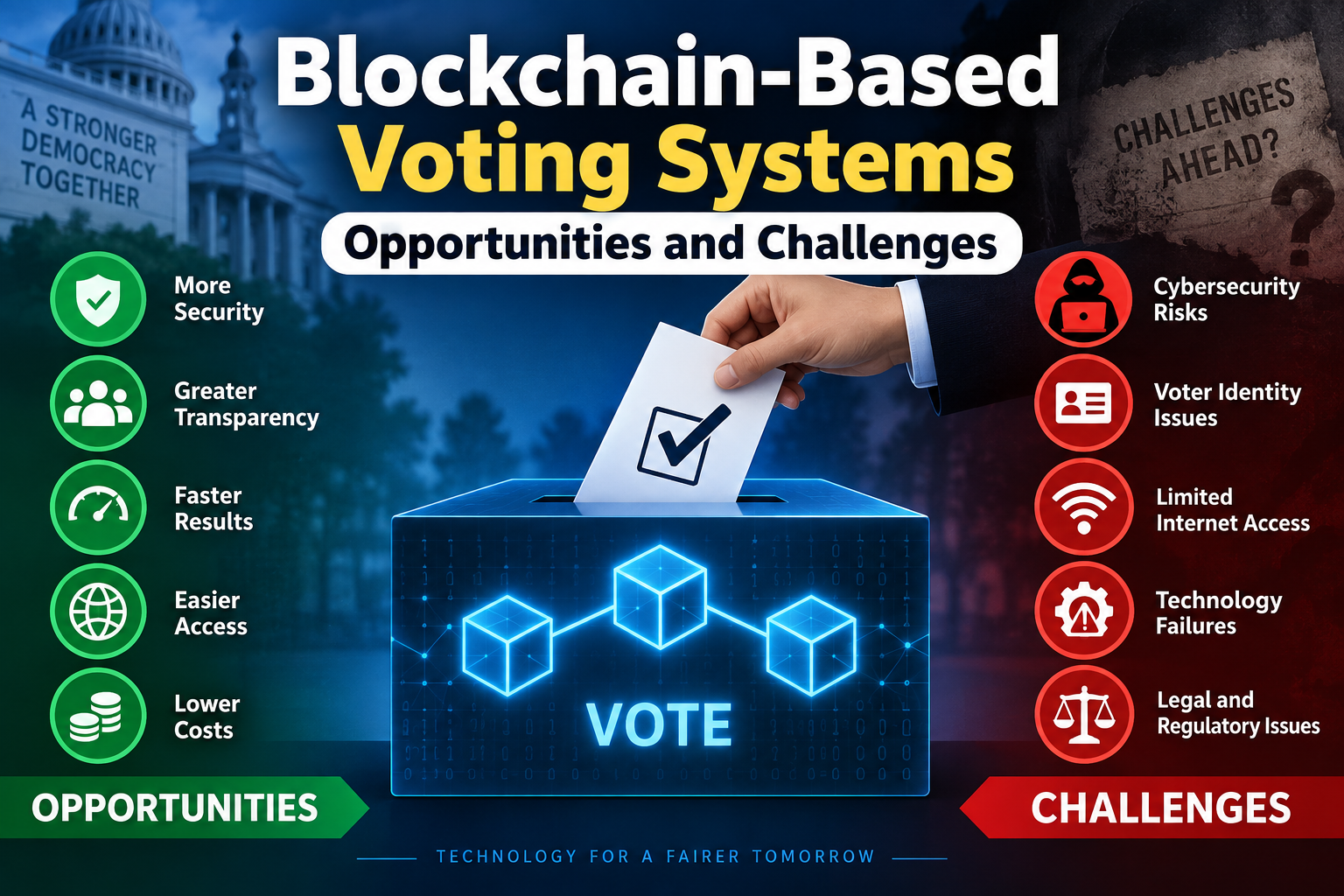
Blockchain voting can also speed up the election process. In the traditional voting, the count of millions of paper ballots can take several hours or even days. In some cases a recount is necessary if there is a close call. In blockchain voting, votes can be automatically counted by the system. The final result could be available significantly quicker. This can help minimise delays and minimise errors resulting from manual counting by people.
One is the ease of voting. It may be difficult for some people to get to voting centres. They might be overseas, out of town, live with disabilities, or reside in remote locations. A secure digital device, based on a blockchain voting system, could enable citizens to cast their ballots. A citizen, for instance, could vote with a smartphone or computer, following an identity check. This could increase the number of people who participate in elections.
Some of the expenses of an election can also be minimized through the use of blockchain. Many pollsters report that ballot papers, the transportation of ballots and voting equipment, election workers, and the protection of polling centres, and counting the votes all cost the government a lot of money. Some of these costs can be minimized with a digital blockchain system. Developing the system can also initially be costly, though, due to the need for sturdy software, equipment, cyber security, and trained staff.
While blockchain voting presents numerous opportunities, it also poses significant challenges. Cybersecurity is a significant issue. While blockchain itself might be hard to change, devices used by people to vote can still be attacked. If someone's cell phone is infected with harmful software, for instance, then the cell phone holder can be targeted to alter the vote prior to it being added to the blockchain. The hackers can also target voting platform systems like websites, servers and identity verification systems on the voting platform.
An additional hurdle is the lack of voter ID. The system should ensure that each voter is an actual person with no possibility of multiple voting. The system also has to maintain privacy of the person's vote. This poses a challenging conundrum. Election officials must establish the voter's identity but do not need to link the voter's name with the candidate they voted for. This may result in voters losing their privacy, if not properly designed.
Access to the Internet is also a major problem. Not all people have access to a Smartphone, computer or a good internet connection. This issue is particularly pressing in poor and rural communities. When voting is all digital, some may not be able to vote. The technology should ease voting, not make it inaccessible to people. Governments would have to ensure that there were no "left-behind" people who cannot access the internet.
One issue is knowledge gap in technical skills. Many find blockchain hard to comprehend. Consumers of the electoral system may not believe in a system they don't understand. There would also be a need for training of election workers. Governments might need to inform citizens about the way blockchain voting functions, the security of their vote and how they can verify that their vote has been recorded accurately.
Another issue is the failure of technology. Computers can develop faults. Networks can cease to function. Electricity can fail. There are potential software issues. A small technical problem can cause chaos and anxiety during an election. Hence, it is essential that there are robust backup mechanisms in blockchain voting systems. Detailed contingency plans should also be in place to deal with the failure of digital voting.
Another problem is the law. A lot of countries have the laws governing their elections that were designed for paper ballots or conventional electronic ballots. Governments might need to establish new rules and laws before blockchain voting can be mainstreamed. These laws should describe how digital votes will be counted, how voter privacy will be maintained, how voters will handle problems, and who will manage the technology.
https://x.com/Sloaneoluchi/status/2099905496048120281
https://x.com/i/status/2088342261742580216
https://coinmarketcap.com/currencies/pussfi/
Note:-
Regards, @adeljose