Cryptocurrency Derivatives and Futures Markets Explained
Cryptocurrency has evolved from an idea that was only a small digital thing to a large financial market. Nowadays, people aren't just purchasing and selling cryptocurrencies like Bitcoin or Ethereum. There are also financial products that let traders benefit from changes in the price of cryptocurrencies without actually possessing the cryptocurrency. Such products are known as cryptocurrency derivatives. Futures are one of the more prevalent kinds of cryptocurrency derivatives. It's crucial to grasp derivatives and futures markets, as they heavily influence the actions of cryptocurrency traders, price fluctuations, and risk management strategies.
Cryptocurrency derivatives are financial agreements whose worth is determined by the price of a cryptocurrency. In layman's terms, the value of the derivative is based on another asset. For instance, a bitcoin derivative's values are derived from bitcoin's value. The trader doesn't necessarily have to possess any bitcoins to trade the contract. Rather, the trader is reaching a financial settlement on the assumption the price of Bitcoin will move in a certain direction. Unlike conventional cryptocurrency purchases, where someone purchases Bitcoin and maintains it in a wallet or exchange, derivatives trade based on the value of the underlying asset.The main difference between trading derivatives and trading actual cryptocurrencies is that derivatives are not based on actual possession of the underlying asset; instead, they are based on the value of the underlying asset.
There are various kinds of cryptocurrency derivatives. The primary types are futures, perpetual futures, options and swaps. Futures contracts are agreements to buy or sell an asset at a particular price at a future time. Options are a way for a trader to have the right, but not the duty, to trade an asset at a given price. Perpetual futures are identical to the normal futures contracts, except they have no stipulated expiration date. They have gained a lot of popularity because they provide traders with additional options for getting into the crypto market.
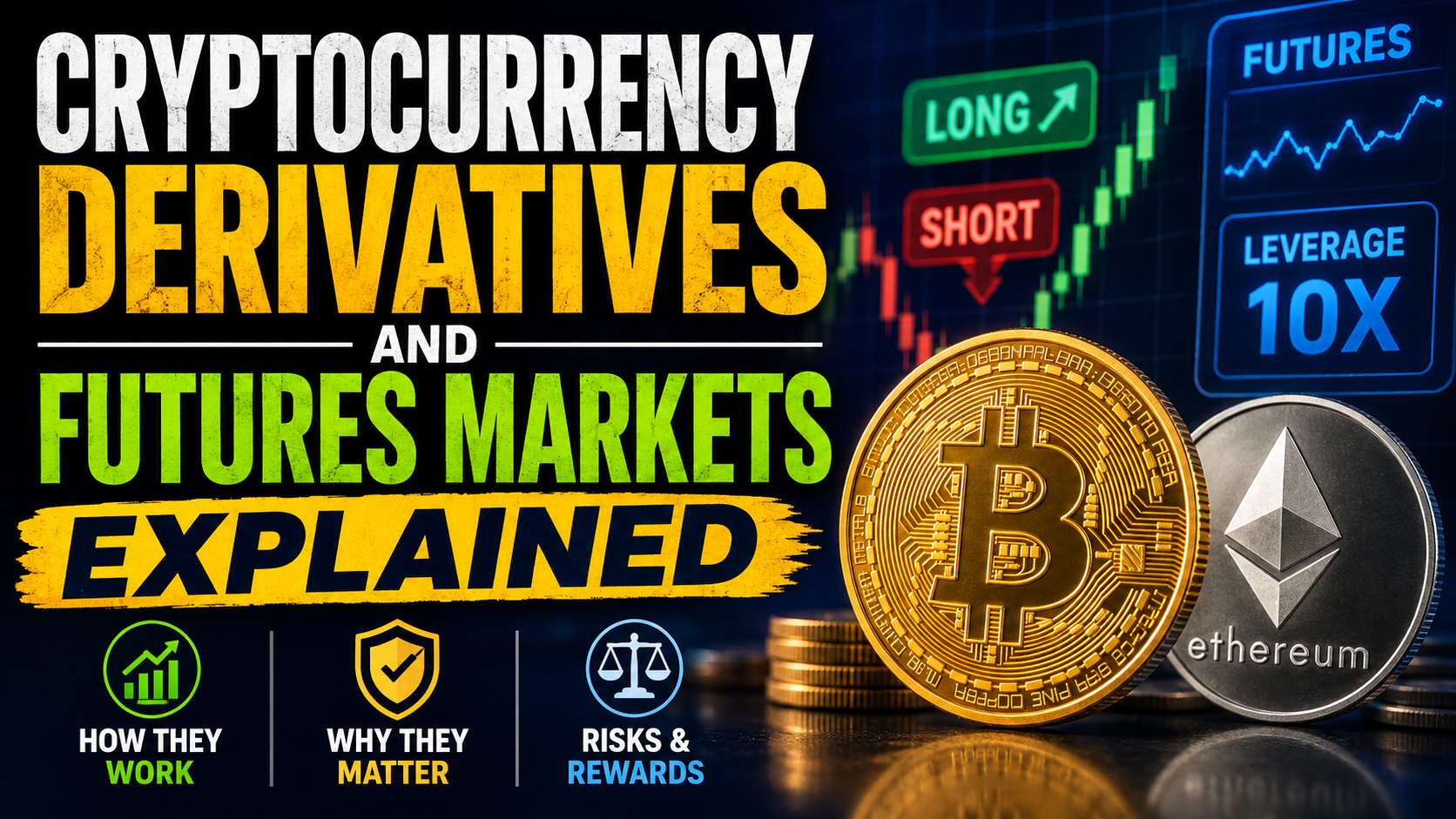
The cryptocurrency futures market is particularly significant. A futures contract is a way for a trader to speculate on the price going down or up. If I think that Bitcoin is going to rise from $60k to $70k, I can go long on a futures contract. If Bitcoin goes up like I think it's going to, then I can make money. If it goes in the other direction, though, I could lose money. If a trader thinks that the price of Bitcoin is going to drop, they can go short. The trader can make a profit if the price goes down.
Leverage is a key characteristic of cryptocurrency futures. Using leverage means that a trader can open a larger trade than they have invested. If I have $1,000, and leverage 10X, I could control a position valued at approximately $10,000. This can lead to significantly more profits when the market is favourable. That's the same thing that happens when you lose. A little bit of a misstep can result in a huge loss. This is why leverage is one of the most dangerous aspects of cryptocurrency derivatives trading.
Margin is another critical element of composition. Margin is the amount of funds deposit by a trader to establish and hold an invested position. If the market turns and trades negatively for the trader, the exchange may need additional funds to maintain the position. Position may be liquidated if the trader does not have enough margin. When liquidation occurs, the exchange closes the position since the trader has lost too much margin. This can occur rather rapidly in crypto since prices can fluctuate significantly in minutes.
Perpetual futures are gaining in popularity among the crypto market. Perpetual contracts are different from the traditional futures, in the sense that they do not expire. Traders can keep their positions open as long as they continue to meet the margin requirements. However, in the case of perpetual, there is typically some sort of funding rate. Funding rate is a fee that is paid between traders with long and short positions. It assists to maintain the perpetual price of the cryptocurrency near to the real time spot price. Under certain market conditions, long traders can pay short traders or short traders can pay long traders.
Cryptocurrency derivatives are not only used for speculation. They will also make an excellent ornamental hedge. The action of hedging is to shelter against potential losses. For instance, if I have a lot of Bitcoins and I fear that the price might drop. I could enter into a futures contract to go short on my Bitcoin, as opposed to selling all my Bitcoin. If Bitcoin does go down, the profit from my futures position can help offset my loss on Bitcoins. Derivatives can then be useful for risk management for investors.
Price discovery is also provided by derivatives in the cryptocurrency market. Price discovery is the activity that enables buyers and sellers to assist in the process of determining the market price of an asset. There are numerous traders who have various expectations in futures markets. There are those who think that costs will go up and those who think costs will go down. They engage in buying and selling and can offer clues regarding the market expectations and impact on the market.
But some significant risks exist with cryptocurrency derivatives, too. However, the main danger is that traders can lose a lot of money in a short span of time, particularly when trading with high leverage. Derivatives can amplify volatility in cryptocurrency markets, which are already volatile to begin with. A trader can accurately forecast for the direction of Bitcoin in the long term but end up losing money as the price goes against them in the short term and forced to liquidate their trades.
Also, there is the possibility of exchange issues, liquidity issues and rapid market fluctuations. When there aren't enough buyers and sellers in a market, it can be challenging to close a trade at the desired price. The other rules involved in a contract, fees, funding rates, margin requirements, and liquidation prices are also important things for traders to know before entering a trade.
https://x.com/Sloaneoluchi/status/2095939142375125131
https://coinmarketcap.com/currencies/pussfi/
https://x.com/i/status/2088342261742580216
Note:-
Regards, @adeljose