Cryptocurrency Regulations Around the World: A Comparative Analysis
Cryptocurrency is a crucial part of today's financial system. Today, millions of people around the world invest, make payments, trade, and participate in other financial activities using digital currencies like Bitcoin and Ethereum. The booming growth of cryptocurrencies has, however, given rise to apprehensions for governments. Many countries have implemented regulations to regulate the use of cryptocurrencies due to concerns like fraud, money laundering, tax evasion issues, cybercrime, etc. I believe there is a need for regulation but the governments should make the rules that will not stifle innovation.
Cryptocurrency regulation refers to the rules and laws established by the government to regulate activities related to digital currencies. These rules could apply to cryptocurrency exchanges, digital wallets, taxation, advertising, trading and payments with cryptocurrencies. There are several reasons why, given the various financial systems, economic conditions and opinions surrounding digital currencies, different countries have taken different approaches. At this moment, some nations have established strict laws that restrict or prohibit certain cryptocurrency activities while other nations have established clear laws that allow cryptocurrency businesses to operate legally.
The U.S. is one of the biggest cryptocurrency markets in the world, but it has grown up via a series of government agencies and legislation, rather than a single cryptocurrency law. The approach to cryptocurrencies taken by various agencies will vary based on their purpose and structure. Some digital assets might, for instance, be considered securities and others might be considered commodities or property. There are also regulations governing anti-money laundering and customer identification for cryptocurrency exchanges and other businesses. While the United States has traditionally given cryptocurrency enterprises a free range, it has also turned its attention to investor protection and the fight against illegal activity. I think the American way demonstrates that controlling a technology that doesn't neatly fit into the traditional financial box is not easy.
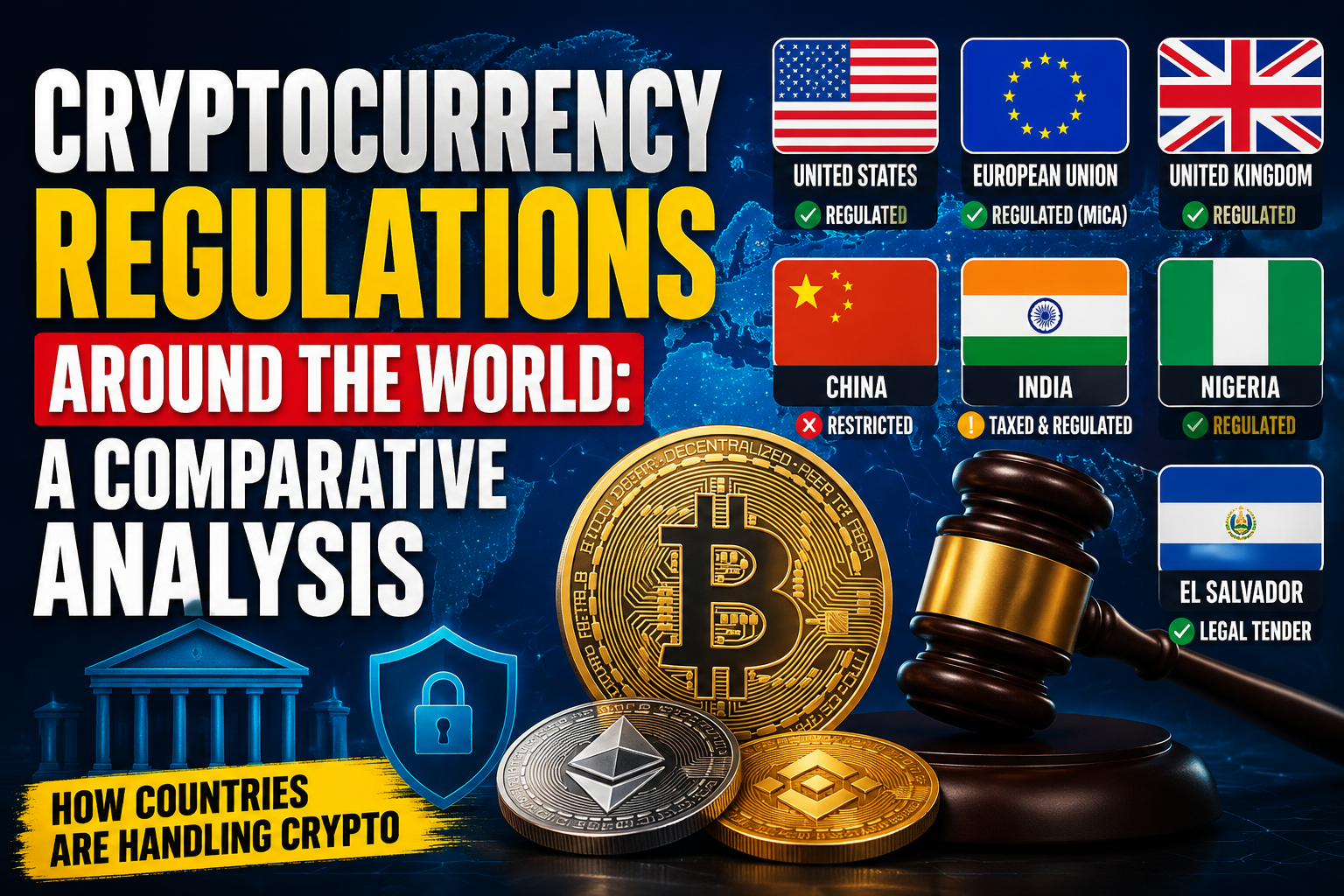
In the EU, a more structured approach has been adopted with common rules for its member states. The key development is the Markets in Crypto-Assets Regulation (MiCA). The regulation will establish a legal framework for crypto-assets and establish requirements for companies providing cryptocurrency services. It is also dedicated to consumer protection, market integrity and stablecoins. This will provide businesses with more definite rules to adhere to and more protection for consumers. I think one of the big benefits of the European model is that it's trying to establish a uniform standard across many countries, rather than have each country have its own totally different standard.
The United Kingdom also created its own method of cryptocurrency regulation. Regulation of crypto businesses, particularly exchange and custody provision, has been a major priority for the country. The cryptocurrency companies face a number of requirements, including restrictions against money laundering and terrorist financing. The UK has also been progressing towards a more comprehensive crypto-assets regulatory framework. This is evidence that the country is seeking to strike a balance between its aspirations of becoming a big financial center and the protection of consumers in the field of technology.
In China, the government is much harsher. The Chinese government has banned cryptocurrency trading and mining in the country. Meanwhile, China has been creating its own central bank digital currency (CBDC) dubbed the digital yuan. Unlike cryptocurrencies like Bitcoin, which are decentralized, this one is under the control of the central bank. China's strategy demonstrates that a government can oppose decentralized cryptocurrencies while also encouraging government-regulated digital currencies. I believe this is one of the best illustrations of the varying futures of digital currencies in different countries.
India has also adopted a unique strategy. The nation has not officially outlawed cryptocurrencies, but has instituted taxes and regulations for digital currencies. There are substantial tax implications for income and transactions involving cryptocurrencies, and the government is also pondering on how to regulate this sector. The Reserve Bank of India is also keen on introducing an Indian digital currency. As seen in the Indian case, a government can permit individuals to trade in cryptocurrencies, but impose some limits on the risks involved by means of taxation and regulations.
Nigeria is also a special case in the African cryptocurrency market as many Nigerians have expressed keen interest in cryptocurrencies. Cryptocurrency has been utilized for investment, global funds transfers and much more. The Nigerian government and financial institutions have taken a dynamic shift in their stance towards cryptocurrencies over time, from heavily restricting to a more regulated approach. In recent years, the focus of regulations has been on virtual asset service providers and their licensing and supervision. This is critical because specific regulations could help lower fraud and enable fraudulent cryptocurrency businesses to operate. But the regulation has to be well crafted as too much regulation may drive users back to informal or unregulated platforms.
Another odd one is El Salvador, which in 2021 made Bitcoin legal tender. The government was very supportive of Bitcoin and enacted policies to incentivize its usage. Far from the majority of countries, this is what was done. The policy was criticized, however on account of the volatility of the Bitcoin exchange rate and public money and financial risks. El Salvador's journey demonstrates the potential benefits and significant hurdles of integrating cryptocurrencies into the mainstream financial landscape.
It is evident from the analysis of these countries that there is no universal solution for the regulation of cryptocurrencies. The United States has an intricate regulatory model, the European Union has established a unified legal regime, China has been more conservative, India has been tax-oriented and regulatory, Nigeria is progressing towards tighter controls, and El Salvador has tested the policy waters by allowing broader adoption of cryptocurrencies. Such disparities can pose issues for international companies as a cryptocurrency firm could be legal in one nation and effectively prohibited in another.
https://x.com/i/status/2087239943756116115
https://x.com/i/status/2082974918300541265
https://coinmarketcap.com/currencies/pussfi/