The Future of Decentralized Identity on Blockchain
The world is getting increasingly digital. Nowadays, internet banking, learning, shopping, communication, business, health services, and other activities are performed by people. As a result, establishing online identity is all the more crucial. Currently, digital identities are all in the hands of companies, governments, banks, schools, and social media. We provide these organizations with our personal data and it is recorded in their systems. But there are numerous issues with this approach. Personal data may be stolen, leaked, misused and shared without consent. Blockchain decentralized identity is an emerging concept which could be a solution to some of these challenges.
Decentralized identity is an identity system that empowers individuals to take control of their digital identity. Rather than relying solely on a single company or organization to keep and oversee personal data, an individual might administer critical identity documents via digital means like a secure identity wallet. Blockchain technology can assist in this system, offering a trustworthy approach to verifying information without relying on a single entity to manage it all. I think this can be a future proofing of how people will identify on the Internet.
Blockchain works well for decentralized identity because it's a distributed and hard-to-change record keeping system. A blockchain is a record that can be verified by various network participants. But, not everything is suitable for being put right on a public blockchain. Personal data like a person's residence address, passport, medical data or ID number should not be disclosed. Instead, in the blockchain, verifying a certain credential can be achieved without revealing all the private data that went into creating it, by using the blockchain to verify that it was issued by a trusted organization.
Suppose that I have finished a university course, for instance. The university would be able to provide me with a digital certificate that would prove I attained a degree. If I want to apply for a position, I can show my employer that I'm qualified. The employer would have a concrete way of knowing that the credential is real, without them having to call the university to verify the credential. I would also be able to have more say in who I share the credential with and at what time. This might be a quickening and an ease for verification of all parties involved.
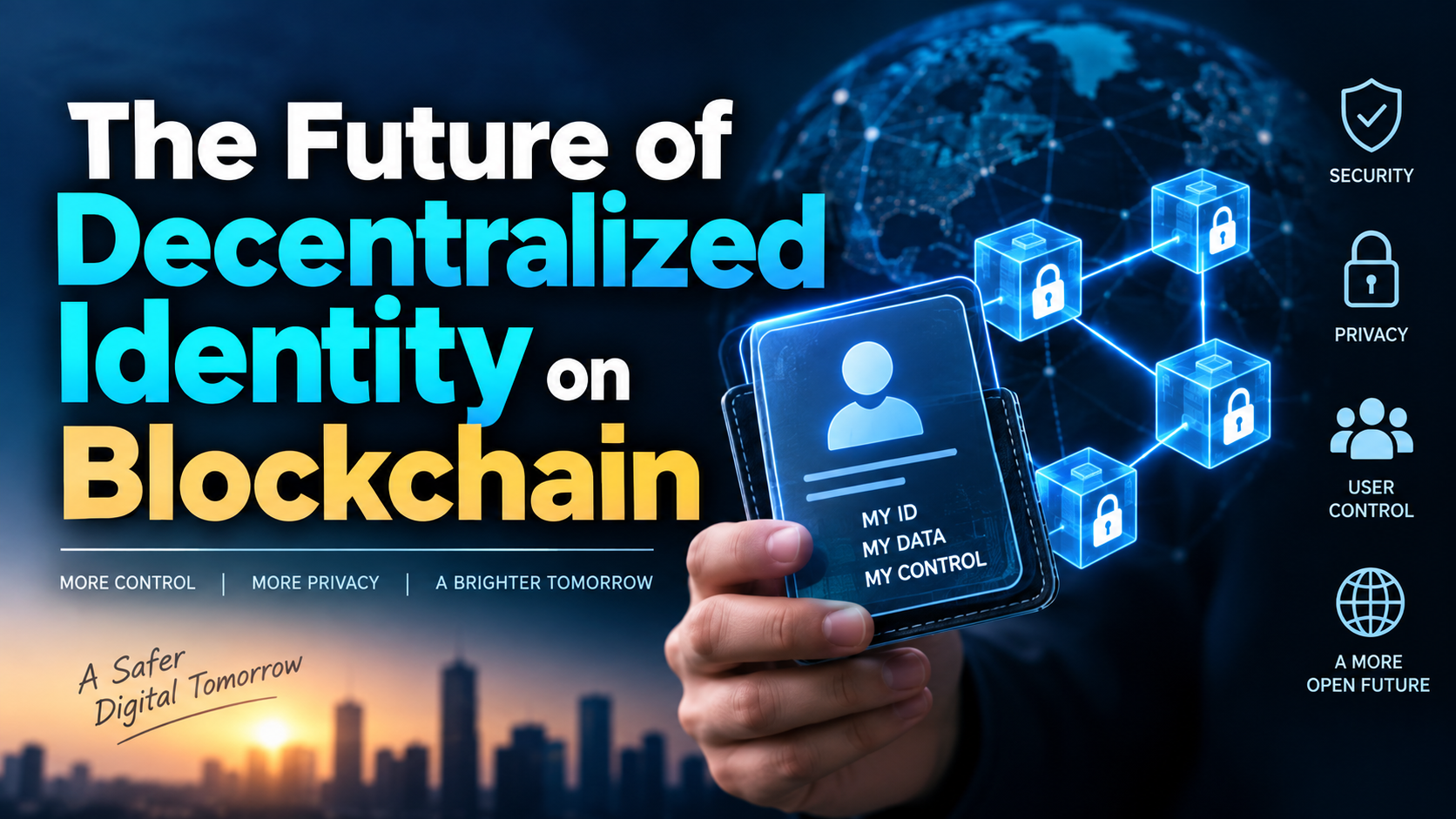
Decentralized identity could be crucial for the future in the context of privacy. Currently, there are a lot of websites that require more information than necessary from people. For instance, the service may only require an individual's age, but the individual may be asked to submit an identity document that includes his or her full name, date of birth, picture, and more. If a person needed to prove only the required fact in the future, with a decentralized identity system that would be possible. I believe this is a healthier way to do things as they shouldn't be required to post personal information that isn't needed to use the service.
Decentralized identity also has the potential to enhance security. Today, many large enterprises have a vast amount of information in their centralized databases. These databases can become enticing goals for hackers. Individuals could have their personal details, such as credit card, banking, and other personal information, revealed in the case of a successful attack on such a database. A decentralized identity system can help organizations to have less personal data collected and stored. This won't eradicate all security concerns, but it can alleviate some of the issues that can arise from having everything in the same location.
Decentralized identity has the potential to be applied in a wide range of other applications in the future. It might be used by banks for verifying customers. Digital certificates may be issued by the schools or universities for which the student attends, and the student would be able to easily show proof of completion. Digital identity systems can be used within hospitals to allow patients to have better control over who accesses certain records. Governments can provide digital credentials for public services. Decentralized identity also has the potential to be used for verifying employees, customers, suppliers, or business partners for companies. It could also enable easier travel, if secure digital credentials are generally accepted.
Another critical aspect is financial inclusion. Other people of the world do not have the provision of traditional banking and identification systems. Decentralized identity could provide alternative means for individuals to establish vital information about themselves and gain access to services online. But blockchain doesn't cover the scenario where people have no official documents or internet access. Governments, technology firms, banks and communities will still have to collaborate to make these systems useful and accessible.
While decentralized identity has its merits, it also has its drawbacks. Availability of use is a big issue. Many do not understand blockchain, digital wallets, private keys, etc.Many don't know blockchain, digital wallets, private keys, etc. Decentralized identity systems can be too complex, and if they are, people won't use them. If there is no secure way to recover an identity wallet, this could create a significant issue as well. Therefore developers must develop simple, secure and recoverable systems.
Legal and trust issues too. There are different laws in various countries concerning identity, privacy and personal information. Governments and organizations will have to determine which digital credentials they will accept and how to treat frauds and errors. It is also important that there be opportunities to renew or cancel credentials as needed. To be successful globally, different systems will require common standards to enable them to interact with each other.
I think cooperation, simplicity, privacy and trust will all be critical components of the success of decentralized identity in the future. Users will not necessarily adopt a system just because it is blockchain. If it will help them and keep their information safe, they'll use it. The same or compatible standards will also have to be accepted by governments, businesses, schools, banks, and technology companies. Education will be key, because users must be aware of how to safeguard their digital identity.
https://x.com/Sloaneoluchi/status/2096931307812987291
https://coinmarketcap.com/currencies/pussfi/
https://x.com/i/status/2088342261742580216
Note:-
Regards, @adeljose