The Future of Real-World Asset (RWA) Tokenization in Global Finance
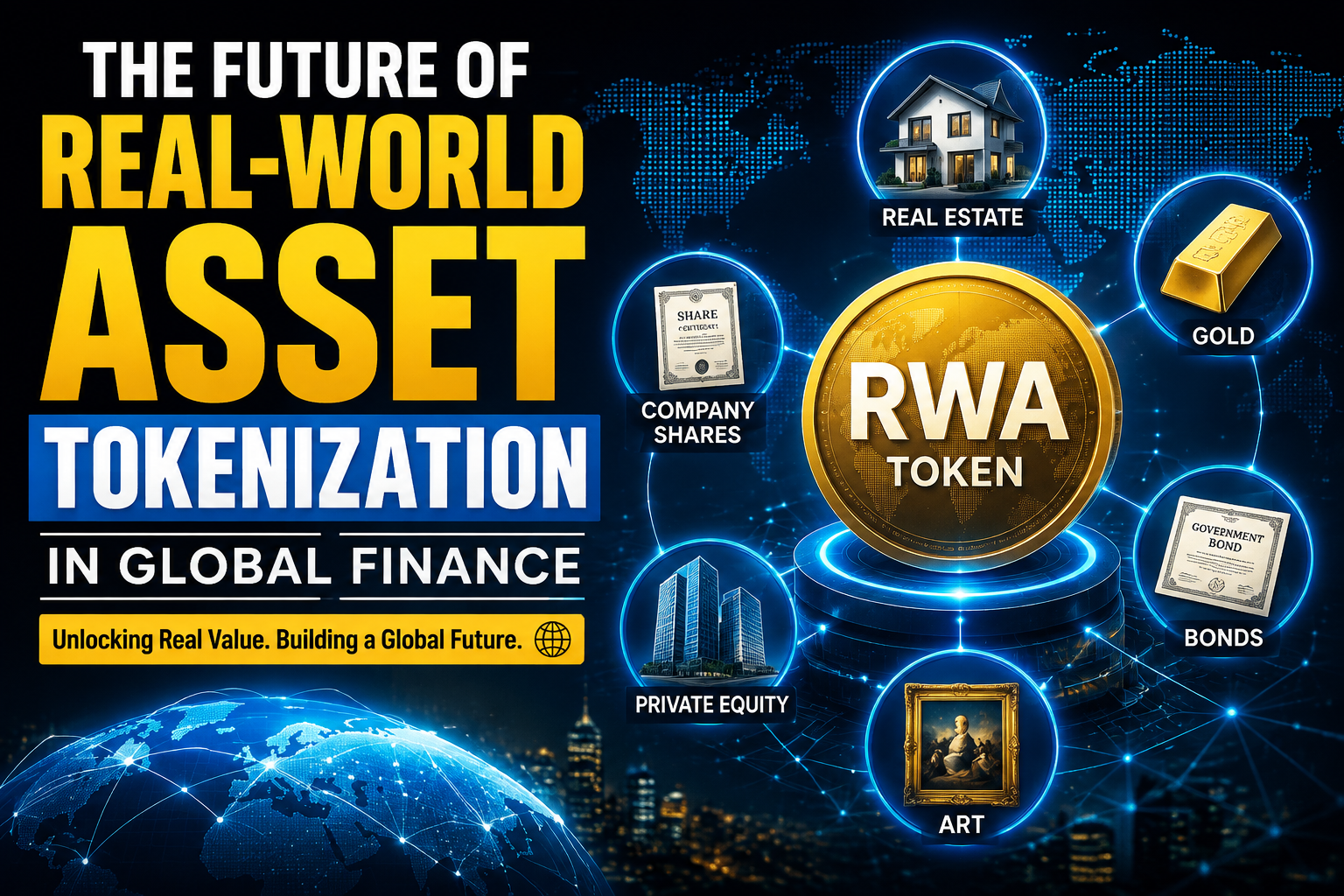
Blockchain technology is revolutionizing the world of finance, and its impact on this rapidly changing market is undeniable. Real-World Asset (RWA) tokenization is one of the latest and intriguing developments. This is merely the conversion of physical or conventional financial possessions into blockchain-based digital tokens. The assets may range from homes and land, gold, artwork, stocks, bond holdings, and even some high dollar collectibles. People can own or trade digital tokens in place of the assets themselves rather than trading through the normal method. I think this concept can impact the future of global finance in a lot of ways.
The concept of Real-World Asset tokenization involves the creation of digital assets that are linked to a real-world asset. For instance, a $1 million worth of a building can be broken down into one million digital tokens. It is not necessary for a person to purchase the entire building in order to be an owner. Rather, that person will be able to purchase a few tokens and be a small proprietor of the building. It's known as fractional ownership. It enables more people to invest in valuable assets which they were unable to afford before.
One of the most significant benefits of RWA tokenization is that it makes it easier to get access to investment opportunities. Historically, it has been a privilege of the wealthy or large companies to make such an investment. Nowadays, the blockchain technology enables common people to invest with lower amounts of funds. I believe this will help to narrow the rich-poor investment divide as more people will be able to join in the global financial markets.
An additional advantage is increased liquidity. In the real world, often real property like land or buildings are bulky items that will typically take time to sell. In some instances, they can wait for a few months before they are able to sell the pony. As a result, the assets can be traded much more quickly with the tokenization as the digital tokens can be purchased and sold on blockchain platforms. This provides investors with greater flexibility in entering or exiting investments at any time. This also creates greater liquidity in financial markets, which are, in turn, more active and efficient.
Another factor contributing to the popularity of RWA tokenization is transparency. Each exchange on a blockchain is documented in a safe, digital ledger. It's hard to modify or delete this record. Consequently, investors are able to easily track who has owned the shares and transactions that have occurred. This helps to minimize fraud and boost consumer confidence between buyers, sellers and financial institutions. I think there's a level of transparency that is one of the biggest reasons that a lot of companies are interested in blockchain technology.
Another cost advantage of tokenization is that it can lower transaction fees. In the traditional financial transactions, banks, brokers, lawyers and other middlemen are involved. All these providers ask for fees to be paid for their services. Much of these transactions can occur between buyers and sellers without intermediaries by way of smart contracts. Smart contracts are digital self-executing contracts which enforce agreements once specific requirements are met. This helps to minimize paperwork, the time involved and minimizes transaction cost.
The future of RWA tokenization is promising too, as several financial institutions are already delving into the concept. Banks, investment companies, and technology companies are creating blockchain systems to facilitate the tokenization of assets. The governments of various countries are also enacting legislation governing digital assets. Once regulations are made more clear, more investors may be comfortable investing in tokenized assets. This may boost the uptake of the product over the next few years.
Another domain over which tokenization can have a significant impact is international investment. Investing in another country these days may entail numerous legal requirements, currency conversions, and high costs. Tokenization simplifies the cross-border movement of assets with the help of blockchain technology. Investors from all over the globe can trade in digital assets without incurring numerous obstacles. This could attract more investment in the world and bolster global financial markets.
RWA Tokenization has its share of challenges, but it has many benefits. Regulation is a big issue. There are different regulations on digital assets and cryptocurrencies in various countries. Some governments completely embrace blockchain innovation, as others have tight restrictions. If there are no clear and consistent rules, investors can be uncertain. Governments and financial regulators need to cooperate in developing legislation that safeguards investors and promotes innovation.
There is another hurdle – cybersecurity. While blockchain is incredibly secure, digital wallets, exchanges, and other online platforms could be targeted. However, if investors do not take proper precautions to safeguard their digital assets, they could lose their assets. This requires proper education and good security measures. I think that everybody should know what blockchain is before investing in tokenized assets.
Public awareness is yet another concern. Lots of people still do not comprehend the technology blockchain or tokenization. Although the two are different, some people get confused with tokenized assets and cryptocurrencies. There is a need for increased awareness to the benefits and risks of this new financial system, both among individuals, businesses and governments.
In the future, I am hopeful that Real-World Asset tokenization will continue to expand as the blockchain technology advances. Investment in real estate, government bonds, company stocks, luxury items, and crops could be among the future categories of token investments. People worldwide can more easily access, access more quickly, and at lower costs, financial services. Traditional finance and blockchain technology can co-exist rather than compete.
In conclusion, the future of Real-World Asset tokenization in global finance is very promising. It provides more opportunities in investment, liquidity, transparency, reduced costs, and facilitating international transactions. While regulation, cyber security and public awareness are still hurdles to overcome, those issues can be addressed through cooperation, education and technological advancement. I think RWA tokenization can revolutionize the financial system around the world, and generate a new generation of investors.
Note:-
Regards, @adeljose
I have corrected the mistake.
@adeljose
https://x.com/i/status/2086411303178911748
https://x.com/i/status/2082974918300541265
https://coinmarketcap.com/currencies/pussfi/