If I Were Mayor for a Week: The Everyday Lessons I Brought Home from Montréal
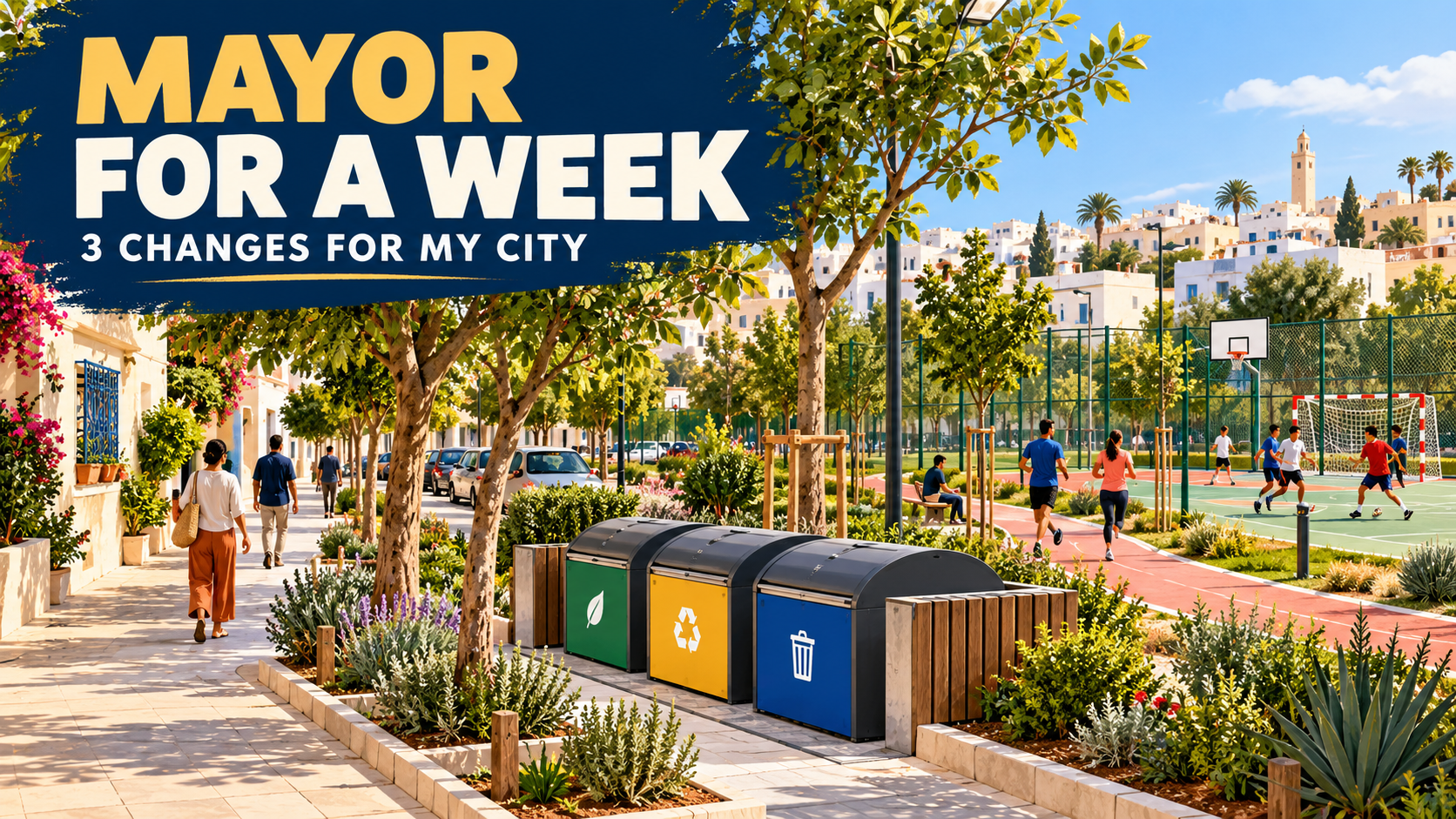
AI-generated illustration of the three changes I would start: reliable waste collection, cared-for streets and sports spaces close to home.
Hello Steemians,
When I read the question about becoming mayor for one week, my mind went back to a trip to Montréal, Canada, during the summer of 2024. I did not return home dreaming of a spectacular monument. What stayed with me were ordinary things: bins placed out for collection, tidy streets in residential areas and sports spaces where people of different ages seemed to have a place.
I remember looking at a street and then at a park and asking myself why these small things, which affect daily life so much, are sometimes treated as minor details. A clean route to school, a maintained space in front of a building and a court that children can actually use are not grand political slogans. They are the city that people experience every morning.
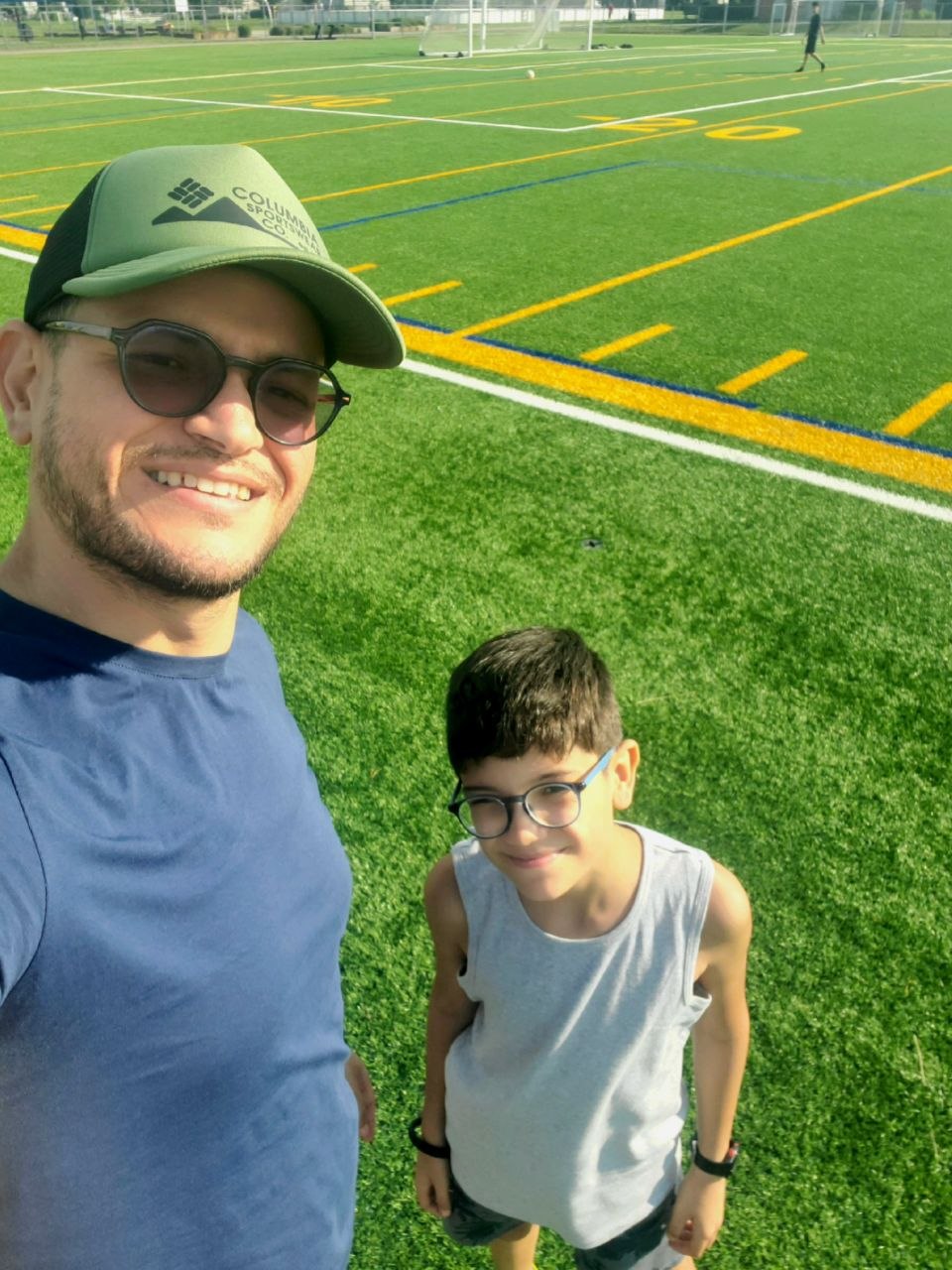
Standing with my son beside this field made me think about something simple: a good city gives children somewhere nearby to play and gives their parents a reason to enjoy the neighborhood with them.
My photos were taken during that visit. They show what attracted my attention, they are not a claim that every street in the Montréal area looks like this. I would not copy Canada exactly either. The climate, budgets and neighborhoods in my Tunisian city are different. But I would take home one useful idea: make the ordinary parts of a neighborhood work reliably.
If I had special powers for just seven days, I would begin a one-year pilot in three neighborhoods. A week would be enough to set priorities, assign responsibilities and launch the first visible steps. It would not be enough to build every facility or change every habit by magic.
1.Make waste collection something residents can count on
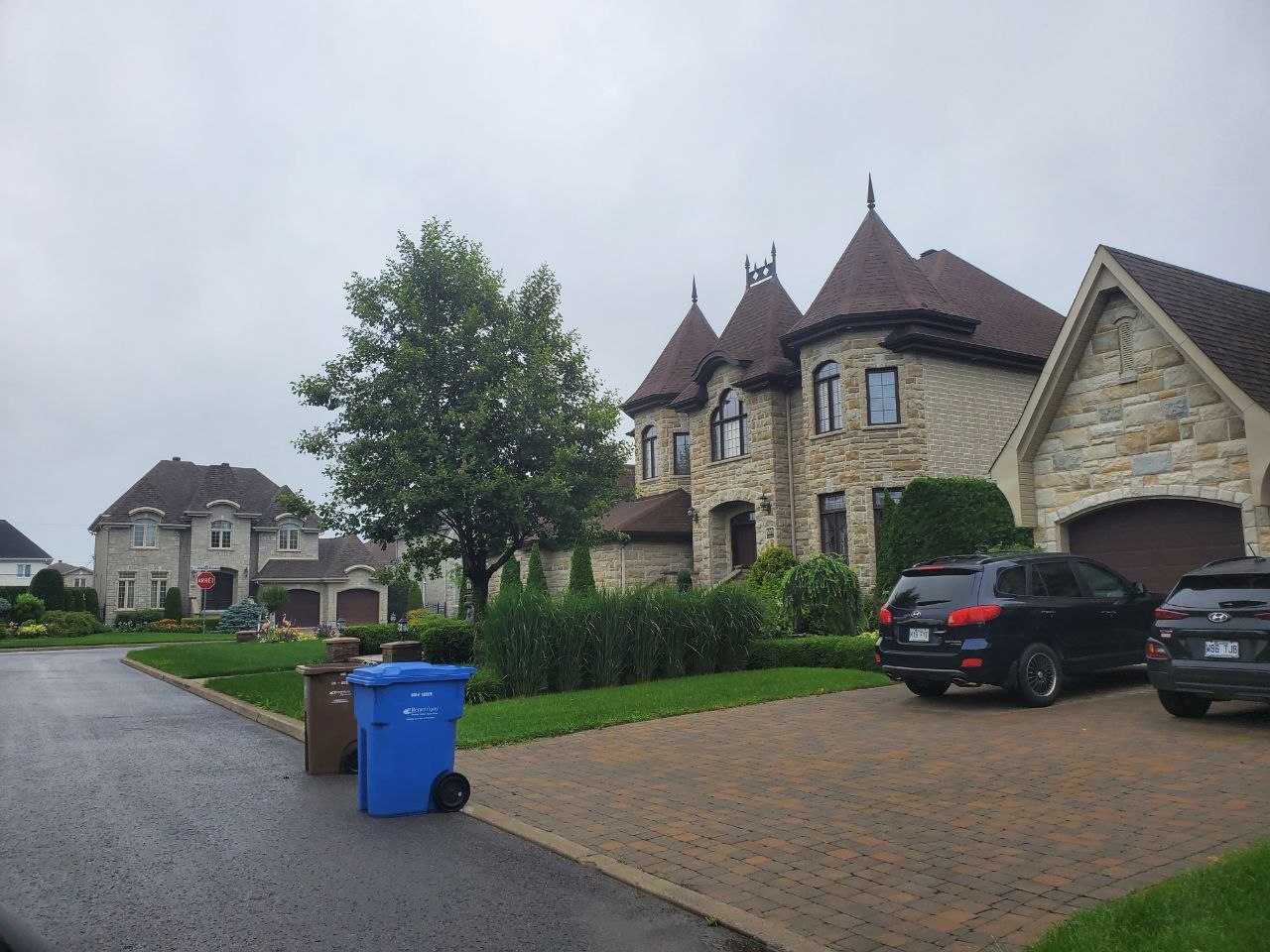
The bins in one of my photographs may look like the least exciting part of a Canadian holiday. Yet I kept thinking about them. They had a place and a purpose, and residents had a way of knowing when to put them out. Montréal now publishes collection information by address, along with instructions about what goes in each container. That sort of clarity is what I would want to adapt at home.
 |  |
|---|---|
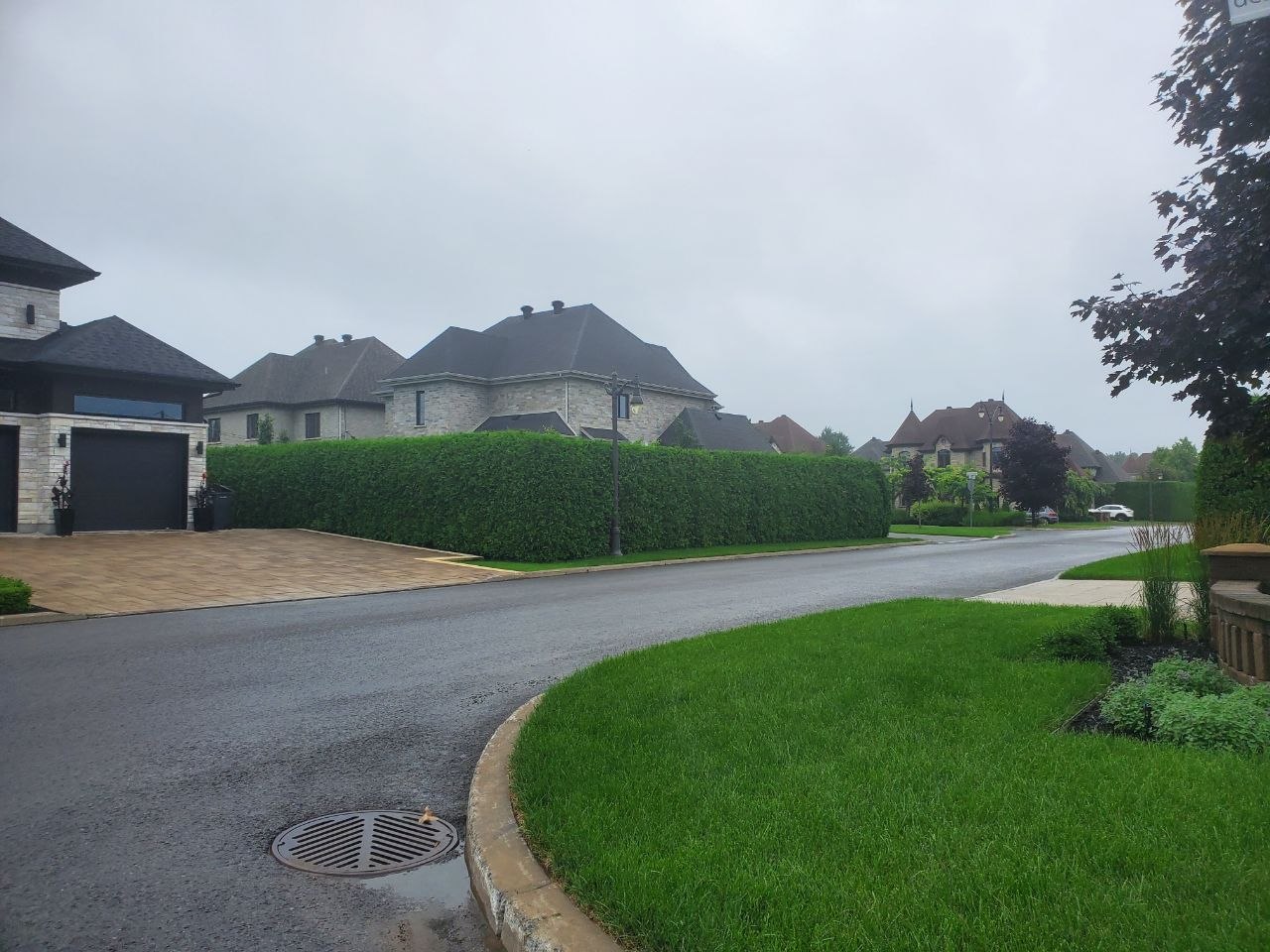
| The bins caught my attention because collection becomes easier for everyone when the routine is clear. | I liked how the street itself felt usable and cared for, right down to the space beside the road. |
In my first week as mayor, I would walk the routes with collection workers, residents and shopkeepers before drawing a new map from an office. Then I would publish a simple schedule for each pilot neighborhood, place covered shared bins where individual bins are impractical and establish a number people can call when a collection is missed. Shops and households would receive the same clear instructions.
I would start by separating ordinary waste from a small stream of dry recyclable materials only where a real buyer or sorting partner can collect them. There is little honesty in asking families to sort their waste if everything ends up together in the same truck.
The sanitation workers and many residents would probably support a reliable timetable. Some shopkeepers might worry about where bins stand or whether collection hours interfere with deliveries, some households would resist changing routines. I would invite those people to help choose the locations and hours. A timetable that looks perfect on paper but blocks a doorway will not last long.
And I would begin with the vehicles and teams the municipality already has. A new refuse truck is a major purchase: one Tunisian municipality awarded a contract for a truck at 380,000 DT, or 1,926,600 STEEM at the rate used in this post, in 2025. My pilot would concentrate first on routes, containers, communication and maintenance, then make the case for new vehicles only if the existing fleet genuinely cannot cope.
2.Care for the edges of our streets, without turning beauty into a punishment
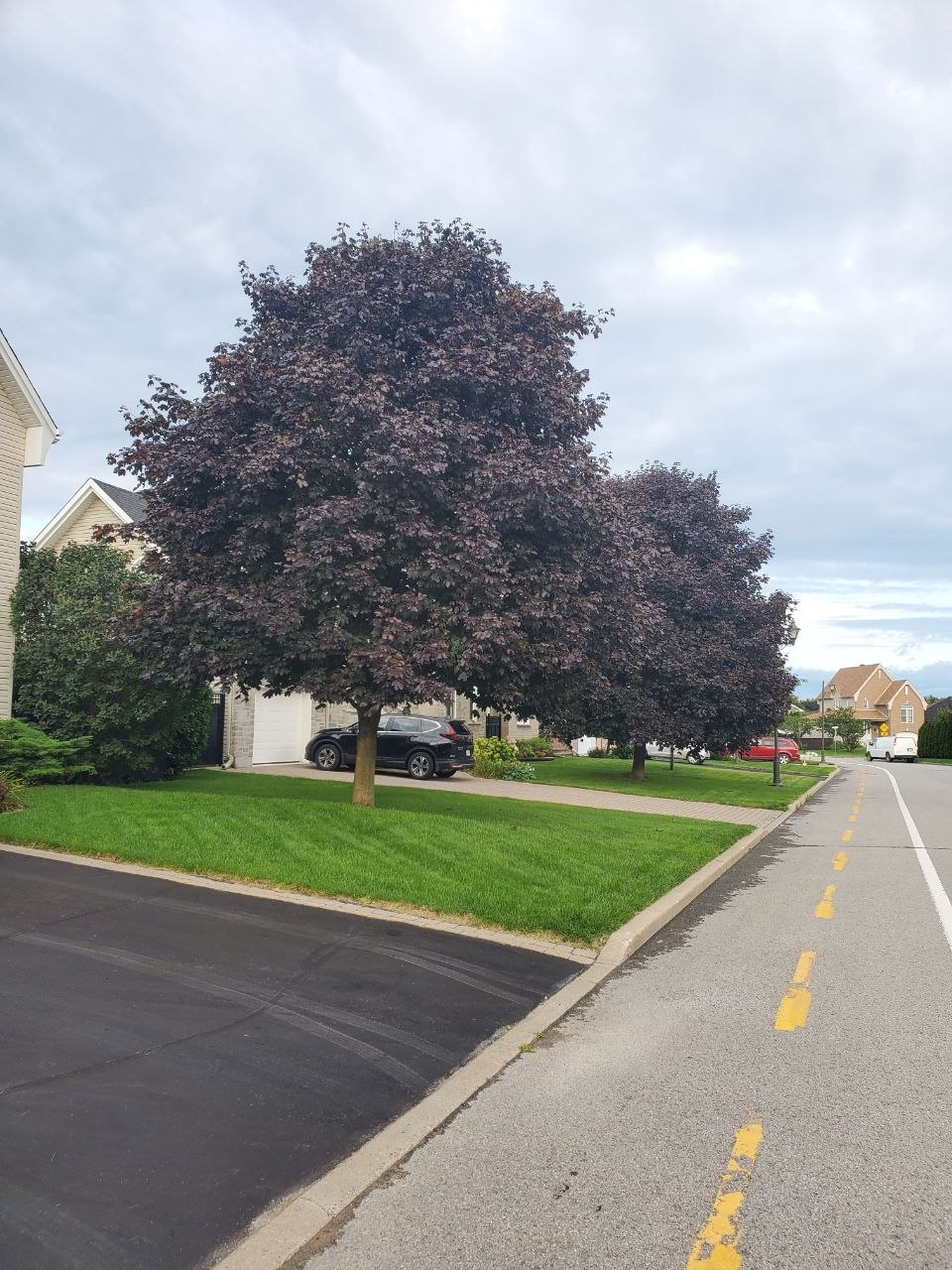
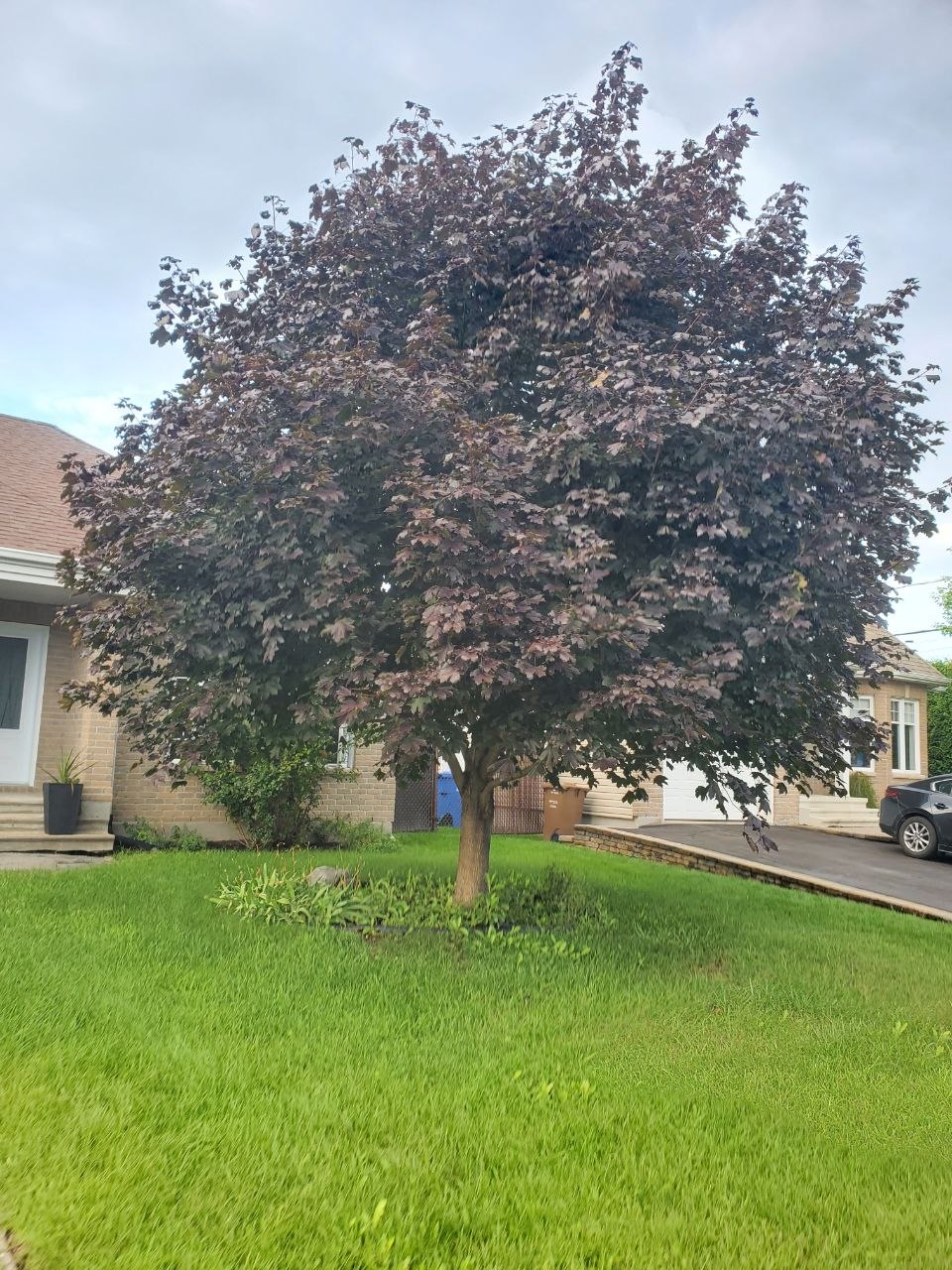
Another thing I noticed around Montréal was how the space in front of homes affected the whole street. One tidy entrance, one tree kept clear of the path and one clean pavement may seem insignificant alone. When they continue from house to house, walking there feels different.
 |  |
|---|---|
| The line between a private entrance and the public street can shape how a whole neighborhood feels. | I admired the care visible from the pavement, while knowing that the size of a private garden is not the standard my city should demand. |
Montréal has rules concerning the upkeep of private property and, in some places, the strip beside it. I would propose a local, proportionate rule for the pilot neighborhoods: keep the space immediately around a building free of dumped rubbish, building debris and plants that block the footpath. First would come information and a reasonable period to put things right, help would be available for elderly residents and households unable to do the work themselves. Any penalty would be a last step, applied fairly.
The municipality would have to set the example. It cannot ask residents to care for the edges of their homes while leaving public pavements, drains and empty municipal plots neglected. I would schedule municipal cleaning and repairs alongside any obligations for property owners.
|
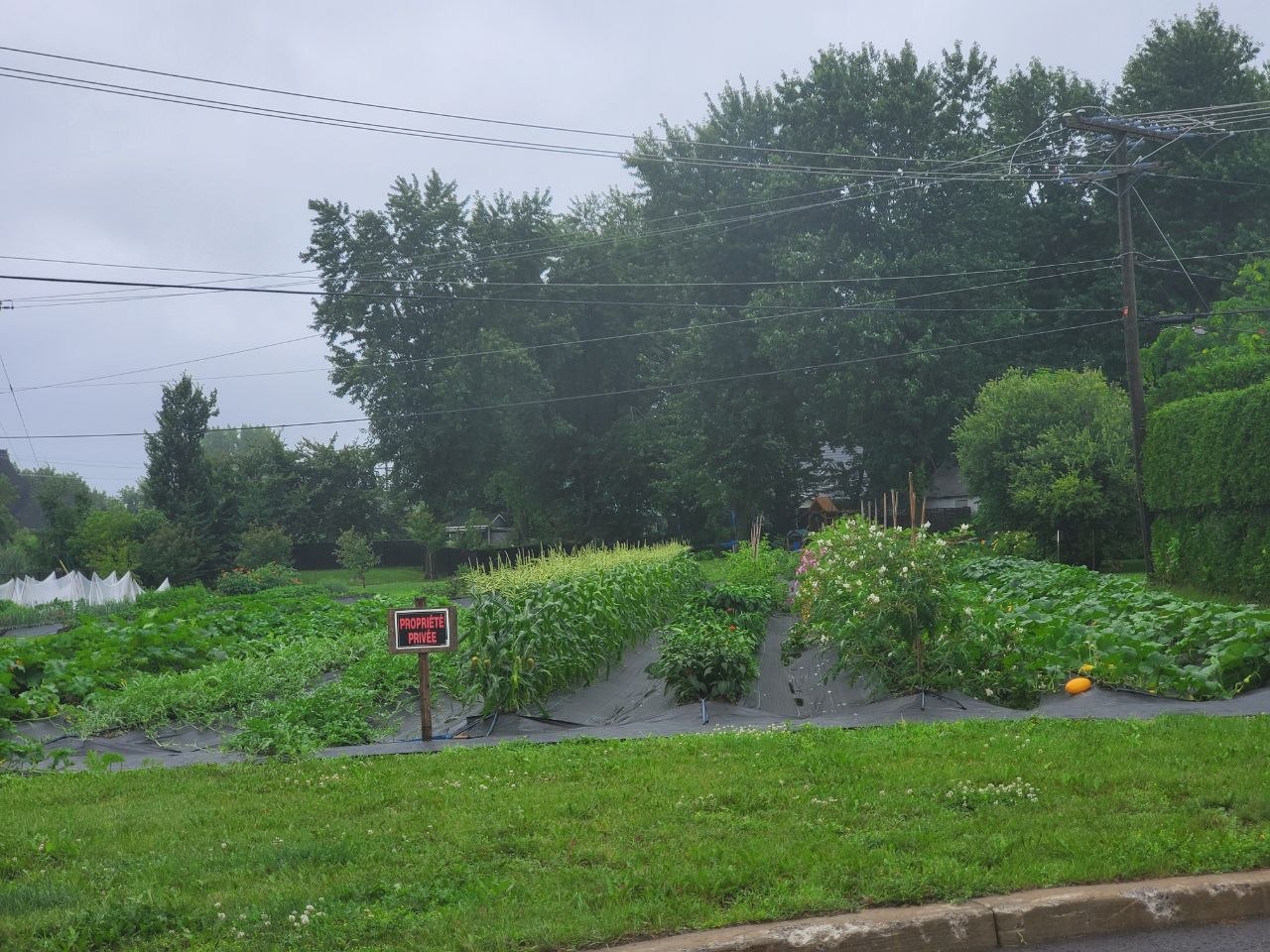
This is a private garden, not a public space to copy. What inspired me was the habit of looking after a place.
I would not demand a green Canadian lawn in Tunisia. In our climate, that would be an expensive and thirsty misunderstanding of the lesson. We could use hardy local plants, shade trees where they can be maintained, and clear, safe walking routes.
Residents who want cleaner surroundings and small businesses that depend on a welcoming street would support this change. Some owners would object to another duty or expense, and they would have a point if the city offered no help and did none of its own work. I would rather win their trust with a street that visibly improves than begin by issuing fines.
3.Put more than one sport within reach of each neighborhood
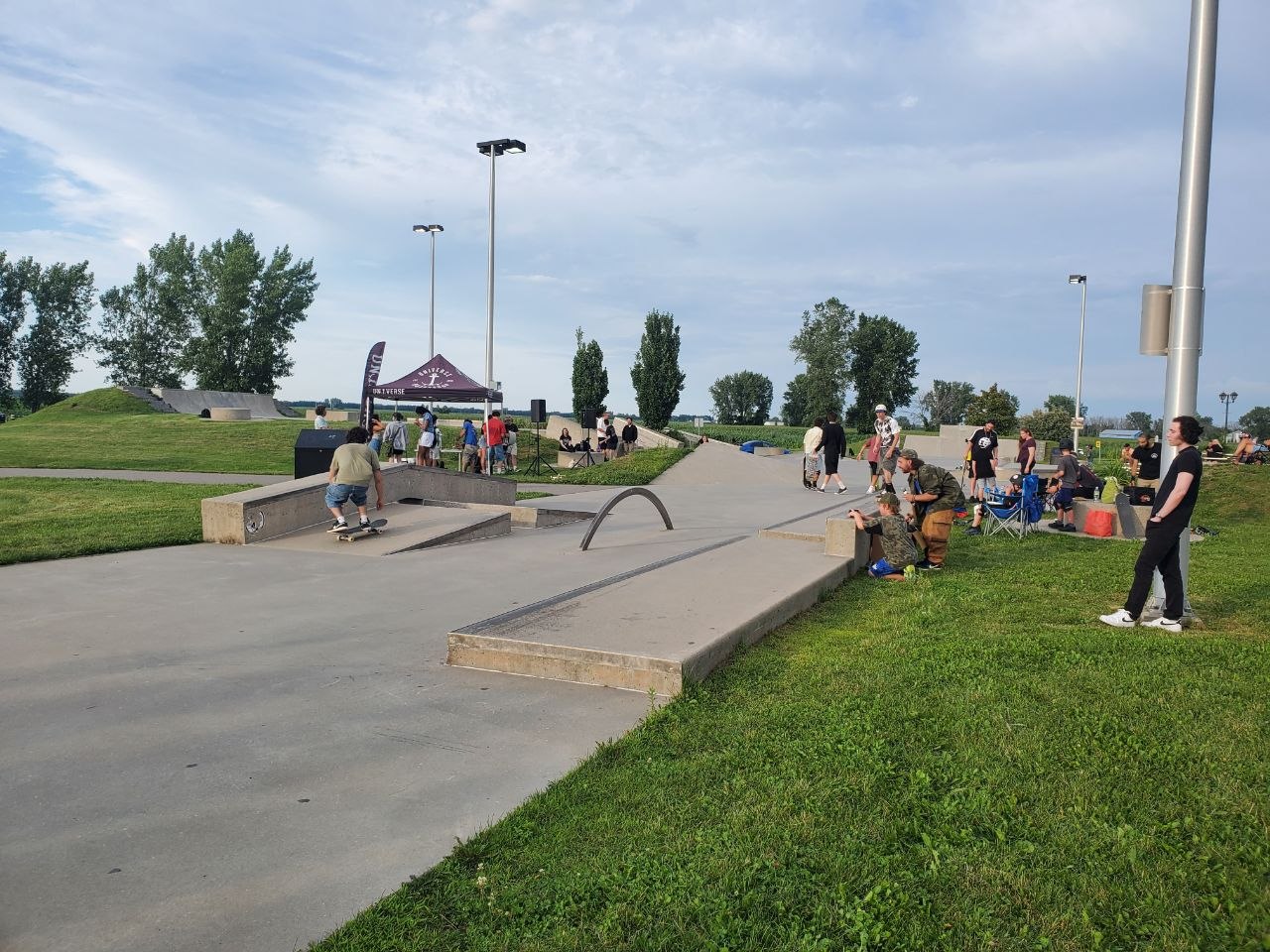
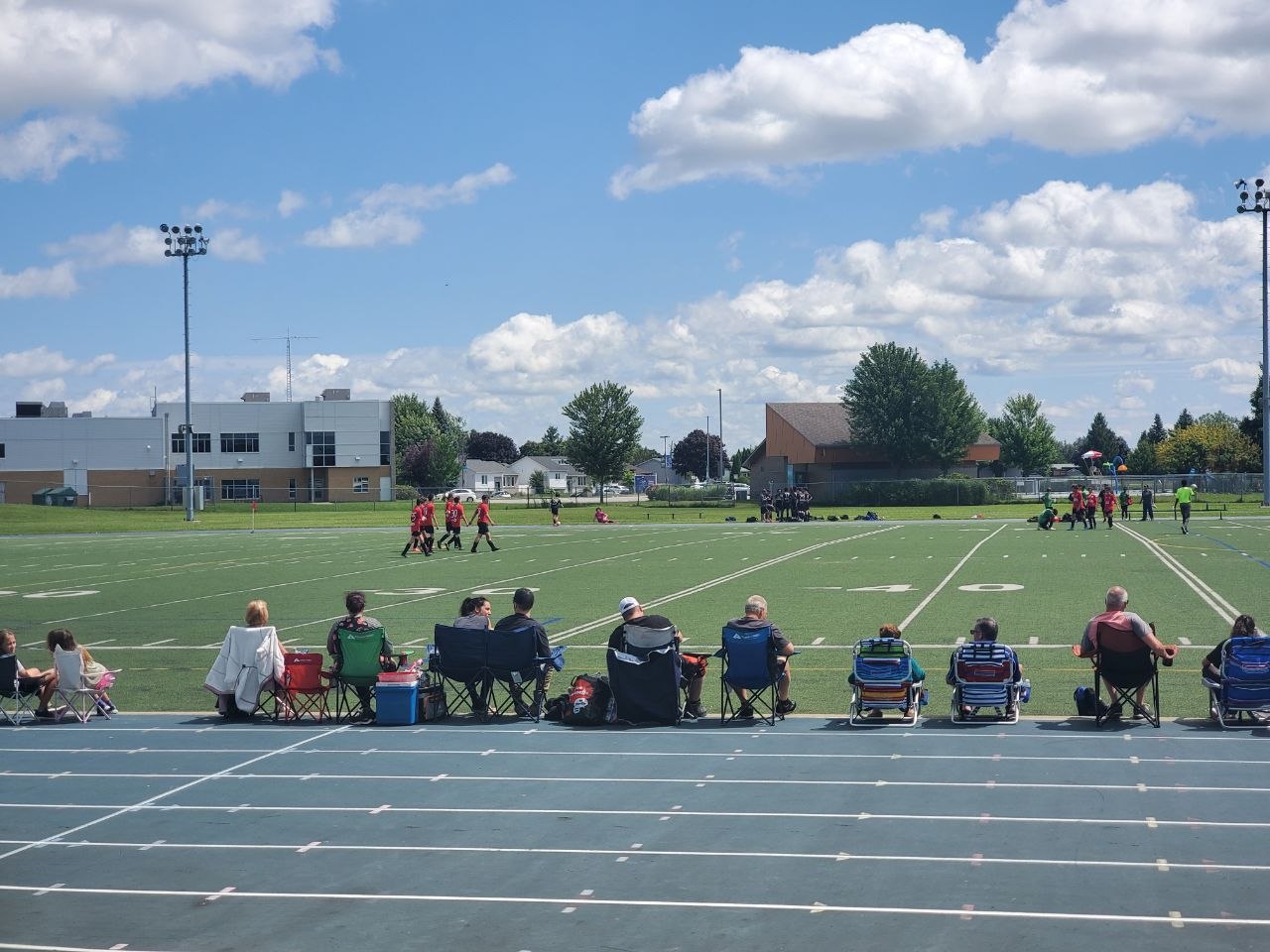
The strongest memory from that trip may be the sports areas. I saw a skate space alive with people and a field with a running track where families could watch, walk and spend time together. My son and I also stood on a field in one of the photographs. It reminded me that a sports ground can serve a neighborhood even for somebody who is not competing that day.
 |  |
|---|---|
| Seeing skaters use a public place gave me another answer to the question, “What can a neighborhood park be for?” | The field was for players, but the track and space around it also welcomed people who came simply to move or watch. |
During my mayoral week, I would identify two existing, underused public sites in or near the pilot neighborhoods. After checking ownership and safety, one could gain markings and equipment for football, basketball and other ball games, the other could include a short walking or running loop and a small skate or exercise area. They would be open without an entrance fee, with agreed hours, lighting where appropriate and a maintenance schedule written down before construction began.
I would ask young people, sports clubs, women and girls, parents, older residents and people with disabilities what they would actually use. I have no interest in building a photogenic court that is locked most afternoons or feels unsafe for half the neighborhood.
Young people, families and local clubs would be natural supporters. Some neighbors would reasonably worry about noise and lighting, and others might object if an informal parking space were converted. I would discuss opening hours and access before finalizing the layout. A park should add life to the area without making the nearest homes miserable.
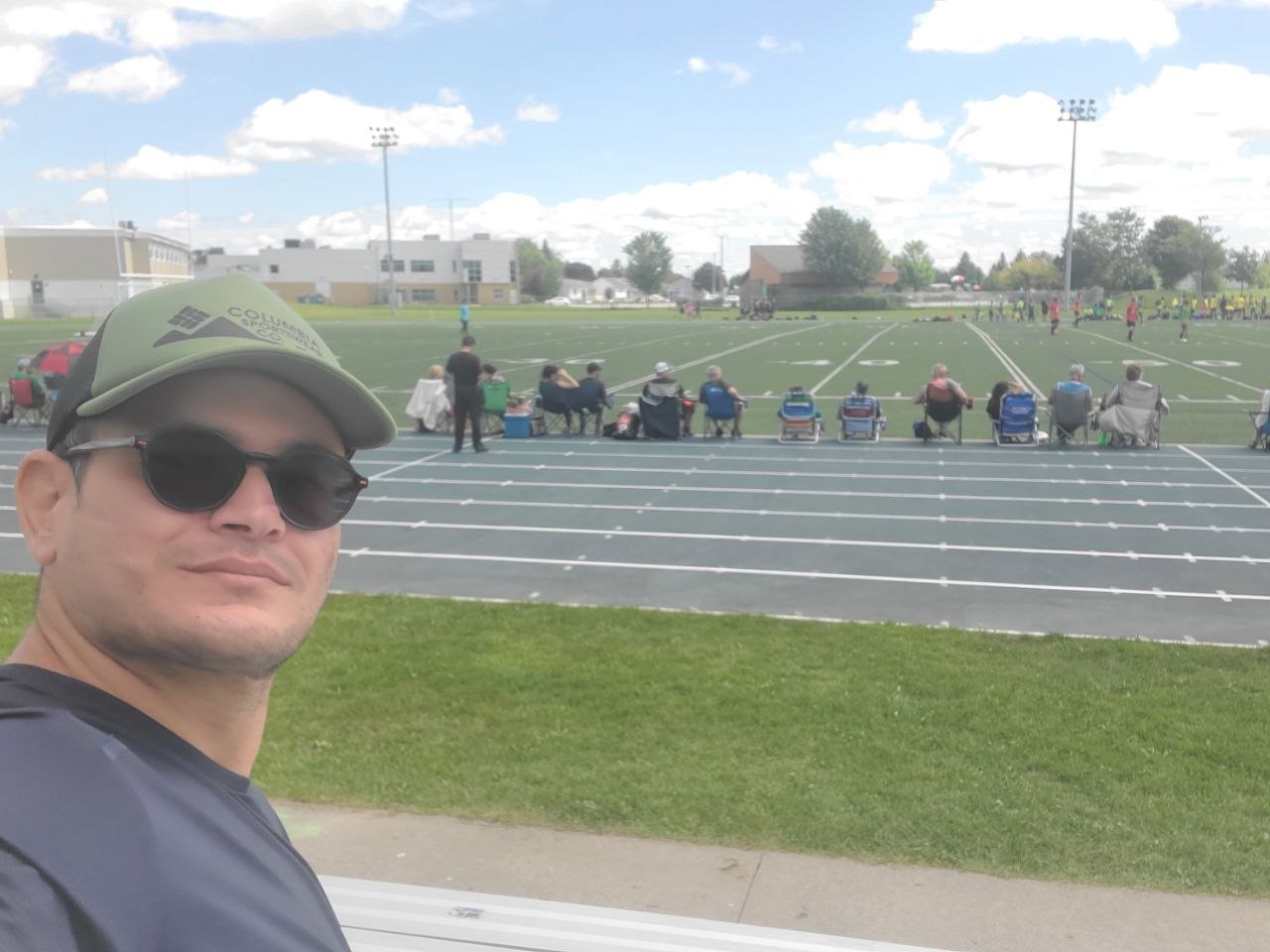
I was only taking a photograph here, but I could imagine the difference a place like this would make if children and adults could reach it regularly from home.
What would I pay, and where would the money come from?
I would present the figures honestly as a planning estimate for a one-year, three-neighborhood pilot, not as construction quotes or a promise that all the money is already available. For the STEEM equivalents below, I use the illustrative rate of 1 DT = 5.07 STEEM, the value at the time of any real purchase could be different.
| Change | Estimated cost | At 5.07 STEEM per DT |
|---|---|---|
| Collection routes, bins, public information and first-year operation | 250,000 DT | 1,267,500 STEEM |
| Public street-edge cleaning, small repairs, planting and household assistance | 150,000 DT | 760,500 STEEM |
| Upgrade of two modest, multiuse sports sites | 500,000 DT | 2,535,000 STEEM |
| First-year maintenance and contingency reserve | 100,000 DT | 507,000 STEEM |
| Total pilot | 1,000,000 DT | 5,070,000 STEEM |
For funding, I would propose 600,000 DT (3,042,000 STEEM) from the municipal capital and service budget, including postponing nonurgent decorative works after checking existing commitments, request 250,000 DT (1,267,500 STEEM) in regional or national co-funding, and seek 150,000 DT (760,500 STEEM) from transparent local partnerships for sports equipment and neighborhood planting. Sponsorship would not give anyone the right to fence off a public park or put a private name above the needs of residents.
Yes, that means making savings elsewhere. I would delay projects whose main purpose is appearance for one budget cycle, while protecting basic services and the wages of the people who provide them. If the co-funding did not arrive, I would reduce the number of sports installations and publish the revised plan instead of pretending that a missing 250,000 DT (1,267,500 STEEM) could be wished into existence.
Would any of it survive after my week ended?
This is the question that would worry me most. I could announce collection days on Monday, if trucks stopped arriving after I left, residents would lose faith. I could ask people to care for their street on Tuesday, if the municipality abandoned its own pavements, the rule would feel unfair. I could launch a sports project on Wednesday, if nobody paid to maintain it next year, the gates might soon be locked.
That is why my seven days would end with a published schedule, a pilot budget, named municipal teams, open neighborhood meetings and a public review after three months. The special powers would help me begin. The workers who collect waste, the residents who use the streets and the young people who fill the parks would decide whether the changes were worth keeping.
I know that a week is too short to turn my Tunisian city into Montréal, and I would not want to do that anyway. What I took from my visit was not a demand for identical houses or identical lawns. It was the feeling that somebody had thought about the ordinary journey from one's front door to the street, and from the street to a place where a child could play.
If, after my imaginary week as mayor, a parent knew when the rubbish would be collected, an older person could walk along a clear pavement and a child could choose between a ball, a skateboard or a run close to home, I would call that a meaningful start.
Which of these three changes would you put first in your own neighborhood?
Photographs: my images from the Montréal-area visit in summer 2024. The pilot costs and funding mix are hypothetical planning figures, not official quotations. Background consulted: City of Montréal collection schedules, recycling collection guidance, property upkeep guidance, and a 2025 Tunisian municipal refuse-truck award.

Ciertamente encontrar a nuestro paso un camino impoluto, atractivo y agradable a la vista, sería algo que a todos nos deleitaría el alma y nos enamoraríamos fielmente de nuestro territorio creando aún más un sentido de pertenencia que nos conduciría a cuidarlo y protegerlo en todo su esplendor.
También es cierto que lamentablemente, estas pequeñas cosas terminan siendo gigantes para un pueblo y para quienes tienen el mando y la potestad de administrar una región , parece no importarle lo suficiente o dejarlo en un segundo plano para darle prioridad a otras cosas que favorezcan sus intereses personales. Así se percibe en América latina sobretodo, o crees que pasa así en todas partes del mundo?.
Tienes ideas geniales y de implantarlas como alcalde en una semana serían tan fructíferas que quedarían permanentes en el tiempo cuando la ciudadanía goce de dichos frutos de manera tangible. Sin duda ese excelente plan de recolección de basura con disposición infalible para los ciudadanos, el cuidar la belleza de la infraestructura urbana y el colocar más de un deporte a pie de los vecindarios; son un trío de estrategias qué harían de cualquier localidad un sitio extraordinario y lleno de virtudes para todos sus habitantes.
Todo lo tienes muy claro en cuanto a planificación , presupuesto y estrategias de financiamiento, deberías considerar el colocarlo en práctica en serio y te garantizo que todos votaríamos por ti, incluyéndome, jajaja;
Estaría dispuesta a mudarme donde quiera que estés para disfrutar de la gran filosofía de gestión de este inteligente y talentoso alcalde.
Éxitos en tu excelente publicación. Abrazos y Bendiciones!
#s34engagement
Thank you so much, Mariami, for your warm and thoughtful words. I truly believe that these small everyday details can make a huge difference in people’s lives. And yes, unfortunately, I think this challenge exists in many parts of the world, not only in Latin America.
Your support almost makes me want to run for mayor, especially with a voter like you!
A big hug to you, and thank you again for your beautiful reflection and blessings. #s34engagement
Tomar buenos modelos de otras ciudades y adaptarlos a nuestra realidad es muy inteligente.
Yo también considero una prioridad el tema de los desechos sólidos y en ello observo que eres muy metódico para una implementación.
La corresponsabilidad de la población en cuanto al ornato y habitabilidad a sus alrededores es justa, lógica y a la vez estratégica.
Y sin duda alguna la garantía de espacios para la práctica de actividad física de una forma organizada es fundamental, incluso sería mi segunda prioridad.
Tienes muchos aspectos cubiertos, incluído el presupuestario.
Coincido en que el afectar positivamente al menos una vida e impactar la conciencia de un grupo de personas es ganancia para cualquier gerencia.
Thank you so much for your kind words! I really appreciate the way you understood the idea behind the post. I agree, waste management and sports spaces can make such a real difference in everyday life. And honestly, if even a few people start caring more about their surroundings, that already feels like a win.
Thanks again for reading and sharing your thoughts, my friend!
#s34engagement
Upvoted! Thank you for supporting witness @jswit.