Season 34 Week 6 Challenge | From the Hive to the Jar... and One Day Back Again
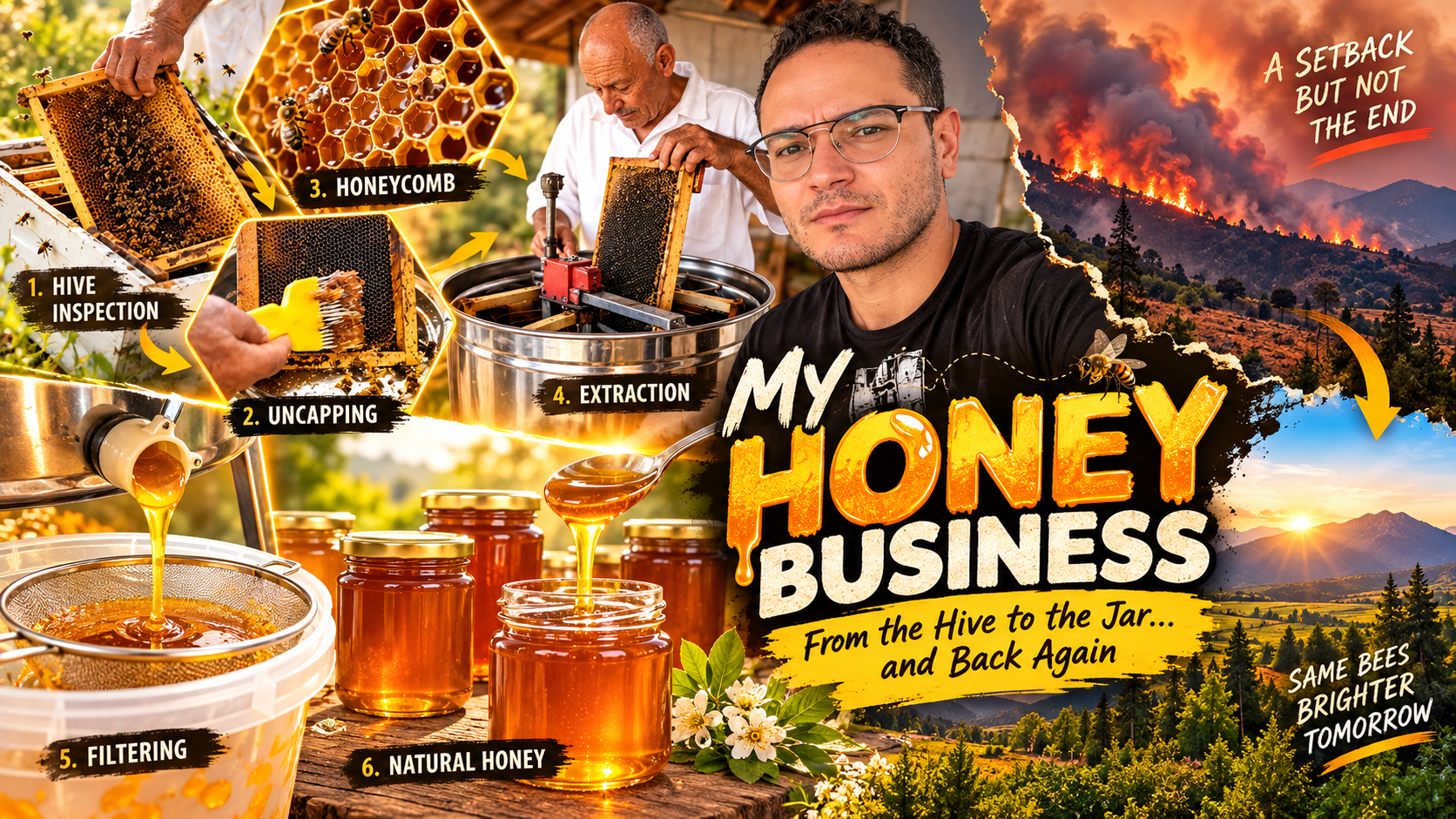
Edited By Canva
Hello Steemians,
When I think about starting a business, I do not immediately imagine an office, a computer, a shop full of products or a complicated business plan filled with figures, because the business project that has stayed closest to my heart began in a much more natural way, surrounded by bees, wooden frames, the smell of wax and the excitement of watching honey slowly move from the hive into the extractor and finally into the jars that we could place on the table.
For me, honey production was never simply about obtaining something sweet that could eventually be sold, because I had the opportunity to experience the entire process myself and to understand that behind every jar there is a living colony, many hours of work, careful observation, patience, knowledge of nature and, above all, an environment healthy enough for the bees to survive and produce.
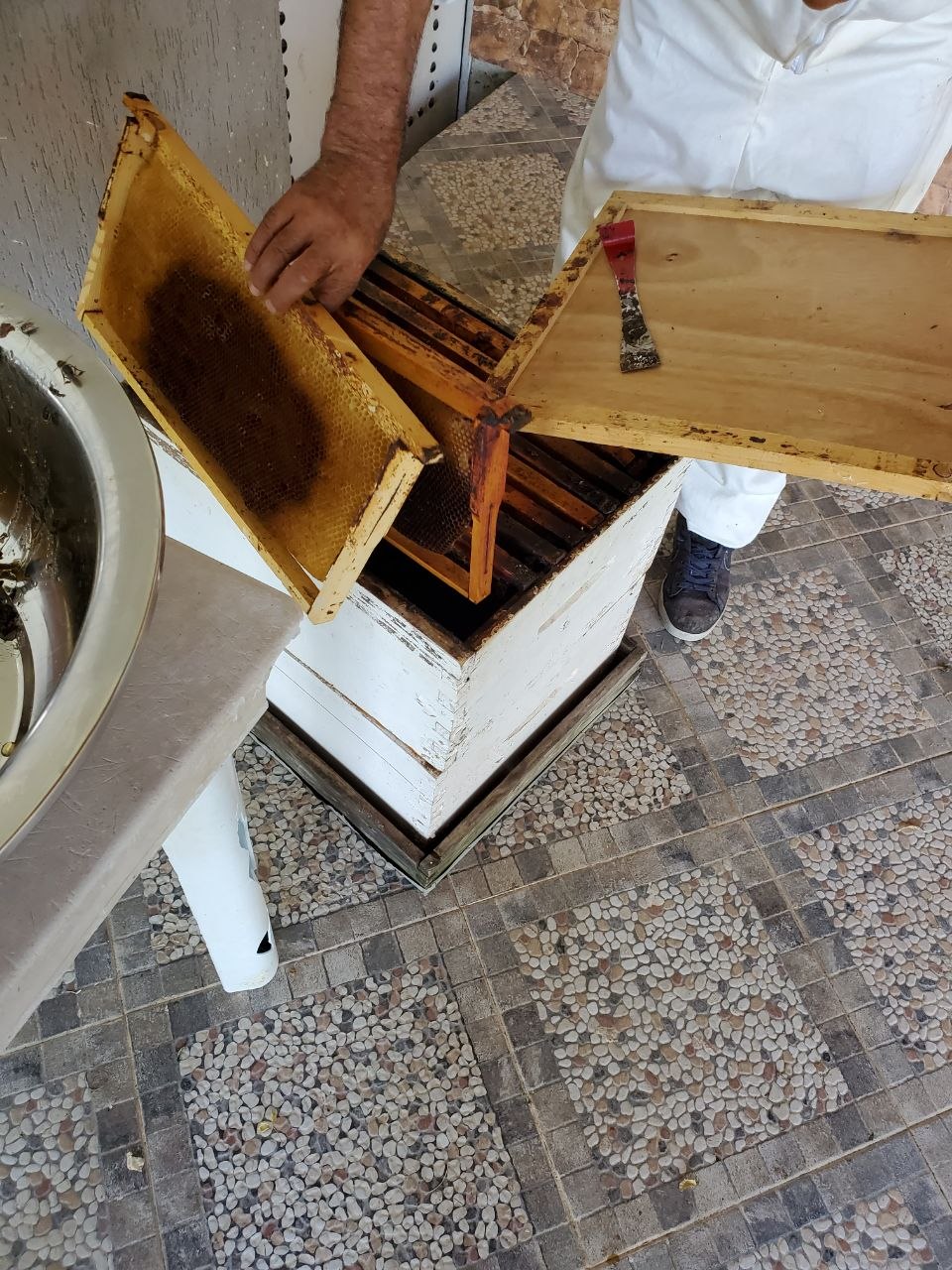
This was where everything really began for me, because long before the honey reached a jar, there were hives to open, frames to inspect and bees to work around carefully while respecting the rhythm of the colony.
Unfortunately, this experience also taught me one of the most difficult lessons that any small business owner can learn, because even when we work seriously, plan carefully and take good care of what we have built, there are situations that remain completely outside our control, and in my case that situation came from the fires that spread through the surrounding mountains and eventually destroyed the environment on which my bees depended.
Have I ever wanted to set up my own business?
Yes, and in reality I had already started moving in that direction through honey production, because I was not simply buying honey and reselling it to other people, but participating in the process from the hive itself until the moment when the final product was ready to be stored, tasted and eventually shared with others.
What attracted me most to this activity was the fact that the product had a story before it had a price, because when you hold a honeycomb frame in your hands and see the cells filled one by one, you understand that the final jar sitting on a kitchen shelf represents much more than a simple commercial product.
 |  |
|---|---|
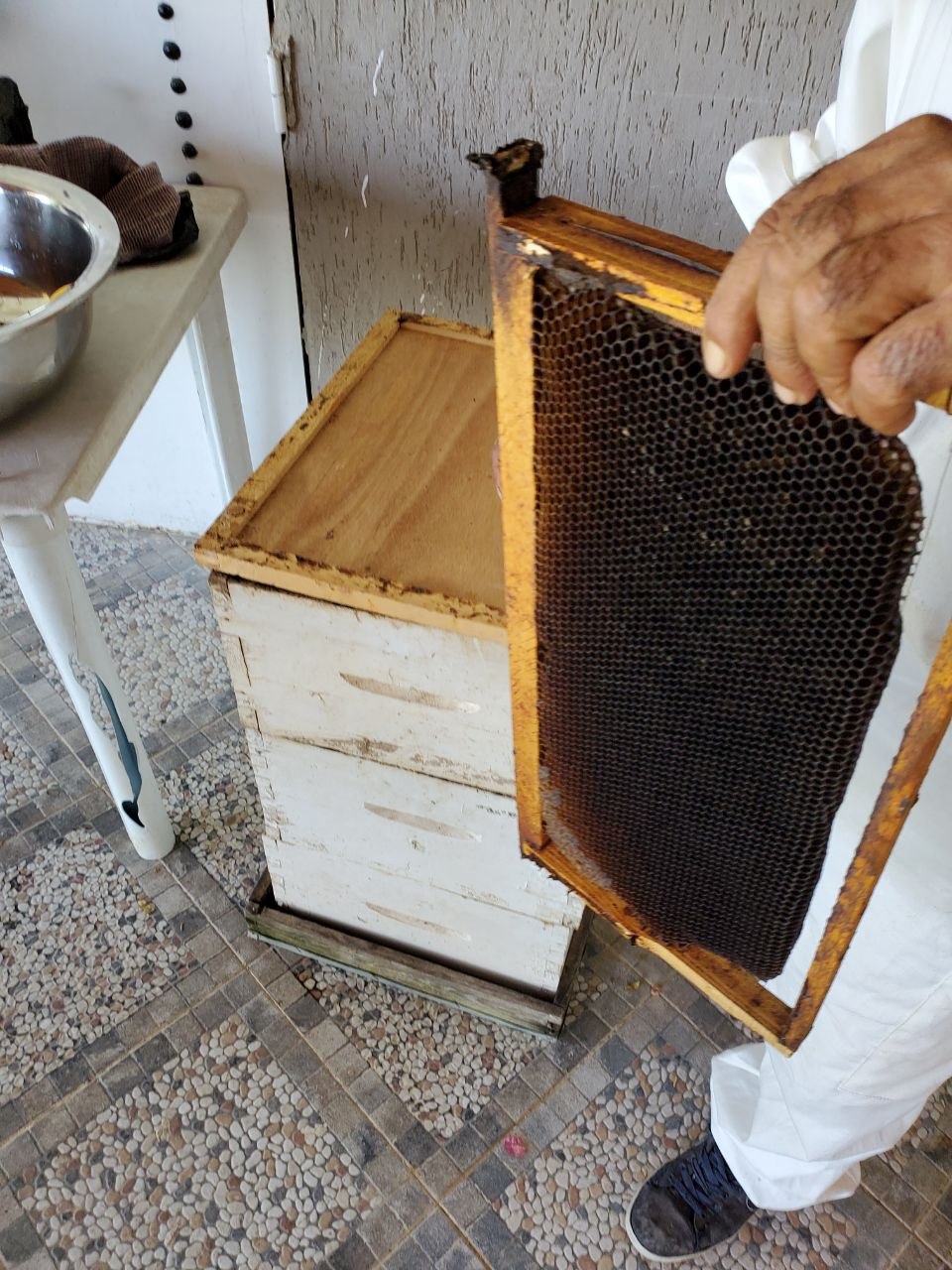
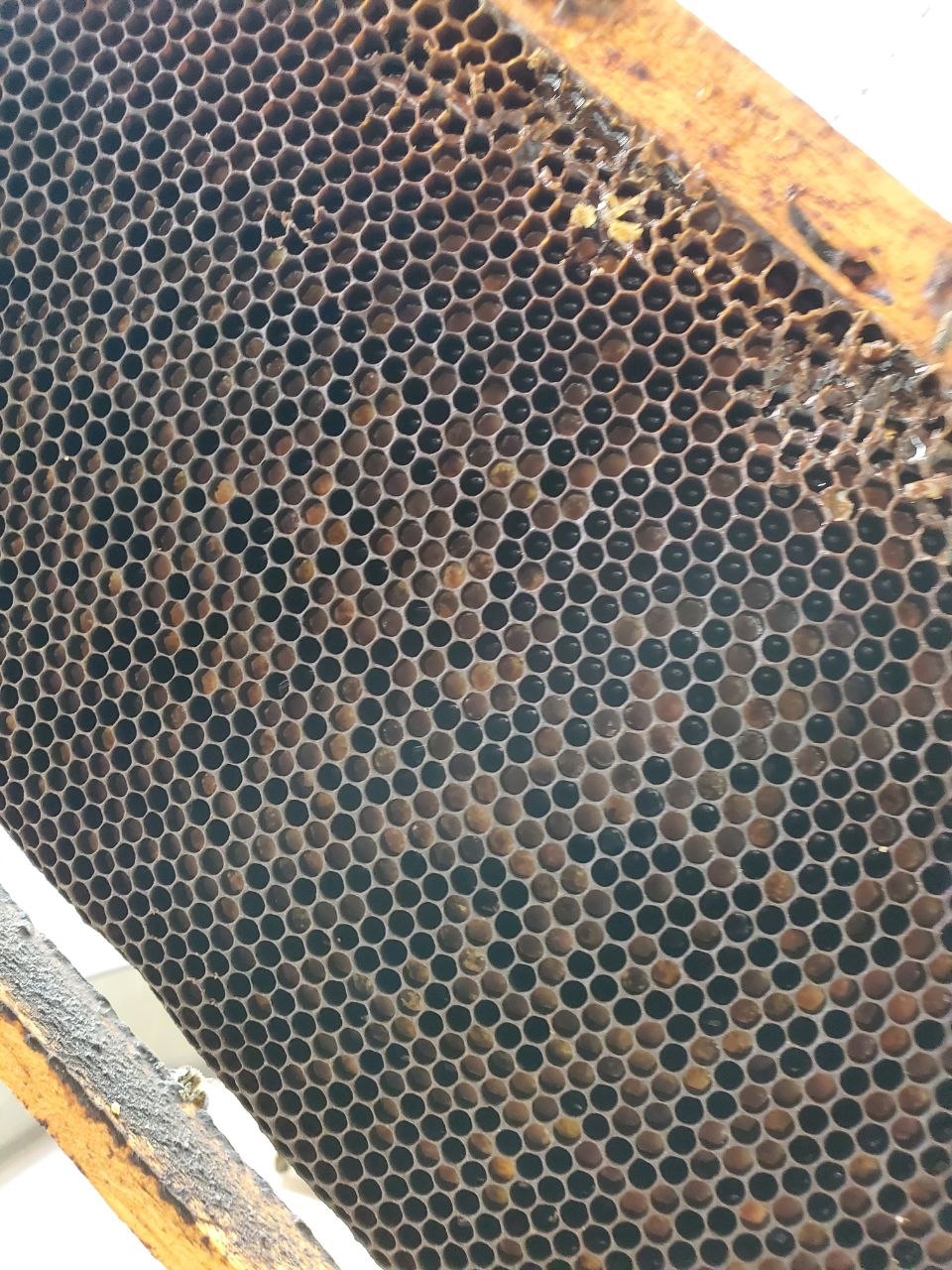
| Looking at a frame like this always reminded me that honey is created cell by cell long before we begin thinking about jars, labels or selling prices. | Seeing the honeycomb from such a close distance made the final product feel completely different, because every cell represented the work of the colony and the surrounding environment. |
That direct connection with production is precisely what made me think that honey could eventually become a real small business, because instead of trying to sell something whose origin I barely knew, I could explain exactly how it was produced, show the hives, document the extraction and allow customers to understand the complete journey of the product they were buying.
From the hive to the extractor
One of the moments I remember particularly well was preparing the frames before extraction, because this was the point when the honey that had remained protected inside the comb was finally going to leave the hive and begin the transformation into the clear golden product that most people recognise.
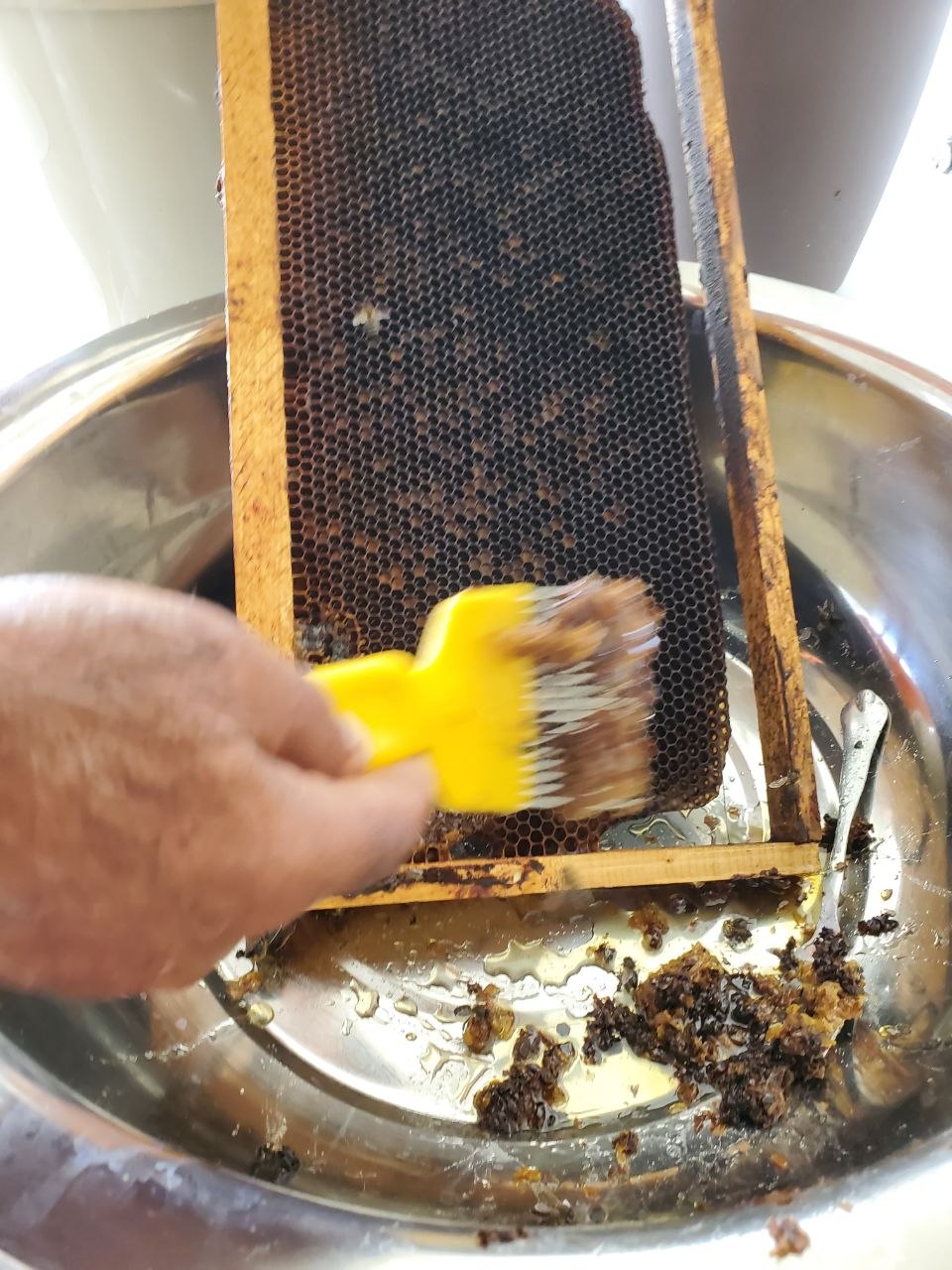
Preparing each frame required patience because the objective was to make the honey accessible while preserving the comb as much as possible so that the frames could continue to be useful.
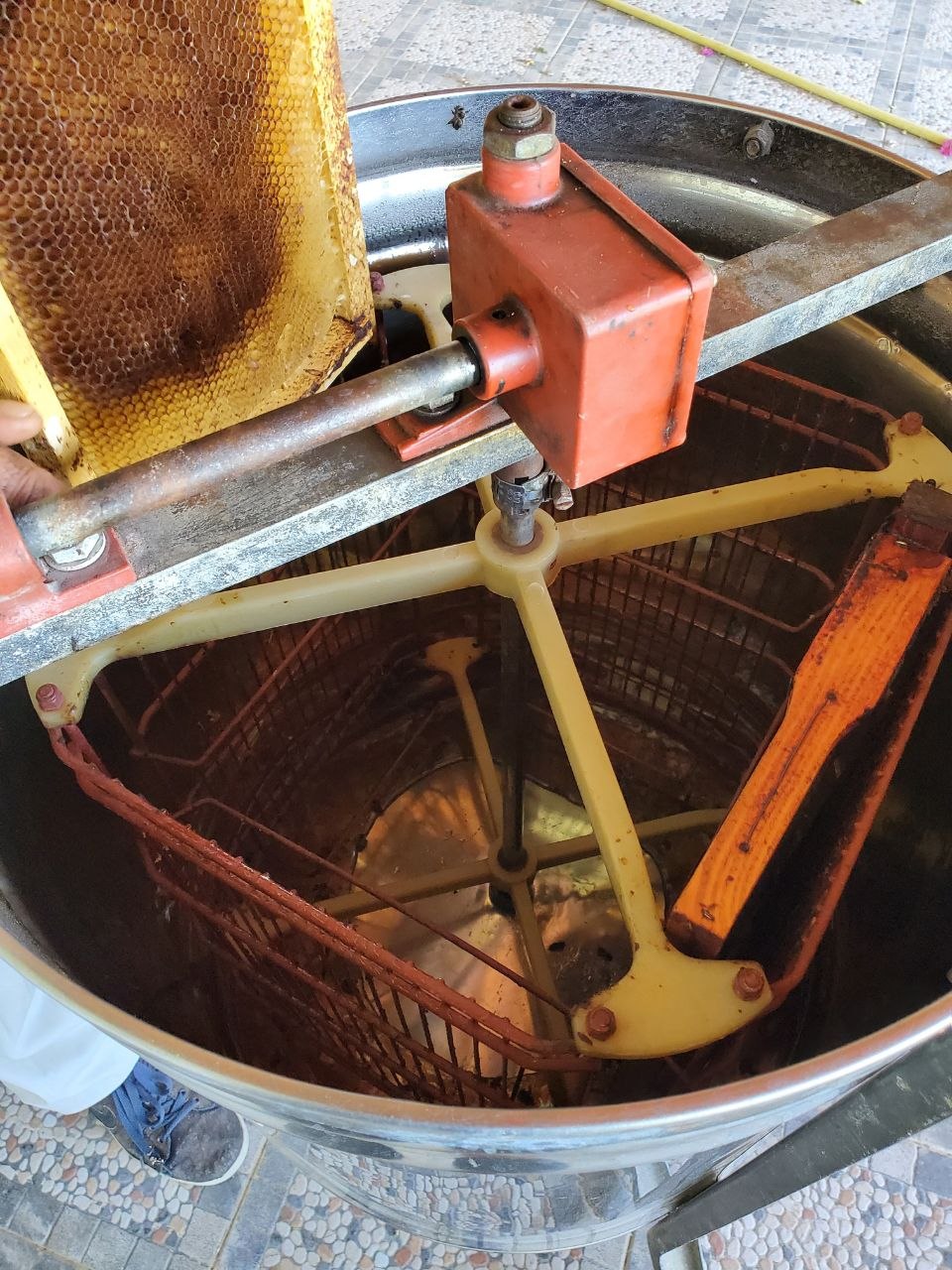
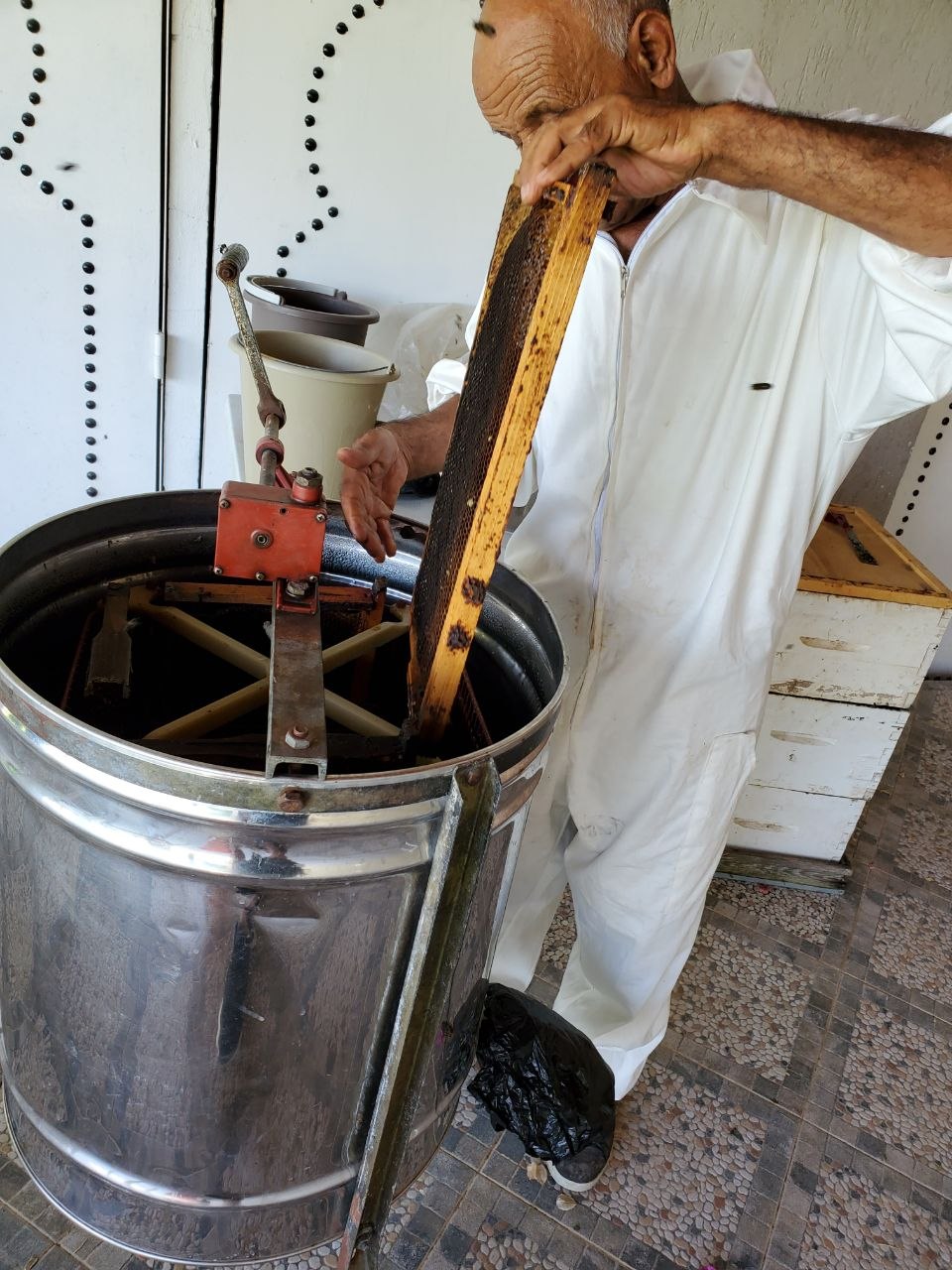
Once the frames had been prepared, they were placed inside the extractor, and this stage always fascinated me because the machine allowed us to remove the honey through centrifugal force while keeping the structure of the comb largely intact, which meant that the same frames could later return to productive use rather than being destroyed after every harvest.
 |  |
|---|---|
| Positioning the frames correctly inside the extractor was important because once the mechanism started turning, balance helped the extraction proceed more smoothly. | This simple-looking machine became one of the most important links between the hive and the finished product that eventually reached our jars. |
I particularly enjoyed watching the extractor working because, after spending time around the hives and handling the frames, this was the stage when the result of all that patience began becoming visible, and I could finally see that the activity was not only about caring for bees but also about producing something tangible that could potentially become the foundation of a small family business.
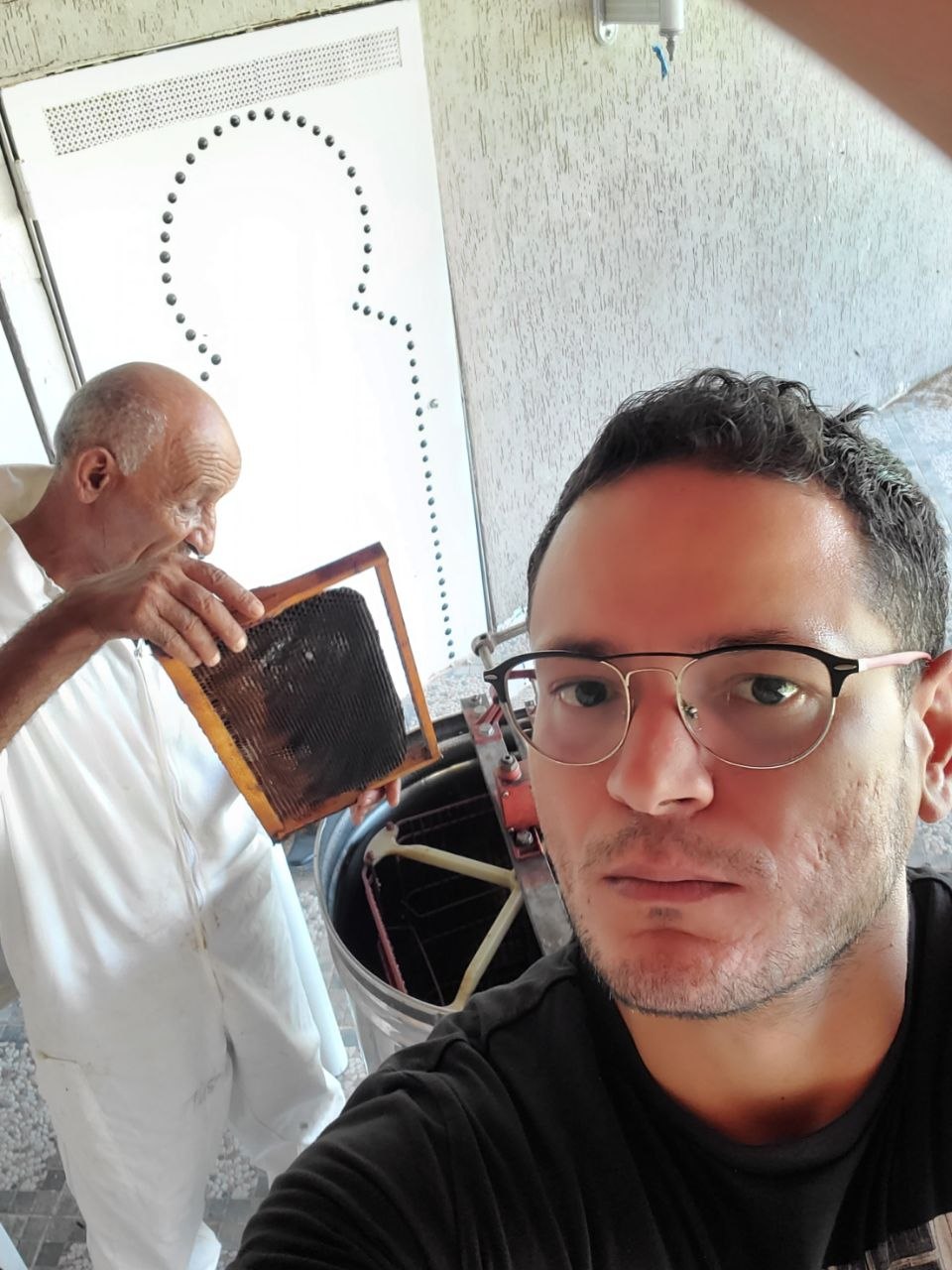
I still enjoy looking at this photograph because it reminds me that I did not experience honey production from a distance; I was present during the extraction and saw the process develop from one stage to another.
I also recorded part of this experience, and this video remains important to me because photographs can preserve isolated moments, while a video gives a much stronger impression of the movement, the equipment and the practical work involved in transforming full frames into jars of honey.
My honey production video
The moment when the honey finally appears
After the frames had been processed inside the extractor, the honey accumulated at the bottom and could finally be released, and even today I think this is one of the most satisfying moments in the entire process because the honey does not rush out like water but flows slowly, heavily and continuously, giving us time to appreciate its colour and texture.
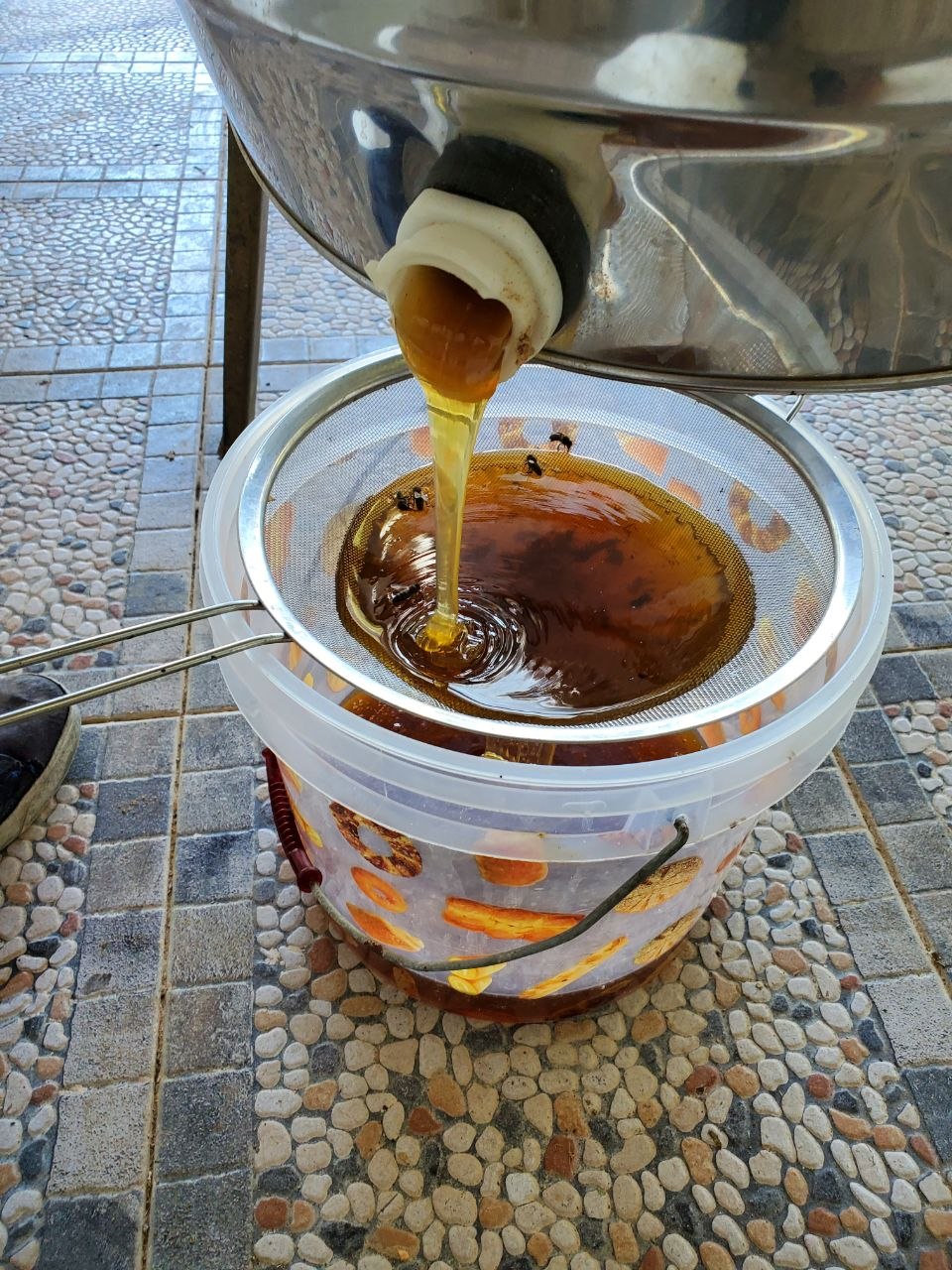
After all the work around the hive and the preparation of the frames, seeing the honey finally flow from the extractor was the moment when the harvest truly became real.
The honey then passed through a filter in order to remove small pieces of wax and other particles before being collected, and this simple step was important because the appearance and cleanliness of the final product are part of the quality that customers notice immediately when they open a jar.
When I saw the honey flowing into the container, I often thought that there was a clear difference between having a hive and having a business, because the hive gives you the possibility of producing honey, while the moment when you can consistently extract, filter, package and present that honey is when the activity starts to become commercially meaningful.
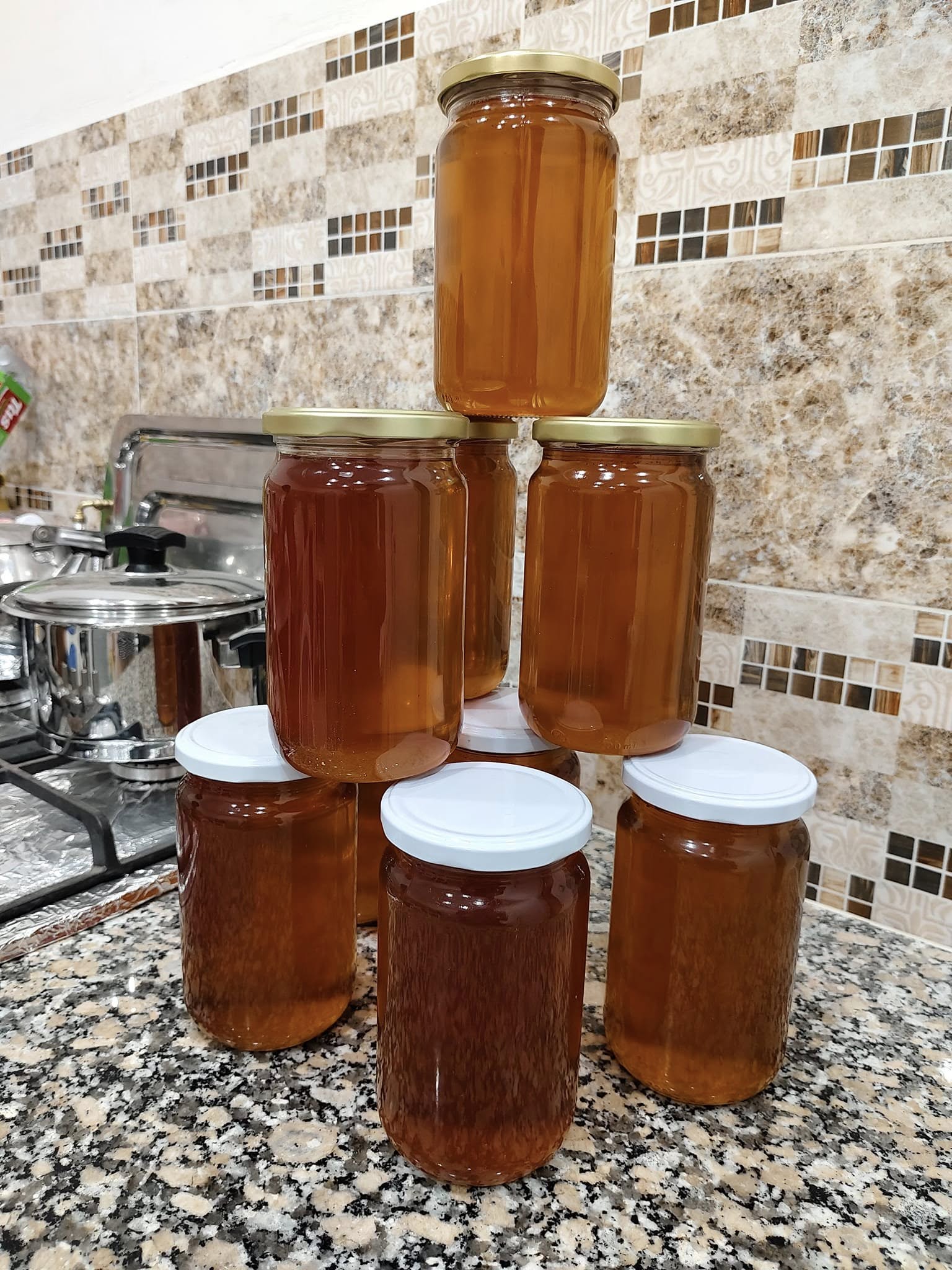
Seeing the jars together after extraction gave me a special sense of satisfaction because each one represented the result of several different stages of work that had started much earlier inside the hive.
And of course, after watching the colour and texture of the honey, there was always the final and simplest test, which was tasting it directly and appreciating a product whose origin I knew from the beginning.
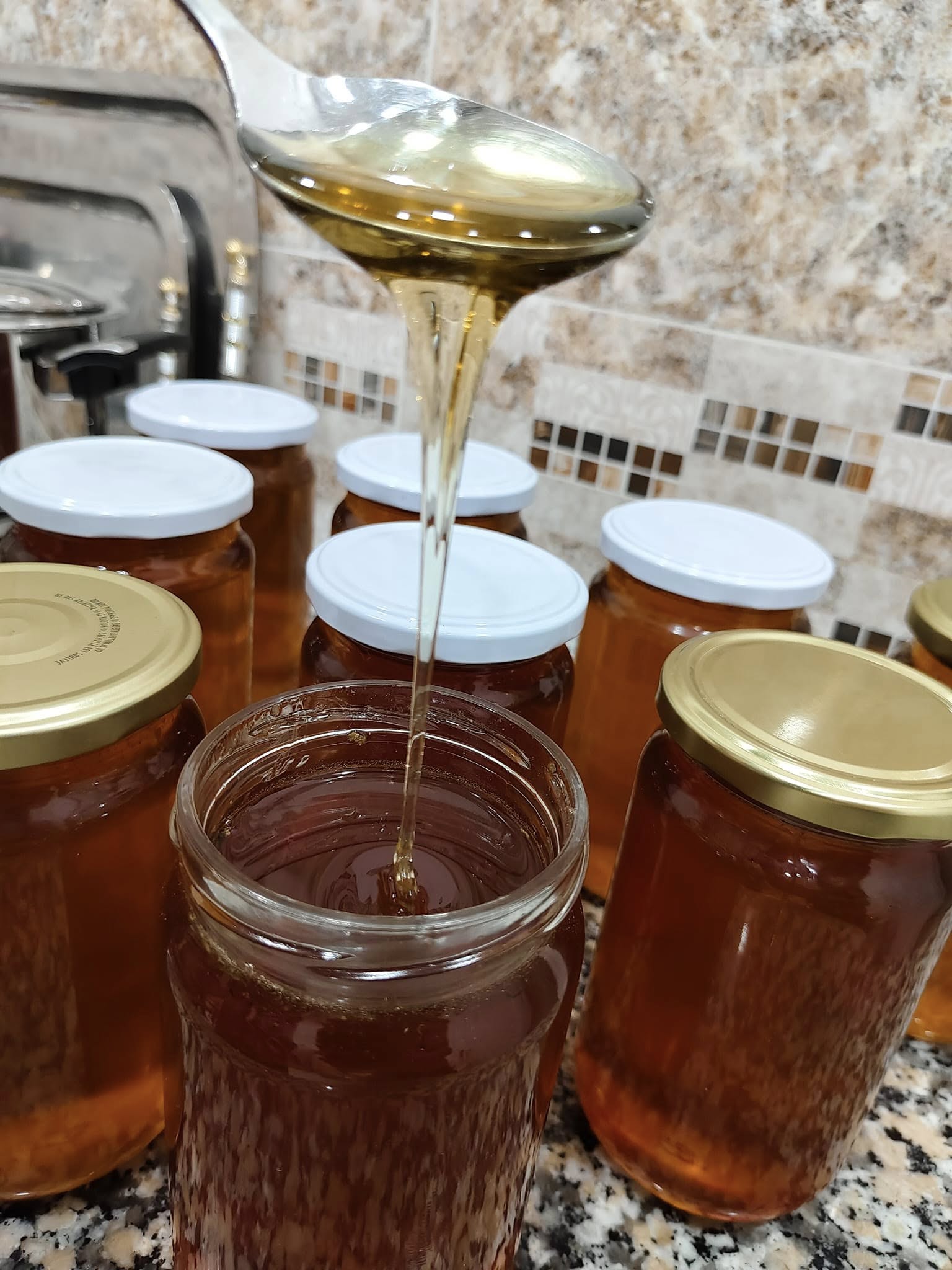
For me, this remains one of the best ways to appreciate the final product, because before thinking about labels or marketing, I first want the honey itself to be something that I am proud to taste and share.
If I restart this activity, what kind of business would I create?
If I decide to restart the project, I would not immediately try to build a large commercial operation with dozens of hives, employees and expensive infrastructure, because the experience I already had has taught me that beekeeping is strongly dependent on nature and that growing too quickly can make the business more fragile instead of making it stronger.
I would prefer to restart with a relatively small number of colonies, perhaps around ten hives, so that I could closely monitor their health, follow their development through an entire season and gradually rebuild my experience before increasing the scale of production.
The apiary itself would obviously remain a physical activity because bees cannot be managed online, while the extraction and packaging could initially take place in a suitable small workspace without the need to rent an expensive commercial shop, and this would allow me to reduce unnecessary fixed costs during the first stage of the project.
The commercial side, however, could be much more modern than before because I would combine direct sales, recommendations from existing customers and online promotion, using social media not only to advertise the jars but also to show the hives, the environment, the extraction process and the people behind the product.
For me, that transparency could become one of the strongest parts of the business because customers would not simply see a label saying “natural honey”; they would be able to see where the honey came from and how it was produced.
A simple business plan for starting again
Because this is a project that I want to restart in the future rather than a business that is currently operating at full scale, the following figures are only illustrative planning estimates that help me think about feasibility, because the real cost of hives, colonies, equipment, packaging and transport would need to be checked again when I actually decide to begin.
For the STEEM equivalents used in this post, I am taking an illustrative rate of approximately 1 DT = 5.25 STEEM, based on the market values available when preparing this publication, although the STEEM price can naturally change considerably over time.
| Item | Estimated cost in DT | Approx. STEEM |
|---|---|---|
| 10 complete hives and basic hive equipment | 3,000 DT | 15,735 STEEM |
| Bee colonies / swarms | 2,500 DT | 13,113 STEEM |
| Protective clothing, smoker and small tools | 500 DT | 2,623 STEEM |
| Feeding, treatments and first-season maintenance | 700 DT | 3,672 STEEM |
| Jars, lids, labels and basic packaging | 500 DT | 2,623 STEEM |
| Transport and site preparation | 500 DT | 2,623 STEEM |
| Emergency reserve | 800 DT | 4,196 STEEM |
| Estimated initial requirement | 8,500 DT | 44,583 STEEM |
These figures could be lower if some of the equipment from my previous activity can still be reused, especially the extraction equipment and smaller tools, which is one of the advantages of returning to a project that I already experienced rather than entering the field completely from zero.
I would also avoid spending too much money at the beginning on decoration, expensive branding or a physical shop, because I would rather invest first in healthy colonies, suitable locations, good equipment and the ability to produce consistently before thinking about creating an impressive commercial image.
How would I set the price?
For a simple business exercise, I could work with an illustrative retail price of around 50 DT per kilogram, or approximately 262 STEEM, although the real selling price would obviously depend on production costs, the type of honey, packaging, market conditions and what other local producers are charging at the time.
A simple price structure could look like this:
| Jar size | Price in DT | Approx. STEEM |
|---|---|---|
| 250 g | 15 DT | 79 STEEM |
| 500 g | 28 DT | 147 STEEM |
| 1 kg | 50 DT | 262 STEEM |
I would not choose the selling price only by looking at competitors, because if another beekeeper sells at a lower price but has lower costs or produces at a much larger scale, copying that price could make my own activity unprofitable, so I would calculate the real cost of producing each kilogram and then compare that figure with the local market before deciding on the final price.
Who would my competitors be?
The competition would probably come from two different directions, because on one side there are experienced local beekeepers who already have established customers, a good reputation and years of practical knowledge, while on the other side there are supermarket products that benefit from convenience, large distribution networks and sometimes lower prices.
I would not try to compete with everyone simply by selling cheaper honey, because competing only on price would eventually become difficult for a small producer, and I believe my stronger advantage would be traceability, direct contact and the story behind each harvest.
If someone bought a jar from me, I would like that person to be able to see photographs of the apiary, watch the extraction video, understand approximately when the honey was harvested and know who actually produced it, because that relationship of trust can be very important when people are choosing a food product.
What could ten hives produce?
Honey production can vary significantly depending on rainfall, temperature, flowering plants, colony strength and many other conditions, so I would never consider any production figure guaranteed, but for a very cautious planning exercise I could imagine an average of around 10 kilograms of saleable honey per productive hive during a season, which would mean approximately 100 kilograms from ten productive colonies.
At an illustrative average selling price of 50 DT per kilogram, the calculation would be:
100 kg × 50 DT = 5,000 DT
≈ 26,225 STEEM in gross honey sales
If annual operating costs such as feeding, treatments, jars, transport and small replacement equipment reached approximately 1,500 DT, or around 7,868 STEEM, the activity could leave approximately:
5,000 DT − 1,500 DT = 3,500 DT
≈ 18,358 STEEM
This calculation also immediately shows why I would not expect the first season to make me rich, because an initial investment of approximately 8,500 DT, or 44,583 STEEM, would be significantly higher than the projected first-year operating surplus, which means that recovering the initial investment would probably require several successful seasons rather than a single harvest.
Then came something that no business plan could predict
A business plan can estimate prices, production, equipment and operating costs, but it cannot always predict what nature is going to do, and this is where my own experience changed completely.
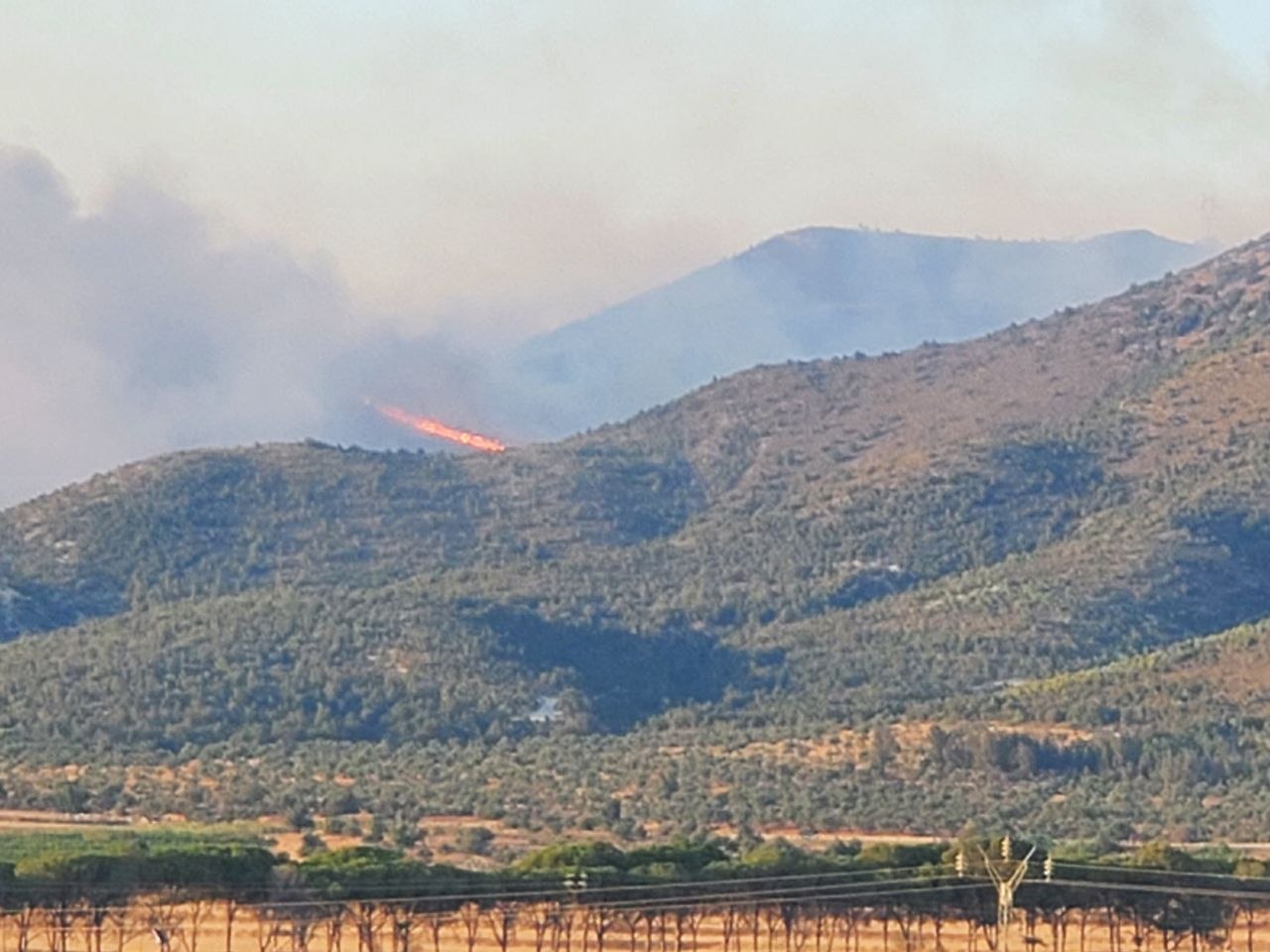
There are moments when every calculation suddenly becomes secondary, because the environment that supports the entire activity can change in a way that no small producer is capable of controlling.
The fires that affected the mountains also affected my bees, and eventually I lost the colonies that had made this honey production possible, which was difficult not only because of the financial loss but also because a bee colony is not simply another piece of equipment that can be replaced the following morning.
A colony is a living system that develops over time and depends on its queen, its workers, the availability of flowers, access to water, suitable temperatures and the wider ecosystem around the hive, which means that when the surrounding environment is badly damaged, the consequences for the beekeeper can continue long after the flames themselves have disappeared.
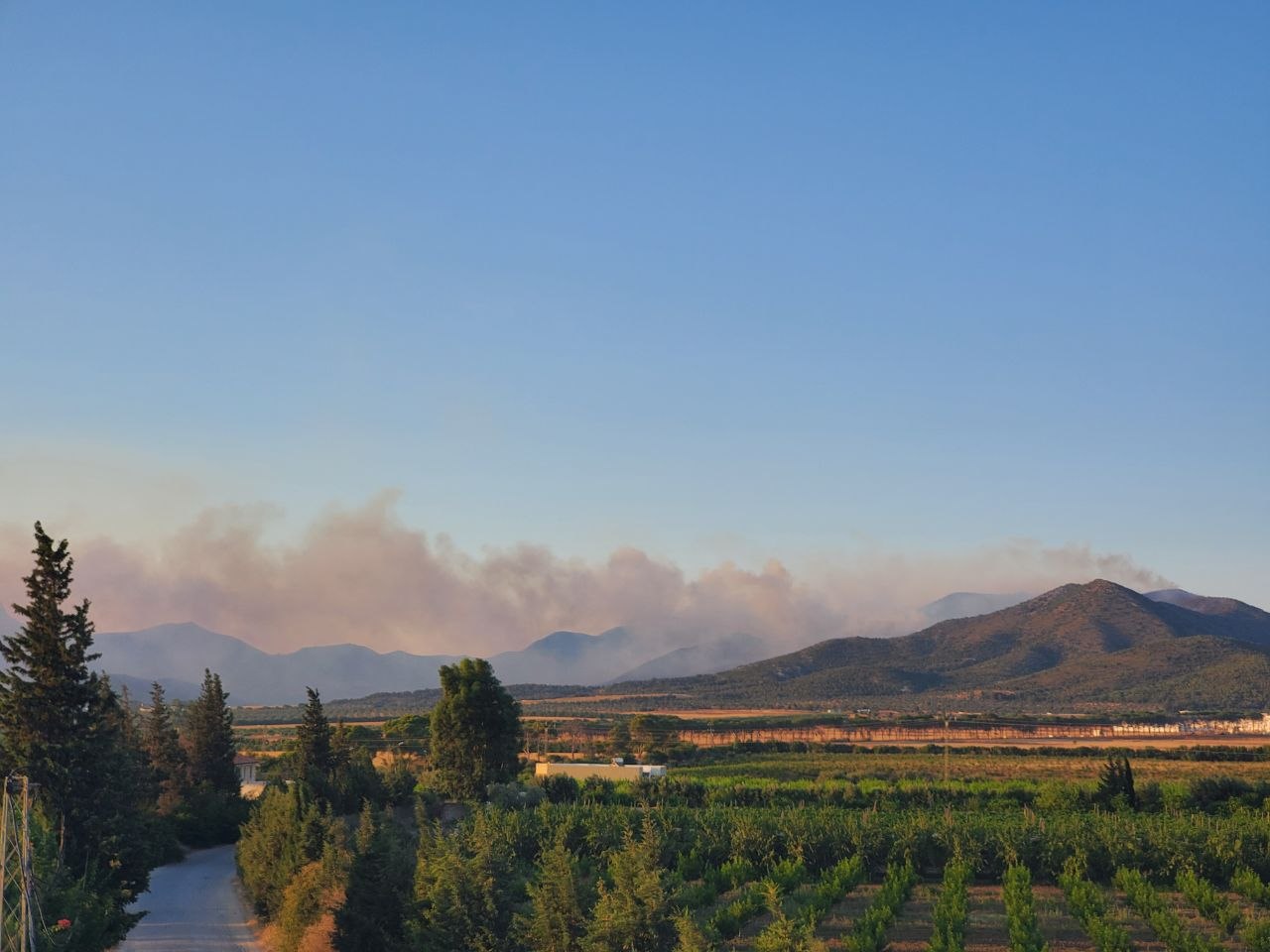
Watching the smoke spread across the mountains made me understand very clearly how vulnerable an agricultural activity can become when its success depends directly on the surrounding ecosystem.
For a while, the project stopped, the hives were no longer productive and honey extraction became something I remembered through photographs and videos rather than something I continued doing every season, but the idea itself never disappeared completely.
The equipment remained, the experience remained, the memories remained, and most importantly, the desire to start again remained.
What would I change if I started again?
If I restart this business, the biggest change would be that I would think about resilience before thinking about expansion, because before the fires I was mainly interested in producing honey, whereas today I would also think carefully about how to protect the activity against the possibility of losing an entire apiary in one event.
Instead of placing every colony in exactly the same location, I would eventually like to distribute the hives between more than one suitable site, provided that each place offered enough vegetation, water and safe access, because losing one location should not automatically mean losing the entire project.
I would also pay much more attention to vegetation around the apiary, seasonal fire risks, access routes and water availability, while keeping an emergency reserve that could help replace colonies or repair equipment if something unexpected happened.
That experience taught me that growth does not always mean owning more hives.
Sometimes real growth means building the same business in a way that is more difficult to destroy.
Honey would not be the only product
Another idea I would like to explore in the future is developing products around the hive rather than depending exclusively on jars of honey, because once the colonies are healthy and production becomes stable, there may be opportunities to gradually introduce other items such as small gift jars, honey presentation boxes, beeswax products, pollen or propolis.
I would not introduce all of these products immediately, because it would make more sense to produce one product well before trying to manage several different lines, but over time this diversification could allow the activity to generate income in more than one way and could also make the business more interesting for customers.
I would particularly like the idea of offering different honey batches according to harvest periods whenever nature allowed it, because honey can change in colour, flavour and aroma depending on the flowers available to the bees, and that natural variation could become part of the identity of the product rather than something that needs to be hidden.
How would I market my honey?
I would begin with the story rather than with expensive advertising, because I already have something that many small businesses try to create artificially: real photographs of the hives, real images of the frames, real moments from the extraction process, a real video of the work and photographs of the finished jars.
Instead of presenting only a perfect commercial photograph of honey surrounded by decorative flowers, I could show customers the complete journey from the colony to the jar, and I believe that kind of authenticity would help people understand what they are buying.
Social media could therefore become an important part of the project, because I could document the season, show the condition of the colonies, share the extraction process and announce when a new harvest becomes available, while direct recommendations from satisfied customers could gradually build trust without requiring a large advertising budget.
An interrupted project that I still want to rebuild
When I look at these photographs today, I do not only see honey and equipment, because I also see a project that gave me practical experience, taught me patience and showed me how much work can exist behind a product that appears incredibly simple once it reaches a glass jar.
I also see something that stopped before I was ready to let it stop.
These jars belong to an earlier chapter of my beekeeping experience, but when I look at them now, I see less of an ending and more of something that I still want to produce again.
If I restart, I will return with more experience than I had the first time, a clearer understanding of the risks, a more cautious approach to expansion and, hopefully, a better strategy for turning honey production into a small but sustainable business rather than simply treating each harvest as an isolated event.
I already know the feeling of opening a hive and carefully removing a frame, I know what it looks like when the cells are full, I have watched the extractor turn, I have seen the honey flow slowly through the filter and I have filled the jars with the final product, but unfortunately I have also learned how quickly a natural disaster can interrupt everything that took years to build.
Perhaps that is precisely why I still want to begin again, because the projects that remain in our minds after they disappear are often the ones that meant something more to us than the money they could generate.
If you had to restart a business after losing it because of circumstances beyond your control, would you rebuild the same project exactly as it was, or would you use the experience to create something stronger and better prepared for the future?
All photographs used in this publication are my own and document my personal experience with beekeeping, honey extraction and the mountain fires that interrupted this activity. The financial figures presented in the business plan are illustrative estimates used only to explore the feasibility of restarting the project, and the real costs, production levels and selling prices would need to be recalculated when the project is actually launched again.
Hola amigo, se nota mucho lo que te apasiona esto, tanto que ni siquiera lo veías como un negocio, disfrutabas cada paso de lo que hacías. Es una pena que todo se perdiera por los incendios. Explicas este trabajo tan a fondo que ni nos damos cuenta todo el esfuerzo que conlleva su fabricación, disfrute mucho su publicación y también aprendí de ella. Saludos y éxitos
#s34engagement
Hola amiga, muchas gracias por tus palabras. Creo que eso era precisamente lo especial de esta experiencia: mientras trabajaba con las colmenas no pensaba primero en vender, sino en disfrutar cada etapa y aprender del proceso. Los incendios fueron un golpe duro porque no solo se perdió una producción, también desapareció un proyecto al que estaba muy unido, pero todo lo vivido me dejó experiencia y todavía mantiene vivo el deseo de volver a empezar algún día. Me alegra mucho saber que mi publicación también te permitió descubrir un poco mejor todo el trabajo que existe detrás de un simple frasco de miel.
#s34engagement
Curated by: @mvchacin
Your business plan is different but quite interesting, which is the result of many hours of hard work, careful observation, patience. You are right that business is not just about offices, computers, shops full of products. I found your honey business plan quite interesting. The scene of bees, wooden frames, the smell of wax and honey slowly accumulating from the hive to the extraction machine and finally to the jar is really amazing. You will face various adversities in this business, but your experience, patience and hard work will provide inspiration to start anew. Honey business can be profitable if the right knowledge is applied, work is done to expand it. There are many types of honey available in our country, which we buy from the market. These are sold at very high prices but are not pure. The long process between the process of storing your honey and the final jar of honey placed on the table requires a lot of patience and hard work. May your business continue to expand, I wish you all the best.
#s34engagement
Upvoted! Thank you for supporting witness @jswit.
📢 Only a few days remain — exclusive bonuses are waiting for you!
Steemit airdrop rewards just dropped, and it’s time to secure the bag! y'all crushed it out there, and your rewards are officially locked and loaded.
More detail on portal:
https://t.co/Si2QhdDTyi
May it be one of the first of many in a positive rapidly progress milestones 🧡
Curated by: @mvchacin
Hi friend
You have provided a practical explanation of how the beekeeping business is conducted, sharing detailed information through every image that has given us a clear understanding. You also highlighted how wildfires in the mountains can disrupt this business—a challenge for which we must be prepared in advance. Your ability to re-establish the business despite such setbacks is impressive, and I wish you all the very best.