Personal Health Agents: Reshaping Habit Formation in Wellness
Navigating the landscape of personal health often presents a formidable challenge, despite the proliferation of health trackers, dietary apps, and readily available medical information. Individuals frequently struggle with the consistent application of health-promoting behaviors, not due to a lack of data, but rather the overwhelming complexity of integrating diverse information and translating it into actionable, sustainable habits. The sheer cognitive load required to synthesize genetic predispositions, real-time physiological data, environmental factors, and clinical history into coherent daily decisions often leads to decision fatigue and eventual disengagement.
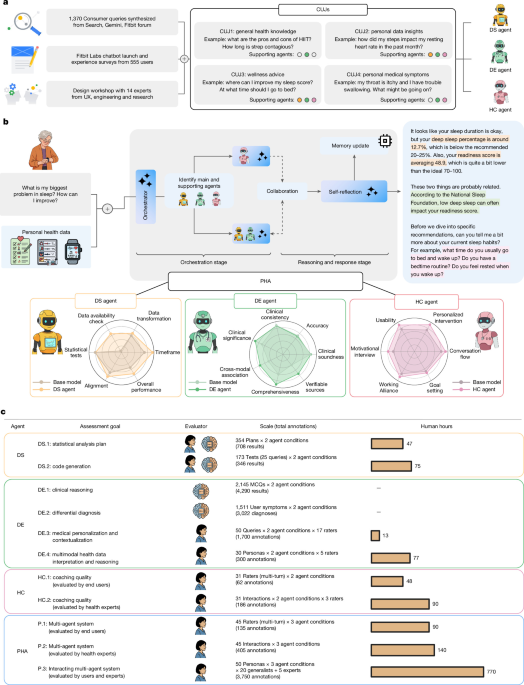
The concept of a personal health agent (PHA), as elucidated in recent research, offers a sophisticated framework for overcoming these pervasive barriers. A PHA is envisioned as an advanced artificial intelligence system designed to serve as a comprehensive, individualized health companion. Its core function is to aggregate and process a vast array of personal health data, encompassing genomic information, behavioral patterns, clinical records, and environmental exposures. By integrating these disparate data streams, the PHA aims to provide highly personalized, real-time insights and guidance tailored precisely to an individual's unique biological and lifestyle context. This moves beyond simple data tracking to intelligent interpretation and proactive recommendation.
Source: www.nature.com
From a behavioral science perspective, the architecture of a PHA directly addresses several critical inhibitors of habit formation. The system’s capacity for automated data ingestion and sophisticated knowledge representation reduces the significant cognitive burden currently placed on individuals. Instead of manually correlating sleep patterns with dietary intake or stress levels with exercise adherence, the PHA performs this intricate analysis autonomously. This simplification is vital; by offloading the mental effort of data synthesis, individuals are better positioned to focus on the behavior itself, thus lowering the activation energy required for action.
Furthermore, the reasoning and interaction components of a PHA are particularly relevant to the principles of effective behavioral nudges and feedback loops. Generic health advice often fails because it lacks personal relevance and timeliness. A PHA, however, can provide highly contextualized micro-interventions. For instance, instead of a blanket recommendation to "exercise more," the PHA might suggest a specific 15-minute walk at a particular time, factoring in the individual's recent activity levels, calendar availability, and current environmental conditions like air quality or weather. Similarly, dietary suggestions could be tailored based on an individual's unique metabolic profile, current food inventory, and upcoming social engagements, moving from broad guidelines to precise, actionable choices. This level of personalized guidance significantly increases the likelihood of adherence and, consequently, the successful establishment of new, healthy habits.
The emergence of personal health agents signifies a potential paradigm shift in how individuals manage their wellness. By transforming raw, fragmented data into clear, actionable prompts and feedback, PHAs could fundamentally alter the landscape of self-care. This infrastructure promises to alleviate the inherent cognitive load associated with comprehensive health management, facilitating consistent behavioral change through intelligent, personalized intervention. The future of health may not be about accumulating more data, but rather leveraging sophisticated AI to translate that data into the precise, timely support necessary for cultivating sustainable, health-promoting behaviors.
Inspired by: https://www.nature.com/articles/s41586-026-11161-8