The Diary Game // 12th October 2026 // R&D on Mill Scale Wastage During Hot Charging in Steel Industry
My Steemian's Friend,
Today I’m going to write a diary about my activity in 12-10-2026. I hope everyone will enjoy my diary. Yesterday, we carried out another R&D activity at our steel factory to find out the mill scale wastage percentage during hot charging in the rolling mill.
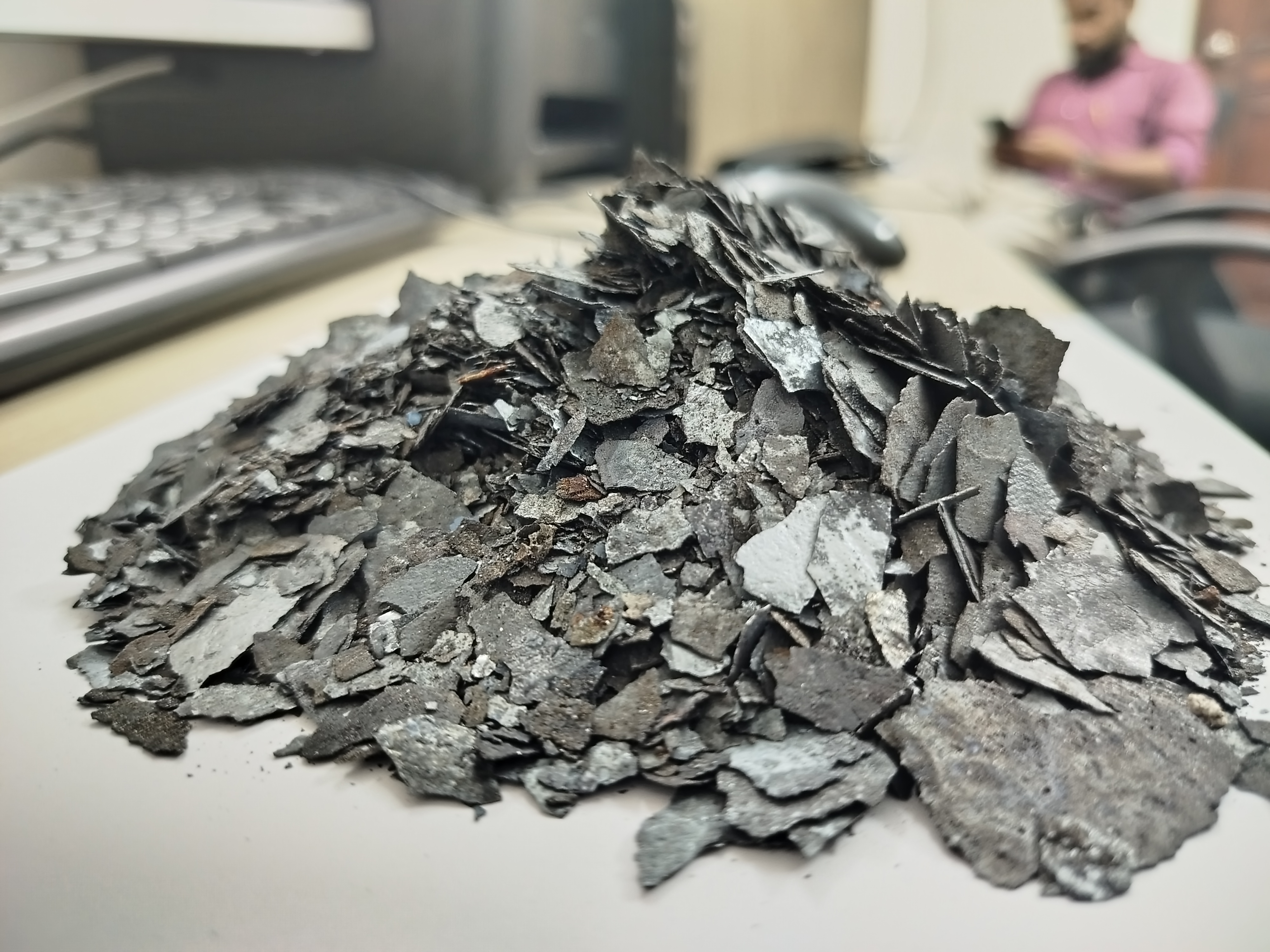
Mill Scale
We had already conducted this experiment twice before, and yesterday we repeated it again to get a better understanding of the actual wastage during rebar production.
In our factory, billets are produced from liquid steel through the Continuous Casting Machine (CCM). After passing through the mold and cooling process, the liquid steel becomes a solid billet. When the billet comes out of the CCM, its temperature is around 1200°C. During hot charging, these billets are transferred directly to the rolling mill without cooling them completely to room temperature.
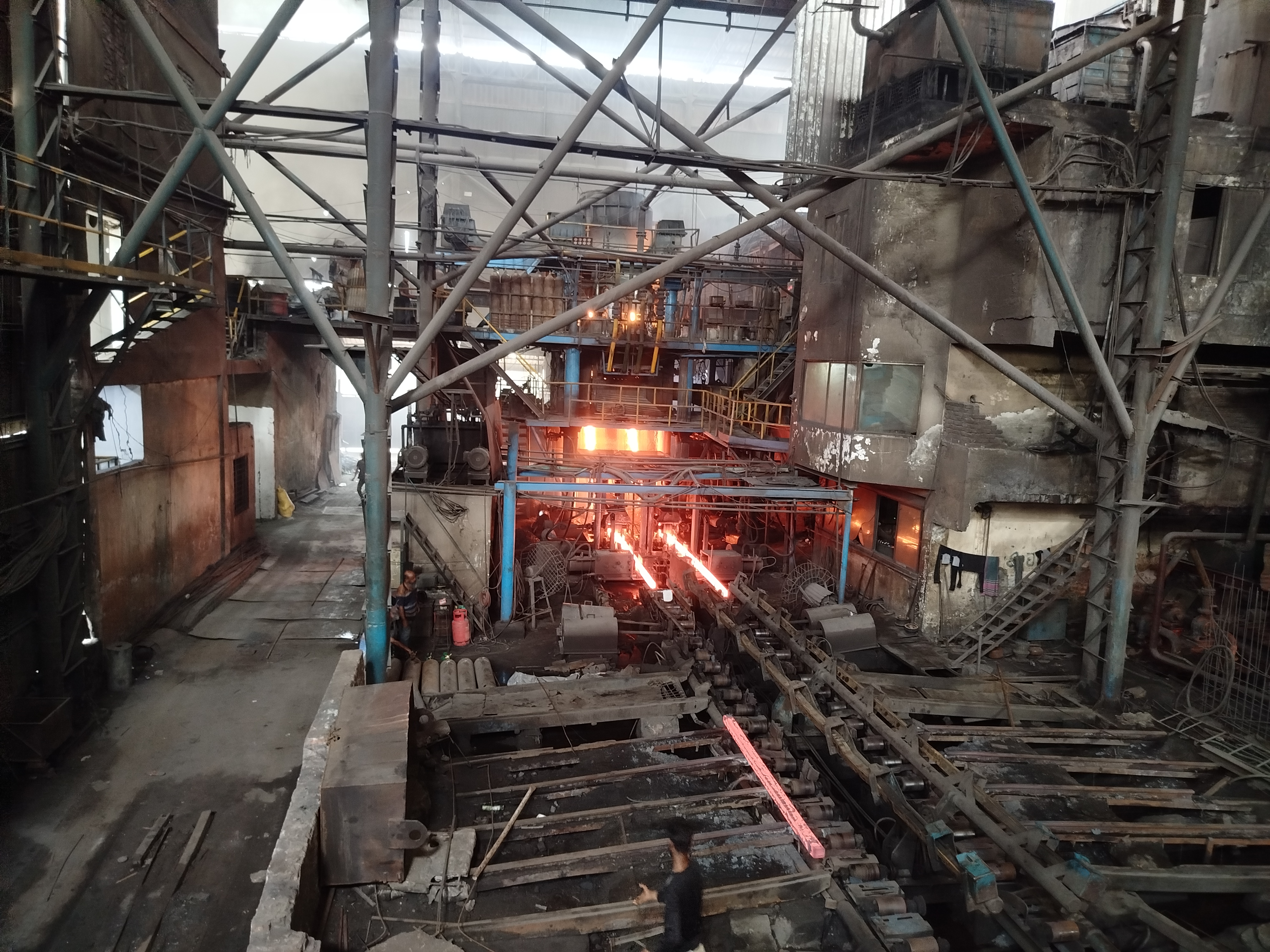
Continuous Casting Machine
Before rolling, the billet temperature is generally maintained within the range of 1000–1100°C. At such high temperatures, the billet surface reacts with oxygen in the surrounding air, forming an iron oxide layer. This layer is commonly known as mill scale. It forms on the billet surface during high-temperature exposure and gradually falls off as the billet moves through the rolling line.
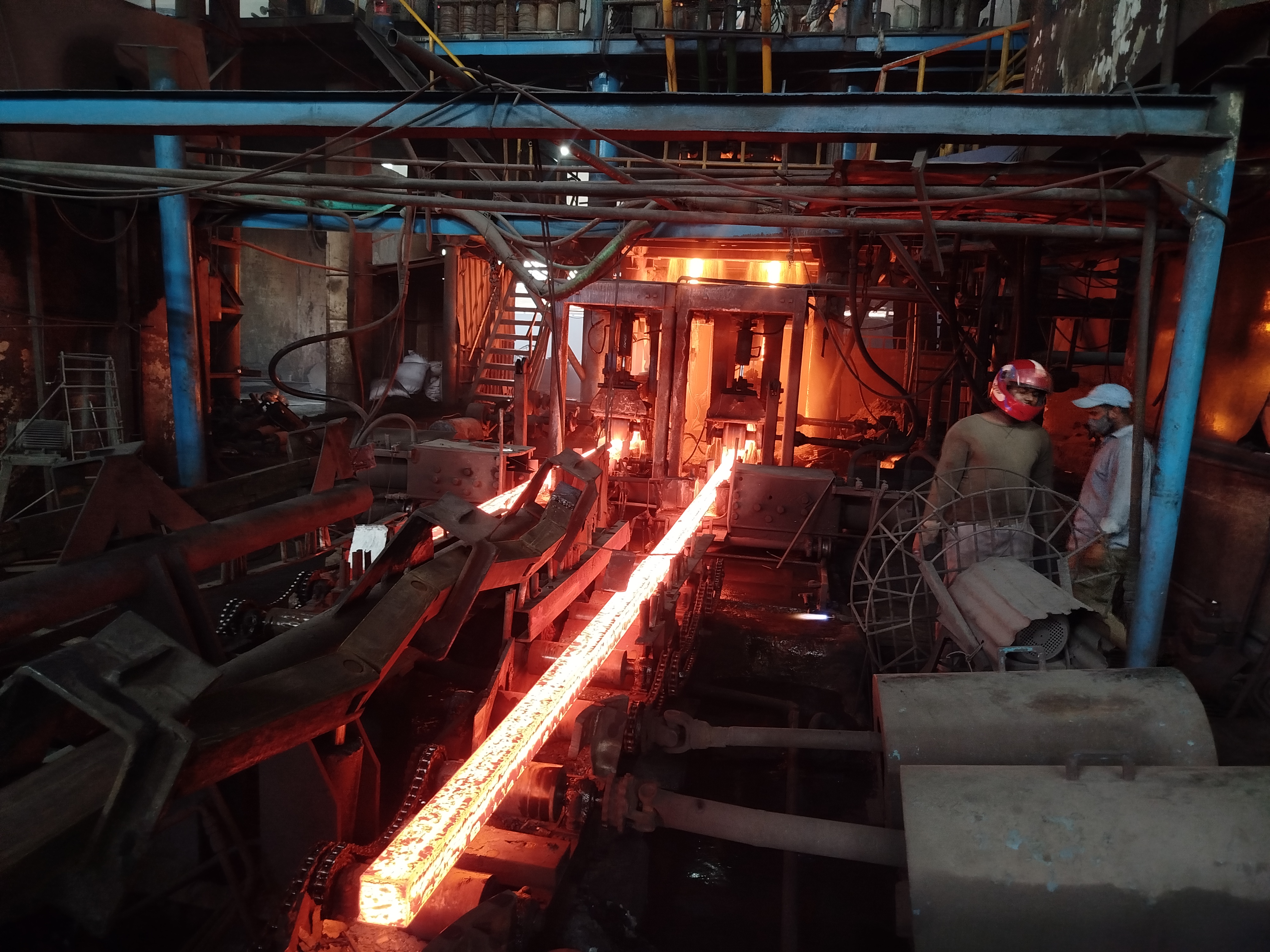
Hot Billet From CCM are Going to Rolling Mill
The billets produced in our factory have a cross-sectional dimension of 100 mm × 100 mm and a length of 118 inches. Based on these dimensions, the total external surface area of one billet is approximately 1.21 m². This entire surface is exposed to the surrounding atmosphere during the production process, although the actual oxidation rate depends on the temperature, exposure time and operating conditions.
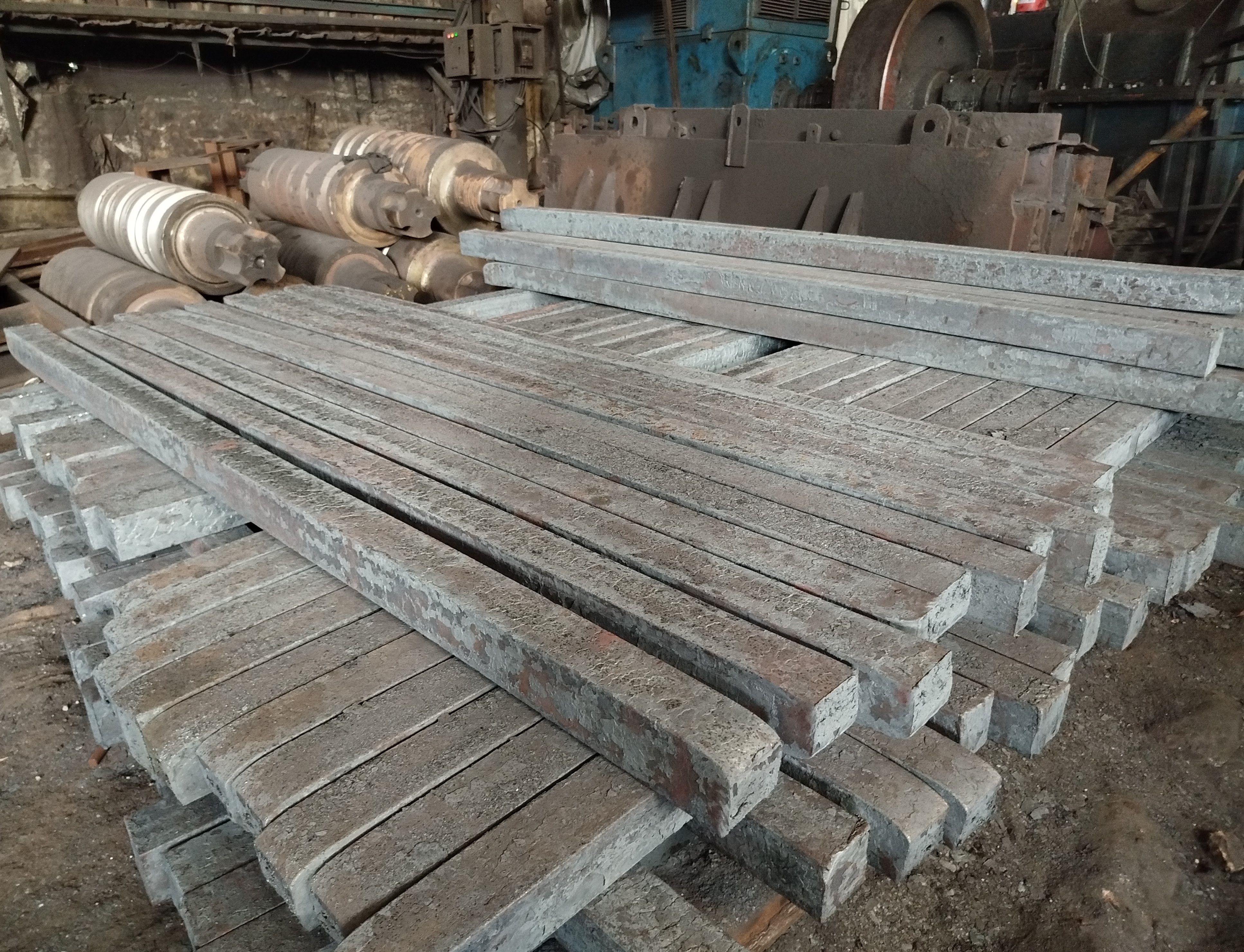
100mm * 100mm * 3000mm Billet
As the billet passes through the rolling stands, the mill scale breaks away from the surface and falls at different points along the production line. Some of it may fall before reaching the finishing stands, while the remaining scale separates during subsequent rolling operations. By the time the rebar reaches the cooling bed, much of this scale has already been lost from the production process. For this reason, it is difficult to collect and measure the total mill scale directly.
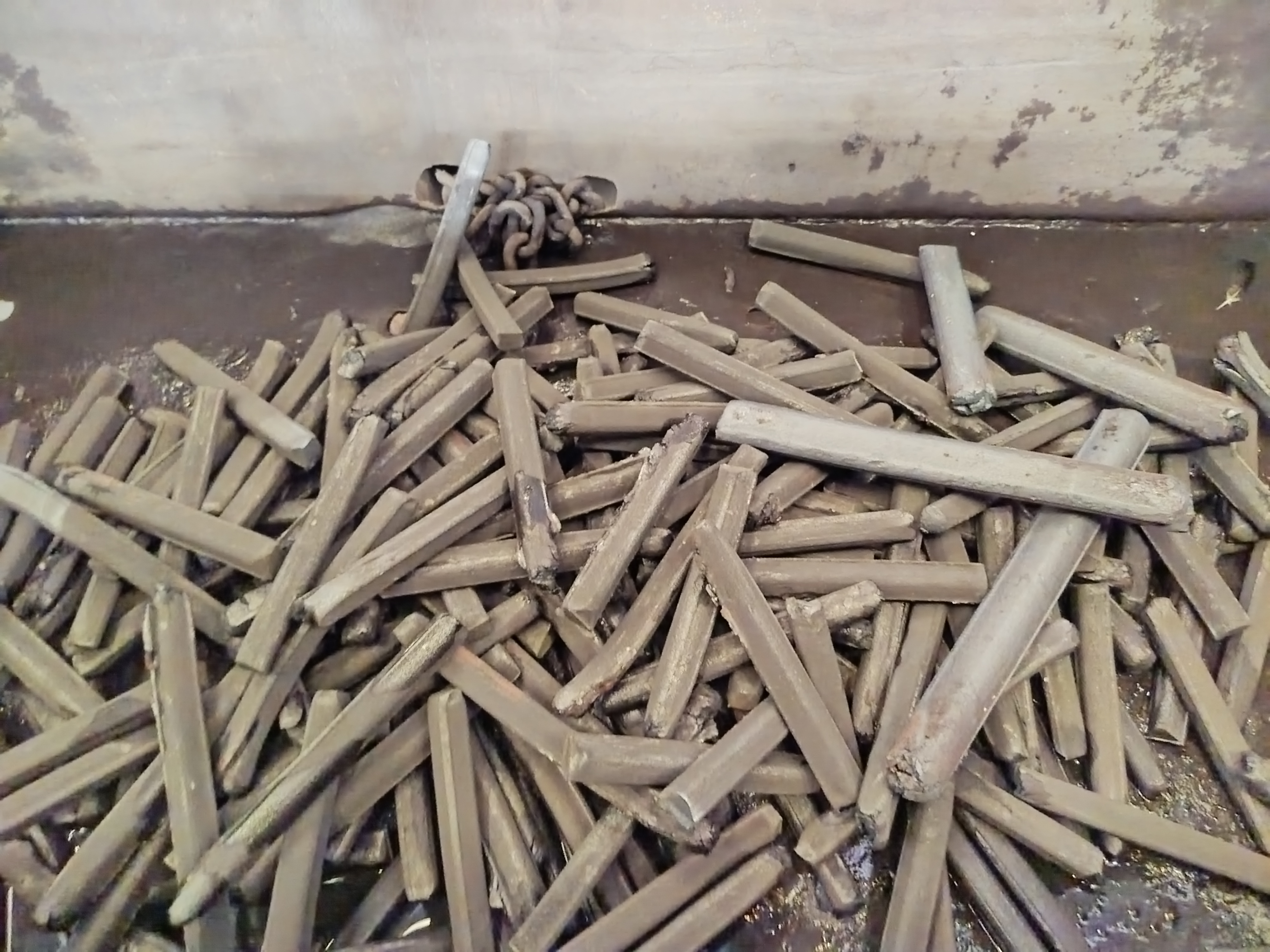
Oval Cutting in Rolling Mill
So, we decided to calculate the wastage indirectly through a material balance. First, we calculated the theoretical weight of each billet using its volume and the density of steel. We then counted the total number of billets received from the CCM and calculated their total incoming weight.
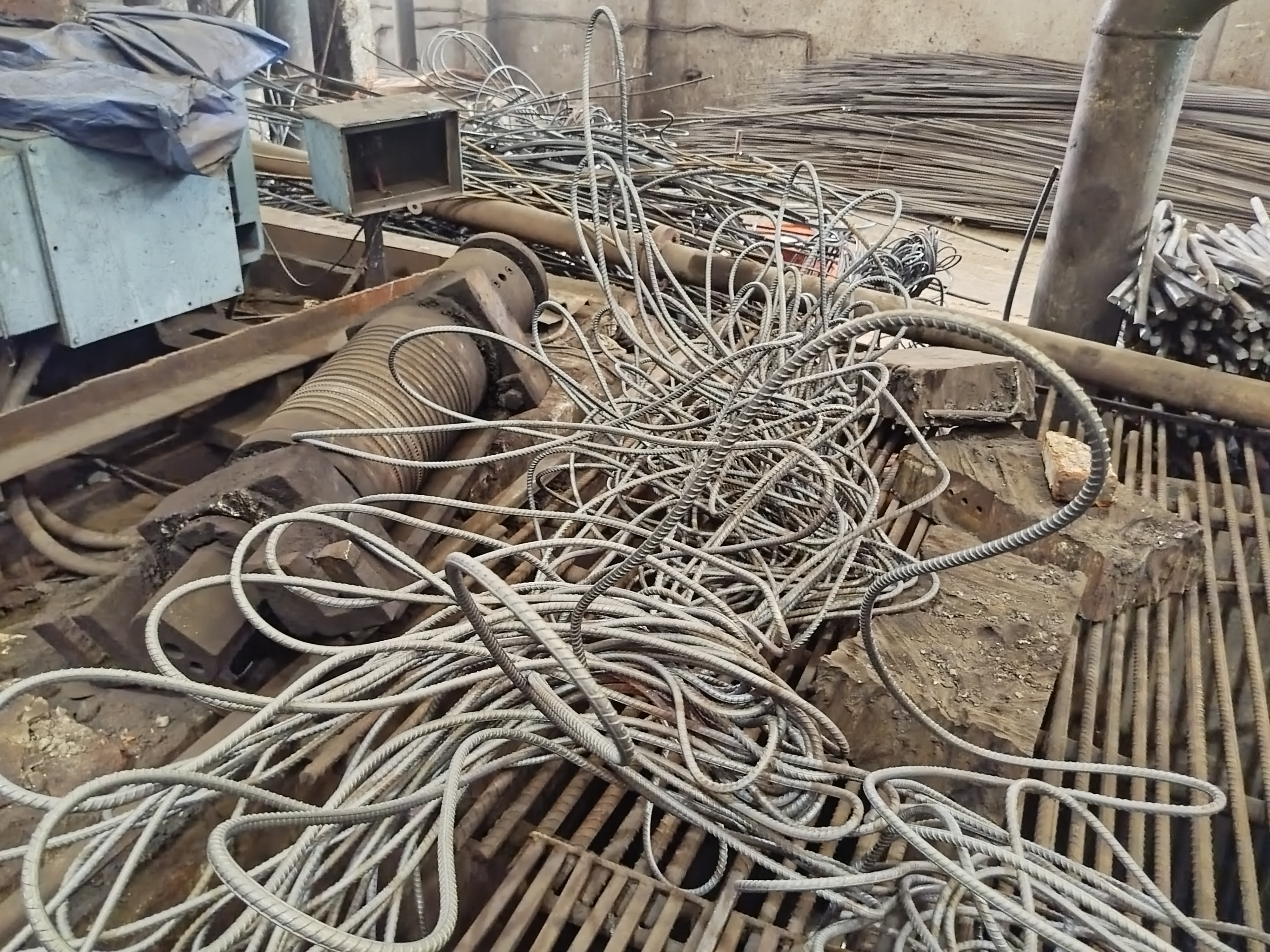
Missrol in Rolling Mill
Next, we considered the different types of cutting losses during production, including front-end and tail-end cutting by the continuous shear, as well as cutting by the cold shear. These cutting losses also need to be accounted for separately because they contribute to the difference between the incoming billet weight and the final finished rebar weight.
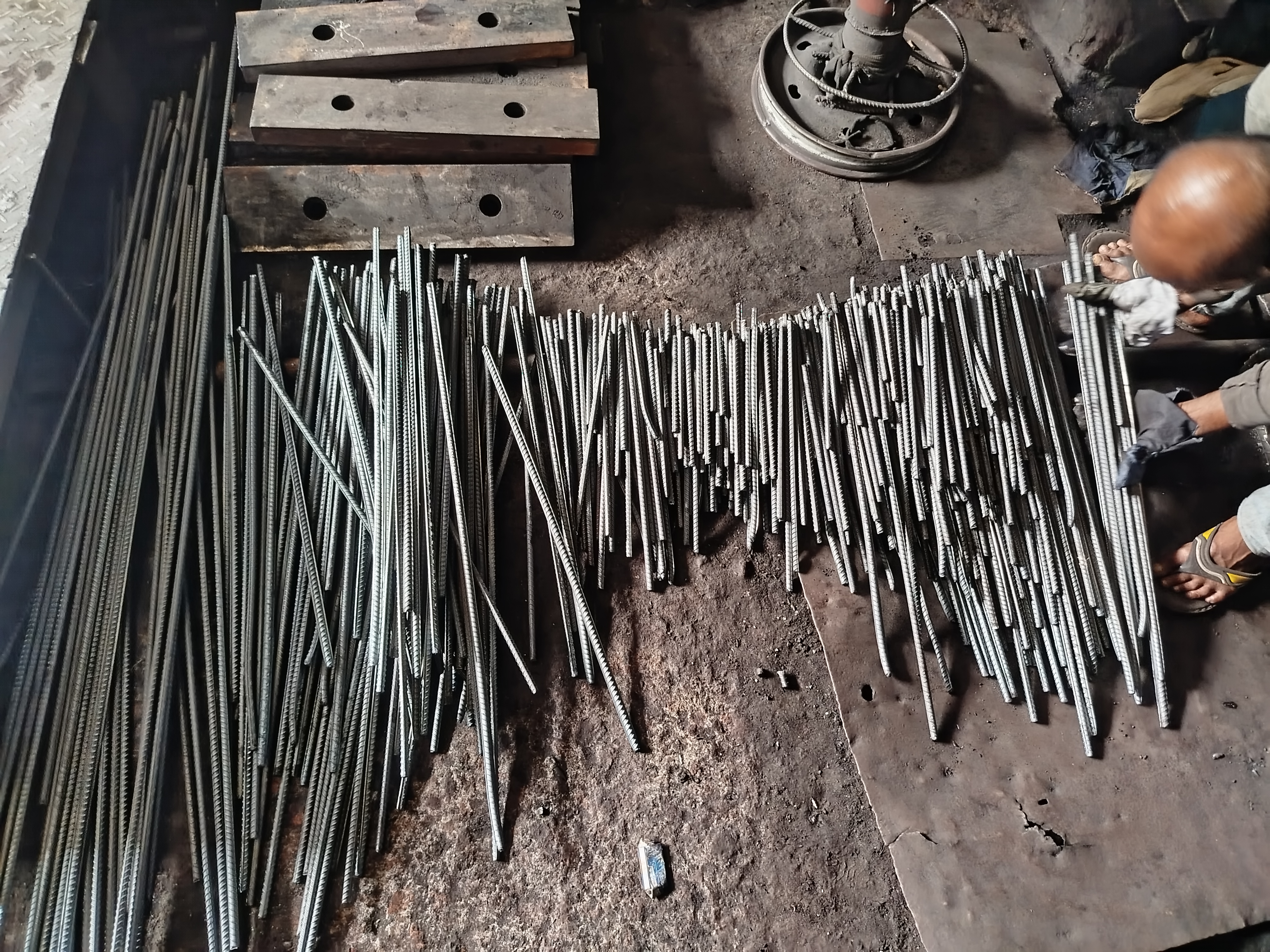
Cold Shear Cutting
After collecting all the necessary information, including the total incoming billet weight, shear-cutting losses and finished rebar weight, we could estimate the mill scale wastage by calculating the remaining material loss.
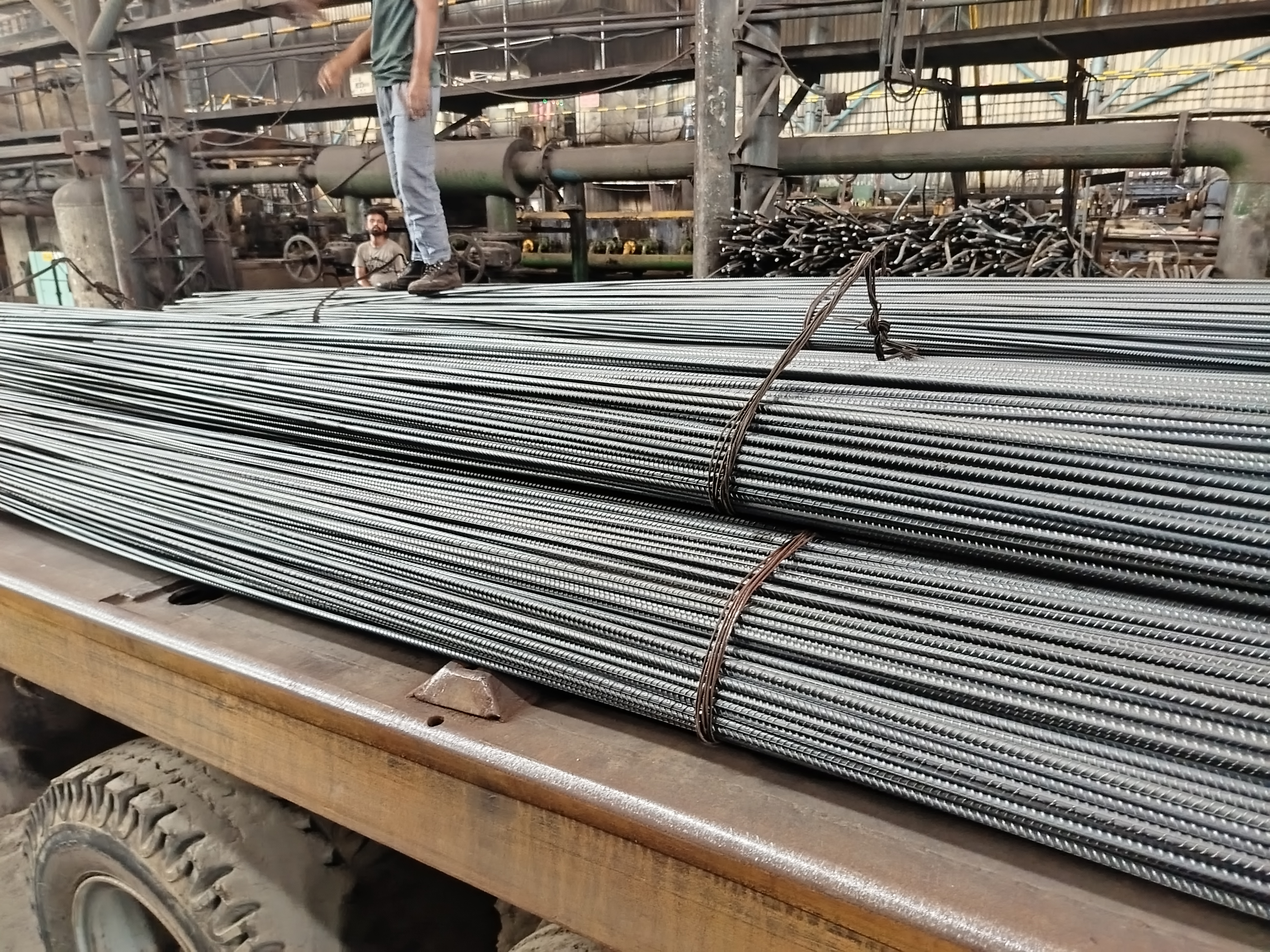
Finished Re-Bar

The basic calculation is:
To estimate the mill scale weight correctly, we need to subtract the known cutting losses and any other separately measured material losses from the total difference between incoming billet weight and finished rebar weight. Otherwise, the calculated value may include losses other than mill scale.
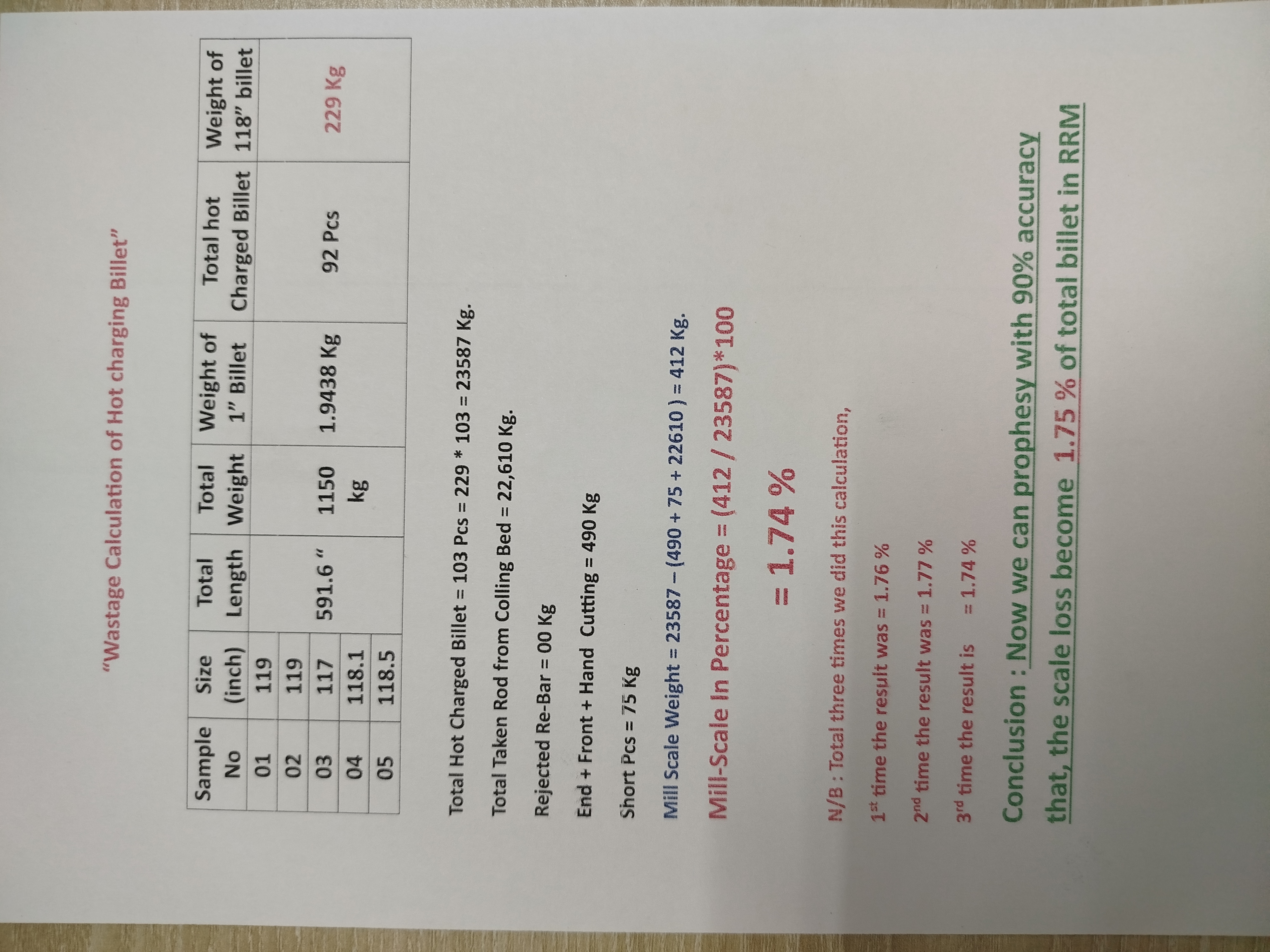
General Calculation
Yesterday's R&D work was another step towards understanding the actual material wastage during hot charging at our factory. Since we had conducted the same experiment twice before, repeating it gave us another opportunity to compare the results and check their consistency. Our main objective was to determine a reliable mill scale wastage percentage that could be used for production analysis and material cost calculations.
This type of R&D is a simple calculation, but it is important in a steel factory. Even a small percentage of material loss can have a noticeable effect on production costs when the total quantity of billets processed is large. By understanding the actual wastage, we can better evaluate our production efficiency and identify opportunities to reduce material losses in the rolling mill.
Thanks For Reading My Diary...
