Creative Challenge - Unleash Your Creativity w-1|| A 16TH-CENTURY AFRICAN SCULPTURE FROM BENIN, NIGERIA 🇳🇬
Greetings to all my fellow steemians!
Art is one of the best ways of expressing our creativity, preserving our history, and educating ourselves about our cultures. Sometimes, just a simple pencil and a piece of paper can enable us to create masterpieces with great historical significance. In this post, I will share my drawing experience as I attempted to draw a 16th-century African sculpture from Benin, Nigeria.
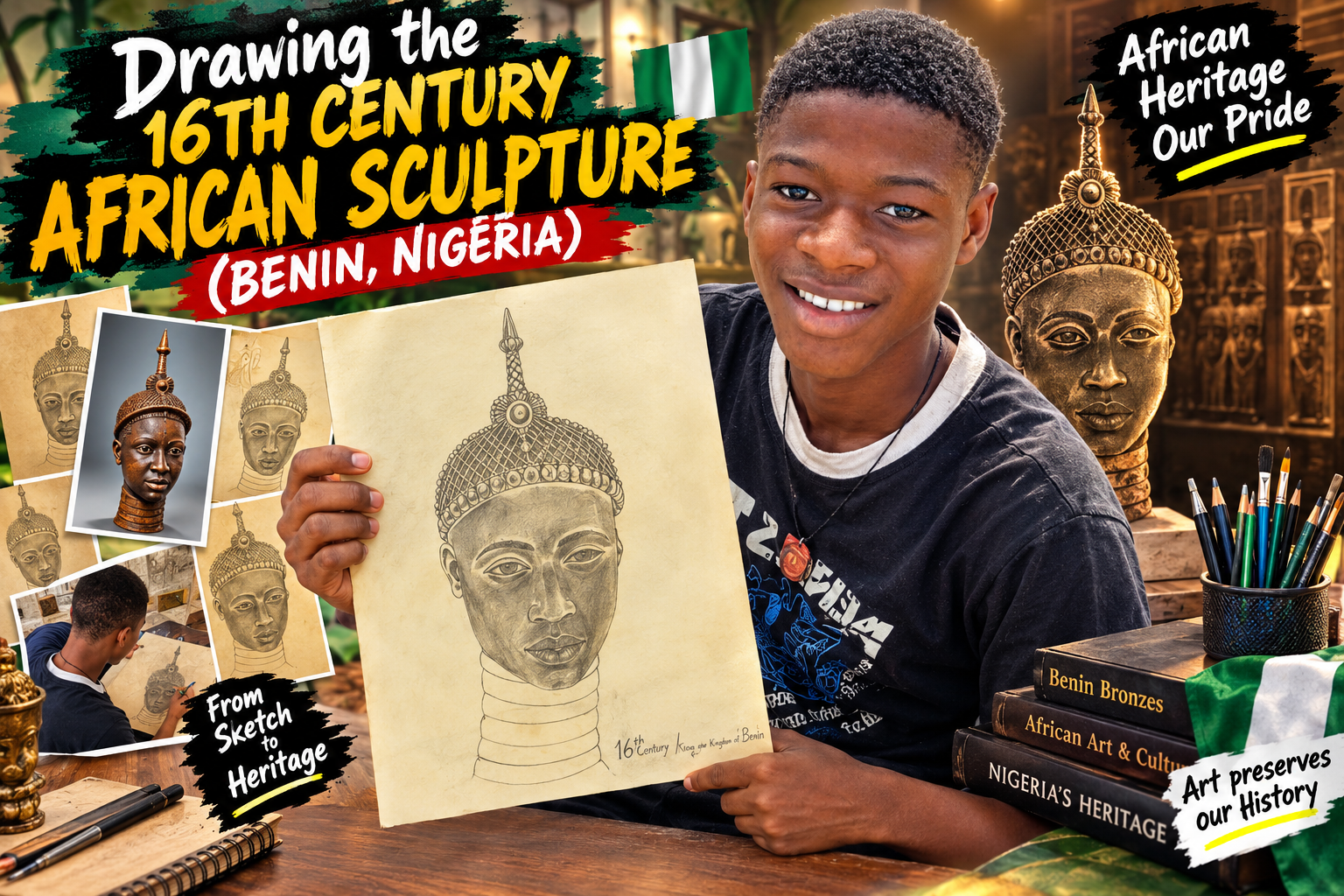
This was a fascinating experience for me, as not only did I get the chance to express my creativity, but I also got to depict an important piece of African cultural heritage using my artistic skills. The exquisite traditional crown, the sculpted facial features, and the intricate designs made me want to try to recreate this masterpiece.
I have captured my drawing process in photographs to enable you to view my work as well as the changes that took place from the initial sketch to the final stages of drawing. Let me walk you through my drawing process.
🖼️ STEP 1: GETTING INSPIRATION FROM THE ANCIENT 16TH -CENTURY SCULPTURE
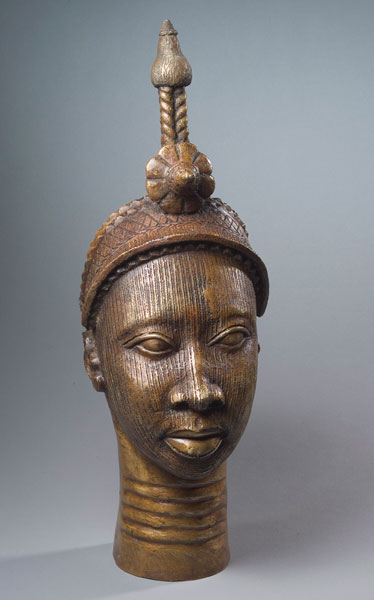
My first task was to study the sculpture and take note of all the intricate details that I would want to incorporate into my artwork. I closely examined the reference image of the sculpture and noted such features as the traditional crown, eyes, lips, and the long neck with rings.
 |
|---|
Reference image
I found the crown inspiring, as it had exquisite designs. I intend to capture all of these details in my drawing.
As an initial step towards creating art, it is always important to take time to study the reference image.
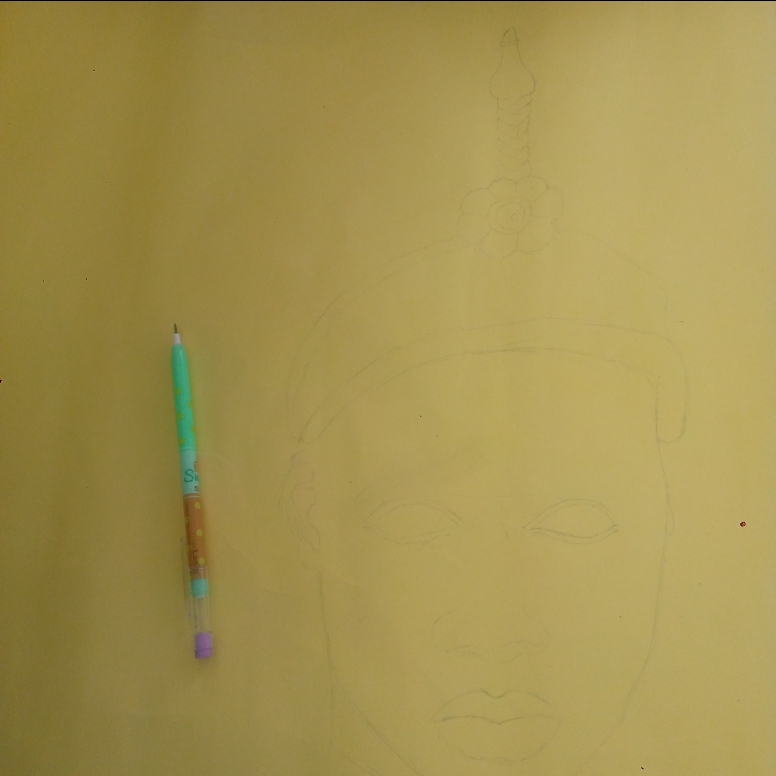
Having studied the sculpture, I moved on to the next step of sketching the general outlines of the head with my pencil.
 |
|---|
At this early stage, I focused on making sure that I captured the general outlines and proportions of the head correctly. I sketched the facial features one after the other and made sure to leave enough space for the long neck with rings at the bottom of the sketch. At this point, I did not attempt to capture all of these outlines in a single stroke. Instead, I took my time making sure that I had the correct outlines for all these features.
I believe that the outline is the most important part of any artwork. Without proper outlines, one is unable to capture the rest of the artwork’s details accurately. As I made my outlines, I did so lightly to allow for corrections. This approach enabled me to make the proper lines and shapes gradually.
👑 STEP 3: DRAWING THE AMAZING TRADITIONAL CROWN
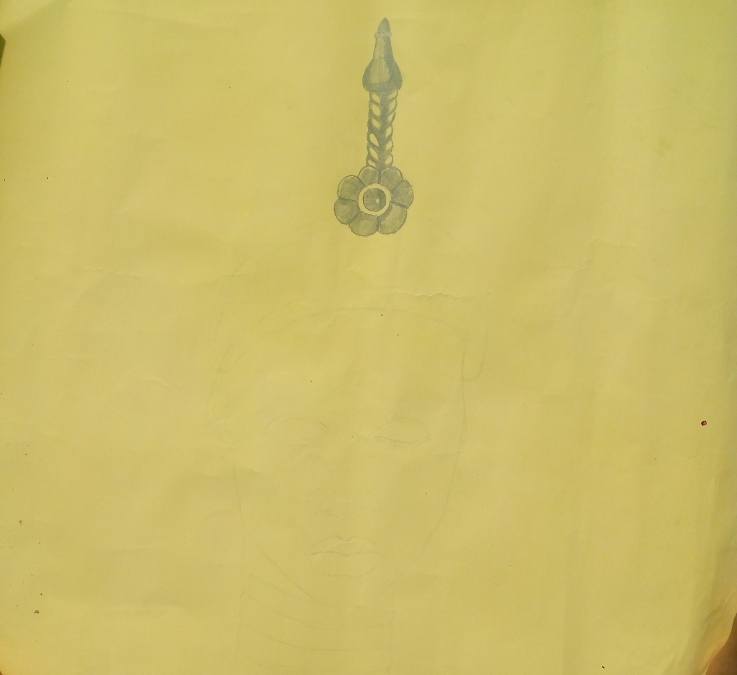
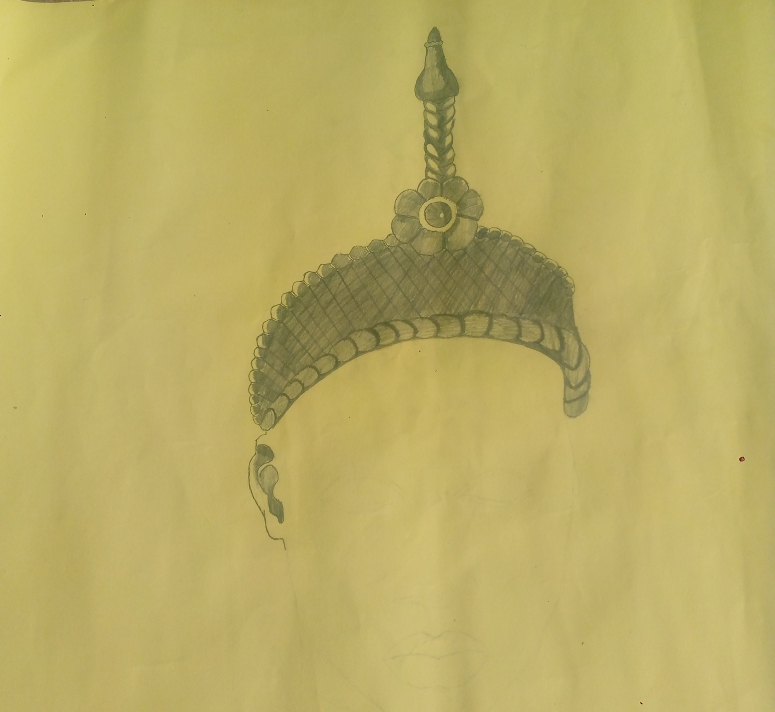
At this point, I got to work on one of my favorite parts of this sculpture, the traditional crown. I worked on the crown’s outlines first before capturing all the intricate designs adorning it.
 |  |
|---|
I used my pencil to capture all the outlines and patterns of the crown. I worked on the crown’s borders, the small patterns along the borders, and the crossed lines that formed the crown’s net. After that, I took care of the crown’s flowery motif at the top of the crown as well as the tall, twisting embellishment that rose from the center of the crown.
This was another stage where I had to work carefully as there were many intricate designs on this crown. As I continued to work on this part of the sculpture, my crown began to look more defined. I felt thrilled that I was able to replicate some of the intricacies of this sculpture.
👁️ STEP 4: WORKING ON THE EYES AND EYEBROWS
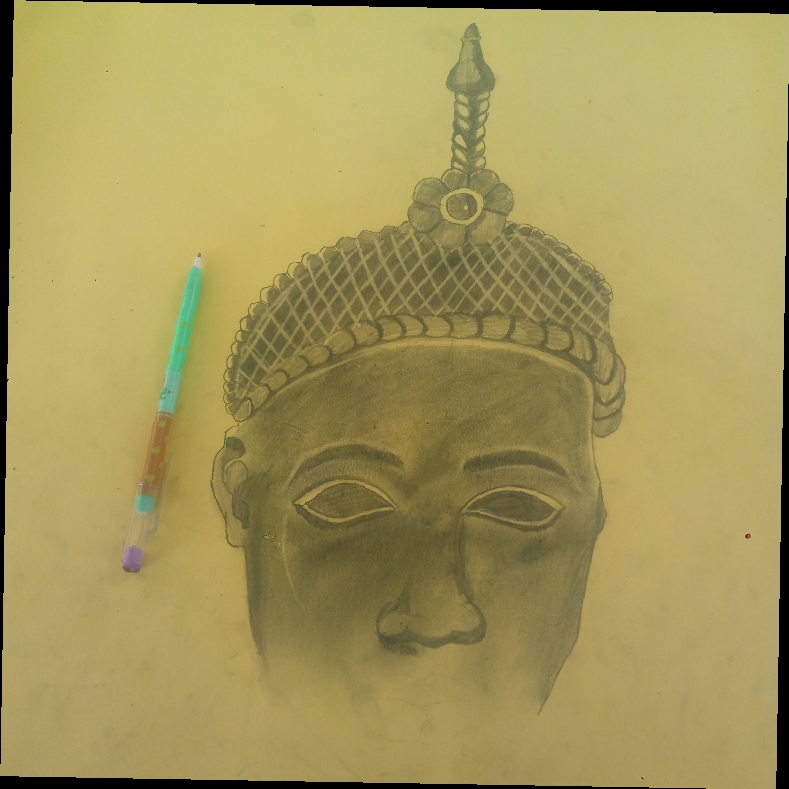
Having worked on the crown, I turned my attention to the eyes and eyebrows. I paid special attention to the eyes and outlined each eye carefully. I worked on the upper and lower boundaries of the eyes and darkened the lines to make them stand out. I also worked on the eyebrows and darkened their outlines to make them more visible.
 |
|---|
I realized that the eyes were the most expressive parts of this sculpture. Thus, I had to work on them carefully to capture their intricate shapes and positions.
I continued to compare my work to the reference image to make sure that the eyes were shaped and placed correctly.
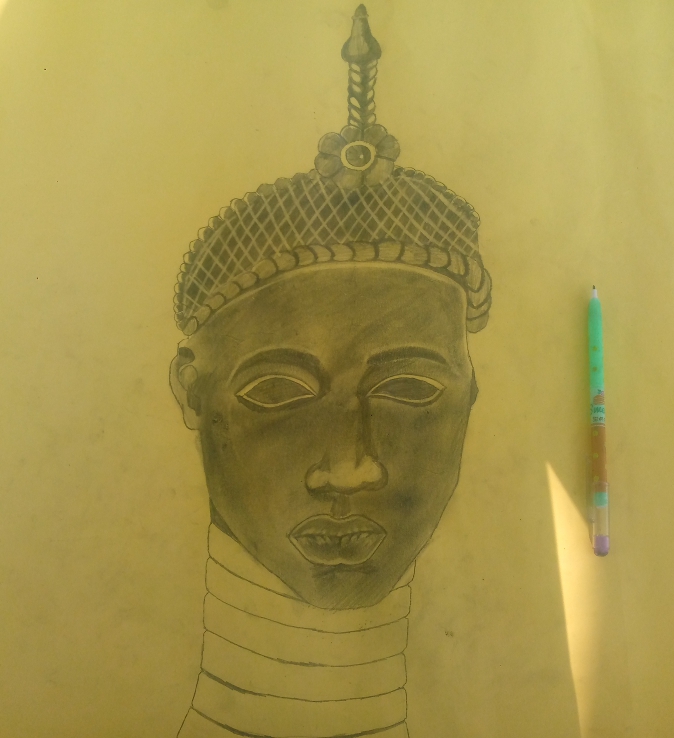
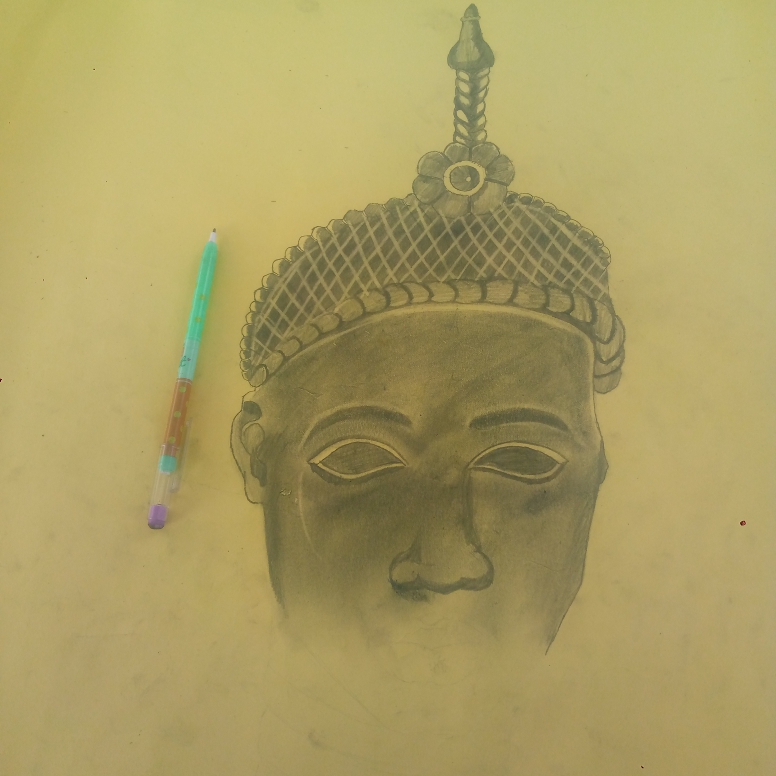
At this point, I moved on to the next facial features, the nose and the lips. I began with the shape of the nose and outlined it. I darkened the edges of the nose to allow for a more defined look. I then moved on to the lips, outlining the curves of the upper and lower lips before working on the designs on the inside of the mouth. This allowed me to capture the mouth’s intricate details and recreate this feature.
 |  |
|---|
I have always understood that no detail in facial features is too small. As such, I have learned to observe every facial feature carefully to ensure that I am able to replicate it accurately. In this sculpture, I had to pay attention to the position and shape of the lips and the nose to achieve the traditional look of this sculpture.
🌑 STEP 6: MAKING THE SHADING STROKES TO GIVE THE DRAWING DEPTH
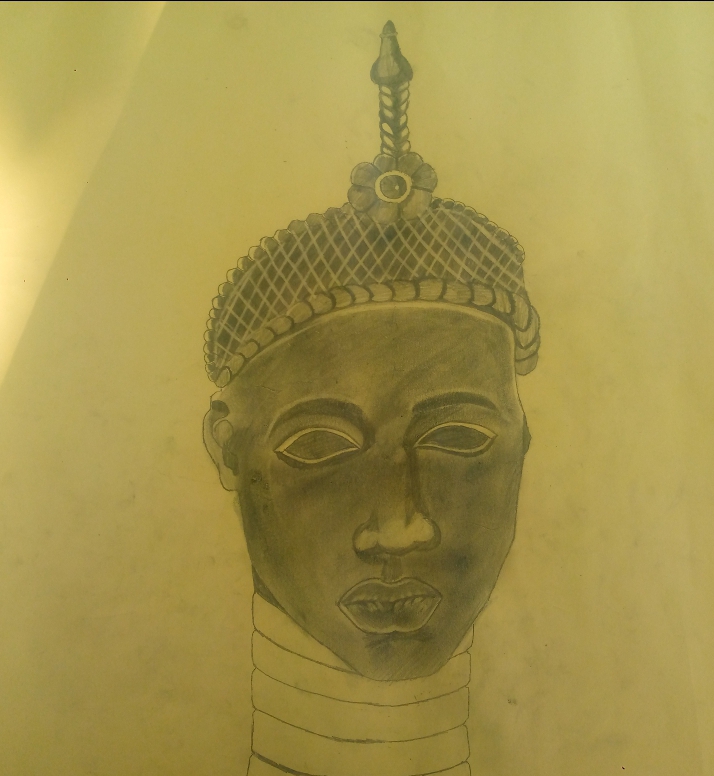
Having worked on the facial features, the next step was to bring the drawing to life by adding the shading strokes. Using my pencil, I darkened some of the outlines on the forehead, eyes, the sides of the nose, the cheeks, and the chin. I also darkened some of the outlines on the crown to bring out the intricate patterns on it.
 |
|---|
Shading was important as I did not want my artwork to look like a two-dimensional image. I wanted the shading to give the drawing some depth and dimension. As such, I darkened some of the sections of the artwork to depict shadows. I also blended some of the strokes to allow for a smooth transition of color to give the drawing more depth.
Even though I still felt that there were some details I needed to work on, I was quite happy with the effect this step had brought to my sculpture.
🖌️ STEP 7: COMPLETING THE LONG NECK AND ITS RINGS
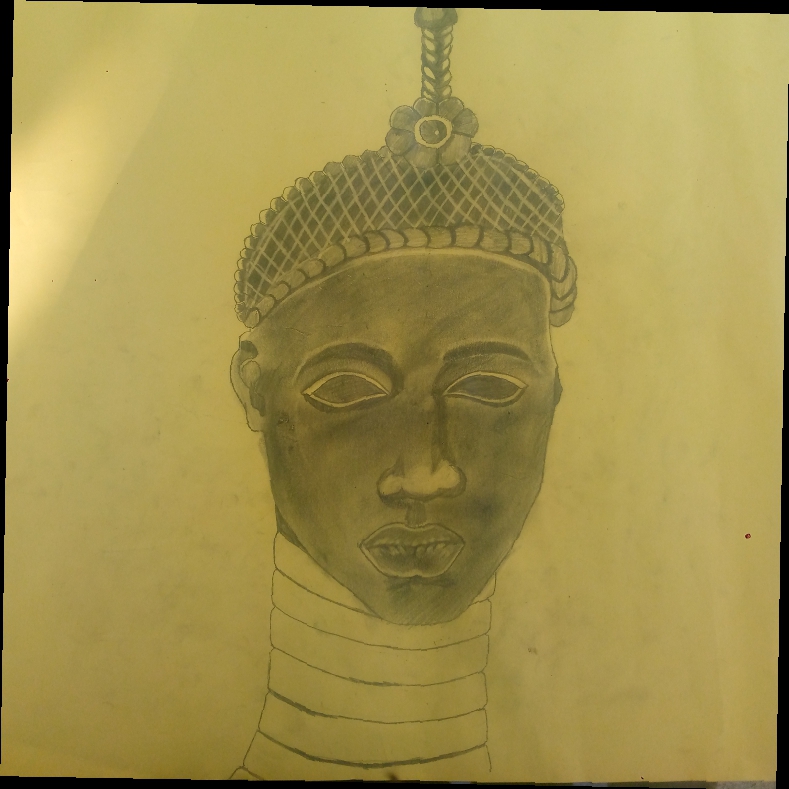
The sculpture had one more unique feature that I had to incorporate into my artwork, the long neck adorned with rings. I began by extending the lines of the neck from underneath the chin. I then sketched the rings one after the other along this line to depict the sculpture’s long, ringed neck.
 |
|---|
The ringed neck required precision as the rings had to be evenly spaced and positioned along the long neck. I tried to make sure that the rings were not separate from the neck but instead extended from the neck as one continuous feature.
I also had to add some shading strokes to define some of the edges of these rings. At this point, I had completed most of the sculpture’s intricate detailing. This long, ringed neck was another unique piece of African cultural heritage that I felt honored to depict.
🔍 STEP 8: REVIEWING MY WORK TO MAKE SOME FINAL IMPROVEMENTS
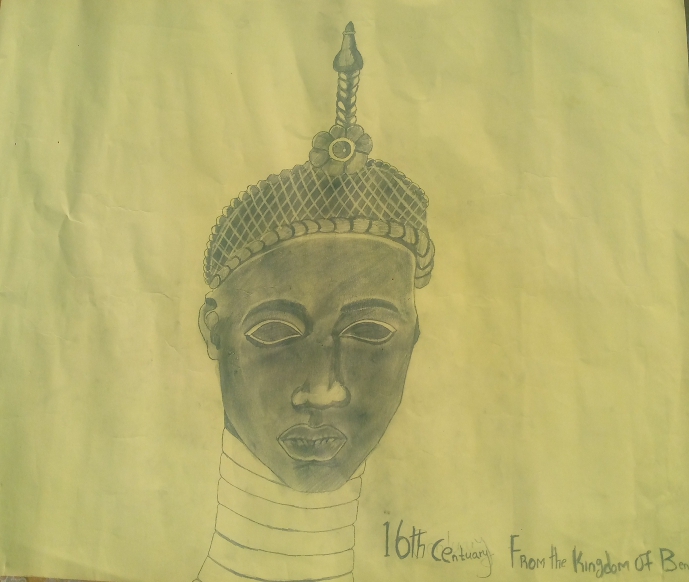
I took some time to review my artwork and figure out what details needed my further adjustment. I worked on the crown, facial features, shading, and the long, ringed neck to highlight some of the most important parts of my sculpture. I darkened some of the outlines and made some minor adjustments to the artwork to make it look more appealing. I also captured some of the images of my sculpture at this point to enable me to share my progress with you.
 |
|---|
I have come to realize that at times it is important to stop and review your work to figure out all the aspects that need your improvement. In this case, it was important for me to be able to review my artwork to be able to make those small changes that would ultimately improve my sculpture.
🏆 STEP 9: MY FINAL DRAWING AND EXPERIENCE
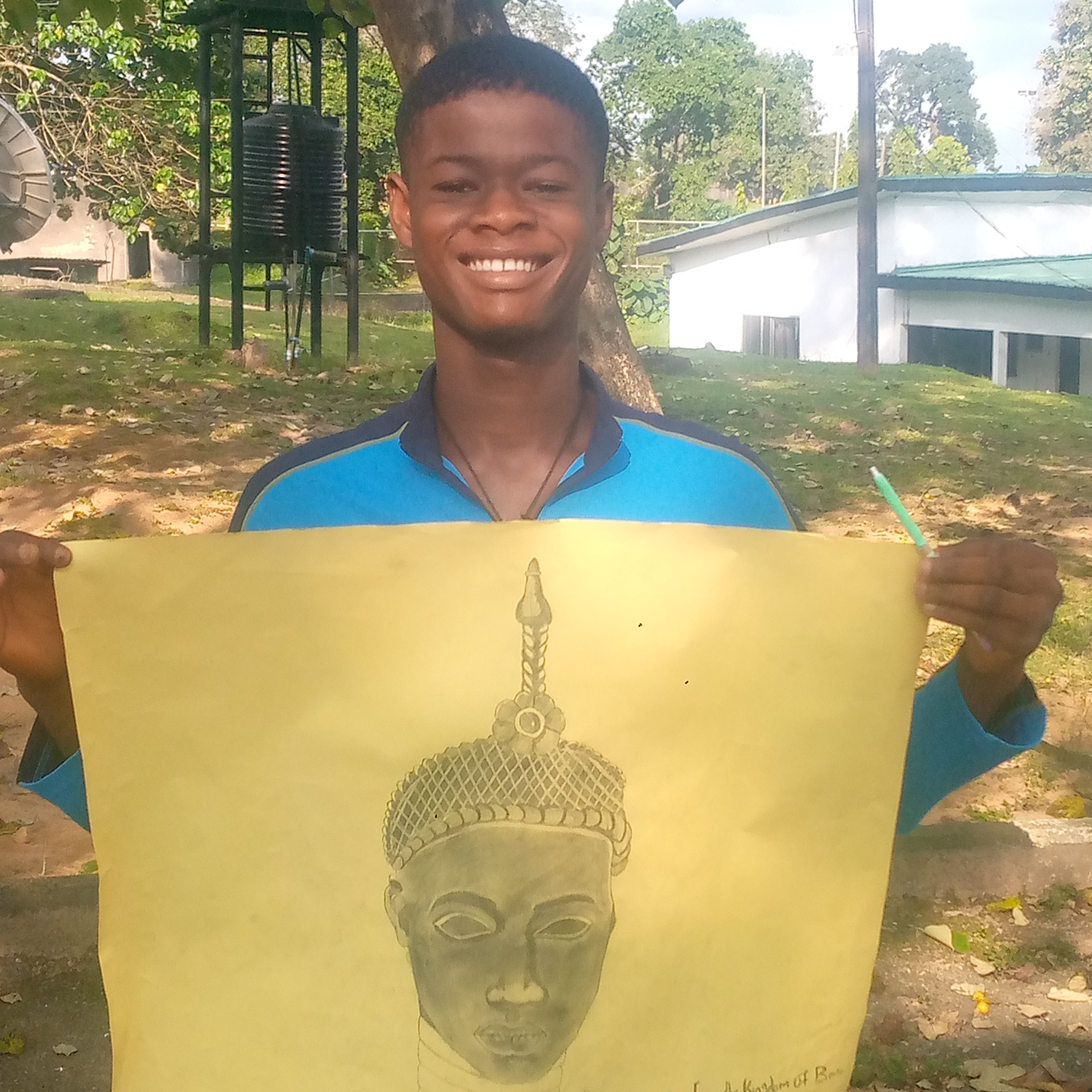
At this point, I reached a stage where I felt confident that my artwork was looking its best and I was ready to share my final drawing of this sculpture. Being able to capture this sculpture was an amazing experience for me. I could not only witness the time and effort I put into my sculpture, but I was also able to appreciate the outcome of my hard work. I captured a self-portrait with my sculpture to mark this momentous occasion. For me, it was not just about taking a picture, but it was also about commemorating this incredible experience.
 |
|---|
I think that this was a great step towards developing my artistic skills. At the start of this drawing process, I was working on the general outline of the sculpture, but as I progressed, I was able to move on to the more intricate details and the shading to give the sculpture more depth. As such, I was able to gain a lot of experience in drawing. Even though I still have a lot to learn about art, I feel that such skills will continue to develop with time and practice.
🇳🇬 WHAT I LEARNED FROM DRAWING THE BENIN SCULPTURE
I learned a lot of valuable lessons from this drawing experience. Some of these lessons include:
| |
|---|
It is important to be patient when working on a complex artwork that entails intricate detailing. This sculpture, for instance, had many details, especially the crown. As such, I had to work patiently to capture all these intricate details accurately. I could not have rushed this work as there were a lot of details to capture.
Observation plays a significant role in art. As you observe your reference image, you are able to depict most of its details accurately. I was able to observe the details of this sculpture to recreate it using my artistic skills.
Practice makes perfect. This sculpture was complex and demanded a lot of my artistic skills. Such artwork can only be achieved through practice. I had to practice a lot to be able to create this masterpiece.
Art enables us to preserve our cultural heritage. This sculpture was part of our African cultural heritage. As such, being able to depict this artwork enabled me to preserve our cultural heritage by appreciating it and passing it to others.
It is important to take one step at a time when working on an artwork. I had to take it slow and steady as I worked to ensure that I was able to capture all the intricate detailing of this sculpture. For instance, I started by working on the general outlines of this sculpture before incorporating the smaller details.
My experience of drawing this 16th-century African sculpture from Benin, Nigeria, was both educational and entertaining. I got the chance to not only practice my skills of drawing but also to depict an important piece of African cultural heritage. I believe that art entails a combination of many skills, including patience, observation, creativity, and practice. As such, even though some of these skills may be innate to us, we should always strive to develop our artistic skills further. It is always important to take it slow when working on complex artworks, as this can help us be able to capture intricate details with ease.
I am glad that I took this challenge and I hope to continue to develop my artistic skills through such practices and other creative activities. Our African art is part of our identity and as such, I hope that we can all help to preserve it.
@abdul-rakib, @mahadisalim, @sumaiya03
C.c; @jimiaera02
https://x.com/IkechukwuEsn/status/2109902055938601195
Thanks for your support @josepha I appreciate sir 🙏