Scaffolding With Conceptual Flexibility
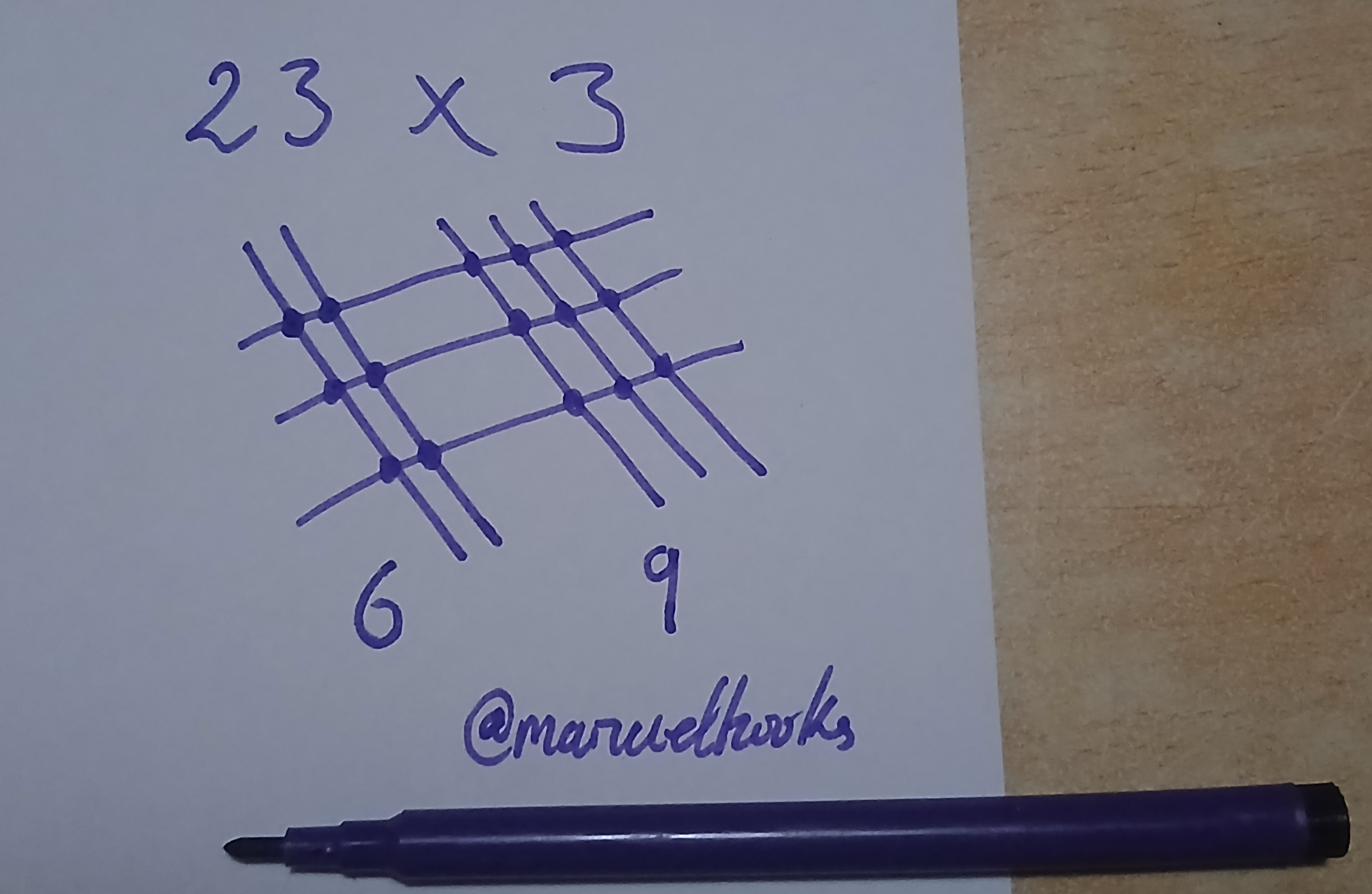 Vedic line multiplication Captured with GalaxyA15
Vedic line multiplication
When I assume the role of a teacher, I understand we all have different learning preferences. A situation like this calls for conceptual flexibility on the part of the teacher.
Let's assume the topic is multiplication. Conceptual flexibility demands that the topic be explained and presented in a format that favors those who learn better by listening, and another arrangement for those who will understand better if they participate, without leaving out those whose eyes are the gateway to their brain.
Is there any other way?
Let me show you something called Vedic line multiplication. It has something to do with the Japanese. Whatever its origin story may be, as long as it could give your kids an alternative and an edge.
This visual approach to multiplication is often referred to as line multiplication or stick multiplication. It is a system that determines the product of two numbers by representing them as lines and computing the intersection points created where those lines meet.
Let's dive in, starting with simple single-digit multiplication.
2 x 3
Just as the multiplication sign has a first line and a second line that crosses over it, that is exactly what we will be doing.
We will start with two lines for the 2, then three lines for the 3 as shown below.
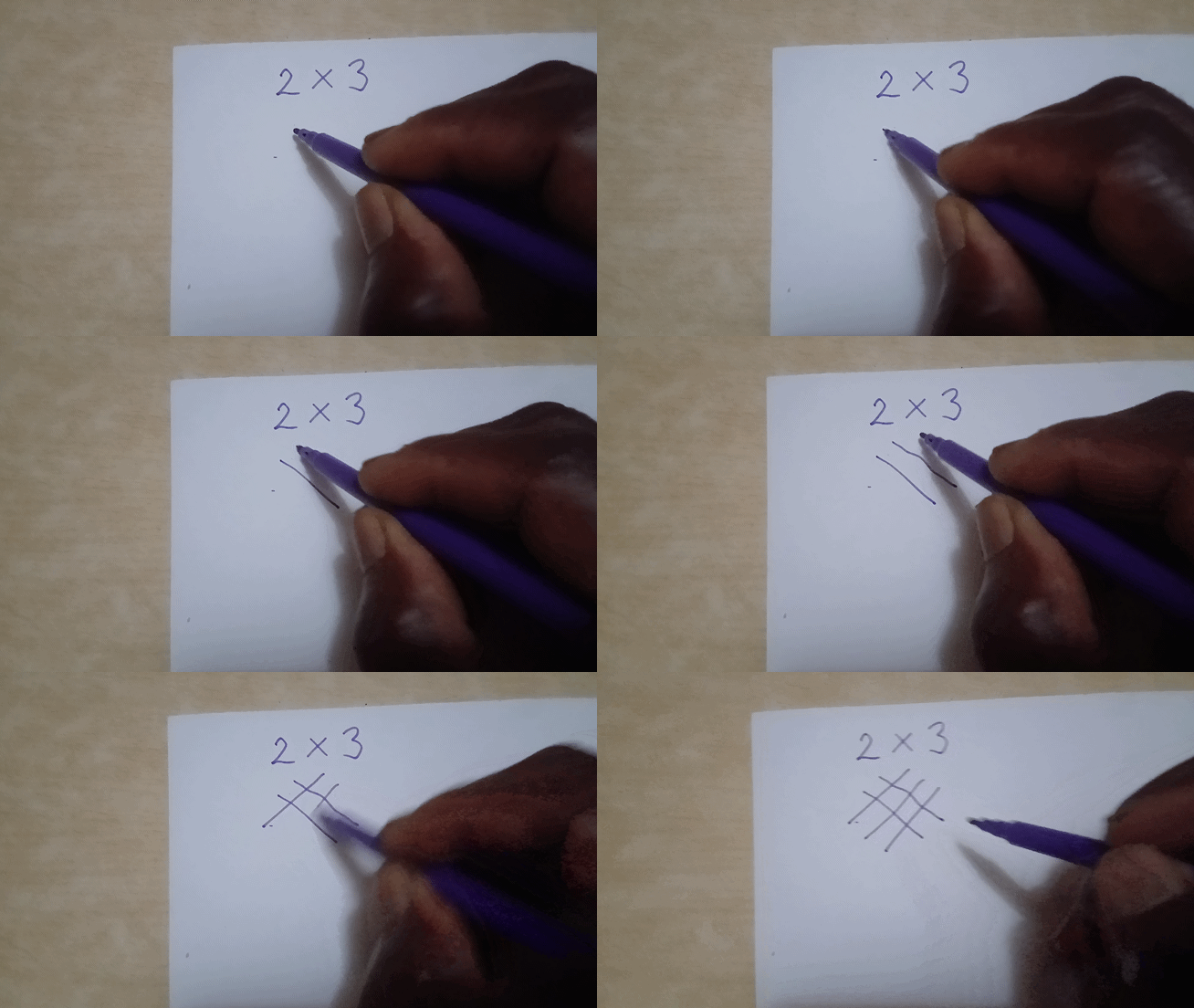
Now, count all the places where the lines cross.
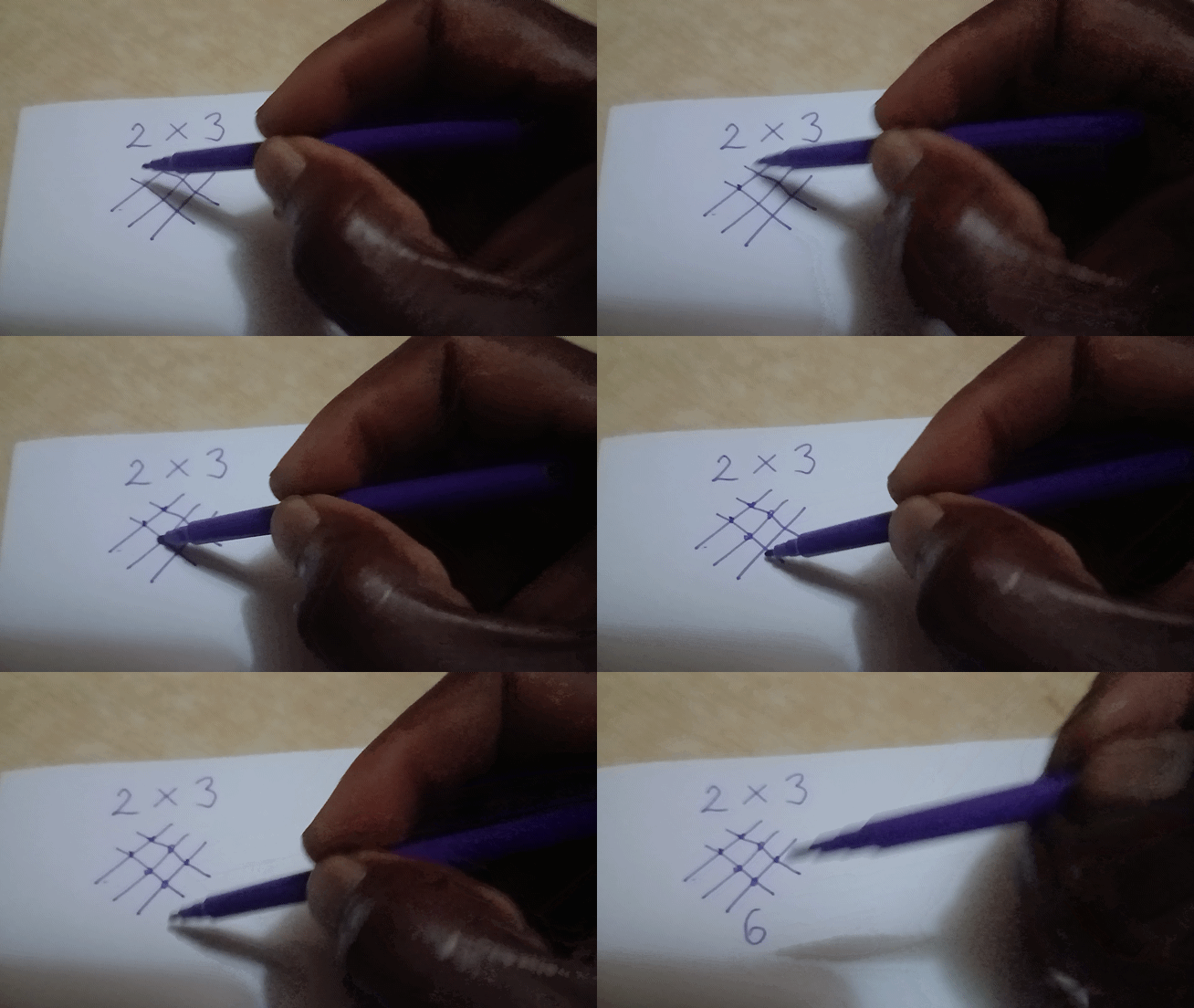
You can see how we got six as our answer.
The first time I saw this, what rushed into my head at this point was, what if we have a double-digit number like 23 X 3?
23 X 3
You know it will not matter if you say:
3 x 23 or 23 x 3.
Both should arrive at the same answer.
This picture is carrying 23 as a double-digit number. We have the two and the three. 2 in the tens column and 3 in the units column.
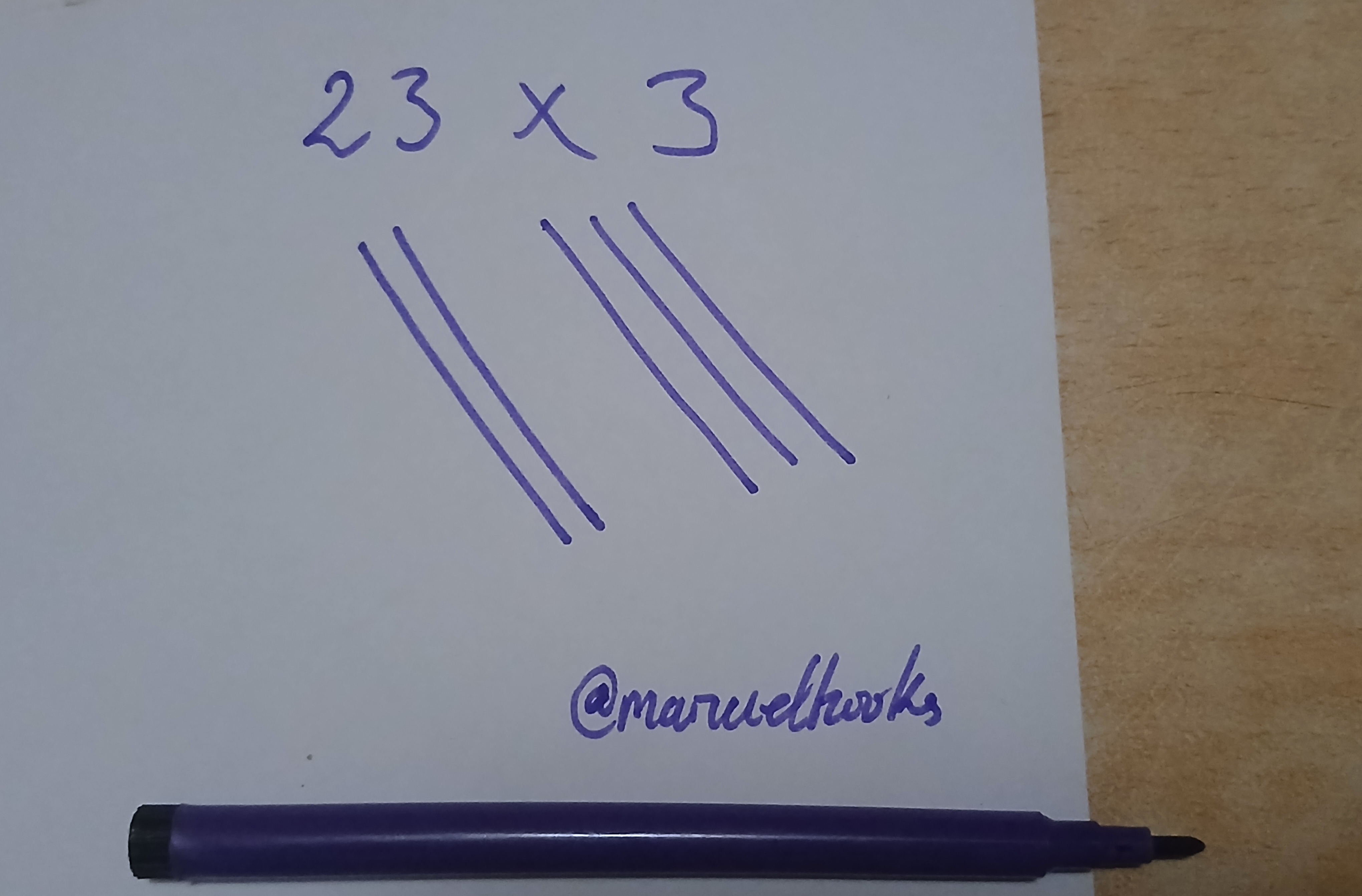
Now we are multiplying it by 3
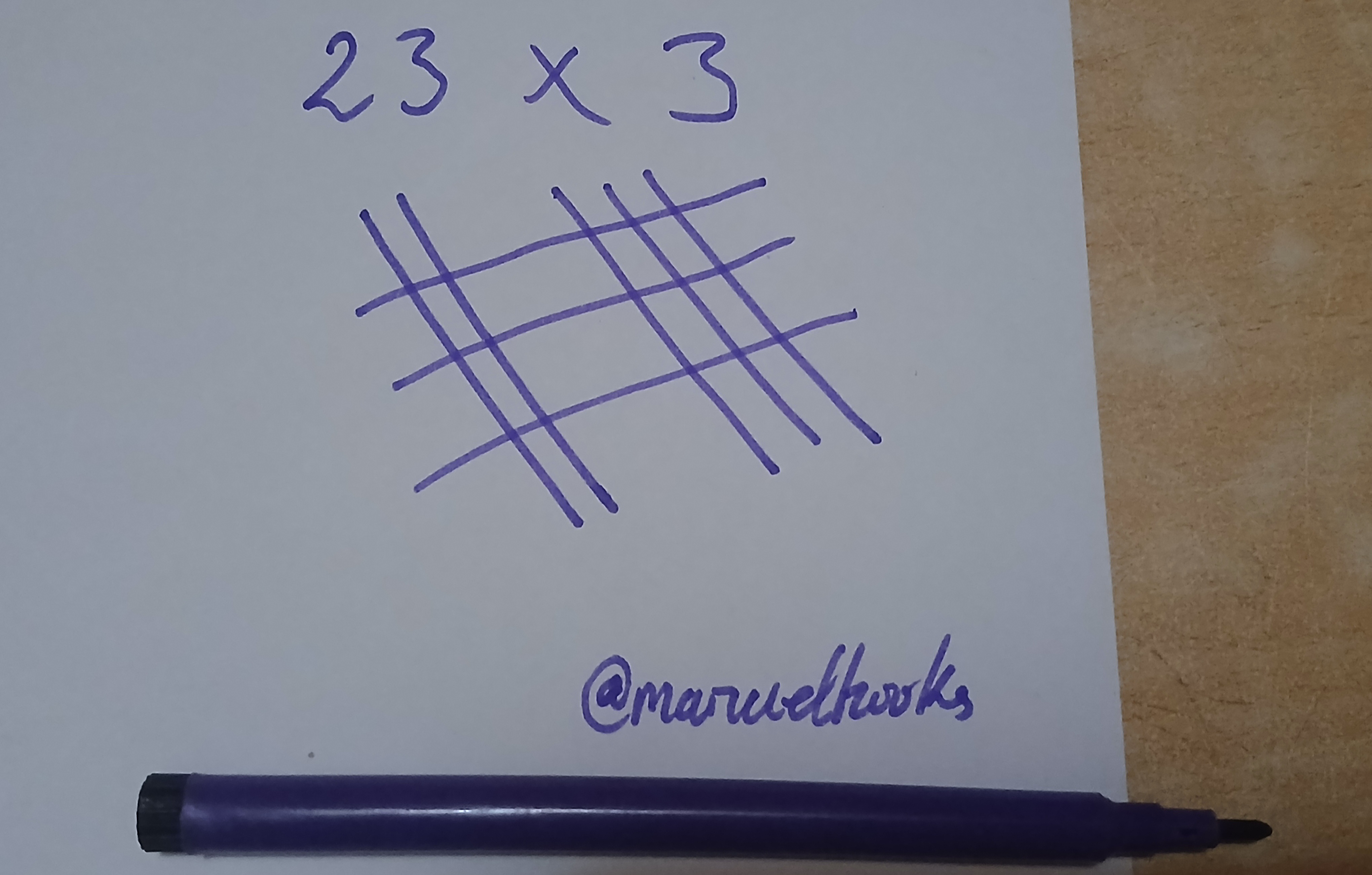
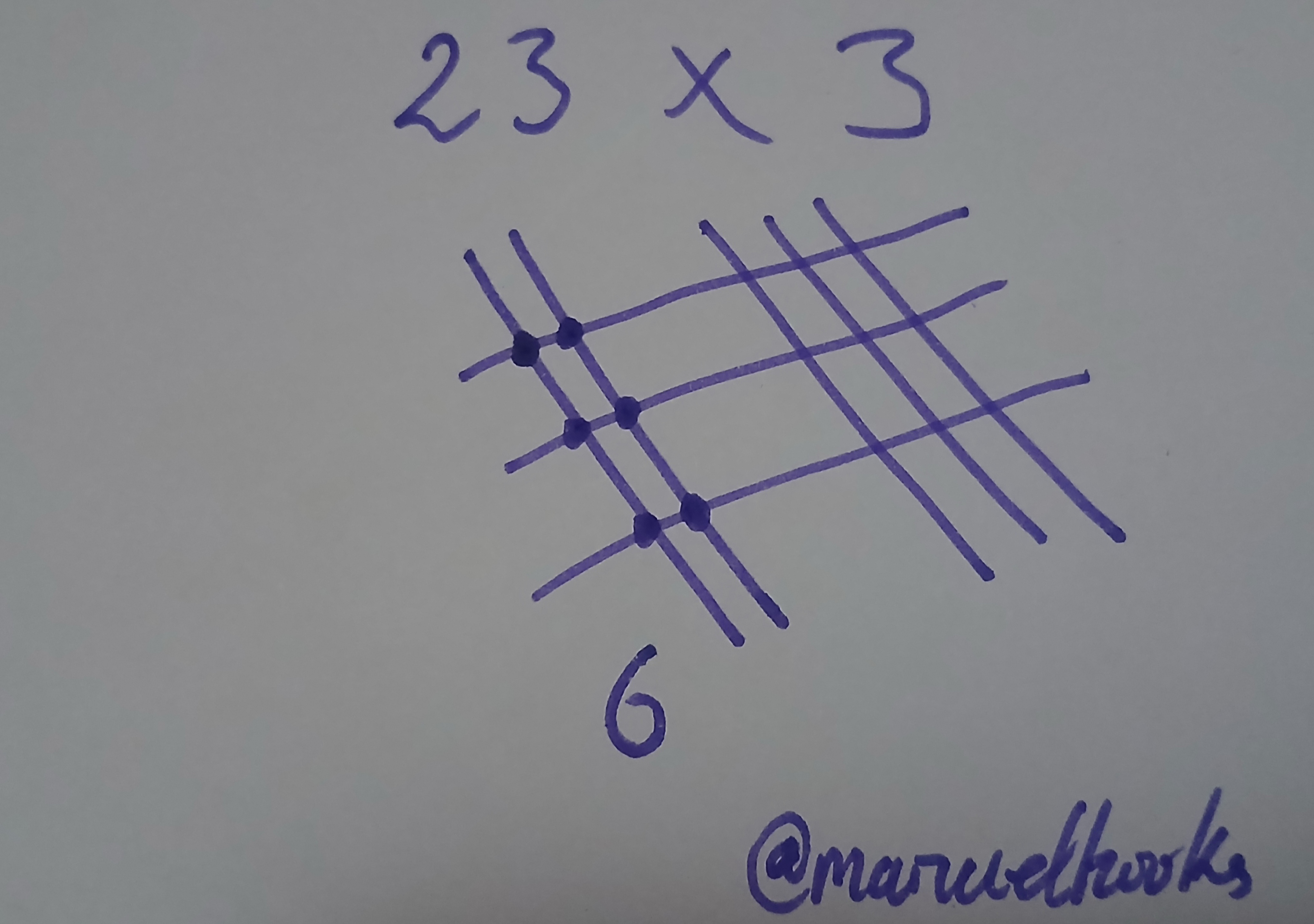
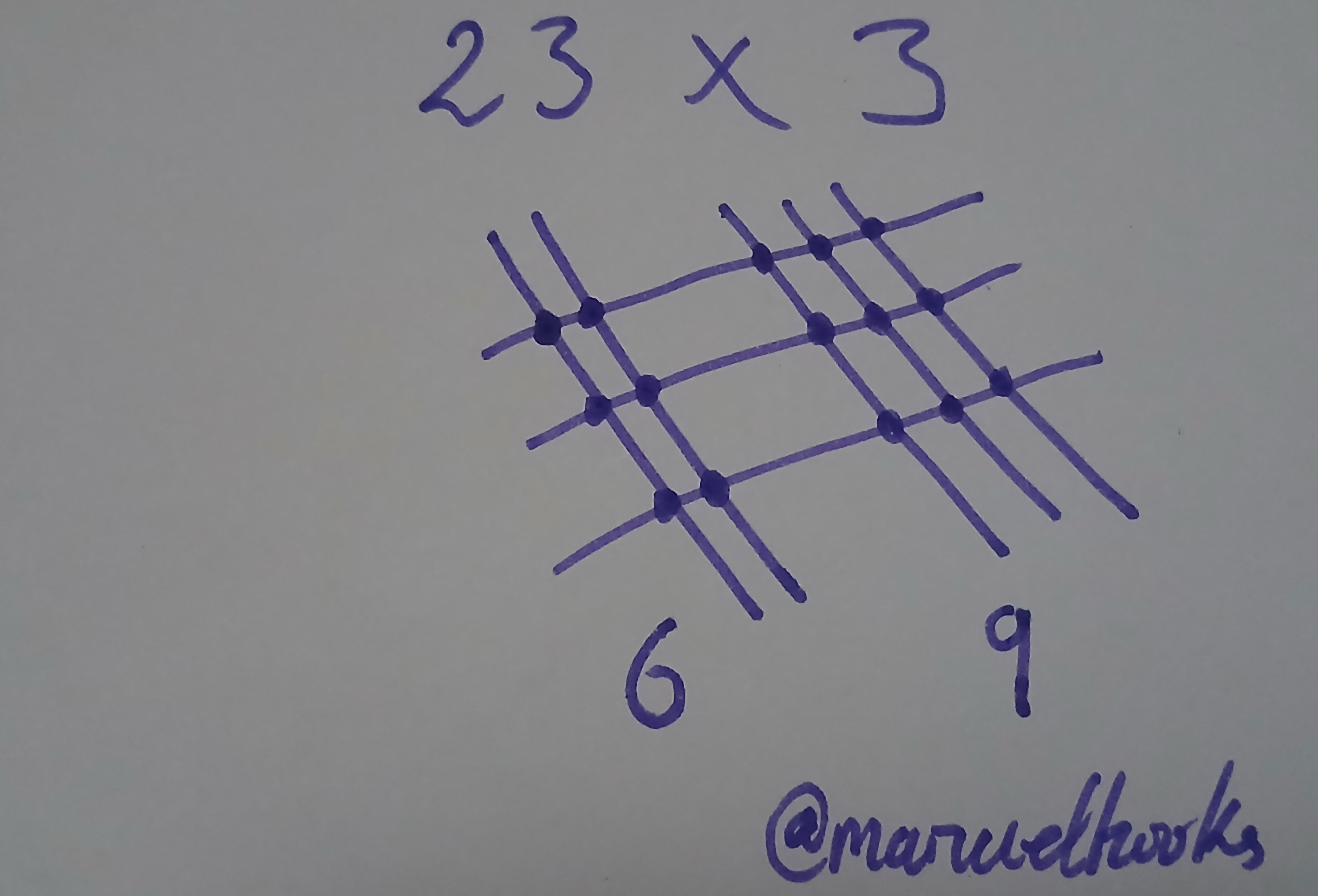
It's time to compute the crossing.
 |  |
|---|
We have 6 under the tens and a 9 under units
23 X 3 = 69
Even when I thought it was impressive, I was not done asking questions. Representing numbers with lines feels okay until you have to use two lines for a 2 and the same two line for 11.
The answer I got was satisfying. Treat it the same way we handled number 23. One in the tens and the other one in the units column. Just make sure they are separated well.
Talking about place value, let's look at a three-digit number like 124 × 2
124 × 2
In this case you will have one line, a space, two lines, a space, and four lines to represent 124.
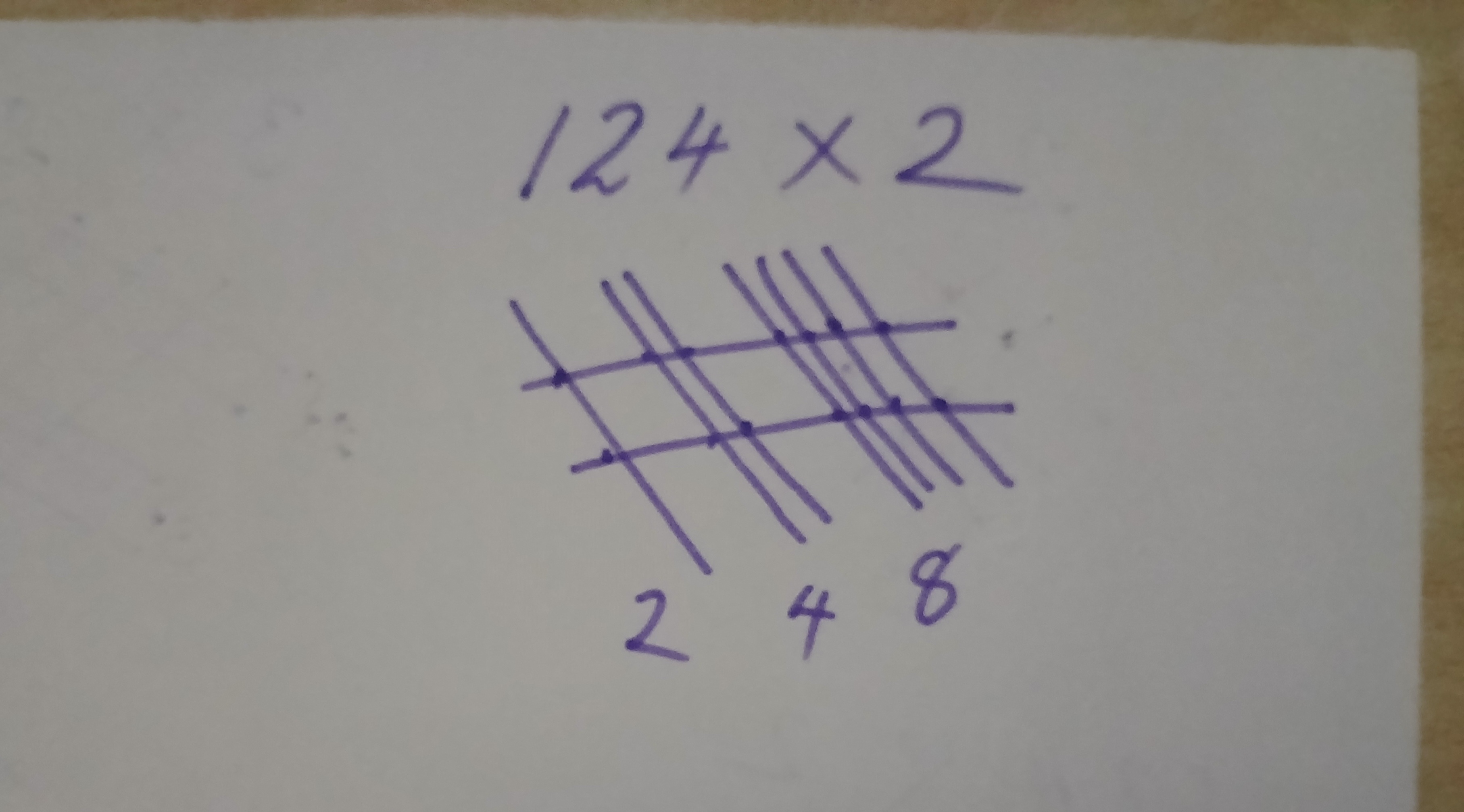
It is multiplied by 2 unit lines.
The result is 2 under hundreds, 4 under tens and 8 units
124 × 2 = 248
This all went well, but I was still not done with my questions and scenarios. How do we manage the multiplication of a three-digit number by another two or three-digit number? More importantly, how do we deal with zeros in the numbers and carrying forward?
These will be answered in my next entry on Scaffolding With Conceptual Flexibility: Zeros, Carrying, and Big Numbers.
Conclusion
Conceptual flexibility is not about having one perfect way to teach.
It’s about having 3, 4, or 5 ways so that no learner gets left behind. Vedic line multiplication is proof that math doesn’t have to live only on paper and formulas.
Sometimes it lives in lines, intersections, and seeing.
When a child who struggles with 23 x 3 on paper can get 69 with sticks and lines,
that’s not a trick. That’s scaffolding.
@dequeen
@okere-blessing
@rubee2as1 @scottrollins
@joslud @xavuno @bountyking5
Media Credit |
|---|
| Composer | @manuelhooks |
|---|---|
| Captured by | @manuelhooks |
| Captured with | Galaxy-A15 |
| Posting Date | Sunday 6th September |
| (@) 2026 |
#steemexclusive #maths #club5050
#discovery #education #nigeria
#learnwithsteem #lines
#mathematics
#vedic
https://x.com/manuelhook41759/status/2096377895123894485?s=20
Thank you for sharing on steem! I'm witness fuli, and I've given you a free upvote. If you'd like to support me, please consider voting at https://steemitwallet.com/~witnesses 🌟