Living in Vulnerable Areas, Disaster Mitigation Awareness Remains Low

It seems we never learn from history—including regarding disaster management—despite living in the vulnerable "Ring of Fire" region.
Indonesian society, including the people of Aceh, faces threats from various types of natural disasters. These range from geological events (such as earthquakes and landslides) and hydrometeorological hazards (floods, droughts, extreme weather, etc.) to ecosystem-related disasters (forest and land fires, haze, erosion, etc.) and other crises that escalate into critical situations—such as disease outbreaks—even if they are not technically classified as natural disasters.
All of these occur frequently in Indonesia, and once again, this includes Aceh. These various forms of disaster claim lives and property, damage public facilities, and destroy social infrastructure. Trillions of rupiah are allocated for disaster response, yet—ironically—these funds often become a breeding ground for corruption, victimizing the survivors all over again and compounding their misery.
Whenever a disaster strikes, we seem to be jolted back into an awareness of disaster mitigation. Yet, for the most part, awareness regarding disaster mitigation remains extremely low—or virtually non-existent. Mitigation efforts are often treated merely as routine programs—if they exist at all—and are usually funded by donor agencies.
In short, disaster mitigation is not yet viewed as an absolute necessity for citizens living in disaster-prone areas. If we look to a quake-prone nation like Japan, disaster mitigation awareness is instilled from childhood and becomes deeply ingrained in their subconscious.
It is no wonder that Japanese citizens do not panic when disaster strikes. People from all walks of life—from young children to the elderly—know exactly what to do during an earthquake, understand self-rescue protocols, and know what supplies to prepare.
For instance, Japanese households keep backpacks stocked with essential items—such as food and water—sufficient for three months. The contents of these packs are regularly replenished, even when no disaster occurs.
This same awareness of pre-disaster mitigation needs to be cultivated among the people of Aceh. The Aceh Disaster Management Agency recorded 148 disaster events between January and July 2026, resulting in losses exceeding IDR 112 billion. Notably, the impact of the floods that struck in late 2024 is still being felt today.
These disasters occurred across 21 of Aceh’s 23 regencies and cities, indicating that the entire region is disaster-prone. Even when a disaster does not strike a specific regency or city directly, residents often still experience the repercussions.
Therefore, disaster mitigation must once again become a routine program involving all stakeholders. Schools, offices, university campuses, government agencies, and the general public must possess a high level of awareness regarding disaster mitigation to minimize casualties.[]
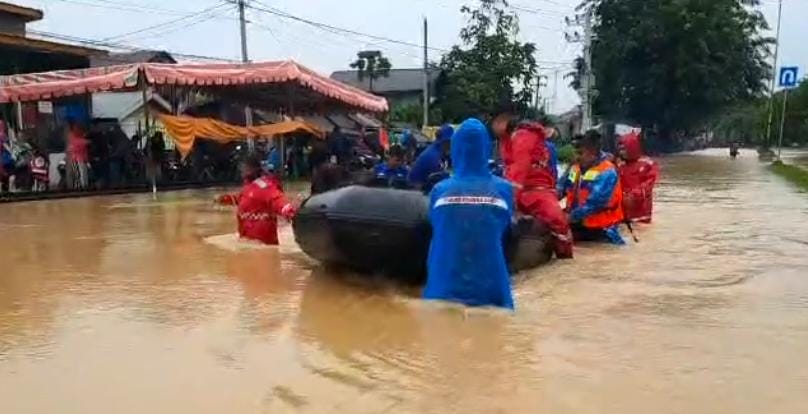
Photo: Flood evacuation in Aceh, Indonesia, in 2025.
If forces of Nature, we really can't stopped it and expectedly many people will be affected. But if we keep monitoring casualties can be avoided. I hope the residents will fastly recovered after the Natural calamity.
Disaster mitigation must indeed be part of the mindset of citizens living in disaster-prone countries. Unfortunately, disaster mitigation education is not yet viewed as a necessity. We certainly have much to learn from countries like Japan.
Thank a lot @aehryanglee. Warm regards from Aceh, Indonesia.