# HOW BRITAIN CREATED NIGERIA: THE STORY BEHIND THE 1914 AMALGAMATION
By @xcel
What we call Nigeria today did not always exist as one political entity. So, what actually happened in 1914?
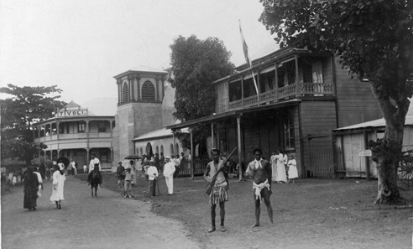
Nigeria's history did not begin with British colonialism. Long before 1914, the region contained powerful kingdoms, emirates, communities and trading societies with their own political and cultural systems.
However, on 1 January 1914, Britain brought its Northern and Southern Nigerian administrations together under one colonial government. This event became known as the Amalgamation of Nigeria.
BEFORE 1914
Before the amalgamation, Britain administered the territory mainly through separate colonial units.
The Northern Nigeria Protectorate and Southern Nigeria had different administrative structures. Lagos had also previously been administered separately before becoming part of Southern Nigeria.
The British therefore were not simply joining two completely empty pieces of land. They were bringing together territories containing diverse societies that already had long histories.
WHY DID BRITAIN AMALGAMATE THEM?
The reasons were largely administrative and economic.
Running separate colonial administrations was expensive and complicated. Britain also wanted to coordinate taxation, customs, transportation, railways and other services.
Financial considerations were particularly important. Southern Nigeria generated significant revenue, while the Northern administration faced greater financial difficulties. A unified administration provided a mechanism for managing revenues and expenditure across the larger territory.
The documentary record preserved by the National Library of Nigeria contains financial proposals prepared in connection with the 1914 amalgamation.
THE ROLE OF LORD LUGARD
Sir Frederick Lugard became the central British figure associated with the amalgamation.
He was appointed Governor-General and oversaw the implementation of the new unified administration.
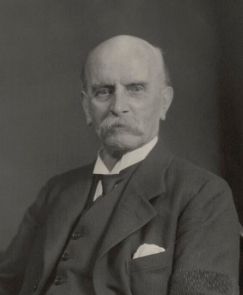
But it is important to understand that Lugard did not simply wake up one morning and invent Nigeria. Discussions and proposals concerning amalgamation had existed before the final arrangement. The National Library's archival record includes documents from 1905, 1913 and 1914, showing the development of the idea over time.
WHAT HAPPENED ON 1 JANUARY 1914?
On 1 January 1914, Northern and Southern Nigeria were formally placed under one central colonial administration.
Lugard became the first Governor-General of the newly unified Colony and Protectorate of Nigeria.
The event created a common colonial administrative framework, but it did not suddenly make all the peoples of the territory culturally or politically identical.
Different languages, traditions, religions and political institutions continued to exist.
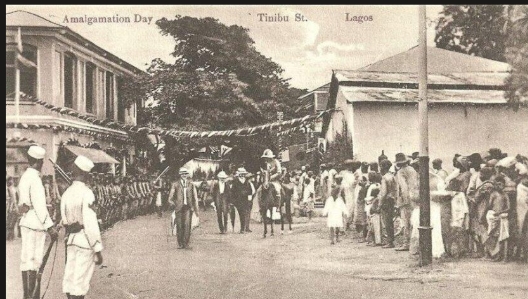
THE INTERESTING PART: WAS NIGERIA "CREATED" IN 1914?
In an administrative sense, yes.
The amalgamation established the colonial political structure from which modern Nigeria eventually developed.
But saying that Britain "created Nigeria" can be misleading if we interpret it to mean that there was nothing here before 1914.
There were already established societies, kingdoms and political systems.
The British created the colonial framework that brought many of these territories under one administration.
That distinction is extremely important when studying Nigerian history.
THE AMALGAMATION HOUSE
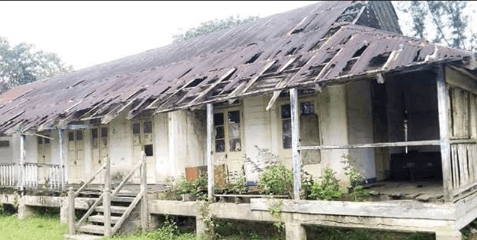
One of the historical places associated with the event is the Amalgamation House in Lokoja, Kogi State.
The National Library of Nigeria identifies the building as the house associated with the coming together of Northern and Southern Nigeria in 1914.
MY TAKE
The 1914 amalgamation is more than just a date to memorize for an examination.
It helps explain one of the foundations of modern Nigeria.
Britain brought different territories under one colonial administration for reasons that included administrative efficiency, financial management and imperial interests. At the same time, the people within those territories retained their different histories and identities.
Therefore, Nigeria's story is not simply the story of a country that appeared in 1914.
It is the story of many older societies being brought into one political framework, followed by a much longer struggle to define what it meant to be Nigerian.
And that story is still being written today.
SOURCES
National Library of Nigeria — Lugard and the Amalgamation of Nigeria: A Documentary Record
https://nigeriareposit.nln.gov.ng/items/ba9c8bba-e14a-4a2a-8da2-7bb3e10c815c/full
National Library of Nigeria — Portrait of Lord Lugard
https://nigeriareposit.nln.gov.ng/items/d1168302-0ebb-468d-8b44-3ebac84af209/full
National Library of Nigeria — Amalgamation House, Lokoja
https://nigeriareposit.nln.gov.ng/items/3cce5e16-809d-48a8-b331-9d1ad7742ad0
What part of Nigeria's history should I investigate next?
Follow @xcel for more researched stories about Nigeria and Africa.