Basic Knowledge in Agriculture #94
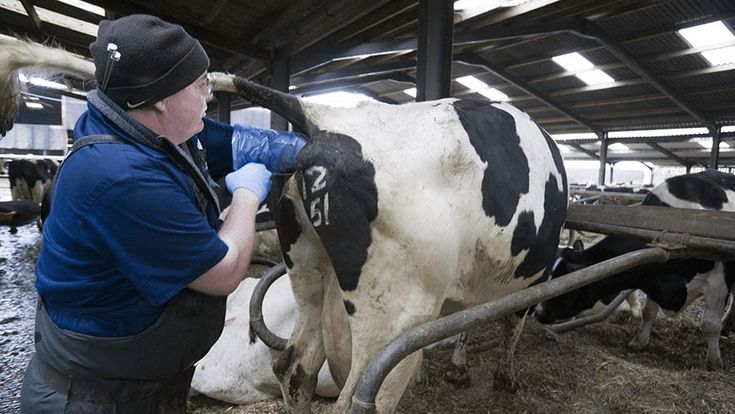
What is Artificial Insemination?
Artificial insemination (AI) is a biotechnological process in livestock husbandry in which semen is collected from the male animal, manipulated, preserved and artificially deposited into the reproductive tract of a female animal utilizing an artificial insemination instrument (or straw), rather than through a copulatory act. AI is divided into four main steps:
Collection of Semen: Sperm is collected from genetically superior males (bulls, rams, boars) utilizing an artificial vagina or by using electroejaculation.
Semen Evaluation and Dilution: The collected sperm is tested for sperm motiity, concentration and general health, then extended with a diluent containing nutrients and antibiotics.
Preservation of Semen: Diluted semen is pipeted into small plastic straws which are then either chilled or frozen to temperatures below that of liquid nitrogen at $-196^\circ\text{C}$ in order to allow long term storage and transportation world-wide.
Insemination of Female: Artificial insemination of females in estrus (heat) is performed by depositing semen into the reproductive tract at the correct stage of estrus to achieve fertilization with the help of a semen catheter guide.
Importance of Artificial Insemination to Agriculture
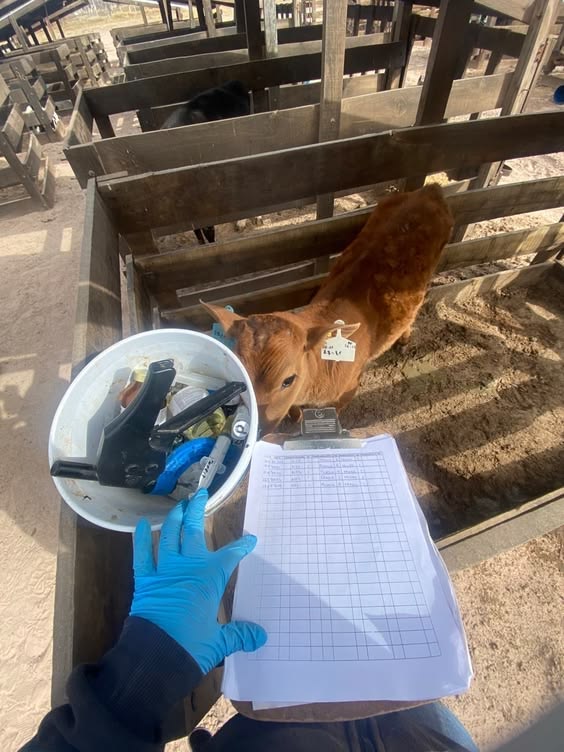
Artificial Insemination is an indispensable tool in the advancement of agricultural farming due to its distinct advantages in terms of genetics, economy and operation:
- Accelerated genetic progress: With the use of artificial insemination, farmers can use high quality males from anywhere in the world. An individual sire can father thousands of offspring per year compared to no more than a few dozen through natural mating. This leads to rapid improvement of heritable traits for, for instance, higher milk yield or better disease resistance, increased rate of growth.
- Economical: The cost for maintaining breeding males (e.g. Bulls) during mature years can be high in terms of feed consumption, housing facilities and medical services. This practice can be avoided with the use of AI on every farm thus reduces costs associated with the operation.
- Disease Control: Natural mating can transmit venereal diseases and infectious diseases among animals. By using AI with antibiotics in semen extenders, sexually transmitted diseases can be avoided among the farm herd by eliminating natural cohabitation.
- Safety: Highly producing males can be dangerous to work with during natural mating process thus leading to injury of the workers and the females. The incidence of such injuries can be eliminated with artificial insemination.
- Overcoming PHYSICAL limitation: This technique enables cross-breeding between animals that may be of too different weight to naturally mate as well as between males and females that might be separated by great geographical distances or where breeding can be risky; e.g. Cross between cat and lion.
Thanks for reading my post I'm inviting @chant, @josepha and @bela90 to participate.