AI and its detectors... / KI und ihre Detektoren...

Deutsch im Anschluß...
In one form or another, AI has become ubiquitous today; we do not even recognise some applications as such, whilst others we welcome and are happy to use. Others we find less desirable, or even abhorrent.
Particularly in the creative sector, the use of AI is frowned upon – quite rightly, in my view. I am not denying that genuine art can, in some cases, be created with the help of AI. What I do dispute is that one should do so. It is not my responsibility to regulate this or to enact regulations or laws to that effect. The current legal framework simply states: the use of AI is legal, provided it is explicitly stated that the content, or parts thereof, is generated by AI…
What I can determine here on Steem are the rules ‘at my table’ – that is, within my own Community, on my blog. Here, I can stipulate: no AI permitted except for the creation of illustrations. To be perfectly honest – I’d be happy to do without them too. I’ve experimented with it myself and ultimately find the results impersonal and meaningless. In my view, they have no place on a blogging platform.
But back to the rules… There is broad consensus within the Communities on Steem that netiquette should be observed, which specifically includes the above: no AI-generated texts! On private blogs, everyone is free to do as they please, as is the case in Communities without such a set of rules. Those are not the subject of my discussion today.
The Communities with a ban on AI-generated texts are moderated, and the moderators have different strategies for dealing with the rampant flood of AI-generated content.
That said, they aren’t actually all that different in the end; detector tools are usually employed to check published texts for AI probability.
The accuracy and reliability of these tools vary as much as the possible interpretations of their results. The fact is: if using them leads to users being pilloried for misconduct that was identified solely by a dubious AI (which is exactly what these detectors are!), then something is going wrong!
During my first week on Booming Kuration, I was alerted twice to posts that I had voted for, even though these observers believed them to have been generated by AI. The feedback is valid and I am grateful for it; there can always be oversights or slip-ups, which can be minimised or corrected in this way. I have now reviewed both posts again and am convinced that they are generic texts in which AI has, at most, acted as a translator.
But why is this the case? Why the difference in assessment? This is by no means an isolated incident… So let’s take a look at how the detectors work today. In the early days of ChatGPT, it was primarily pattern recognition that led to the identification of artificial texts. Nowadays, statistics are used to determine and categorise the average number of words per sentence, the frequency of commas, the number of foreign words used, the use of words with more than eight letters, stylistic repetitions, and so on. For example, a human formulates sentences with an average of 23.4 words. With AI, the average is 29.8 words.
Based on such objective metrics, the AI makes an assessment: this text is probably human-written, that one is not. Mind you: probably. No tool will make a definitive accusation; they all speak of the probability of AI-generated content.
Quite a few moderators and admins, in their overzealous eagerness, are then all too happy to make a factual assertion or level an accusation.
What can I say…? I’m sure each of us has had our own texts checked by such a detector at some point: in my case, it regularly indicates a high probability of AI involvement. Surprise, surprise – I like very long sentences, I know how to use commas, and I enjoy nesting clauses just as much as Thomas Mann did in his day… I frequently use foreign words, and yes, all of this serves as evidence to these AI detectors that the text cannot possibly be human-written.
I’ve also deliberately had texts generated by ChatGPT and then fed them, unchanged, to the detectors: very often, the texts were classified as unambiguously human.
The AI detectors’ assessments are sometimes false positives, sometimes false negatives, and at best only reasonably accurate.
I’d like to show you how this plays out using two examples: a text written by myself and one by @adeljose (I know you write your own texts!)…
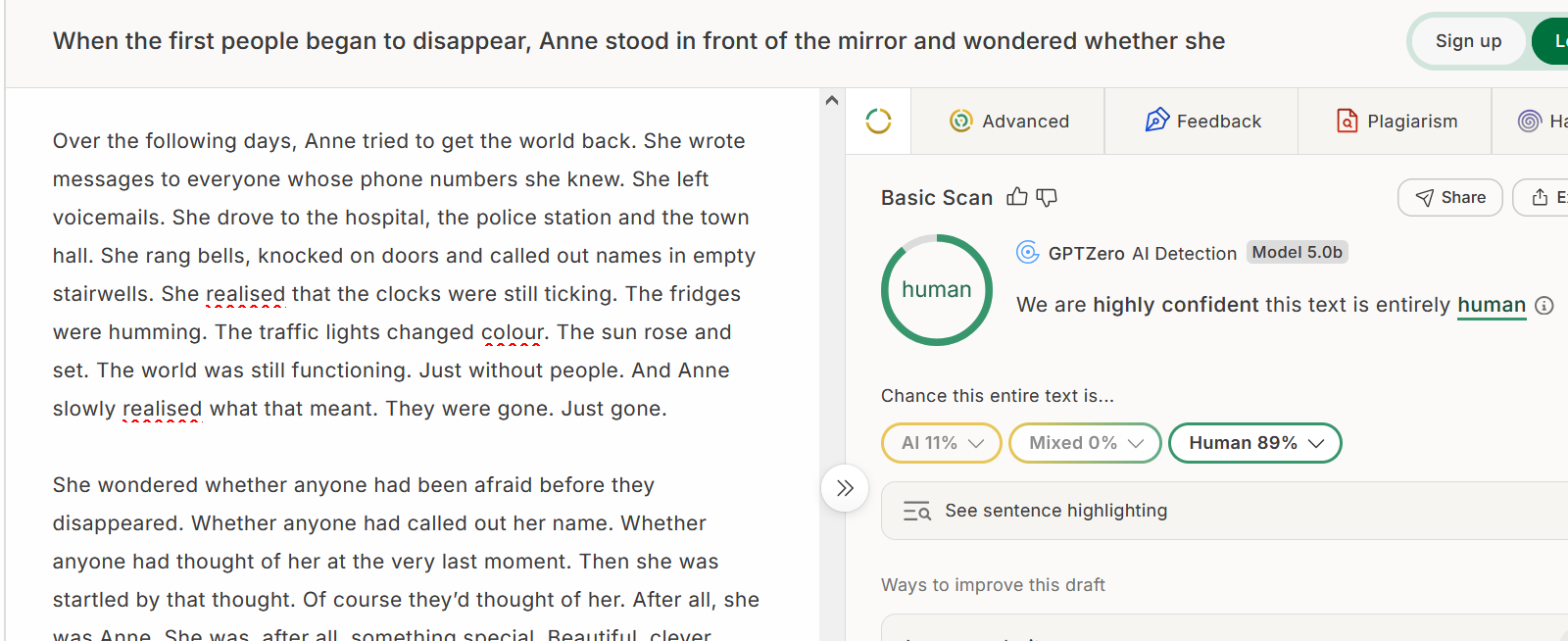
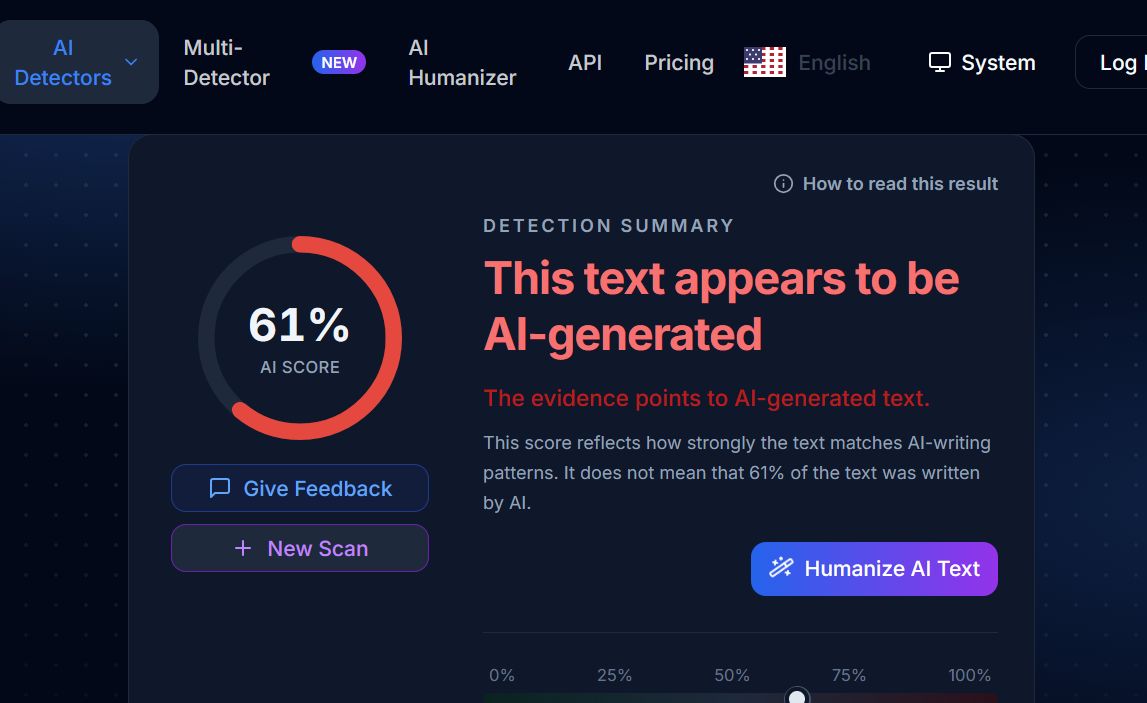
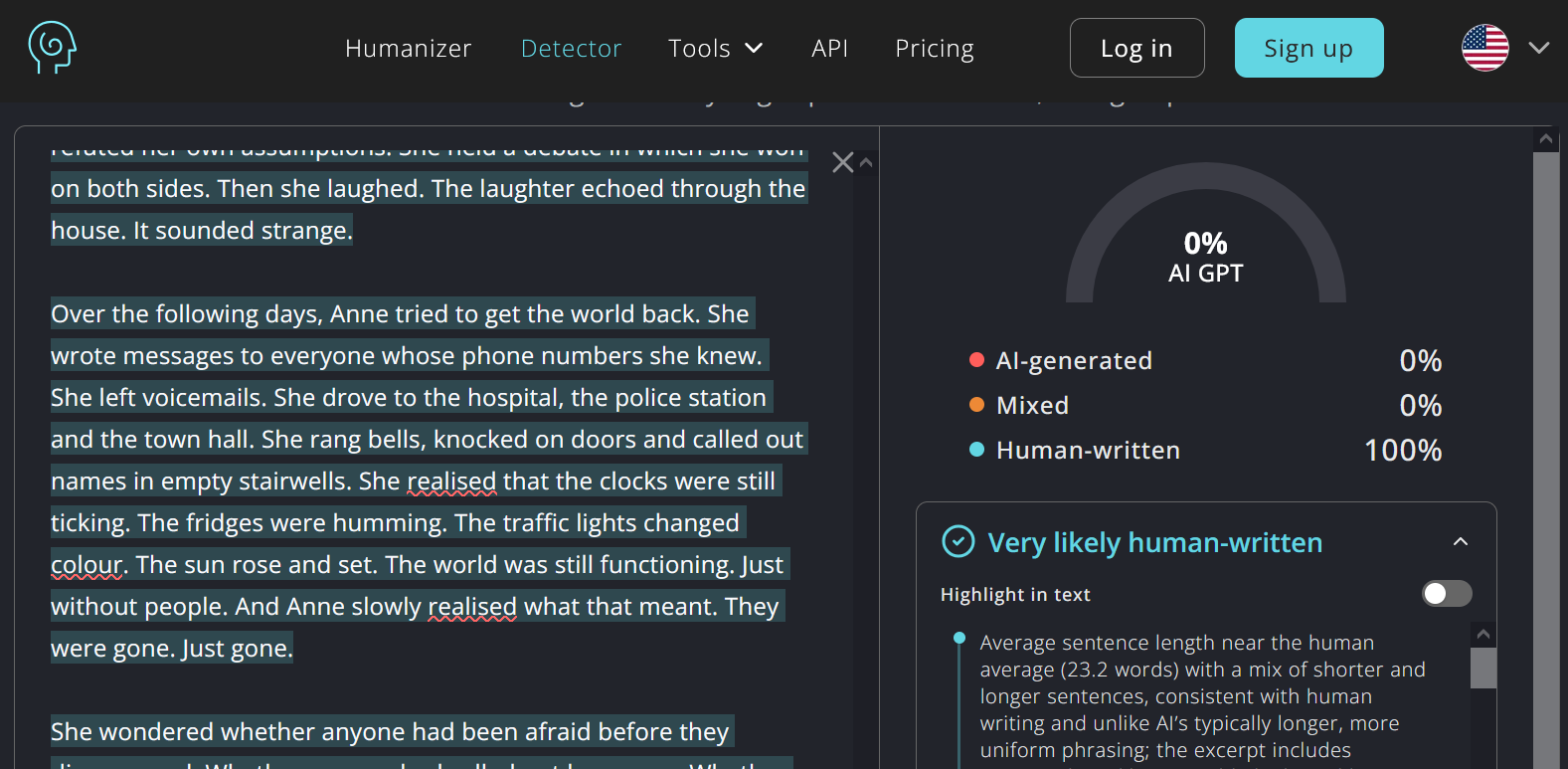
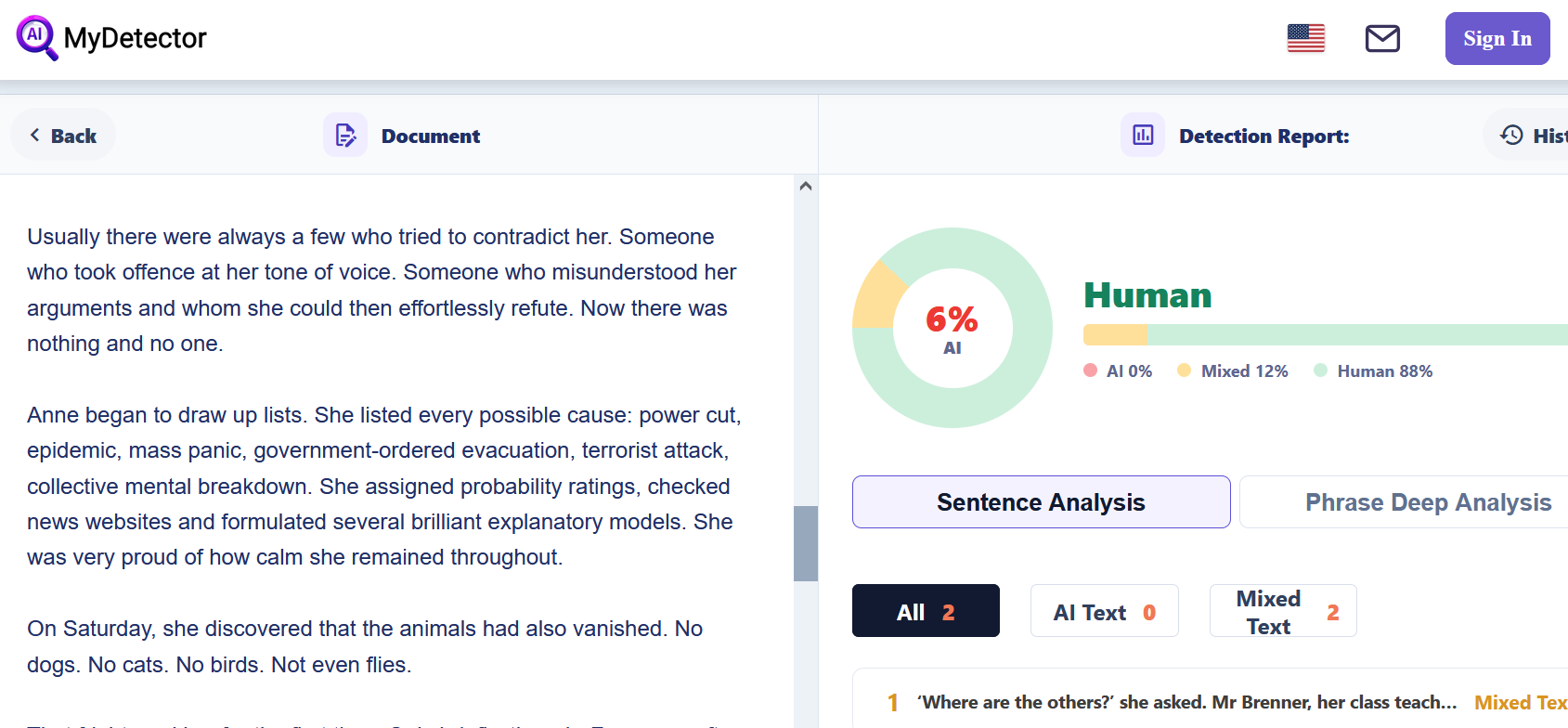
Here’s what the detectors have to say about it:
About my post "For Cold-Blooded October Contest by @ladyaryastark: Ego"
gptzero.me
app.zerogpt.net
humanizeai.pro/detector
mydetector.ai
youscan.io/ai-detector/
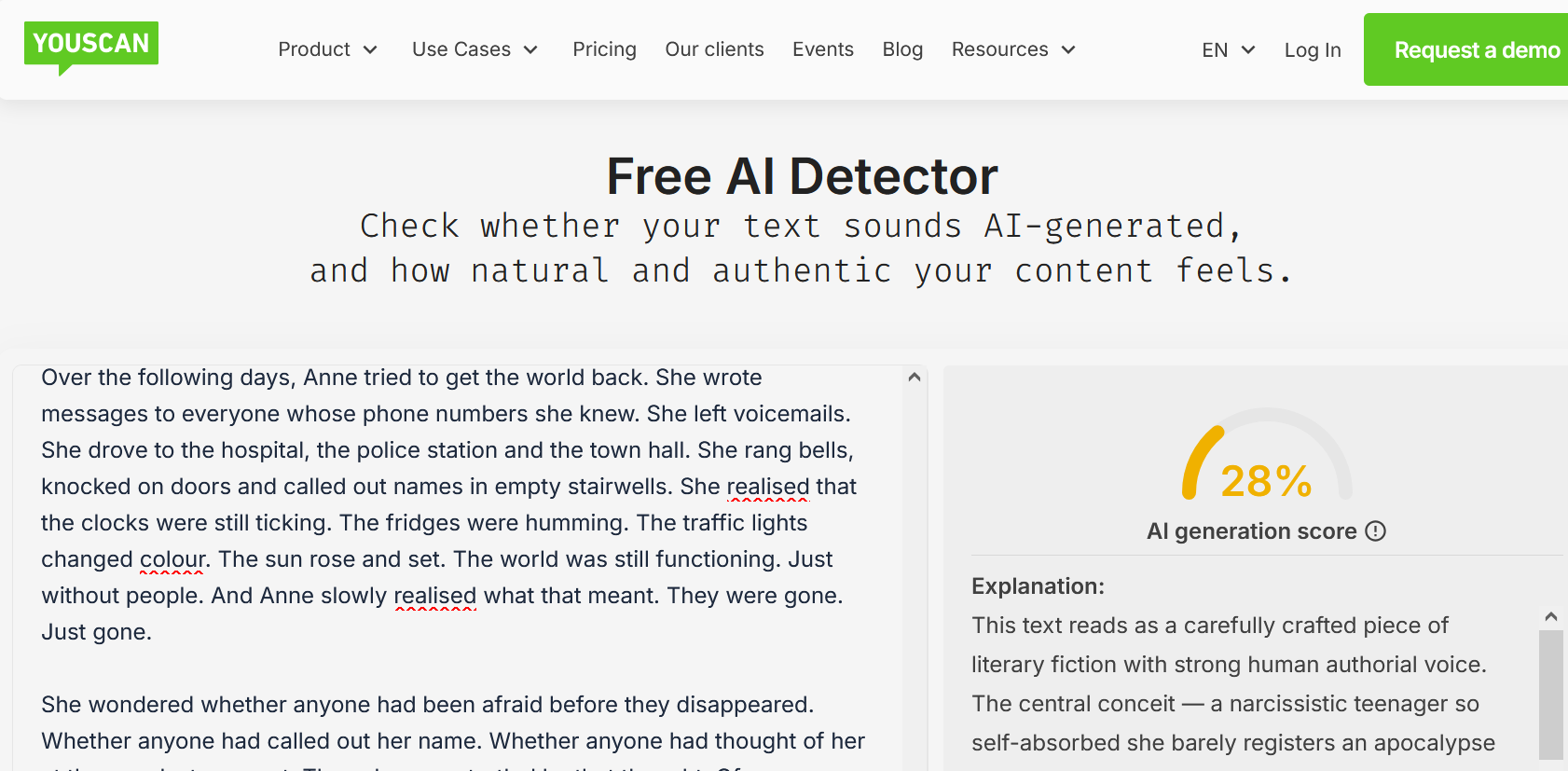
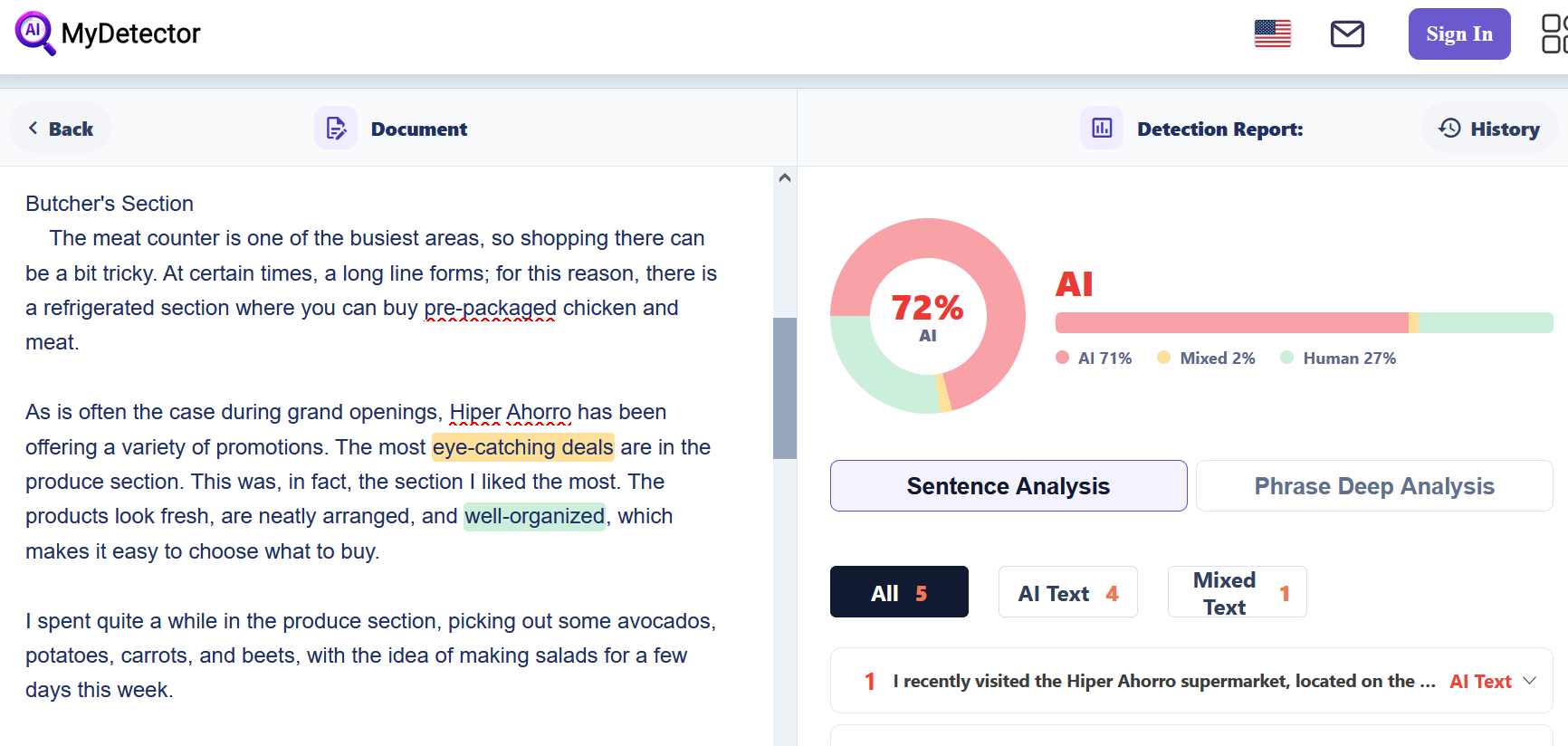
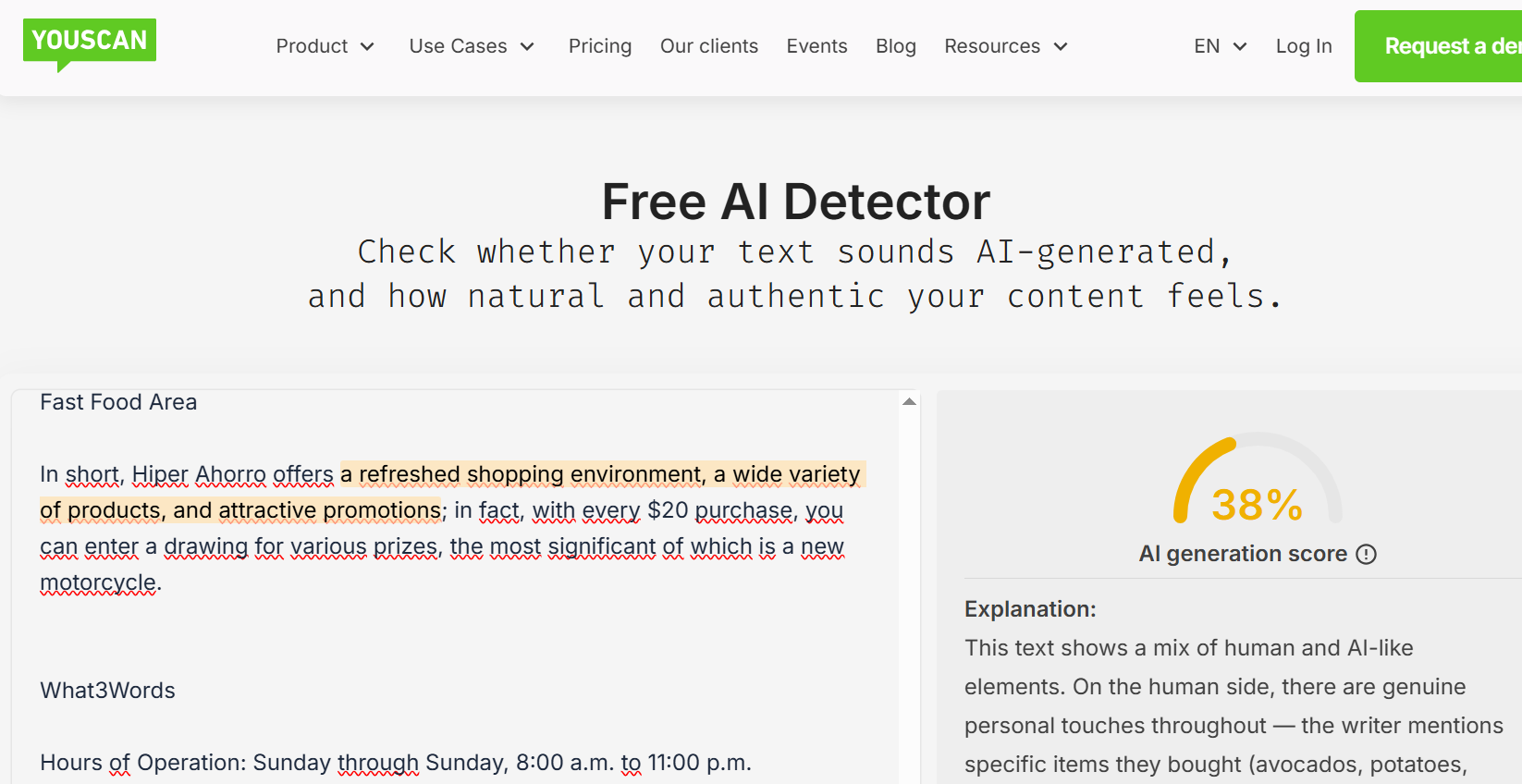
About Adeljose's post "Supermercado Hiper Ahorro, el más grande de Cabimas"...
gptzero.me
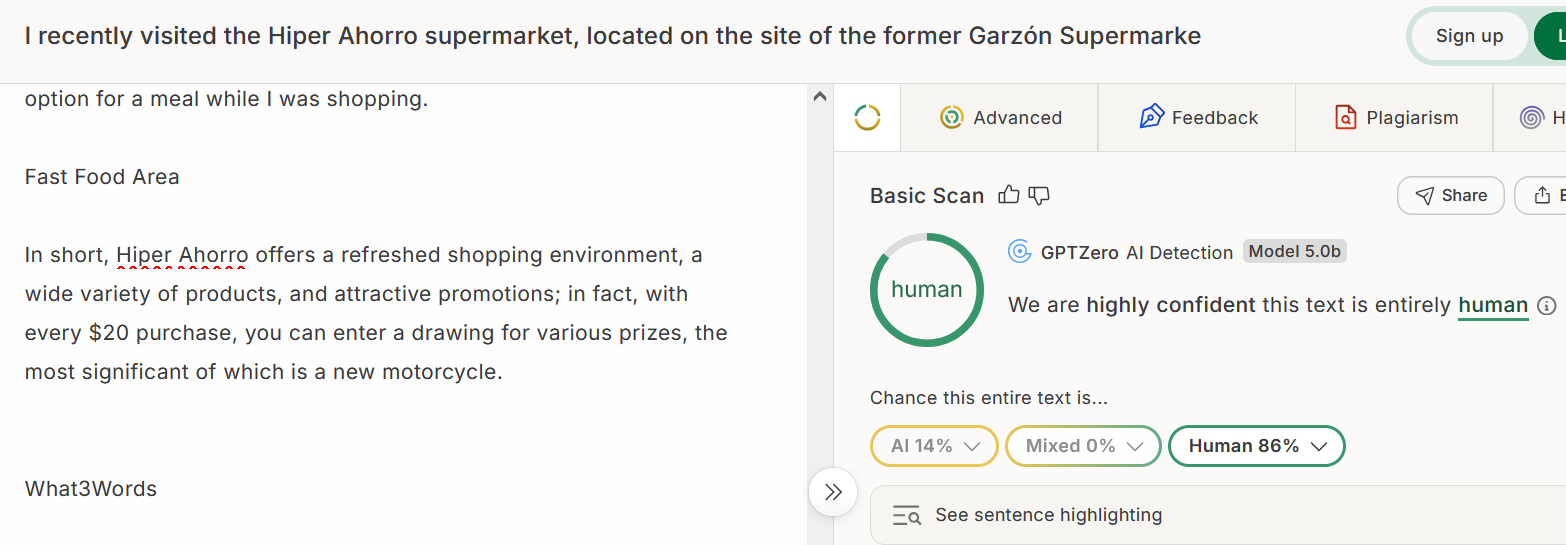
app.zerogpt.net
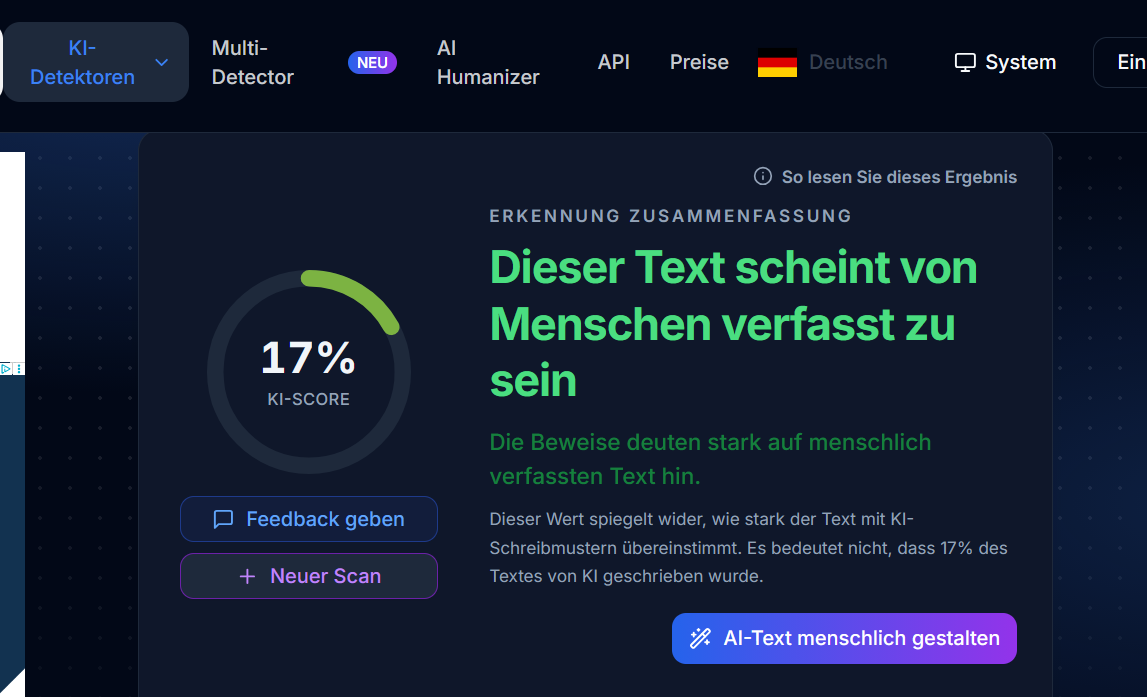
humanizeai.pro/detector
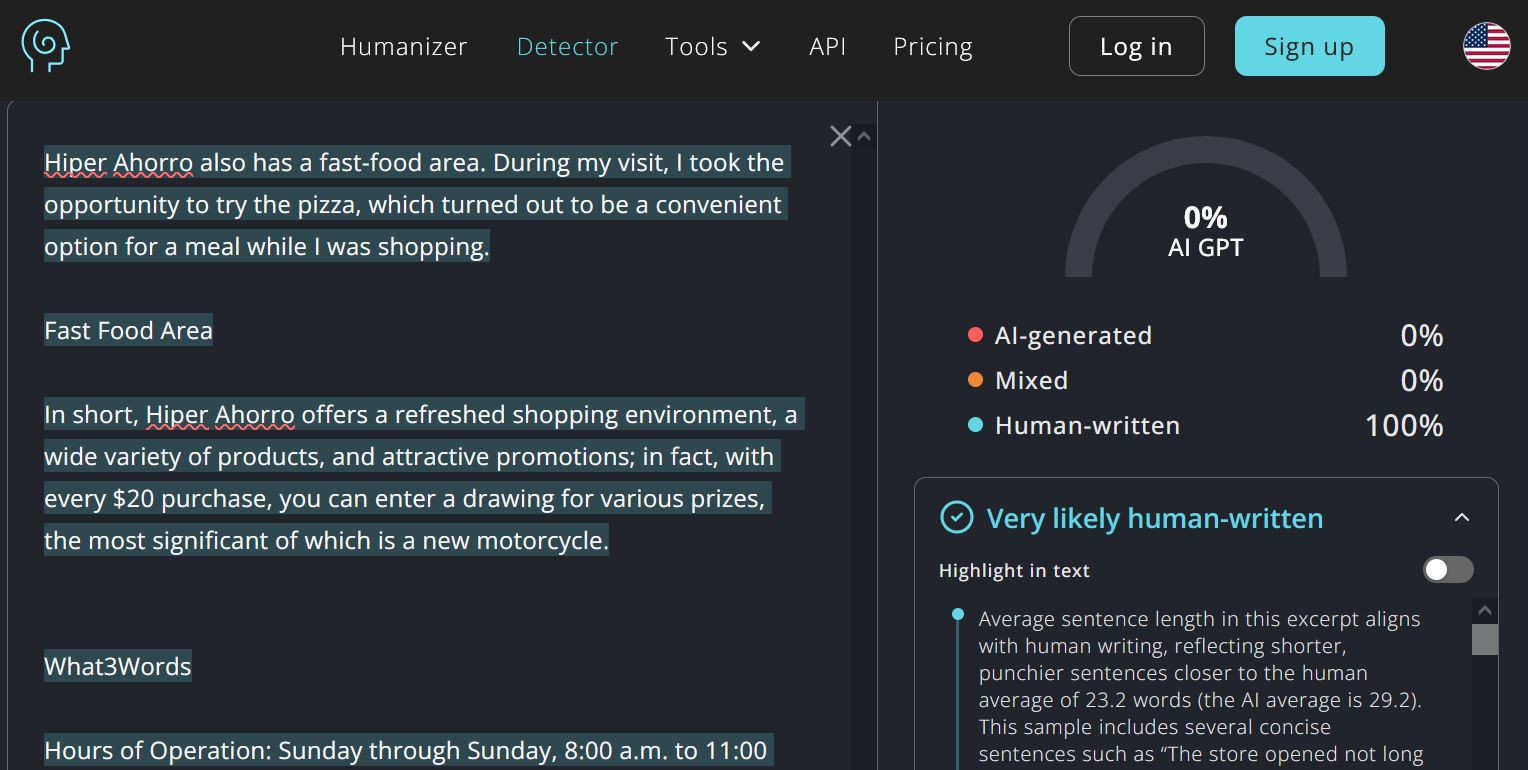
mydetector.ai
youscan.io/ai-detector/
But you can’t use this to discredit authors! Doing so alone makes you guilty of greater offences than the accused might be! This is a blatant reversal of the burden of proof: normally, you have to prove an allegation in order to sanction the perpetrator. Here, however, an accusation is suddenly made publicly, and the person in question is then left with no choice but to defend themselves in a state of necessity…
The only right way is to read the texts thoroughly. By yourself! To look at them in the context of the language used in earlier posts and in comments. To ask the author for details… And if a suspicion then arises, THEN a detection tool can help to clarify matters.
And then? Then you don’t vote for the post. At the end of the day, it’s simply a poor post. Nothing more is required. A spammer who churns out masses of AI-generated posts has their reasons for doing so. If the votes don’t come in, it’s not worth the effort for someone who’s only after a quick and easy source of income. Starve the spammers out!
The other extreme we see today is the widespread prejudgement of authors based on flimsy ‘evidence’. Which, in turn, stems from the real problem that is often glossed over: do moderators actually read the posts? Are they even capable of doing so to a decent standard? Do they have a feel for language, an understanding of human nature, experience in assessing texts…? The people who set themselves up as both prosecutors and judges here are, unfortunately, in many cases unable to engage properly with the content they nevertheless pass judgement on.
Steem, this wonderful open platform with its welcoming culture, is thus becoming a place where one must expect blanket disparagement at any moment. And anyone who can’t put up with that simply goes elsewhere...
Deutsche Version:
In irgendeiner Form ist KI heute allgegenwärtig geworden; manche Anwendungen bemerken wir gar nicht als solche, manche begrüßen wir und verwenden sie gerne. Andere finden wir weniger wünschenswert bis verabscheuungswürdig.
Gerade im kreativen Bereich ist der Einsatz von KI – aus meiner Sicht zu Recht – verpönt. Damit bestreite ich nicht, daß sich ggf. mit Hilfe einer KI auch echte Kunst gestalten läßt. Ich bestreite, daß man das tun sollte. Das zu regulieren, dafür Vorschriften oder Gesetze zu erlassen, liegt nicht in meiner Verantwortung. Die aktuellen rechtlichen Rahmenbedingungen sagen lediglich: der Einsatz von KI ist legal, solange ausdrücklich darauf hingewiesen wird, daß Inhalte oder Teile davon KI generiert sind…
Was ich hier auf dem Steem bestimmen kann, sind die Regeln „an meinem Tisch“ – also in meiner Community, auf meinem Blog. Hier kann ich festlegen: keine KI außer zur Erstellung von Illustrationen zulässig. Ganz ehrlich – ich würde auf diese auch gerne verzichten. Ich habe selber schon damit gespielt und finde letzten Endes die Ergebnisse unpersönlich und nichtssagend. Hat für mich auf einer Blogging-Plattform nichts zu suchen.
Aber zurück zu den Regeln… In den Communities auf dem Steem herrscht weitgehend Einigkeit, daß einer Netiquette gefolgt wird, die genau das obige beinhaltet: keine KI generierten Texte! In den privaten Blogs hat jeder alle Freiheiten, sich anders zu verhalten, desgleichen in Communities ohne solches Regelwerk. Die sind heute nicht mein Gesprächsgegenstand.
Die Communities mit einem Tabu für KI generierte Texte werden moderiert und die Moderatoren haben unterschiedliche Strategien, mit der um sich greifenden KI Flutung umzugehen.
Das heißt, so unterschiedlich sind die am Ende gar nicht; meist werden Detektor-Tools verwendet, mit denen die veröffentlichten Texte auf KI Wahrscheinlichkeit geprüft werden.
Die Genauigkeit und Zuverlässigkeit dieser Tools ist so verschieden wie die Interpretationsmöglichkeiten ihrer Resultate. Fakt ist: wenn ihre Anwendung dazu führt, daß Nutzer an den Pranger gestellt werden für ein Fehlverhalten, das ausschließlich von einer fragwürdigen KI (nichts anderes sind diese Detektoren!) festgestellt wurde, läuft etwas falsch!
In meiner zurückliegenden ersten Woche Booming Kuration wurde ich zwei Mal auf Beiträge hingewiesen, denen ich ein Vote gab, obwohl sie von diesen Beobachtern für KI generiert gehalten wurden. Der Hinweis ist legitim und ich danke dafür; es kann immer Versehen oder Flüchtigkeiten geben, die auf diese Art minimiert oder korrigiert werden können. Nun habe ich mir beide Beiträge nochmals betrachtet und bin überzeugt, es liegen generische Texte vor, bei denen KI maximal als Übersetzer mitgewirkt hat.
Aber warum ist das so, warum diese unterschiedliche Beurteilung? Das ist ja kein Einzelfall… Schauen wir uns also an, wie die Detektoren heute arbeiten. In der Anfangszeit von ChatGPT war es vor allem Mustererkennung, die zur Identifizierung artifizieller Texte führte. Mittlerweile wird mit Statistiken gearbeitet, die durchschnittliche Wortanzahlen pro Satz, Häufigkeit von Kommata, Anzahl der verwendeten Fremdwörter, Verwendung von Wörtern mit mehr als acht Buchstaben, stilistische Wiederholungen, usw. ermitteln und einordnen. Z.B. formuliert ein Mensch Sätze mit durchschnittlich 23,4 Wörtern. Bei der KI sind es im Schnitt 29,8 Wörter.
Aus solchen nüchternen Zählwerten macht die KI eine Beurteilung: der Text ist vermutlich menschlich, jener nicht. Wohlgemerkt: vermutlich. Kein Tool wird eine sichere Beschuldigung aufstellen, alle sprechen von der Wahrscheinlichkeit KI generierter Inhalte.
Etliche Moderatoren und Admins machen dann in übereifriger Beflissenheit gerne eine Faktenbehauptung, eine Anklage.
Was soll ich sagen…? Jeder von uns hat gewiß schon einmal eigene Texte durch so einen Detektor prüfen lassen: bei mir kommt regelmäßig eine hohe Wahrscheinlichkeit der KI Beteiligung heraus. Überraschung – ich mag sehr lange Sätze, ich kann Komma, ich schachtele Sätze ebenso gerne wie seinerzeit Thomas Mann… Ich verwende geläufig Fremdwörter und ja, das alles sind Indizien für diese KI Prüfer, daß es nicht mit menschlichen Dingen zugehen kann.
Ich habe auch schon bewußt Texte von ChatGPT generieren lassen und diese dann unverändert den Detektoren zum Fraß vorgeworfen: sehr oft wurden die Texte als eindeutig menschlich klassifiziert.
Die Bewertungen der KI Detektoren sind teilweise falsch positiv, teilweise falsch negativ und bestenfalls einigermaßen zutreffend.
Ich möchte Euch an zwei Beispielen zeigen, wie sich das äußert: Ein Text von mir selbst und einer von @adeljose (ich weiß, daß Du Deine Texte selber schreibst!)…
Was die Detektoren dazu meinen:
Über meinen Post "For Cold-Blooded October Contest by @ladyaryastark: Ego"
gptzero.me
app.zerogpt.net
humanizeai.pro/detector
mydetector.ai
youscan.io/ai-detector/
Über Adeljose's Post "Supermercado Hiper Ahorro, el más grande de Cabimas"...
gptzero.me
app.zerogpt.net
humanizeai.pro/detector
mydetector.ai
youscan.io/ai-detector/
Damit kann man doch aber nicht Autoren diskreditieren! Damit allein macht man sich größerer Verfehlungen schuldig als der Beschuldigte selber möglicherweise! Hier erfolgt ganz offen eine Beweislastumkehr: normalerweise muß man einen Vorwurf beweisen, um den Täter sanktionieren zu können. Hier ist es auf einmal so, daß eine Anschuldigung öffentlich ausgesprochen wird und derjenige sich dann in der Notwendigkeit wiederfindet, sich zu erklären, ggf. Beweise seiner Urheberschaft zu liefern…
Der einzig richtige Weg muß sein die Texte gründlich zu lesen. Selber! Sie im Zusammenhang mit der Ausdrucksweise in früheren Posts, in Kommentaren zu betrachten. Den Autor nach Details zu befragen… Und wenn sich dann ein Verdacht breit macht, DANN kann ein Detektior-Tool helfen, sich Klarheit zu verschaffen.
Und dann? Dann votet man den Beitrag nicht. Dann ist es unterm’m Strich einfach ein schlechter Post. Mehr ist nicht erforderlich. Ein Spammer, der massenweise KI generierte Beiträge fabriziert, hat dafür Gründe. Bleiben Votes aus, lohnt sich der Aufwand nicht für jemanden, dem es nur um eine schnelle und einfache Einnahmequelle geht. Hungert die Spammer aus!
Das andere Extrem, das wir heute vorfinden, ist die massive Vorverurteilung von Autoren aufgrund mangelhafter „Beweise“. Was wiederum an dem eigentlichen Problem liegt, das gerne verschwiegen wird: lesen Moderatoren Beiträge? Können sie das überhaupt auf einem guten Niveau? Haben sie ein Sprachgefühl, Menschenkenntnis, Erfahrung mit der Beurteilung von Texten…? Die Leute, die sich hier gleichzeitig zu Anklägern und Richtern machen, sind leider in vielen Fällen nicht in der Lage, sich angemessen mit den Inhalten zu beschäftigen, denen sie dennoch Stempel aufdrücken.
Der Steem, diese wunderbare offene Plattform mit Willkommenskultur wird dadurch zu einem Ort, an dem man jederzeit mit pauschaler Abwertung rechnen muß. Und wer das nicht aushalten möchte, geht woanders hin...
In early 2025 I conducted a small experiment. I copied text from a travel brochure published in 2008 using Google Lens and submitted it to ZeroGPT for analysis. The service identified 80% of the text as AI-generated. The brochure was written in a somewhat literary style, which made it interesting to read rather than just a collection of information about travel routes.
That experience made me reconsider my attitude towards such checks, because they are far from accurate and don't reflect the full picture. Sometimes, it's enough to simply read the text yourself, because AI content generation algorithms have their own distinctive “writing style”, and certain patterns often repeat themselves.
A nice little experiment. And yes, you’d find that’s the case with quite a few classics: the AI was initially trained on their texts. So, naturally, it ‘recognises’ itself in them...
That's a very clever and spot-on observation! I like it 😉
Greetings @weisser-rabe
I completely understand your point of view regarding the potential relationship between the use of translation tools and the results generated by AI detectors, given that everything today is programmed to work with AI—for example, the translation tool I use, which is https://www.deepl.com/es/translator; As a result, there may be a slight percentage variation across some tools. I think I would have been concerned if it had shown 0% AI content, since it could be a case of “humanized” content—the translator actually changes the grammar. I usually translate the text from Spanish to English, then run it in the reverse direction to see what the translator produces before publishing, and it changes some words, or even an entire sentence.
That said, there are cases where AI intervention in content generation is very obvious, especially when more than three accounts are involved. In the case I mentioned, I didn’t feel the need to use AI detectors: First, because the text is in Spanish, and I know these tools sometimes make mistakes when analyzing content in this language. And second, because it’s completely obvious that these accounts use the same pattern of words in their posts and comments. You may have noticed that another user with strong reading comprehension skills, such as @solperez, has already pointed this out.
https://steemit.com/hive-166405/@solperez/true-colours-11-conclusions-booming03
I agree with you that we shouldn’t condemn anyone, but it’s important to let them know that there’s something odd about the
That’s why I don’t usually rely solely on AI content detectors; I also consider other factors.
I know… On top of that, people (who perhaps don’t read many books) are now confronted with more and more (exclusively?) AI-generated texts (newspapers, business documents, social media…) and, without realising it, adapt their own writing style accordingly. They WANT to sound just as GOOD as the AI (a huge misunderstanding!)… It’s problematic from a writer’s perspective. But we can’t ignore this changed situation.
@comandoyeya’s children, who are both on your list, have certainly not appeared in person since AI became available in this form. To the best of my knowledge, he himself remains authentic, but uses an AI tool to translate. I don’t hold that against him; his reports are good (and too specific to have been entirely the product of an AI...)
I'm sorry, but I would never say that a user of a language other than my native tongue uses AI 100%, because I don't speak the language fluently. For the same reason, I also wouldn't say that they don't use it at all.
In the case you mention, I have read all the linked accounts, and as a native Spanish speaker, and especially being from the same country, I can say with near certainty that a single person is writing for all the accounts.
I even think that many of those accounts use other people's texts, add some data from Paraguay, and generate them with AI. I notice it because there are almost always illogical parts, and parts that simply don't make sense.
Furthermore, all accounts except @jhelbich's use stock photos, which the bot obviously searched for and pasted, so they are often poorly formatted.
Regarding the post you voted for from comandoyeya, does it seem logical to you that a travel post wouldn't have a single original photo, even if it's of the cement bench it mentions? Besides, it had many others Inconsistencies.
I followed @jhelbich before the fork; unfortunately, he moved to another platform. When he returned, I supported him using my personal account, as well as through booming or steemcurator whenever that was possible. However, for some time now, his writing style has changed completely.
The list I shared likely belongs to a single family; while I might be accused of being overly skeptical, I believe they are using AI to keep those accounts active and try to generate easy rewards.
Recently, all of these accounts have featured posts that specify the exact time of every event—something I find rather strange.
Los programas de inteligencia artificial se perfeccionan cada vez más, con lo cual resulta sumamente difícil detectar a los usuarios que utilizan estas herramientas.
En tal sentido, resulta prudente hacerles un seguimiento a los "sospechosos" y que se silencien en todas las comunidades, no en algunas, pues en la medida en que los bots sigan recibiendo votos, los usuarios humanos se desanimarán y podrían optar por el camino fácil.
Confieso que resulta agotador revisar las publicaciones de los sospechosos, pues como bien has señalado, @adeljose, por lo general utilizan el mismo formato para comentar y sus comentarios son tan "meticulosos" que despiertan sospecha en los lectores.
De hecho, antes de acusar a un bloguero como utilizador de IA es necesario tener pruebas irrefutables, ya que podemos herir susceptibilidades.
Un abrazo.
This is the crux of it. It is basically impossible to algorithmically distinguish between AI and human in many contexts. And even humans get the evaluation wrong, quite frequently. This has been true since the earliest days of the LLM, and I suspect it will always be true.
Coincidentally, I saw a post on Twitter this morning arguing that because of this impossibility, science reviewers should just assume that everything is written by an AI and evaluate each submission based on its merits.
The problem with that, of course, is that it's exponentially harder (and more time consuming) to manually read an article than it is to write it with AI, so there aren't enough reviewers (or curators) to keep up with the volume.
IMO, as a practical matter the solution has to include some sort of automation, but I also agree with your point about public accusations - especially when machine translation is in the mix. The response should reflect an understanding that the tools are fallible, and usually it's enough to just skip voting for that post/reply.
I believe I read somewhere that AI content detectors provide a probability score—an estimate of how likely it is that content was generated by AI—rather than a definitive confirmation that the text is entirely AI-generated. At most, the output from an AI detector (which itself relies on AI) should serve as an indication that a thorough human review is warranted, not as conclusive, standalone proof upon which to base a final judgment.
Another issue arises if someone has run the text through an automated translation tool (which often utilizes AI), as this can also trigger a false positive.
That said, I can see why some "censors" might choose to follow the old inquisitorial adage: "better to kill a thousand innocent people than to let one guilty person go free." It is an extreme stance, though I suppose I can grasp the logic behind it. Of course, this very attitude is precisely why I will keep as much distance as possible from such people.
And, by the way, this post certainly sparked some engagement in the comments—which is a good thing.
Image source
I certainly understand that impulse. However, I cannot support its rigidity and the even greater injustice that results from it.
Thank you for your perspective!
Die c't hatte gerade kürzlich das angeblich sehr treffsichere Pangram gestestet. (Link: https://www.heise.de/select/ct/2026/17/2617314115408036518 - ist leider hinter einer Paywall)
Fazit war jedoch auch hier:
Dem muss man wohl nichts hinzufügen...
Yeah, to me, pangram does seem to offer the best results. Unfortunately, without a subscription, it also seems to run out of quota pretty quickly.
Ah, danke. C't haben wir, schaue ich 'mal rein...
Das Problem liegt auf der Hand. Für mich ist der einzige sinnvolle Lösungsansatz, mögliche Gewinne aus solchen Farming Accounts unmöglich zu machen. Keine Selbstvotes mehr, keine Auto Voting Trails, keine Vote Bots... Wenn die Spammer nichts mehr verdienen, machen sie sich die Mühe nicht mehr. Meine Theorie ;-))
I am a supporter and user of AI as a translator, since I have found that classic translation tools tend to produce a worse translation.
But when it comes to posts or comments, it seems like a dishonest shortcut to let AI do all the work. After all, this is a social network and we expect to interact with people.
While I partly agree that there's no absolute certainty in text evaluation tools, I believe they do offer reasonable detection rates. Then there's the human factor for verification.
For that reason, I had suggested to the @steemitblog team that the community curation should be done in the curator's native language because that way it's possible to detect whether the writing is human or not.
In the case of Paraguayan accounts, since bots started commenting on my posts, I detected a high, if not 100%, use of AI in comments, and anyone who reads Spanish can see that.
Even in the same publications they often are so obvious because they use magazine texts, add some information about Paraguay, and it turns out to be utter nonsense. (for a Paraguayan)
If the steemit team don't want to apply sanctions, they should ask users who are flagged as having a high probability of using AI to take a humanity test in order for them to continue receiving rewards.
We recently became outraged because our president is a big thief, but we shamelessly engage in dishonest actions in our own small lives. As a Paraguayan woman, I feel very sorry that my compatriot who owns the bot farm is doing this.
I do not consider sanctions or verification measures to be appropriate on a decentralised and free platform. Here, everyone should be able to decide for themselves how anonymous or private they wish to remain.
However, one thing that must no longer be allowed is generating income through farming accounts. So let’s do away with the possibility of self-votes, auto-voter trails and vote bots. Furthermore, the value of a vote should be linked to click-through rates and actual reading time... Then it simply won’t be worth running such bots any more.
However, this will require changes to the reward system – let’s wait and see what the new heroes in the Steem sky (@substeem.app) have to offer in this regard...
I too believed in absolute freedom, but it implies a great responsibility, something that some avoid, and even commit crimes hiding behind that absolute freedom.
I stand by my point about sanctions. Isn't a negative vote one? Whoever violates rules should be sanctioned. If it were such a free platform, there wouldn't be any rules. The fact that they exist implies that there isn't real freedom.