🧠📱 The Tiny Chip Inside Your Phone That Could Shape the Next AI Era
Today’s Technology News | September 20, 2026
Pick up your phone.
Open the camera.
Switch to another app.
Ask an AI assistant a question.
Open a browser with ten tabs.
Edit a photo.
Play a game.
Maybe record a video at the same time.
It all feels simple.
You tap.
The screen responds.
The app opens.
The camera processes the image.
The AI answers.
But behind that smooth experience is something most people almost never think about:
Memory.
Not your photos.
Not your files.
Not your cloud storage.
I mean the tiny semiconductor memory that your phone uses as its working space while everything is happening.
And today's technology news is a reminder that this tiny component is becoming increasingly important.
Chinese memory-chip maker CXMT says its fifth-generation DRAM platform has entered mass production. Reuters reports that the platform is designed to produce more powerful memory with lower cost and power use, while allowing more chips to be produced from each silicon wafer. CXMT also unveiled two 24-gigabit LPDDR5X products made on the new platform.
You might read that headline and think:
“Okay… another chip announcement.”
But stay with me.
Because once you understand what this chip actually does, you'll start looking at your phone, laptop and AI tools a little differently.
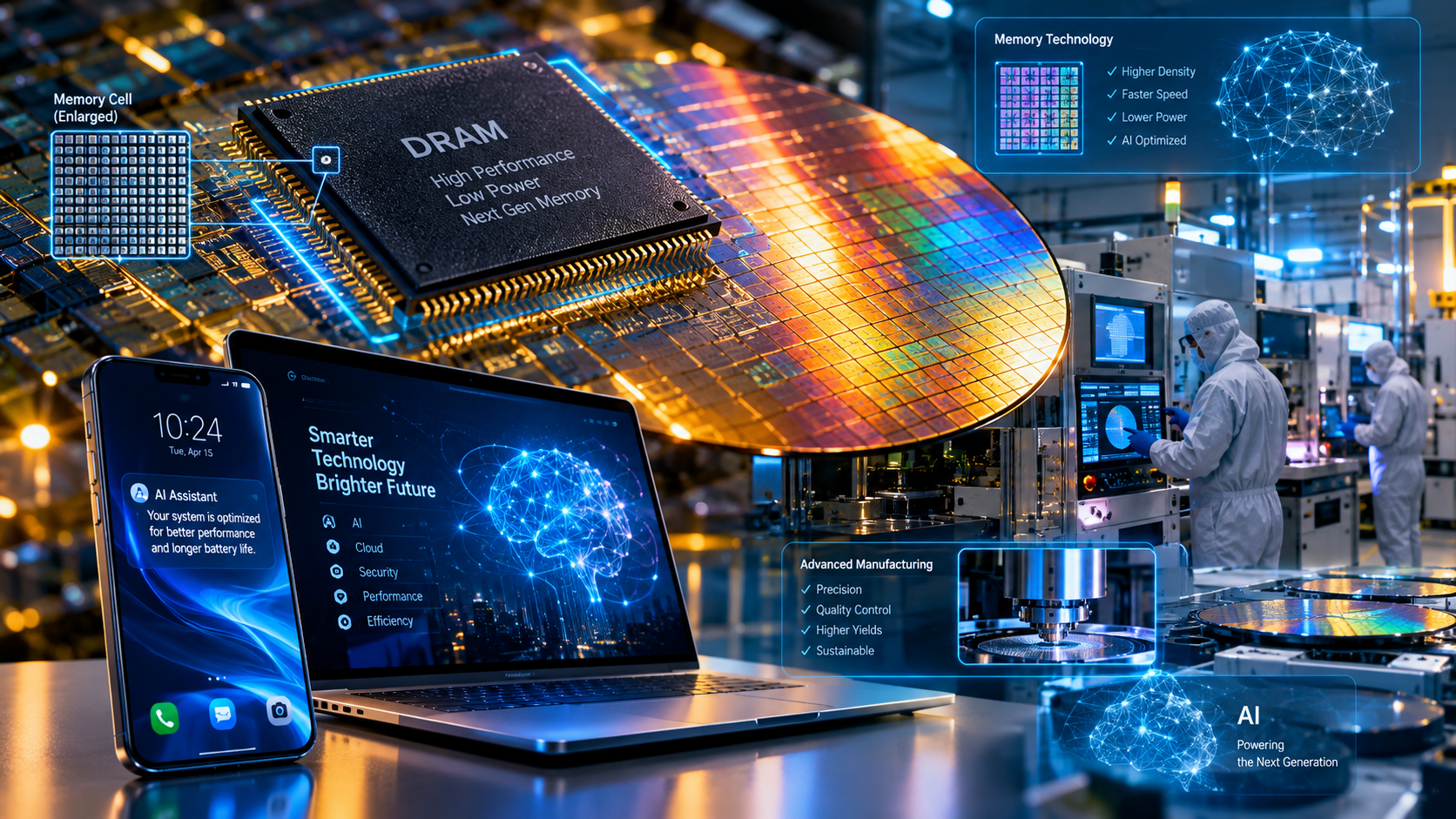
💾 First: What Is RAM Actually Doing?
Let's make this simple.
Imagine your phone is a small office.
Your storage is the filing cabinet.
It keeps things even after you leave:
Photos.
Videos.
Apps.
Documents.
Operating-system files.
Your RAM, meanwhile, is your desk.
The things you are currently working with are sitting on the desk.
You open an app?
It needs working memory.
You edit a photo?
Working memory is involved.
You switch between several apps?
Memory helps keep those active workloads available.
You run an AI process?
Memory becomes part of that workload too.
Micron describes smartphone LPDRAM as volatile memory used for data currently being processed by the CPU, while storage is non-volatile and keeps information such as photos and videos even when the device is turned off.
That's why:
Storage ≠ RAM.
You can have a phone with enormous storage and still have limited RAM.
And you can have lots of RAM without having enormous storage.
They solve different problems.
⚡ Why Does Faster Memory Matter?
Now imagine your desk becoming bigger.
You can work with more things at once.
Now imagine the desk becoming faster to access.
You can move information around more efficiently.
That's broadly what better memory technology is trying to achieve.
Modern applications continuously move data between processing components and memory.
AI makes this even more demanding.
An AI model may need to process large amounts of information.
A camera may need to process several streams.
A game may need to load textures and assets.
A browser may keep many tabs active.
A modern smartphone isn't simply making calls anymore.
It's becoming a small computer.
And small computers need fast working memory.
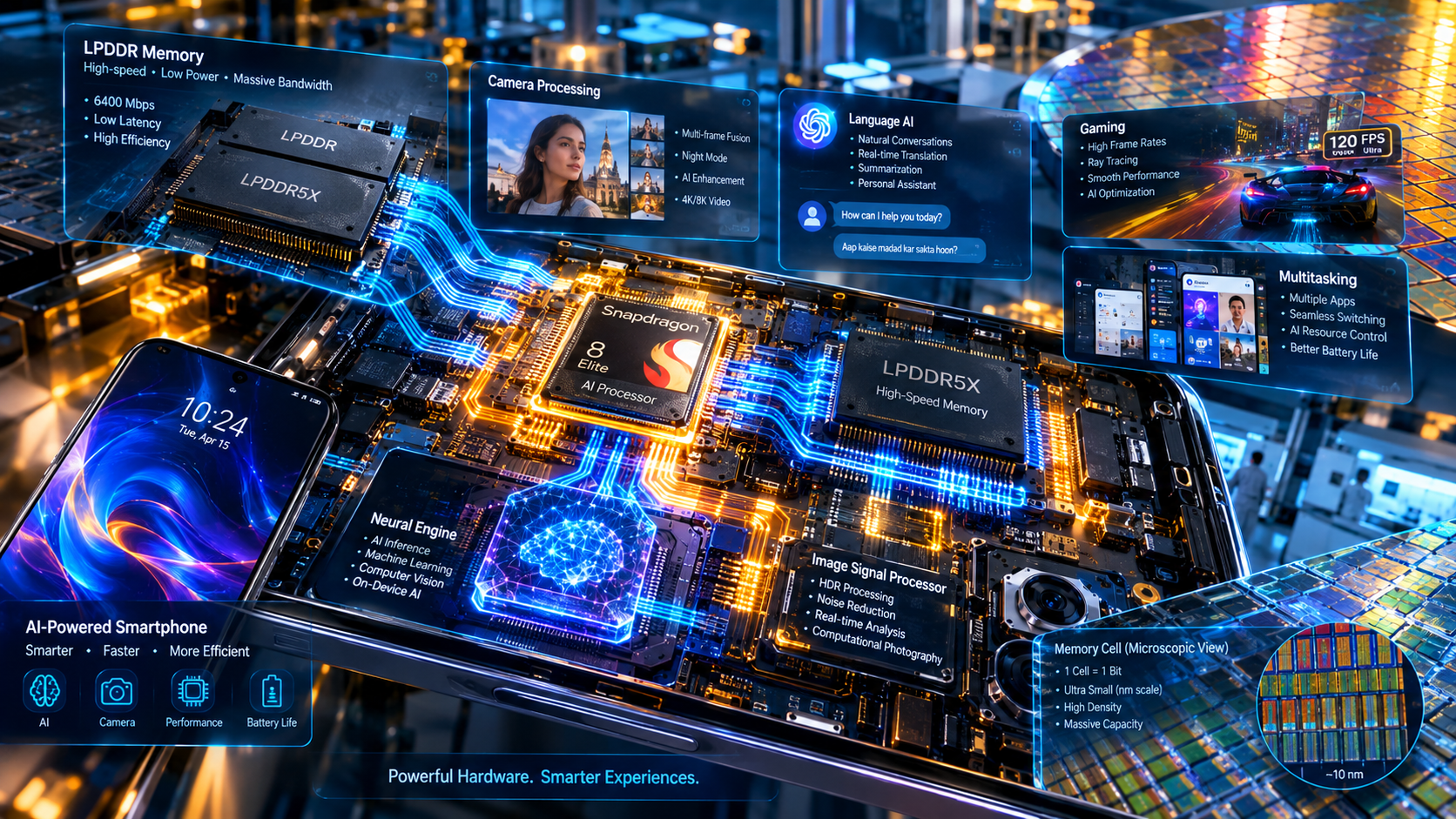
Micron specifically notes that LPDDR5X is useful for high-end gaming, camera and image processing, AI and machine learning, AR/VR and other data-heavy mobile workloads.
🤖 AI Is Quietly Changing the Memory Problem
This is the part I find particularly interesting.
When people talk about AI hardware, they often talk about:
GPUs.
AI accelerators.
Processors.
Neural engines.
But memory is equally important.
A powerful processor that cannot get data quickly enough can spend time waiting.
So modern AI hardware isn't only about making the “brain” faster.
It is also about making the pathway to the brain more efficient.
Think about a restaurant.
You can have the world's best chef.
But if ingredients take forever to reach the kitchen...
the restaurant still can't serve customers quickly.
The processor is like the chef.
Memory is part of the supply system delivering the information.
That is why faster and more efficient memory matters.
🖼️— HOW RAM SUPPORTS AI
📐 And Then We Hear the Word “Nanometre”
This is where technology news can become confusing.
You may have seen:
11.95 nanometres
and wondered:
“What does that actually mean?”
A nanometre is one billionth of a metre.
At semiconductor scale, we're talking about incredibly tiny structures.
But here's an important point:
You should not automatically assume that every semiconductor number described in nanometres is a direct measurement of the entire chip or a simple “smaller number = better chip” score.
Modern semiconductor manufacturing uses many different dimensions, structures and process technologies.
In today's report, Reuters says CXMT reduced the spacing of key features in the data-storage portion of the memory to 11.95 nanometres, using a process called quadruple patterning.
So the real takeaway is:
Manufacturers are finding ways to pack memory structures more densely while continuing to improve manufacturing efficiency.
And that has consequences.
More data per chip.
More chips per wafer.
Potentially lower cost per unit.
And potentially better efficiency.
🏭 The Secret Number Many People Ignore: Yield
Here's a word that deserves much more attention:
Yield
Imagine a bakery.
You put 100 pieces of dough into an oven.
But only 80 come out perfectly baked.
Your production efficiency is not 100%.
Semiconductor manufacturing has a similar concept.
A wafer can contain many potential chips.
But not every finished die necessarily passes every manufacturing and testing step.
Reuters reports that CXMT says its new platform can produce at least 50% more gross chip dies per wafer than its fourth-generation platform, while noting that gross dies per wafer do not equal the final number of chips that pass testing.
That distinction is important.
Because manufacturing isn't simply:
“How many chips can we physically fit?”
It's also:
“How many usable chips can we actually produce?”
Higher efficiency can influence cost, supply and competitiveness.
That makes manufacturing technology incredibly important.
🌐 Why This Matters Beyond One Company
Today's announcement involves CXMT.
But the lesson is much bigger.
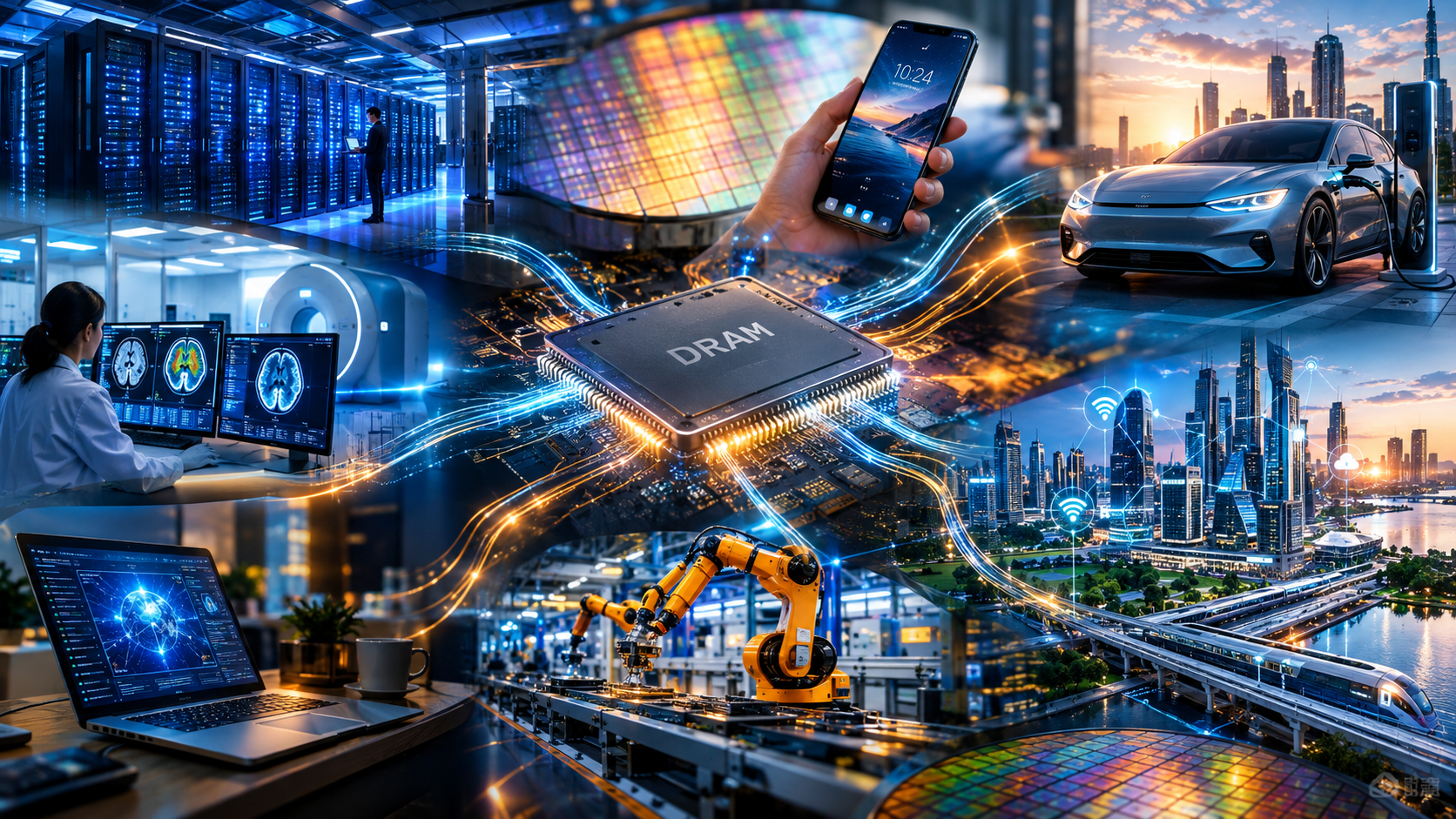
Memory chips are used in:
Smartphones.
Laptops.
Servers.
Cars.
Cameras.
Gaming systems.
Industrial equipment.
AI hardware.
Cloud infrastructure.
And many other devices.
That means memory technology is part of the foundation of the digital world.
A shortage can affect product availability.
A manufacturing improvement can expand supply.
A power-efficiency improvement can help battery-powered devices.
A density improvement can help smaller devices do more.
So tiny changes inside a semiconductor factory can eventually become visible in products sitting in someone's hand.
📱 What Does This Mean for Your Next Phone?
This is where today's news becomes useful for ordinary buyers.
Many people compare phones using one simple number:
“This phone has 12 GB RAM.”
Another has:
“16 GB.”
Then they assume:
16 GB automatically wins.
But it's more complicated.
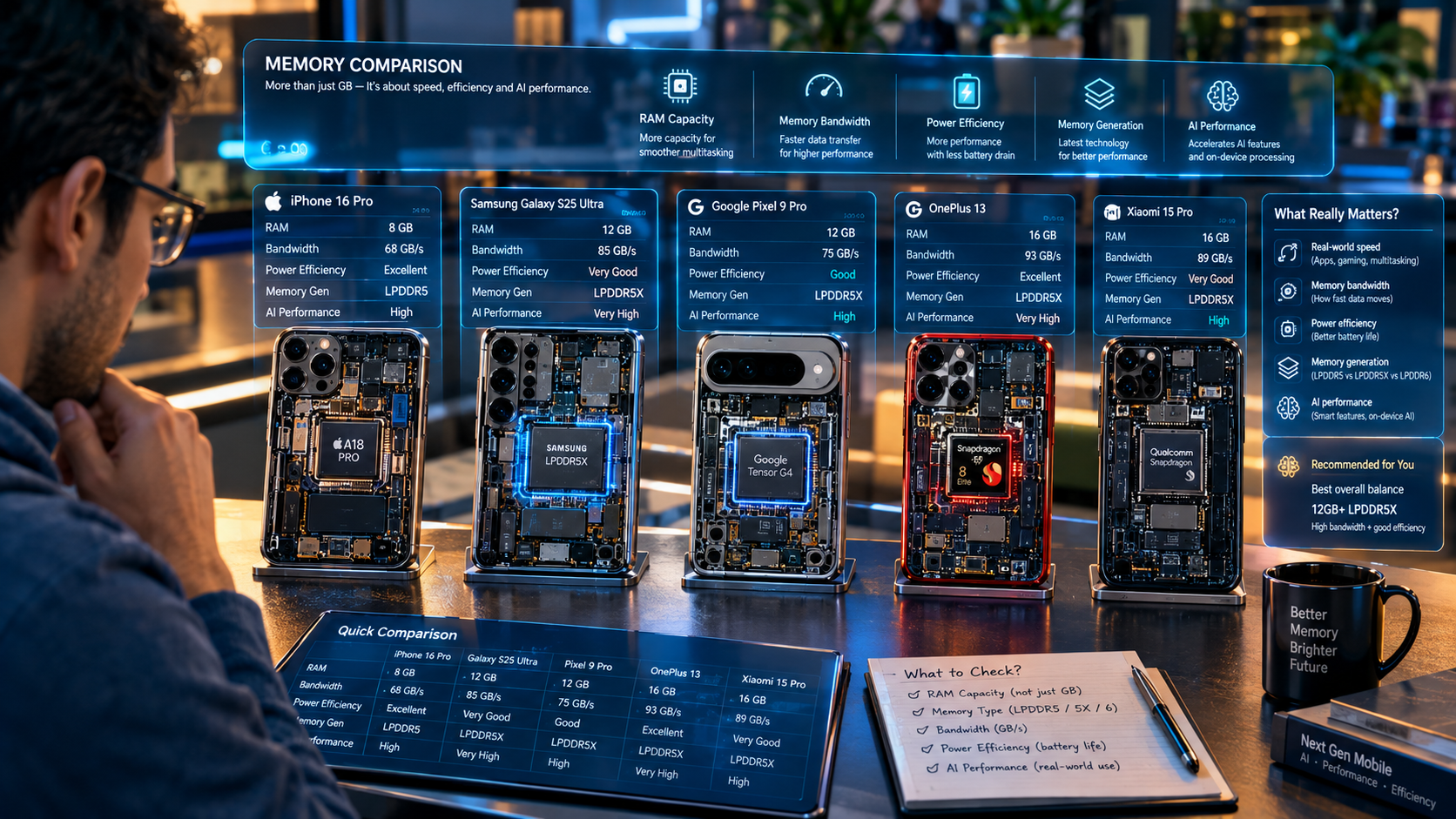
When evaluating memory, you should also consider:
Capacity
How much memory is available?
Speed / bandwidth
How quickly can data move?
Power efficiency
How much energy is needed?
Memory generation
LPDDR4, LPDDR5, LPDDR5X and newer generations offer different capabilities.
Software optimisation
How efficiently does the operating system actually use the available memory?
So:
More RAM does not automatically mean a better device.
You need to look at the whole system.
🖼️— HOW TO CHOOSE SMARTPHONE MEMORY
🔋 Why Low-Power Memory Matters So Much
Now imagine your phone becoming more powerful.
Better camera.
Better AI.
More background applications.
Higher-resolution video.
More sophisticated games.
But there is a problem.
All this processing consumes energy.
Battery technology doesn't improve at exactly the same pace as every new software feature.
So engineers have another challenge:
How do we make devices more capable without turning them into portable heaters with terrible battery life?
That's where low-power memory becomes important.
LPDDR stands for Low Power Double Data Rate memory.
The goal is not simply speed.
It is speed while managing power consumption.
Micron describes LPDDR5X as a mobile-memory technology designed to improve data transfer rates, bandwidth, density and power efficiency, with applications including on-device AI.
This is especially relevant as more AI workloads move directly onto phones and other edge devices.
🧠 The Future of AI May Happen on Your Phone
We often imagine AI as something running inside huge data centres.
And it certainly does.
But another trend is happening too.
Edge AI.
AI processes are increasingly being performed closer to the user.
On:
Phones.
Cars.
Cameras.
Industrial devices.
Wearables.
Local computers.
Why?
Because local processing can offer advantages such as:
Lower latency.
More privacy in some scenarios.
Less dependence on constant cloud communication.
Potentially lower network usage.
But edge AI requires capable local hardware.
And memory is part of that hardware.
This means the tiny chip inside your phone may play a much larger role in the AI future than most people realise.
🚗 Memory Is Moving Into Cars Too
Modern cars are becoming computers on wheels.
Think about:
Driver-assistance systems.
Cameras.
Navigation.
Voice assistants.
Entertainment.
Sensor processing.
Parking systems.
Digital dashboards.
Future autonomous-driving features.
All of those systems generate and process data.
And memory is part of that architecture.
So semiconductor memory isn't just a smartphone story.
It's becoming an important part of transportation.
🏥 What About Hospitals?
Now take the same idea into healthcare.
Modern hospitals increasingly use:
Medical imaging.
Digital patient records.
Monitoring systems.
AI-assisted analysis.
Connected devices.
Real-time dashboards.
Large imaging files.
All of that generates data.
Fast and reliable memory helps computing systems process information efficiently.
Again, the tiny semiconductor seems far removed from the patient.
But technologically...
there is a connection.
The digital infrastructure supporting modern healthcare depends on many layers of computing hardware.
Memory is one of those layers.
🖼️— MEMORY POWERING THE DIGITAL WORLD
🌏 There Is Also a Supply-Chain Story
Now we can return to today's headline.
CXMT's latest production milestone matters not only because of what the chips can do.
It also matters because semiconductor supply is strategically important around the world.
Reuters notes that the latest development comes as China seeks to reduce reliance on foreign semiconductor technology, while U.S. export restrictions since 2022 have limited China's access to certain advanced chipmaking equipment and related software.
That's a geopolitical and industrial fact—not a simple “winner versus loser” story.
The semiconductor industry is incredibly interconnected.
One country may design a chip.
Another may manufacture equipment.
Another may produce chemicals.
Another may fabricate the wafer.
Another may package it.
Another may put it into a phone.
That means the world's semiconductor system depends on a huge international network.
And whenever one part changes...
the rest of the industry notices.
💡 What Can We Learn From Today's Chip Story?
Maybe the biggest lesson is this:
Technology progress is rarely one giant breakthrough.
It is usually thousands of smaller improvements.
A little more density.
A little more bandwidth.
A little less power consumption.
A little better manufacturing yield.
A little smaller structure.
A little better packaging.
A little smarter software.
Then these small gains combine.
And suddenly...
your next phone can do something your previous phone couldn't.
Your laptop becomes thinner.
Your car gets smarter.
Your AI assistant becomes faster.
Your camera processes more complex images.
That is how technological progress often works.
Not one giant leap.
Thousands of connected improvements.
🔮 What Should We Watch Over the Next Few Years?
Today's news gives us several useful things to watch.
- Memory capacity
Phones and laptops may continue to offer more memory.
But capacity alone won't tell the full story.
- Memory bandwidth
AI workloads can be extremely data-hungry.
Faster movement of data can become increasingly important.
- Power efficiency
More computing with less energy will remain a major goal.
- On-device AI
As AI moves closer to phones and other devices, memory requirements will evolve.
- Manufacturing yield
Better production efficiency can influence supply and cost.
- Memory supply diversity
The more capable memory suppliers and manufacturing routes exist, the more flexible the global market can potentially become.
These are useful ideas to remember beyond today's headline.
🖼️— THE FUTURE MEMORY CHIP
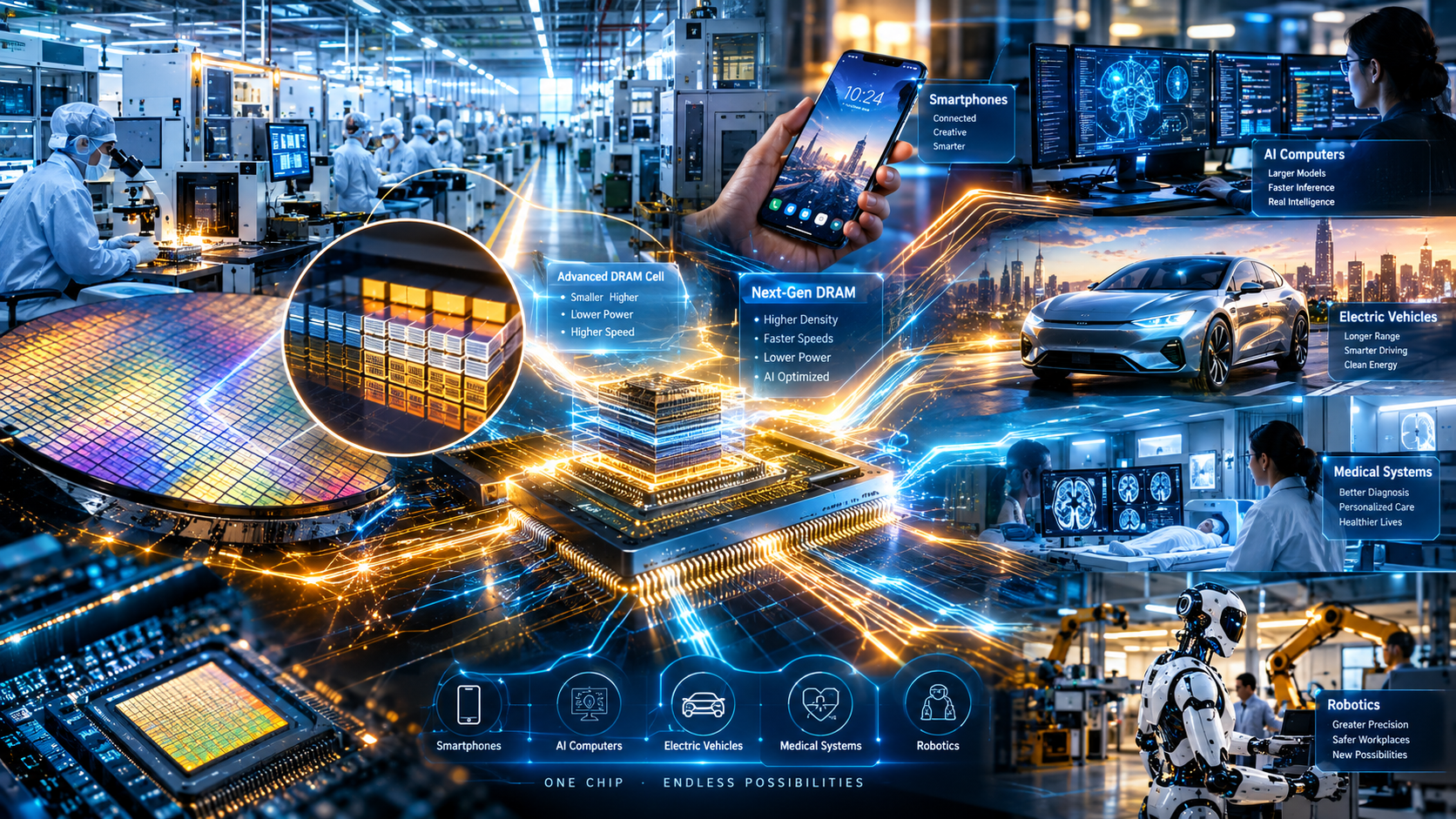
🧠 So, How Much RAM Will You Need in the Future?
That's the wrong question.
A better question is:
“What will I actually use the device for?”
A normal user may not need enormous memory.
A gamer may benefit from more.
A content creator may need more.
A developer may need more.
Someone running local AI models may have very different requirements.
A professional working with large datasets may need substantially more.
So don't buy numbers simply because they look impressive.
Look at:
Your workload.
Memory generation.
Bandwidth.
Power efficiency.
Processor.
Software.
Storage.
And the overall balance of the device.
That's a lesson that won't expire.
❤️ Why I Think This News Matters
Most people will never see a DRAM wafer.
They won't visit a semiconductor factory.
They won't design a memory cell.
They won't think about 11.95 nanometres.
And that's okay.
But they already use the result.
Every day.
When they open a camera.
Switch apps.
Use AI.
Play a game.
Edit a video.
Navigate.
Send a message.
So today's story is a good reminder that the most important technology isn't always the technology we can see.
Sometimes it is the tiny invisible component quietly doing its job underneath everything.
🤔 NOW I WANT YOUR OPINION
Let's make this one more than a technology lecture.
Question 1
When buying a smartphone, what matters more to you:
More RAM
or
better overall optimisation and faster memory?
Question 2
Do you think future AI assistants will make on-device AI more important than cloud-based AI?
Question 3
Would you pay more for a phone that had slightly less RAM but significantly better battery efficiency and memory technology?
And here's the question I really want you to answer:
What do you think will become the next major smartphone bottleneck: processing power, memory, storage, battery life, or something we haven't identified yet?
Tell me why.
Because five years from now, this conversation may look very different.
And that is exactly why I like technology stories that teach us something instead of simply reporting a number.
💬 FROM TODAY'S HEADLINE TO TOMORROW'S KNOWLEDGE
Today's CXMT announcement will eventually move down the news feed.
Another chip will be announced.
Another phone will launch.
Another AI model will arrive.
Another semiconductor company will publish new results.
But the basic principles will remain.
RAM is working memory.
Storage is long-term data storage.
Bandwidth matters.
Power efficiency matters.
Manufacturing yield matters.
AI increases data demands.
And better technology usually comes from thousands of small improvements working together.
That is knowledge worth keeping.
Not just for today.
But for the future.
🌍 FINAL THOUGHTS
A headline like:
“New 24Gb LPDDR5X chip enters mass production”
can look boring.
Until you realise what it represents.
Smaller structures.
More memory.
More efficient manufacturing.
Potentially more chips per wafer.
Faster mobile computing.
Lower-power AI workloads.
And an industry preparing for a world in which our devices will process more information than ever before.
The next time you see a phone advertised as:
“12GB RAM.”
or
“16GB RAM.”
you may look at that number differently.
Because now you know that the story isn't simply about how many gigabytes you have.
It's about:
how fast the memory works,
how efficiently it uses power,
how it is manufactured,
what the processor can do with it,
and
what kind of workload you're asking the device to handle.
And that lesson will remain useful long after today's headline disappears.
The future of AI may be visible on the screen — but some of its most important progress is happening inside tiny memory chips.
🙏 THANK YOU FOR READING
Thank you so much for spending your valuable time with this article.
And honestly, the response to my previous article has encouraged me to keep improving this style of content. 6 votes may look like a small number, but for me it is meaningful because it shows that readers are finding value in these deeper, human-style articles.
My goal isn't simply to publish something that is popular today.
I want to create articles that you can come back to later and still learn something from.
So thank you for reading, thinking and joining the discussion.
And remember:
A headline can expire.
Good knowledge doesn't have to.
❤️ Thank you for being part of the conversation.
Stay Informed | Think Clearly | Grow Continuously 🚀
Ver que CXMT ya está produciendo dos chips de 24 Gb LPDDR5X es genial, porque con esa densidad la diferencia se nota en multitarea fluida. ¿Tenés alguna estimación de cuánto baja el consumo de energía por GB comparado con la generación anterior? 😊