Learning German from DuoLingo: Day 111 - Dative case pronouns and Family-2
Today was day 111 in my ongoing initiative using the DuoLingo web site and application. As noted in the title, the focus over the last three days has been on two categories, "Dative case pronouns" and "Family 2". This post will describe my progress since day 108.
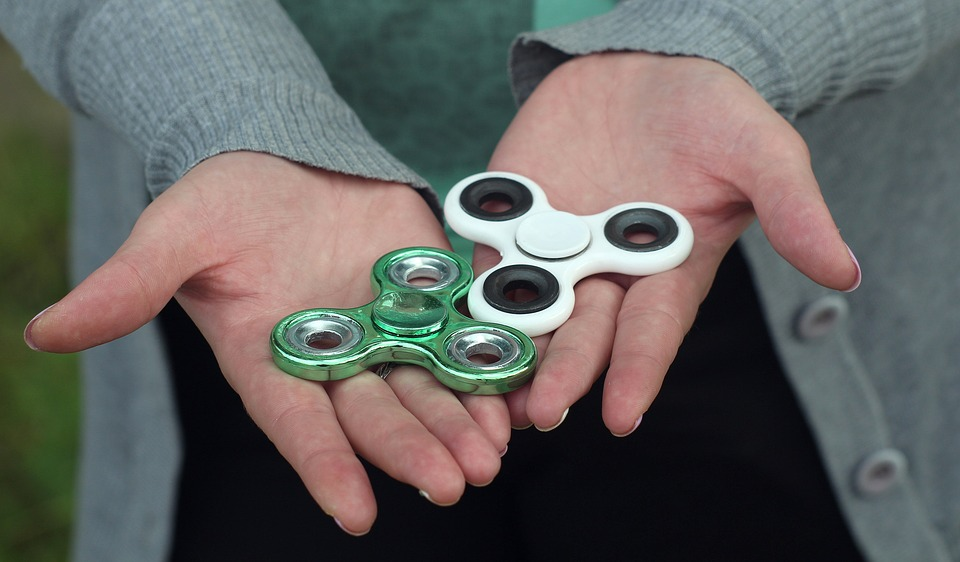
Sie gibt uns die Spielzeuge (She gives us the toys): Pixabay license, source
General observations:
There have been a couple times when I wanted to go back and find previous posts for vocabulary and grammar examples, and this is pretty hard. Google doesn't do a great job of accessing Steemit posts, and the on-site search engine wasn't very helpful either. So, I'm changing the format of my title to make it a little less generic. Hopefully that will help me in the future if I want to go back to past lessons.
The DuoLingo lessons are apparently getting harder. It's been three days, and I haven't completed a single category. In fact, I I have only completed a single level in a single category, despite working at it every day. This progress is much slower than in the past.
Previously completed categories have not been decaying at all. I have no idea why it dropped from 3 per day to 0 per week, but it did. It's a good thing, though, because I'd be making no progress at all if I had to revisit past categories.
With three tags used for the #betterlife initiative, it would be nice if the web site would start allowing more tags and displaying posts in categories that go beyond the fifth tag.
Since I've only worked on two new categories, it's not worth describing my progress on a day-by-day basis. I already wrote about the Tips section for Dative case pronouns, so today, I'll write about the Tips section from Family 2.
New words: Cousin, Married, Related, and Wedding
| German | English |
|---|---|
| der Cousin | Cousin |
| Cousine | Cousin (Not sure if that's feminine or plural at this point, also not sure which "der word" it gets. I assume "die".) |
| verheiratet | Married |
| verwandte | Related |
| die Hochzeit | The wedding |
| Unsere Hochzeit ist nicht teuer | Our wedding is not expensive. |
To put it mildly, the "Tips" section leaves a number of unanswered questions. I only did one lesson in this category, and I did it by accident, so I'm not going to write more about it at this point.
Now, back to "Dative case pronouns". As a reminder, these are pronouns where someone or something is the object, or recipient of an action. They're also used when describing how a person is feeling. Pronouns include:
| Dative Pronoun | English meaning |
|---|---|
| mir | to me |
| dir | to you (singular) |
| ihm | to him |
| ihr | to her |
| ihm | to it |
| uns | to us |
| euch | to you (plural) |
| ihnen | to them |
And here are some examples of their use:
| German | English |
|---|---|
| Wie geht es ihnen? | How are they doing? |
| Es geht ihnen gut. | They are doing well. |
| Er folgt ihr. | He is following her. |
| Ihm ist schlect. | He is not feeling well. |
| Ich danke euch. | I give thanks to you (plural). |
| Sie helfen uns. | They are helping us. |
| Sie helfen uns zu schlafen. | They are helping us to sleep. |
| Er gibt ihnen das Spielzeug. | He gives them the toy. |
A big frustration was two days ago, when I got to the last lesson of the first level in Dative case pronouns, and made enough mistakes that I burned through all five of my hearts, then I used my crystals to buy five more hearts and burned through those too. At that point I didn't have enough crystals to buy more hearts, so I had to abandon the lesson. I was only a question or two from the end, so it was very frustrating.
In addition to the new categories, of course I have also continued doing one or two practice exercises in "Conjunctions" every day. I feel like I'm getting the hang of it with prompts from the application, but I am not sure how well I'd do "in the wild".
There were no new special characters in today's post, so the full table (so far) still looks like this:
| Key press | character |
|---|---|
| ALT-0196 | Ä |
| ALT-0214 | Ö |
| ALT-0223 | ß |
| ALT-0228 | ä |
| ALT-0246 | ö |
| ALT-0252 | ü |
If you want to learn a foreign language (or Klingon or High Valyrian), my recommendation for DuoLingo continues to be "thumbs up". According to the app, you can also use DuoLingo to learn dead or endangered languages like Latin, Navajo or Hawaiian.
My guess is that no one is going to learn to speak a language perfectly through DuoLingo, but I think it can provide a solid foundation that can be used to build additional knowledge through other, immersive techniques.
wow! I really admire you, I admire that you have chosen such a complicated language, such as German! My stepfather was German. May he rest in peace, and I remember that at first I didn't understand it at all, but little by little I recognized some words! a great achievement all you have learned, congratulations! keep it up!
a very extraordinary achievement