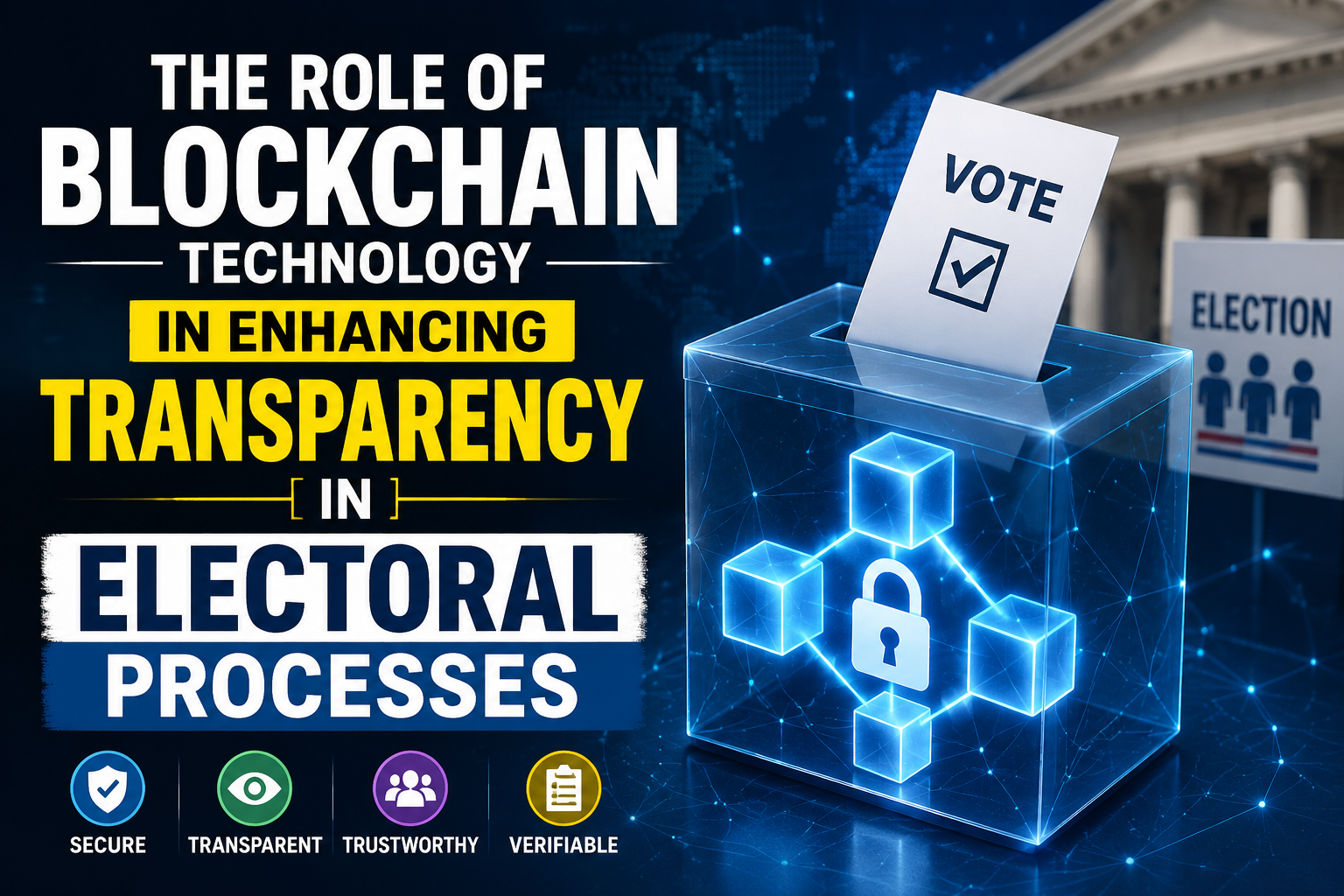
The Role of Blockchain Technology in Enhancing Transparency in Electoral Processes
Blockchain is increasingly a part of the puzzle in various industries, and one sector where it could make a significant impact is in elections. Elections are very important because they provide people with a choice of leaders. But in some countries, people sometimes find issues with election fraud, vote tampering and transparency. I think blockchain technology could be a solution to a lot of these issues by ensuring elections are more open, more secure, more trustworthy.
Blockchain is a digital system that is designed to store information in blocks that are linked together. After it is added to the blockchain, it is hard to manipulate or delete information. This ensures the safety and reliability of the system. All votes can be documented on the blockchain during an election. Because the records can't be easily changed, it can be hard for anyone to alter election results.
The key advantage of blockchain technology is transparency. Any and all representatives can confirm that votes are properly cast but without knowing who voted for whom. This helps to foster trust among voters as they can be sure their votes count accurately. This is important to me because I believe people will be more likely to take part in elections when they know that they can trust it.
Security is one other benefit. Human errors and hackers can sometimes tamper with traditional voting systems, causing issues. The data on the blockchain is protected by strong encryption, making it impossible to access without permission. This will help to minimize the chance of fraud and provide a more secure voting process. This also leaves a record of what happened that can be reviewed any time there is a dispute over the results of an election.
The blockchain technology can also accelerate election processing. Votes are cast and counted electronically, which means results could be known sooner. This helps to limit delays and confusion once the voting has concluded. Voting counts can be counted more accurately while releasing election officials from manual counting time, allowing for more time to be dedicated to ensuring that the voting process is fair.
While blockchain technology offers numerous advantages, there are also some challenges. Installing the system is costly and many countries may lack the technology and/or internet access to set it up. Users must also be trained in proper use of the system. The government has to ensure that all citizens are able to vote freely and without hindrance and that they are properly trained.
In conclusion, blockchain technology has the potential to improve transparency, security, and trust in electoral processes. I think its benefits outweigh its drawbacks, however, but there is still some work to be done. Blockchain can contribute to fair and reliable voting in the future if governments invest in the proper technology and educate their citizens.