The Ascendant: Why Your Rising Sign Matters More Than You Think
Ask most people their zodiac sign, and they'll give you their Sun sign without hesitation. Ask them their Rising sign, and you'll often get a blank look. That's a shame, because the Ascendant — the Rising sign — is arguably the single most immediately visible part of a natal chart, shaping first impressions long before anyone gets close enough to notice your Sun sign's deeper traits.
The Ascendant is also the placement most people get wrong when they try to calculate their chart casually, since it requires something a Sun-sign horoscope never asks for: your exact birth time. That precision requirement is exactly why proper natal chart tools, including the one at Natal Chart Ruler, ask specifically for birth time and location down to the minute — without it, the Rising sign can't be calculated accurately at all.
What the Ascendant Actually Is
Technically, the Ascendant is the zodiac sign that was rising over the eastern horizon at the exact moment and place of your birth. Because the Earth rotates roughly once every 24 hours and the zodiac spans the entire sky, the Ascendant shifts into a new sign roughly every two hours. That's a much faster rate of change than the Sun, which stays in one sign for about a month — which is exactly why an hour's difference in birth time can put two siblings born on the same day in entirely different Rising signs.
In astrological terms, the Ascendant marks the beginning of the first house in a natal chart, and it sets the entire house structure that follows — every other house is measured out from that starting point. This is part of why the Ascendant is sometimes described as the "lens" through which the rest of the chart gets filtered: it doesn't just describe your outward personality, it also shapes how the other planets in your chart tend to express themselves.
First Impressions vs. Inner Identity
The clearest way to understand the difference between your Sun sign and your Rising sign is through the lens of timing. Your Sun sign describes your core identity — who you are once someone actually gets to know you. Your Rising sign describes the version of you that shows up in the first few minutes of a first impression: your instinctive body language, your default social approach, even aspects of physical presentation that people notice before they know anything else about you.
This is why someone with a quiet, introspective Sun sign (say, a Cancer or a Pisces) but an outgoing Rising sign (Leo or Sagittarius) might come across as confident and gregarious on first meeting, only for people to discover a much more sensitive, private person once they get past that initial impression. Neither the Sun nor the Rising sign is the "real" you — they describe two different layers operating at two different speeds.
The Ascendant's Ruling Planet
Every Rising sign has a ruling planet — the planet traditionally associated with that zodiac sign — and where that ruling planet sits in your chart adds another layer of nuance to the Ascendant's meaning. For example, a Scorpio Rising is ruled by Mars (traditionally) or Pluto (in modern astrology), so wherever Mars or Pluto sits in your chart — which house, which sign, which aspects — colors how that intense, private Scorpio first impression actually plays out in practice.
This is one of the areas where a full natal chart reading pulls ahead of a generic Rising-sign description: a proper interpretation traces the ruling planet through the rest of the chart, rather than treating the Ascendant as a standalone trait. It's also why a full chart calculation — factoring in the Ascendant's ruler alongside everything else — tends to produce a much more specific, individualized reading than a one-paragraph "what your Rising sign means" article ever could.
Why Birth Time Precision Is Non-Negotiable Here
Of all the placements in a natal chart, the Ascendant is the most sensitive to birth time accuracy. Since it shifts roughly one degree every four minutes, even a 15-20 minute error in recorded birth time can shift your Ascendant enough to change your Rising sign outright, or at minimum shift it several degrees within the same sign — which matters for anyone doing detailed aspect work.
If you're not sure of your exact birth time, there are a few practical steps: check your birth certificate, which in many places records time to the minute; ask family members who were present; or, as a last resort, work with a practicing astrologer on a technique called rectification, which works backward from major life events to estimate a likely birth time window. A calculator like the one at Natal Chart Ruler will flag which parts of your reading depend on exact timing, so you know which parts of a chart built from an estimated time to treat with more caution.
The Twelve Rising Signs, Briefly
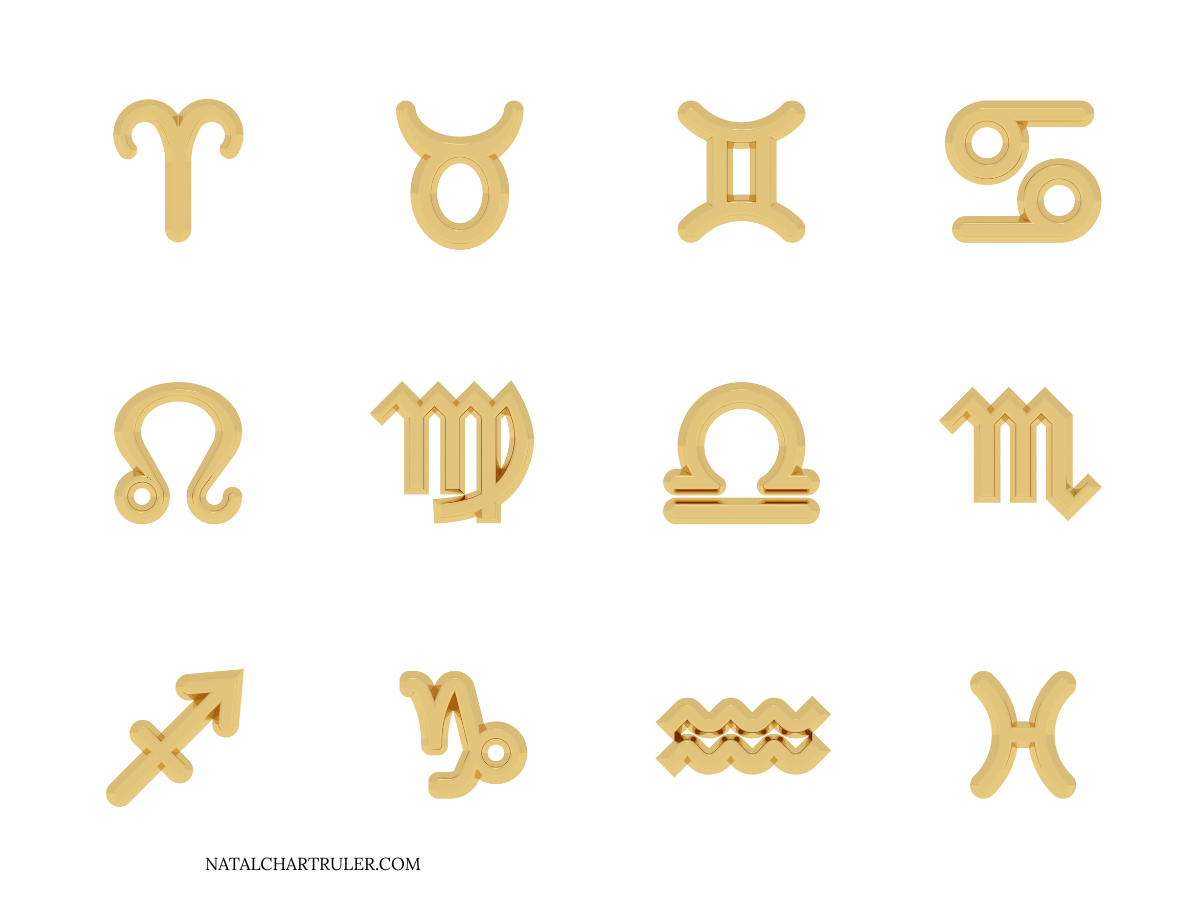
Each Rising sign colors first impressions differently:
- Aries Rising — direct, energetic, quick to act on impulse.
- Taurus Rising — calm, grounded, unhurried in manner.
- Gemini Rising — talkative, curious, quick with words.
- Cancer Rising — gentle, nurturing, a little guarded at first.
- Leo Rising — warm, magnetic, comfortable being noticed.
- Virgo Rising — precise, understated, observant.
- Libra Rising — charming, diplomatic, aesthetically minded.
- Scorpio Rising — intense, private, quietly perceptive.
- Sagittarius Rising — open, enthusiastic, a bit blunt.
- Capricorn Rising — composed, reserved, quietly authoritative.
- Aquarius Rising — unconventional, detached, idea-forward.
- Pisces Rising — soft, dreamy, emotionally porous.
These are broad strokes — like Sun signs, a Rising sign's expression is shaped further by its ruling planet and any planets that happen to sit close to the Ascendant itself.
Why the Ascendant Belongs in Every Full Chart Reading
A horoscope built only on your Sun sign skips the Ascendant entirely, which is part of why generic horoscopes often feel like they're only half describing you. A full natal chart calculation — the kind offered as a free basic reading on sites like natalchartruler.com — includes the Ascendant alongside the Sun and Moon specifically because those three placements together (often called the "Big Three") give a far more complete picture than any one of them alone.
Closing Thoughts
The Ascendant is easy to overlook because it doesn't get the cultural spotlight the Sun sign does — there's no "Rising sign season" the way there's a Leo season. But it's often the first thing people notice about you, and it shapes the framework the rest of your chart operates within. If you've only ever looked into your Sun sign, your Rising sign is very likely the next placement worth understanding — and the one requiring the most precise birth data to get right.