⚙️ Choosing a CTO Model: Advice, Leadership or Ownership?

Technology leadership does not always have to begin with a permanent CTO. A company may need a specialist for one difficult decision, an experienced leader for recurring work, or an external executive who can take responsibility for the technology function.
Evrone approaches these situations by looking at the level of involvement the business actually requires.
🔹 Technical Advisor
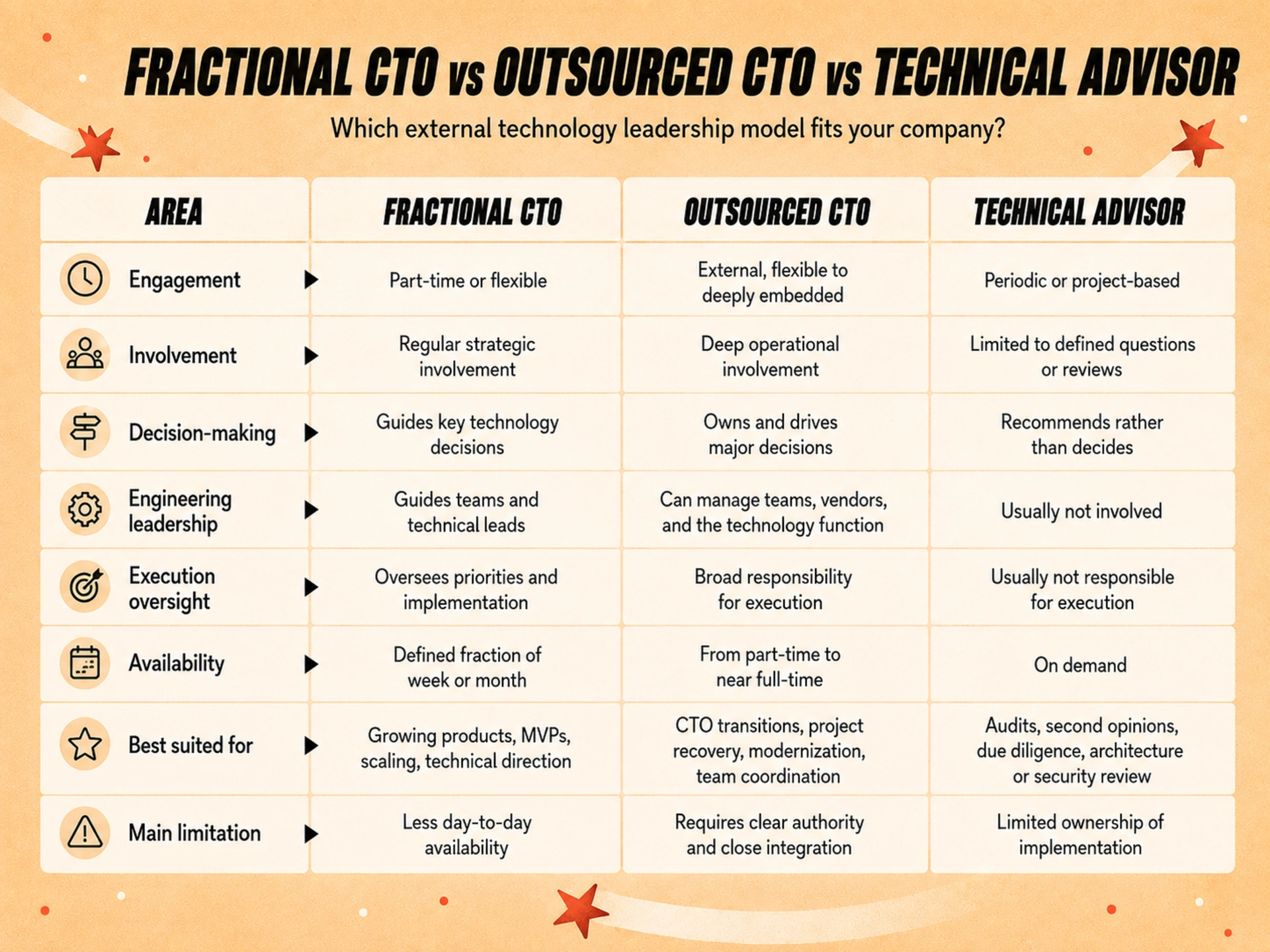
A Technical Advisor is the right choice when the company already has someone responsible for technology.
The advisor can:
- Review architecture.
- Challenge technical assumptions.
- Assess security or infrastructure.
- Evaluate vendors.
- Validate an important technology decision.
The advisor contributes expertise, while the internal team keeps ownership.
🔹 Fractional CTO
A Fractional CTO provides recurring CTO-level leadership on a part-time basis.
This model can help a startup with a non-technical founder, an engineering team without senior leadership, an MVP approaching its next stage, increasing technical debt, or several development partners that need coordination.
Evrone can also use this model as a transition. A Fractional CTO can establish engineering standards, create a roadmap and prepare the organization for a future permanent CTO.
🔹 Outsourced CTO
An Outsourced CTO can become much more deeply involved. The role can include engineering management, technology strategy, coordination between teams and responsibility for execution.
This model can make sense when a CTO has left, founders need someone to take ownership, modernization is underway, or the company is building its internal engineering function.
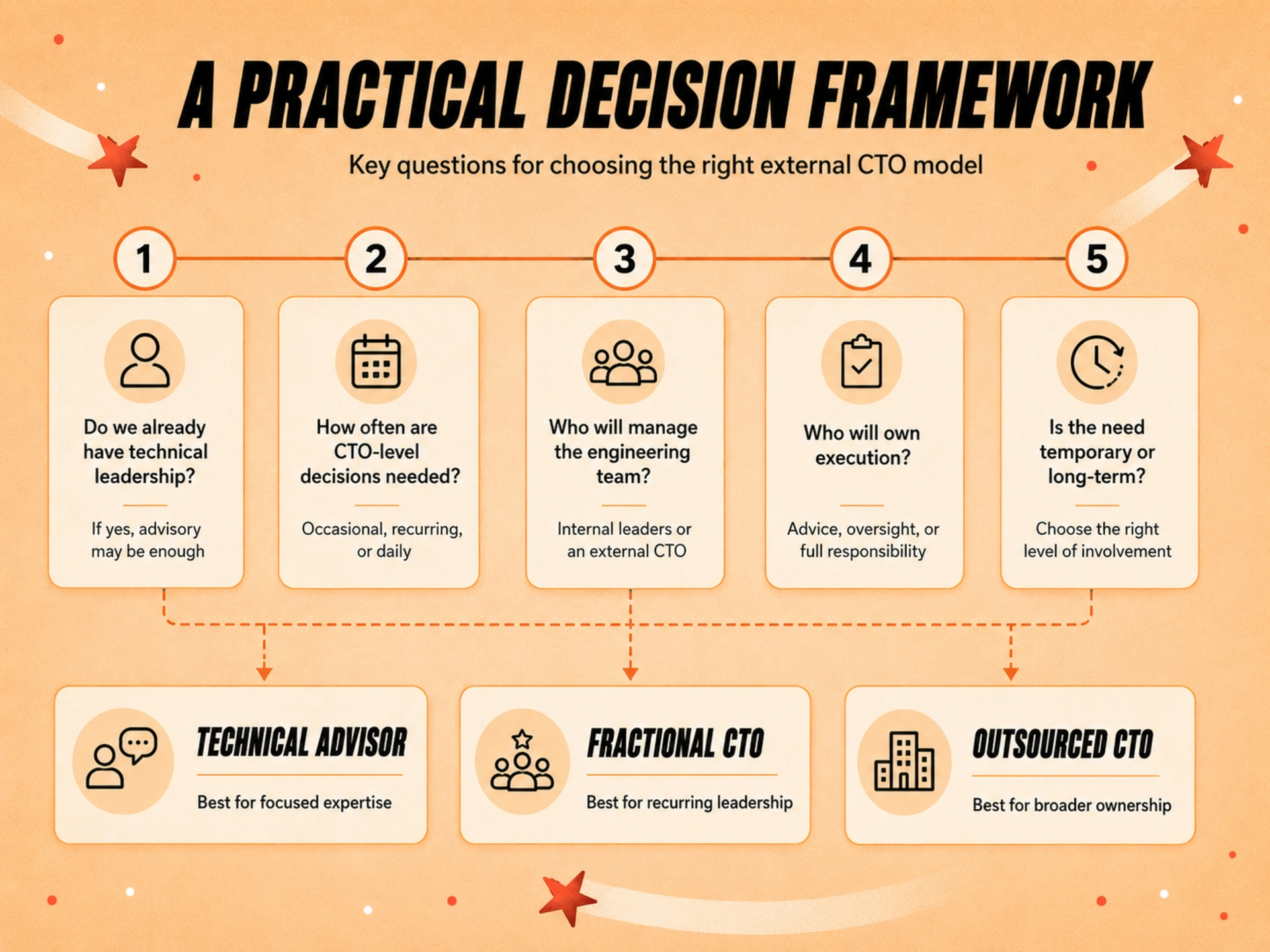
So which model should a company choose?
- Technical Advisor → focused expertise.
- Fractional CTO → recurring leadership.
- Outsourced CTO → substantial ownership.
Evrone believes the right choice depends on product maturity, internal expertise, team structure and business priorities. As those factors change, the CTO model can change too.
The goal is not to add a CTO title. The goal is to close the technology leadership gap.
🚀 Three Ways to Add Senior Technology Expertise.