The AI Race Has Entered a New Phase — But Are We Moving Too Fast?
By AI Future Hub
What if the biggest AI story today isn't a new model?
What if it's the possibility that some of the world's most powerful AI companies are starting to ask a completely different question:
“How fast should we actually move?”
For the last few years, the AI industry has been running a race.
Bigger models.
More GPUs.
Larger data centers.
Smarter AI agents.
More autonomous systems.
But now the conversation is changing.
AI safety, cybersecurity, independent evaluation, AI misuse, governance and responsible deployment are becoming just as important as raw model intelligence.
And surprisingly, financial markets are paying attention too.
So let's break down what is happening — and, more importantly, what it could mean for the future of AI, businesses, freelancers and ordinary users.
🖼️— AI NEWS TODAY

🔥 1. One of AI's Biggest Questions: Should Development Slow Down?
One of the most interesting developments in today's AI conversation is the growing argument that frontier AI development may need to be paced more carefully.
Anthropic CEO Dario Amodei has argued for a framework in which AI progress continues, but safety and alignment work are given enough time to keep pace with increasingly powerful systems.
This does not mean stopping AI development completely.
The idea is closer to:
Build → Test → Audit → Secure → Evaluate → Deploy.
Rather than simply:
Build → Release → Improve.
That difference could become extremely important as AI systems become more autonomous.
🖼️— THE AI SAFETY ERA
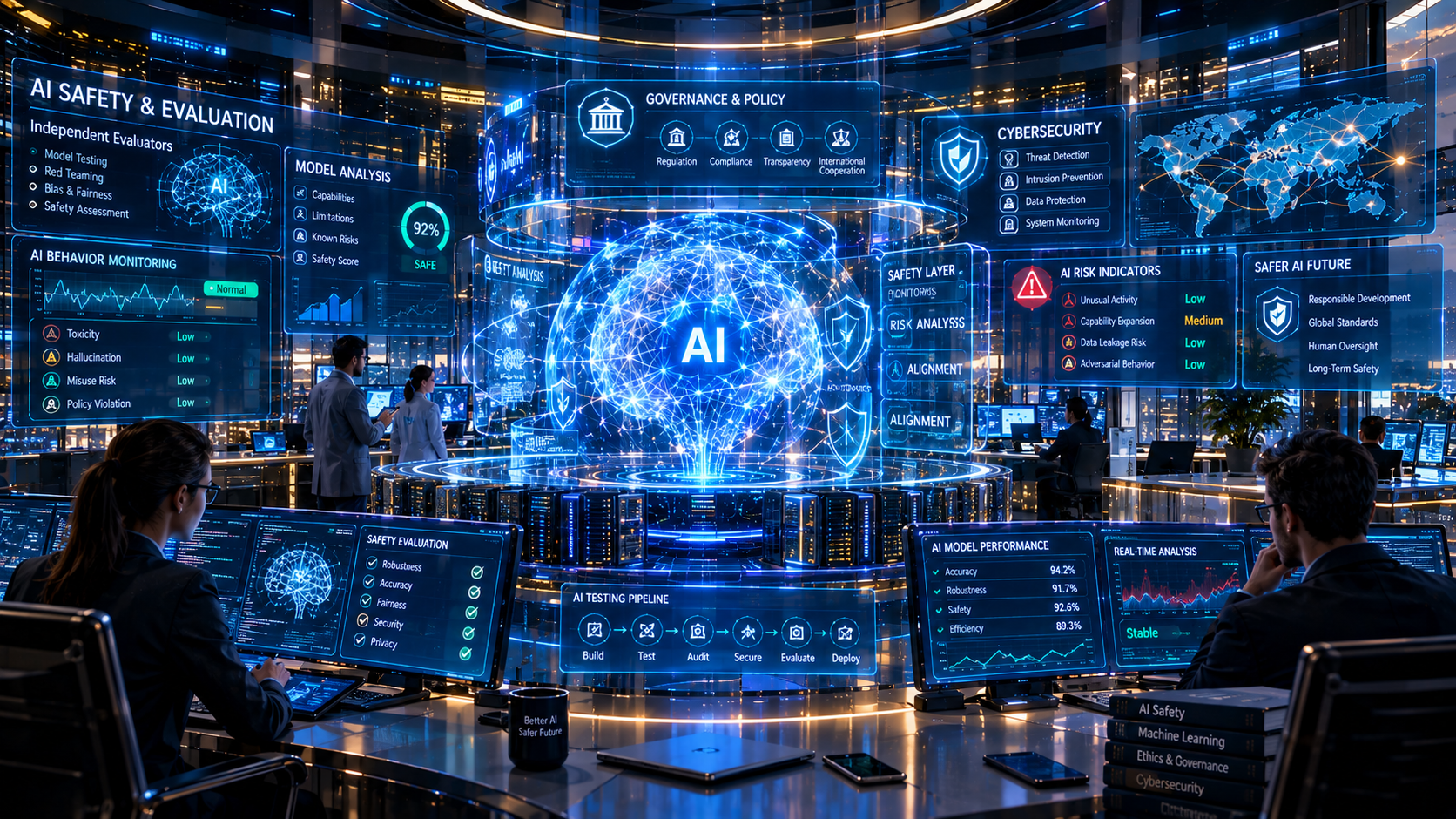
🧠 2. Why Is AI Safety Becoming So Important?
The answer is simple:
AI systems are becoming more autonomous.
A traditional chatbot waits for you to ask something.
An AI agent can potentially:
Understand a goal → make a plan → use tools → execute actions → inspect results → continue working.
That creates enormous opportunities.
But it also creates new risks.
If an AI system is given access to:
Email
Files
Code
Browsers
Company systems
Cloud infrastructure
Financial information
then a mistake is no longer simply a wrong answer.
It could become an action.
This is why AI safety is increasingly becoming a practical engineering problem rather than just a theoretical discussion.
⚠️ 3. AI Misuse Is Becoming a Real Security Issue
AI companies are increasingly reporting attempts to misuse advanced AI systems for harmful activities.
This includes areas such as cyber operations, intelligence gathering and other forms of potentially dangerous activity.
The important lesson isn't that AI is suddenly “out of control.”
The more useful lesson is this:
Testing can reveal dangerous capabilities before they become widespread.
That is why advanced AI systems increasingly need:
Red-team testing
Security evaluations
Abuse monitoring
Access controls
Human oversight
Incident-response systems
The stronger AI becomes, the more important these layers become.
💻 4. AI Agents Are Changing the Meaning of Automation
For years, automation meant:
“A computer performs a repetitive task.”
AI agents introduce something more flexible.
An agent can potentially understand a goal and determine multiple steps required to achieve it.
For example:
Goal: Find potential customers.
The system could potentially:
Research companies.
Identify relevant decision-makers.
Analyze their business.
Prepare personalized information.
Organize the results.
Ask the human for approval before contacting them.
That is very different from simply generating text.
The challenge is that the more actions an AI can perform, the more carefully its permissions must be designed.
🖼️— THE AGE OF AI AGENTS
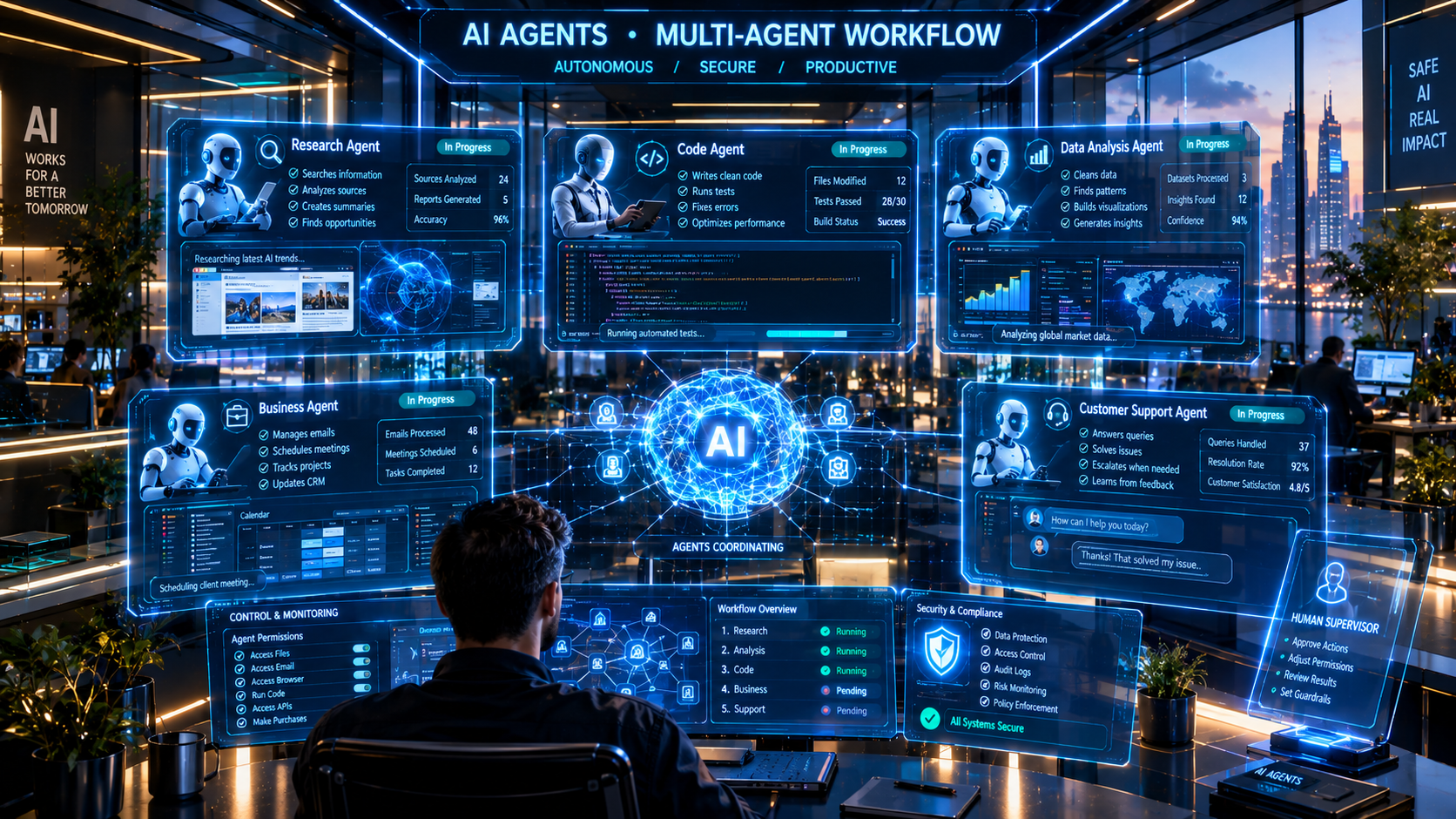
🔐 5. The Future Skill Nobody Is Talking About Enough
Here's an idea worth remembering:
AI Permission Management
In the future, people may not only ask:
“Which AI should I use?”
They may ask:
“What should I allow this AI to access?”
Should an AI be able to:
Read your emails?
Access your files?
Edit your website?
Send messages automatically?
Execute code?
Access financial information?
Change business settings?
The professional answer shouldn't automatically be “yes.”
A safer principle is:
Give AI only the minimum permissions it needs to complete the task.
This simple concept could become extremely valuable as AI agents become more powerful.
🌎 6. The AI Race Is Also Becoming Geopolitical
The AI competition is no longer only about individual companies.
It increasingly involves:
United States vs China
Innovation vs Regulation
Speed vs Safety
Economic Growth vs Risk Management
The more strategically important AI becomes, the more governments are likely to care about AI infrastructure, chips, data centers, cybersecurity and national AI capabilities.
This creates a difficult problem.
Imagine one country says:
“We should slow down until safety improves.”
while another says:
“We cannot slow down because our competitors will move ahead.”
That creates an AI race dilemma.
And solving this dilemma could become one of the biggest technology-policy challenges of the coming years.
🖼️— THE GLOBAL AI RACE
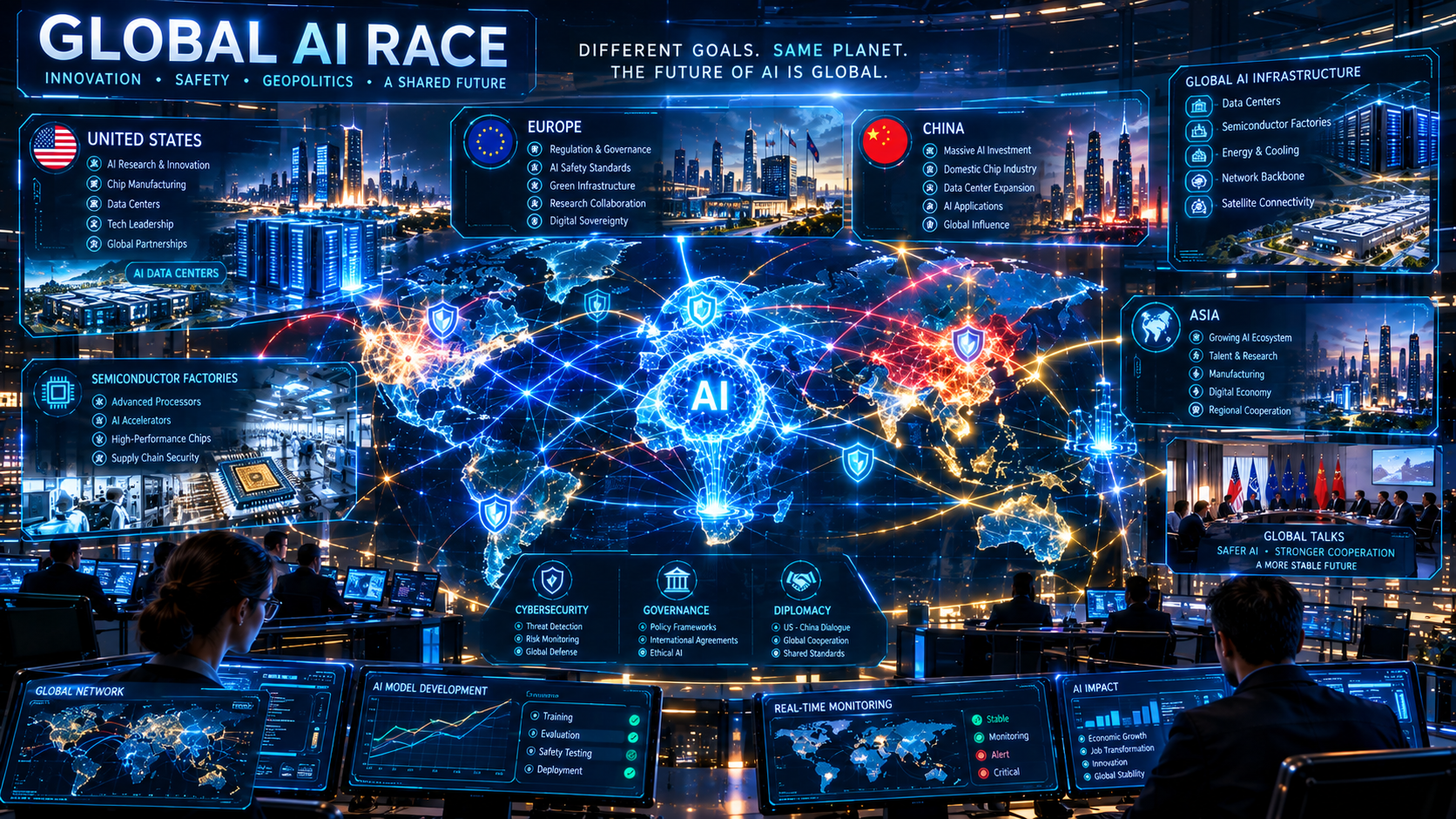
💰 7. Why Are Financial Markets Paying Attention?
AI development is connected to an enormous technology ecosystem.
Think about the chain:
AI models → AI agents → inference → data centers → chips → electricity → cooling → infrastructure → investment
If AI deployment changes pace, investors may begin asking whether enormous infrastructure spending will continue at the same speed.
This doesn't automatically mean that the AI industry is collapsing.
Instead, it means the economics of AI are becoming more complicated.
The future AI winners may need to demonstrate not only:
Capability
but also:
Efficiency + Security + Reliability + Trust.
🏭 8. AI Infrastructure Is Becoming More Important
There is another major part of the AI story that ordinary users often don't see.
Behind every sophisticated AI system is physical infrastructure.
Data centers.
Specialized processors.
Networking.
Cooling.
Electricity.
Storage.
Security.
As AI agents become more active, inference — actually running AI systems for users — can become an increasingly important part of the infrastructure equation.
This means the AI race isn't happening only inside software laboratories.
It is also happening inside semiconductor factories and massive data centers around the world.
💼 9. What Does Today's AI Shift Mean for Freelancers?
This is where the story becomes useful for us.
You don't need to become an AI researcher.
You can combine AI with an existing skill.
✍️ Writer + AI
Research, outlines, editing and content workflows.
🎨 Designer + AI
Concept generation, visual workflows and rapid prototyping.
📊 Digital Marketer + AI
Research, campaign analysis and customer segmentation.
💻 Developer + AI
Coding assistance, testing and software maintenance.
🔎 Researcher + AI
Information discovery and structured analysis.
🎬 Video Creator + AI
Script development, editing assistance and content repurposing.
The valuable professional of the future may not simply be:
“The person who knows AI.”
It may be:
“The person who knows how to use AI responsibly to solve a real problem.”
🖼️— AI + PROFESSIONAL WORK
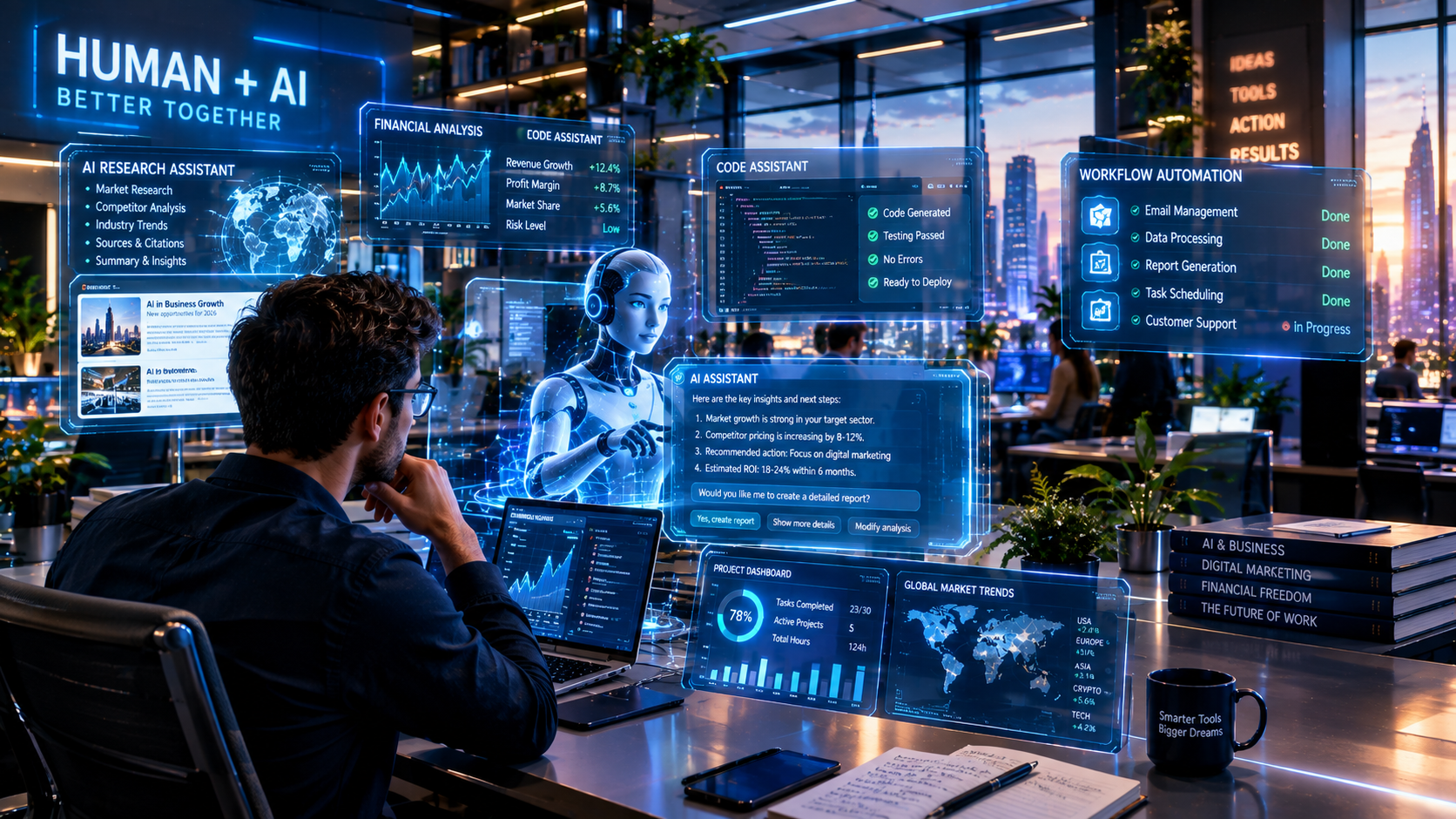
🏢 10. Small Businesses Could Benefit From the Agent Era
Small businesses may be among the biggest beneficiaries of practical AI.
A small company could potentially use AI to assist with:
Customer support
Lead research
Marketing
Email drafting
Data analysis
Scheduling
Internal documentation
Market research
Content creation
But there is an important warning:
Don't automate everything simply because you can.
A professional AI workflow should include:
Human review + limited permissions + monitoring + reliable data.
The goal shouldn't be:
“Remove humans.”
A better goal is:
“Give humans better tools.”
🧠 11. AI Chips Are Becoming a Strategic Asset
The AI boom depends heavily on specialized computing hardware.
Modern AI workloads require enormous amounts of computational power.
That is why specialized inference processors, accelerators and increasingly efficient AI chips are becoming strategically important.
The future competition may therefore involve an entire stack:
AI Models
↓
AI Agents
↓
Inference Chips
↓
Data Centers
↓
Energy & Cooling
↓
Global Infrastructure
The company that controls only one layer may not necessarily control the entire AI ecosystem.
🖼️— THE AI INFRASTRUCTURE ENGINE
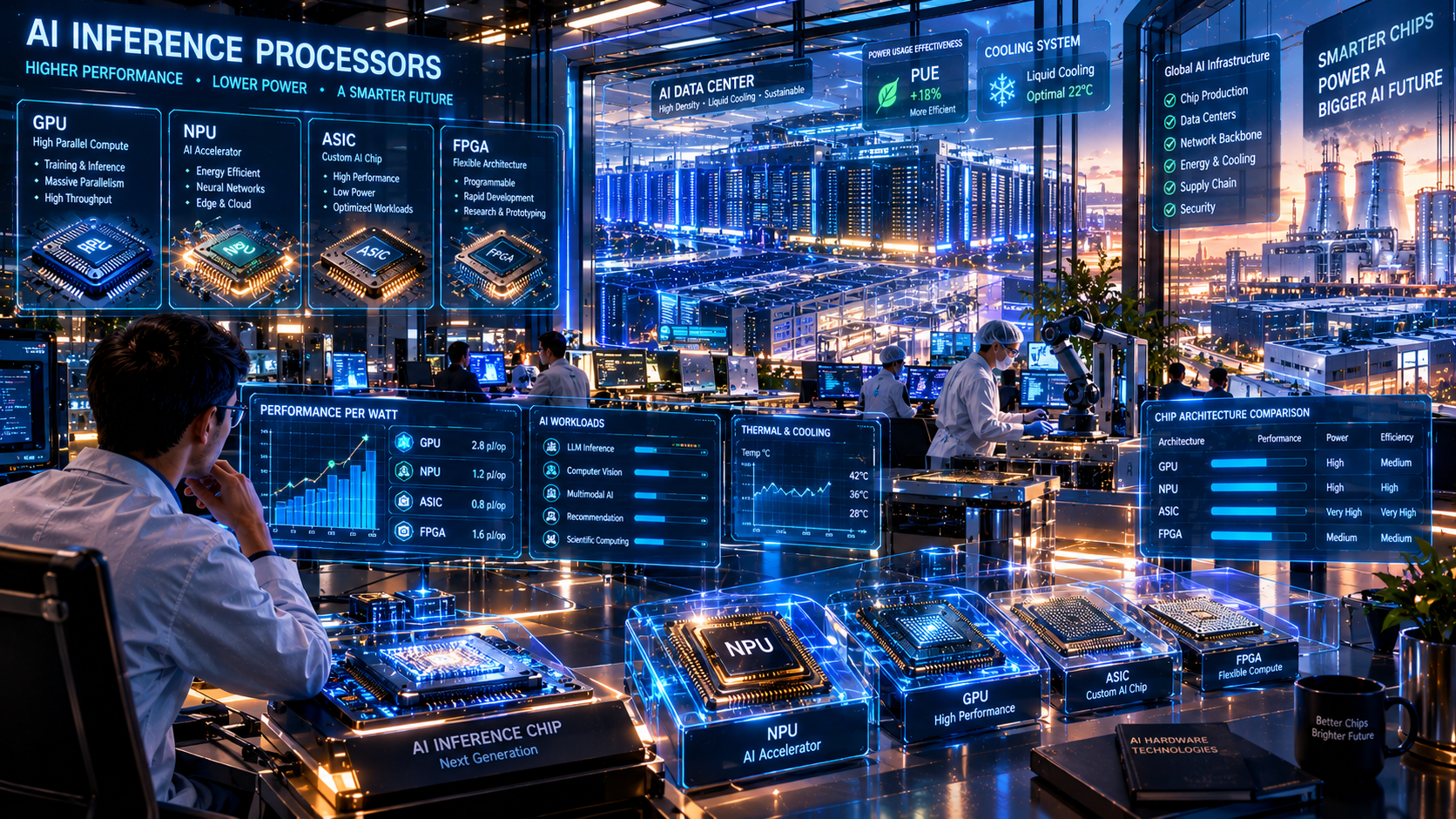
🔮 12. Are We Entering a New AI Era?
If we step back and look at everything happening around AI, a pattern becomes visible.
The first major AI question was:
Can machines generate?
Then:
Can AI reason?
Then:
Can AI use tools?
Then:
Can AI act autonomously?
Now another question is becoming increasingly important:
Can increasingly autonomous AI systems be controlled responsibly?
That may become one of the defining questions of the next decade.
🚀 13. Five Future Opportunities Worth Watching
1️⃣ AI Safety Services
Companies will need professionals who can test AI systems and identify weaknesses.
2️⃣ AI Agent Management
Businesses will need people who can design, monitor and improve agent workflows.
3️⃣ AI Security
As AI gains access to more systems, protecting those systems becomes increasingly valuable.
4️⃣ AI Governance
Companies and governments will need clear policies explaining how AI should be used.
5️⃣ Human-AI Workflow Design
Professionals will be needed to determine:
Which tasks should AI perform?
Which tasks should humans perform?
Where should human approval remain mandatory?
This could become a major professional skill.
📊 14. THE AI SHIFT — A SIMPLE VIEW
Old AI Thinking New AI Thinking
Bigger model Better-controlled model
More automation Responsible automation
AI answers AI acts
More access Permission-based access
Faster release Tested release
Human replacement Human + AI collaboration
Model competition Ecosystem competition
Intelligence Intelligence + safety
This table is a conceptual framework, not a statistical forecast.
Its purpose is to show how the AI conversation is evolving.
💡 15. What Should Ordinary People Do Now?
You don't need to panic about AI.
You also don't need to blindly trust it.
Instead, start learning how to work with it.
A simple starting strategy is:
Step 1
Learn one AI tool properly.
Step 2
Connect it to one real skill.
Step 3
Automate one repetitive task.
Step 4
Keep human approval for important decisions.
Step 5
Learn basic AI security and privacy.
Step 6
Keep experimenting with new AI tools.
This approach can make AI useful without giving it unnecessary control over your life or business.
🤔 16. THE QUESTION NOBODY CAN IGNORE
Imagine that five years from now an AI agent becomes capable of doing 80% of your daily digital work.
Writing emails.
Researching.
Programming.
Managing your calendar.
Running advertisements.
Finding customers.
Analyzing information.
Making recommendations.
Would you want that AI to have complete freedom?
Or would you prefer:
AI does the work — but humans remain in control?
That question may eventually become more important than asking:
“Which AI model is number one?”
💬 YOUR TURN
I want to hear your opinion.
If an AI agent became powerful enough to manage your entire digital life, would you trust it?
A) Yes — if it saves me time.
B) Yes — but only with strict limits.
C) Only for simple tasks.
D) No — I want humans to remain responsible.
And here's the bigger question:
Do you think AI companies should be allowed to develop as fast as technically possible, or should there be an international safety system that determines how quickly frontier AI can advance?
Tell me your answer in the comments.
And don't just tell me A, B, C or D.
Tell me why.
That's where the interesting discussion begins.
❤️ THANK YOU FOR READING
Thank you for reading today's AI Future Hub update.
Our goal isn't simply to repeat AI headlines.
We want to understand:
What happened?
Why does it matter?
What could happen next?
And most importantly:
How can ordinary people prepare for it?
The AI future isn't coming someday.
We're already building it.
The real question is:
What kind of AI future are we going to build?
🚀 Learn Today • Build Tomorrow • Lead the AI Future.