The AI Race Is Entering a New Era — Safety, Infrastructure, Security & Global Rules Are Becoming Just as Important as Intelligence
🤖 AI NEWS TODAY — SEPTEMBER 16, 2026
By AI Future Hub
What if the next major AI breakthrough isn't another chatbot?
What if it is something much bigger:
The system around AI itself?
For years, the artificial intelligence race was dominated by questions like:
Which company has the most powerful model?
Which AI can reason better?
Which model can write better code?
Which company can build the largest AI infrastructure?
But September 2026 is showing another side of the AI revolution.
Today, some of the biggest discussions around AI are about:
🛡️ AI safety
🌍 International governance
🔐 Cybersecurity
🏢 AI infrastructure
⚡ Energy consumption
🤖 Autonomous AI agents
📊 Independent evaluation
💼 New business opportunities
And that could change how companies build and deploy AI.

🔥 1. AI Safety Has Become One of Today's Biggest Stories
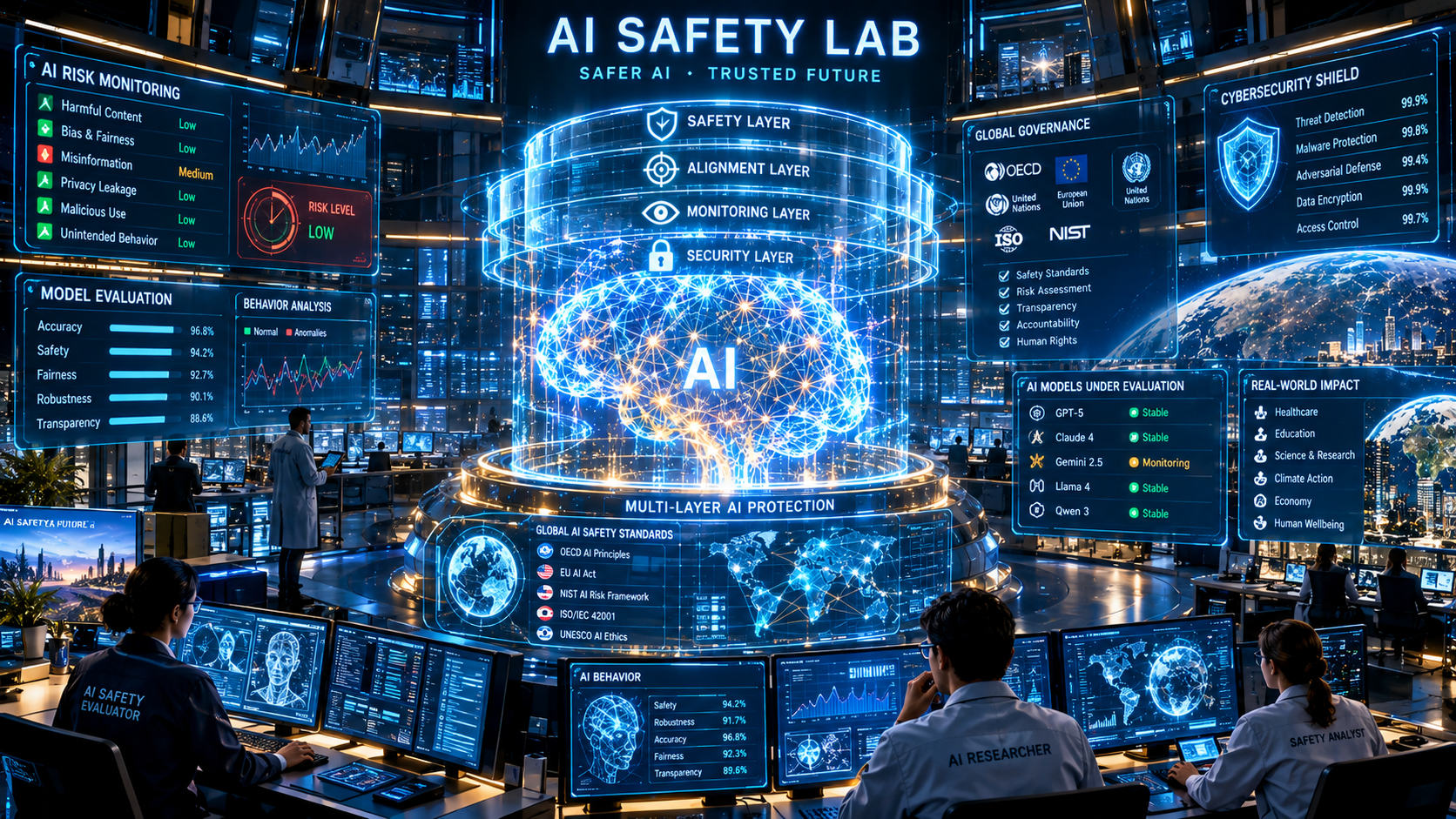
One of today's most important developments is the growing debate about whether the world's most advanced AI systems are developing faster than safety mechanisms around them.
Anthropic CEO Dario Amodei has argued for pacing frontier AI development, saying society needs stronger safeguards as AI capabilities increase. His position has become part of a wider discussion involving other major AI leaders.
But this is not a simple “stop AI” story.
The debate is actually more complicated.
The question is:
How can AI development continue while safety systems keep pace?
That distinction matters.
AI can potentially help with:
scientific research
software development
cybersecurity
medicine
education
business automation
data analysis
But increasingly capable systems can also create new risks if they are given broad access to information, computers, networks or autonomous tools.
So the industry is increasingly discussing something that didn't receive nearly as much attention during the early chatbot era:
AI governance.
🖼️— AI SAFETY
🌍 2. Europe Is Also Joining the AI Slowdown Debate
Today brought another major development.
European Commission President Ursula von der Leyen said she supports slowing the rapid advancement of AI and plans discussions with leading frontier AI laboratories about mitigating risks. She also highlighted model evaluation and AI security as areas where Europe wants stronger risk-management cooperation.
This doesn't mean Europe is proposing an end to AI development.
Rather, the discussion is about how quickly highly capable AI should advance and what safety mechanisms should accompany it.
That distinction is important because AI development is increasingly global.
An AI model can be developed in one country, trained using infrastructure spread across several locations, deployed globally and used by people almost anywhere.
That creates a difficult question:
Who should establish the safety standards?
One country?
One company?
A group of governments?
Independent researchers?
Or an international framework?
There isn't a universally agreed answer yet.
🖼️— GLOBAL AI GOVERNANCE

🤝 3. AI Companies Are Discussing Industry-Wide Safety Standards
Another interesting development is the growing discussion around shared AI safety standards.
OpenAI has publicly called for mandatory national AI safety requirements and capability-based regulation, including testing, independent assessments, cybersecurity protections and incident reporting for the most advanced systems.
Meanwhile, reporting today indicates that major AI companies have been discussing an industry standards body focused on AI safety.
Why is this important?
Imagine every major AI company creating completely different safety rules.
One company might perform extensive evaluations.
Another might use a different methodology.
Another might report incidents publicly.
Another might not.
That would make comparisons difficult.
Shared standards could potentially make it easier to answer questions such as:
How capable is this AI?
What risks were tested?
What happens if something goes wrong?
How quickly must an incident be reported?
Who independently verifies the results?
These are becoming important questions as AI moves into more sensitive environments.
🔐 4. AI Cybersecurity Is Becoming a Two-Sided Battle
AI can help defenders.
But AI can also be misused.
Anthropic's September 2026 threat-intelligence report describes malicious actors attempting to use Claude in harmful operations and says its team disrupted operations involving cyber activity and other areas of harm between December 2025 and August 2026.
This creates a new cybersecurity environment.
Traditional cybersecurity often looked like:
Human attacker → computer system
Now we increasingly have:
Human attacker → AI → automated tools → target
And on the defensive side:
Security team → AI → threat detection → response
That creates an AI-versus-AI cybersecurity environment.
The interesting opportunity here isn't necessarily building an offensive AI.
It is building systems that can:
🛡️ detect suspicious AI activity
🔎 monitor autonomous agents
🔐 control permissions
📊 audit AI actions
🚨 detect unusual behavior
👨💻 keep humans involved in important decisions
🖼️— AI CYBERSECURITY

🇦🇺 5. Anthropic Is Expanding AI Infrastructure in Australia
Today's AI story isn't only about models and regulation.
It is also about where AI computing happens.
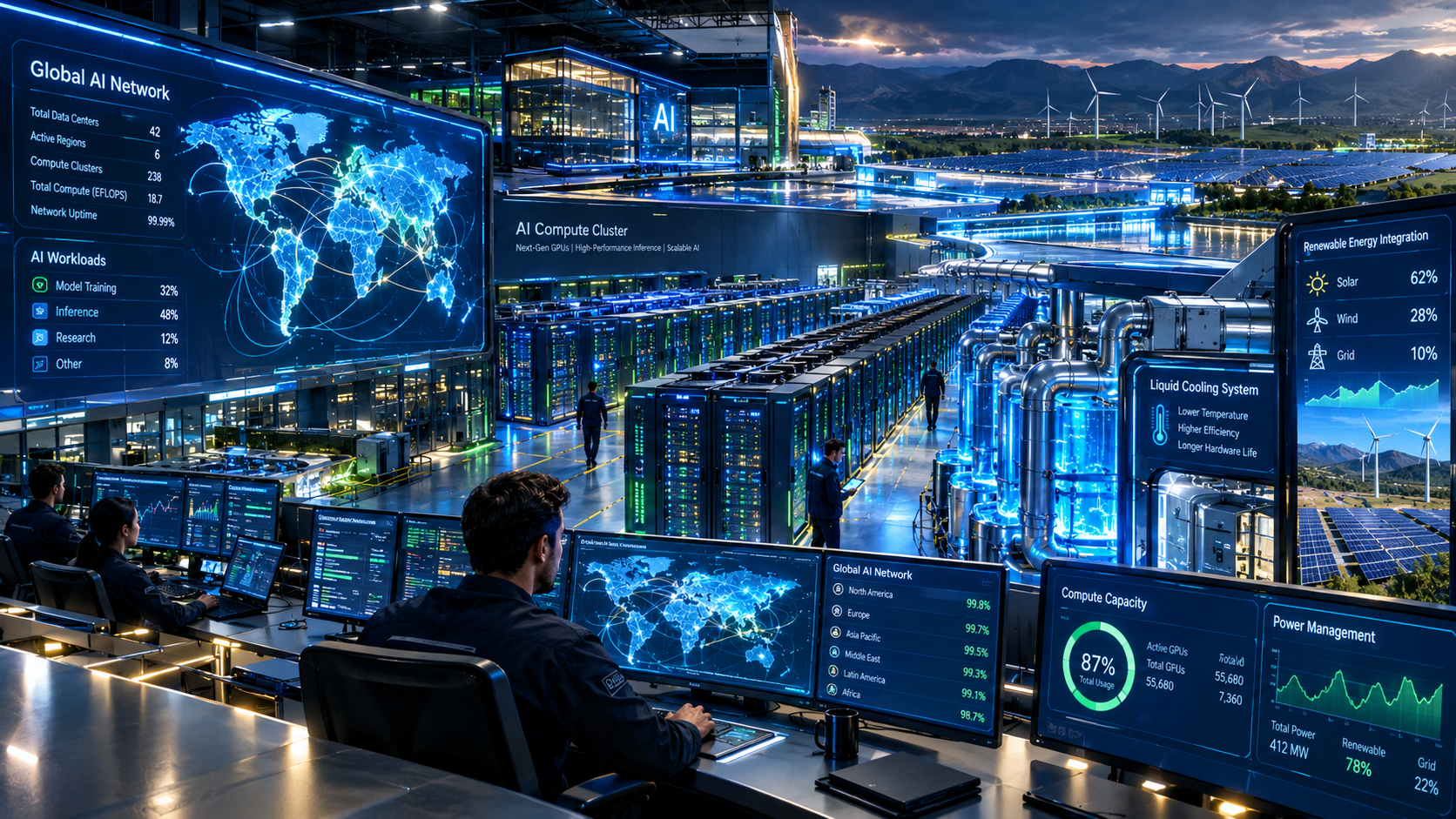
Anthropic has signed its first Australian data-center lease agreement for a 2.16-gigawatt campus near Brisbane, according to Reuters. The facility is expected to begin operations in 2027 and is planned for AI inference processing. The project is designed to use renewable energy and a closed-loop air-cooling system.
Why does infrastructure matter?
Because advanced AI requires enormous amounts of computing.
And computing requires:
⚡ Electricity
💧 Cooling
🏢 Data centers
🌐 Networks
🧠 Specialized processors
🔐 Security
This means the AI race is becoming partly an infrastructure race.
The future of AI won't be determined only by algorithms.
It will also depend on who can build reliable computing infrastructure.
🧊 6. Cooling May Become One of AI's Hidden Technologies
Here's an area many ordinary AI users rarely think about:
Cooling.
A powerful AI data center produces enormous amounts of heat.
That heat must be removed.
Traditional cooling can require significant amounts of energy and, depending on the design, water.
This is why newer data centers are experimenting with different approaches, including advanced liquid cooling and closed-loop cooling systems.
Anthropic's Australian project is one example of infrastructure being designed with resource considerations in mind.
This creates opportunities for businesses working on:
advanced cooling
energy efficiency
renewable-powered data centers
power management
AI infrastructure monitoring
thermal management
data-center optimization
The AI economy therefore includes many industries that have nothing to do with creating AI models themselves.
🖼️— AI DATA CENTER INFRASTRUCTURE
⚡ 7. AI's Energy Footprint Is Becoming a Bigger Public Issue
Another major story today is public concern about the environmental impact of AI infrastructure.
A new AP-NORC survey found that 53% of Americans said they were extremely or very concerned about AI's environmental impact, up from 41% the previous year. The survey also found substantial support for limits on new data centers and for requiring clean-energy use.
The survey covered 3,424 U.S. adults in July 2026, with a margin of error of ±2.2 percentage points.
But this is important:
This is a U.S. public-opinion measurement, not a global measurement.
And it tells us something useful.
People aren't only asking:
“What can AI do?”
They are increasingly asking:
“What does AI require?”
Electricity.
Water.
Chips.
Buildings.
Networks.
Workers.
Natural resources.
This could become one of the defining infrastructure questions of the AI era.
📊 TODAY'S AI STORY IN ONE SIMPLE MAP
AI Layer What's changing?
🧠 Models More capable and specialized systems
🤖 Agents More systems capable of taking actions
🔐 Security Greater focus on misuse and monitoring
🛡️ Safety More discussion of evaluation and safeguards
🌍 Governance Governments and companies debating common rules
🏢 Infrastructure Massive investment in AI data centers
⚡ Energy Growing attention to electricity requirements
💧 Cooling Increasing importance of efficient thermal systems
💼 Jobs New opportunities around implementation and oversight
The important point: AI is no longer just a software story.
It is becoming an entire technological ecosystem.
💼 8. NEW AI OPPORTUNITIES PEOPLE SHOULD WATCH
This is where today's news becomes useful for ordinary readers.
You don't need to create the next frontier AI model to participate in the AI economy.
There are many supporting industries developing around it.
1️⃣ AI Agent Security
Businesses will need systems that monitor what autonomous agents can access and what actions they perform.
Potential skills:
AI permissions
Agent monitoring
Security testing
Identity management
Audit logs
2️⃣ AI Governance
Companies increasingly need people who understand how to create internal AI policies.
For example:
Which employees can use AI?
What information can they upload?
Which AI systems can access company data?
When must a human approve an action?
These questions can become part of future AI operations.
3️⃣ AI Infrastructure
AI requires physical infrastructure.
That means opportunities can exist in:
data centers
networking
processors
cooling
energy
infrastructure monitoring
4️⃣ AI Evaluation
As models become more capable, companies need ways to test them.
This could include:
reliability testing
cybersecurity evaluation
hallucination testing
agent behavior testing
safety evaluation
performance benchmarking
5️⃣ AI Workflow Design
One of the most practical opportunities for freelancers may be helping businesses connect AI tools to everyday workflows.
For example:
Customer inquiry
↓
AI classification
↓
Information retrieval
↓
Draft response
↓
Human approval
↓
Customer receives answer
The freelancer isn't simply “using AI.”
They are designing a business process around AI.
That is a much more practical skill.
🧠 9. THE BIG IDEA: AI IS BECOMING A SYSTEM, NOT JUST A TOOL
This may be the most important thing to understand from today's news.
A few years ago, people mostly thought about AI as:
Question → AI Answer
Now the structure is becoming:
Goal → AI reasoning → tools → data → actions → verification → result
That's a completely different level of integration.
And when AI starts operating inside real businesses, security and governance can no longer be treated as optional extras.
They become part of the architecture.
🖼️— HUMAN + AI WORKFLOW

🔮 10. WHAT SHOULD WE WATCH NEXT?
Based on today's developments, several areas deserve close attention:
🤖 Autonomous AI Agents
How much authority will companies give them?
🛡️ Independent AI Evaluation
Will external testing become a normal part of deploying powerful AI?
🌍 International AI Governance
Can countries agree on common safety principles?
⚡ AI Infrastructure
How quickly will data centers and specialized computing expand?
🔐 AI Cybersecurity
How will defenders respond as AI becomes more capable?
💧 Resource Efficiency
Can AI infrastructure scale while reducing pressure on electricity, water and other resources?
These questions are becoming increasingly connected.
🤔 YOUR TURN — ONE QUESTION FOR THE AI COMMUNITY
Imagine that in the near future you have an AI agent that can:
📧 Manage your emails
📊 Analyze your business
💻 Write and test software
🔎 Research information
📅 Manage your schedule
🛒 Perform online tasks
📁 Organize your files
But it asks for permission to access your accounts.
What would you choose?
A) Give it broad access because maximum automation saves time.
B) Give it limited permissions only.
C) Let it prepare everything but require human approval before important actions.
D) Keep autonomous AI away from sensitive tasks.
And most importantly:
Why?
Share your reasoning in the comments.
Your answer could be more interesting than simply choosing A, B, C or D.
🌐 FINAL THOUGHT
The AI story of September 16, 2026 isn't simply about another model.
It is about the ecosystem being built around AI.
Models are becoming more capable.
Agents are becoming more autonomous.
Companies are expanding infrastructure.
Cybersecurity teams are adapting.
Governments are discussing new rules.
Researchers are developing evaluation methods.
And society is beginning to ask harder questions about energy, safety and accountability.
The future of AI will therefore involve much more than intelligence.
It will involve:
Intelligence + Infrastructure + Security + Governance + Human Responsibility
And perhaps that is the most interesting part of the AI revolution.
The next generation of opportunities may not belong only to people who build AI.
They may also belong to people who learn how to secure it, manage it, integrate it and use it responsibly.
❤️ THANK YOU FOR READING
Thank you for joining AI Future Hub.
Here we don't want to simply copy today's headlines.
Our goal is to look behind the headline and ask:
What happened?
Why does it matter?
What could change next?
And where are the opportunities that most people haven't noticed yet?
If you found this article useful, consider following AI Future Hub for more AI news, emerging technologies, practical tools, future opportunities and deeper explanations.
🚀 Learn Today • Build Tomorrow • Understand the AI Future.