🇪🇺 Mistral AI Just Raised €3 Billion — Is Europe Finally Building Its Own AI Powerhouse?
Europe has been talking about AI independence for years. Today, one company just made that ambition much more serious.






On September 8, 2026, French AI company Mistral AI announced a massive €3 billion Series D funding round, giving the company a post-money valuation of more than €21 billion—roughly $24 billion. Mistral says this is the largest equity fundraising ever completed by a European technology company.
And there is something particularly interesting about who is putting money behind it.
Samsung Electronics led the round, alongside the EU-backed Scaleup Europe Fund, managed by EQT, and existing investor PSG Equity. Other investors also participated, including BlackRock-managed funds, NVIDIA, Salesforce Ventures, ASML and several major European and international investors.
But this isn't just another giant funding announcement.
It may be about who controls the future of AI.
💰 €3 Billion Is a Huge Bet on Mistral
Mistral AI was launched only about three years ago.
Yet today, it has crossed a valuation of more than €21 billion.
That is an extraordinary rise.
The company says it now operates across 20 countries and supports more than 125 global enterprises, including Airbus, ASML and HSBC.
The new capital will be used to expand frontier AI research, increase computing capacity, strengthen infrastructure and accelerate international commercial growth.
But why does Mistral need so much money?
Because modern AI is becoming incredibly expensive.
Building a powerful AI model isn't simply about hiring clever researchers anymore.
You need:
Massive computing infrastructure
Advanced GPUs
Data centers
Energy
Research teams
AI engineers
Model training
Safety systems
Deployment infrastructure
Global distribution
And that creates an interesting problem.
AI may be becoming more open in some ways—but building frontier AI is becoming more capital-intensive than ever.

🇺🇸 America Has OpenAI. Europe Wants Its Own Option.
This is where the story becomes much bigger.
The AI race isn't only about which company makes the smartest chatbot.
It is increasingly about technological sovereignty.
Europe doesn't want its governments, companies and critical industries to become completely dependent on AI infrastructure controlled by companies elsewhere.
Mistral is positioning itself directly around that concern.
Its current strategy emphasizes open-weight models, controllable infrastructure, private deployment and keeping sensitive organizational data under the customer's control.
Mistral's own description is particularly revealing: it wants organizations to have control over their data, models, compute and production systems.
And honestly, that could become one of the biggest AI debates of the next few years.
Who should control AI?
A handful of giant companies?
Governments?
Open-source communities?
Or individual businesses running their own models?

🧠 The AI Race Is Changing
A few years ago, the conversation was mostly:
“Who has the smartest AI model?”
Today, the question is becoming:
“Who controls the infrastructure behind AI?”
That's a completely different competition.
Think about what happens if an important company becomes dependent on one AI provider.
What happens if:
prices suddenly increase?
access is restricted?
regulations change?
the provider changes its model?
data must leave the country?
an API becomes unavailable?
geopolitical tensions affect technology access?
Suddenly, AI isn't just a software product.
It becomes strategic infrastructure.
That's why Mistral's European positioning matters.
🔓 Open AI Doesn't Automatically Mean Cheap AI
There is another interesting contradiction here.
Mistral strongly promotes open-weight AI.
That can give developers and organizations more control than completely closed systems.
But building those models still requires enormous resources.
So we have an interesting situation:
The models can become more open while the infrastructure required to create them becomes more expensive.
That's something worth watching.
Because if only a small number of organizations can afford to train frontier models, then the AI ecosystem could still become highly concentrated—even if the resulting models are open-weight.
🇪🇺 Europe Is Trying to Build More Than a Company
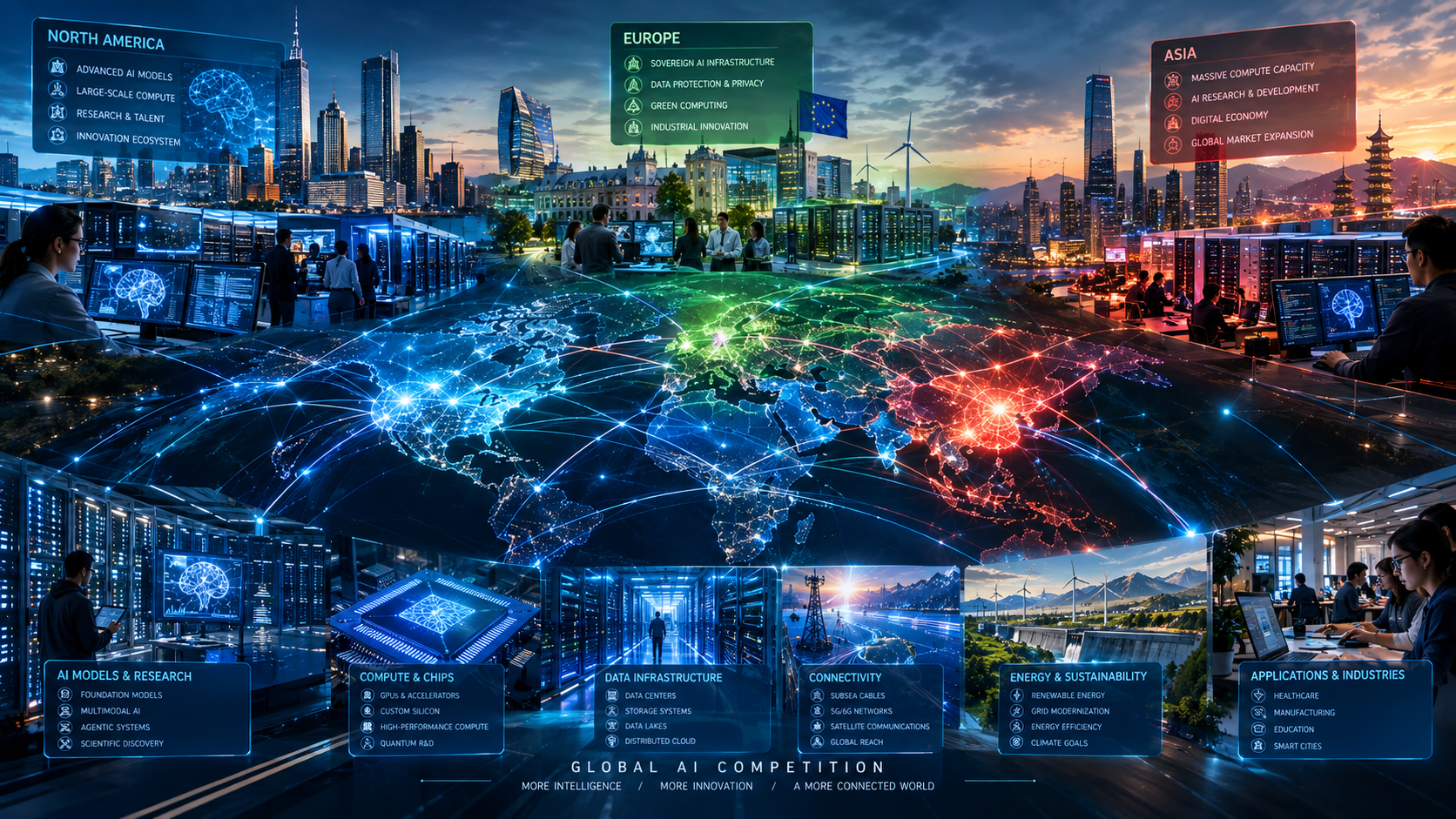
Mistral's funding also fits into a wider European push toward AI sovereignty.
The company has attracted major industrial investors such as ASML and now Samsung Electronics, connecting AI development with the semiconductor and manufacturing ecosystem.
That's important.
AI doesn't exist in isolation.
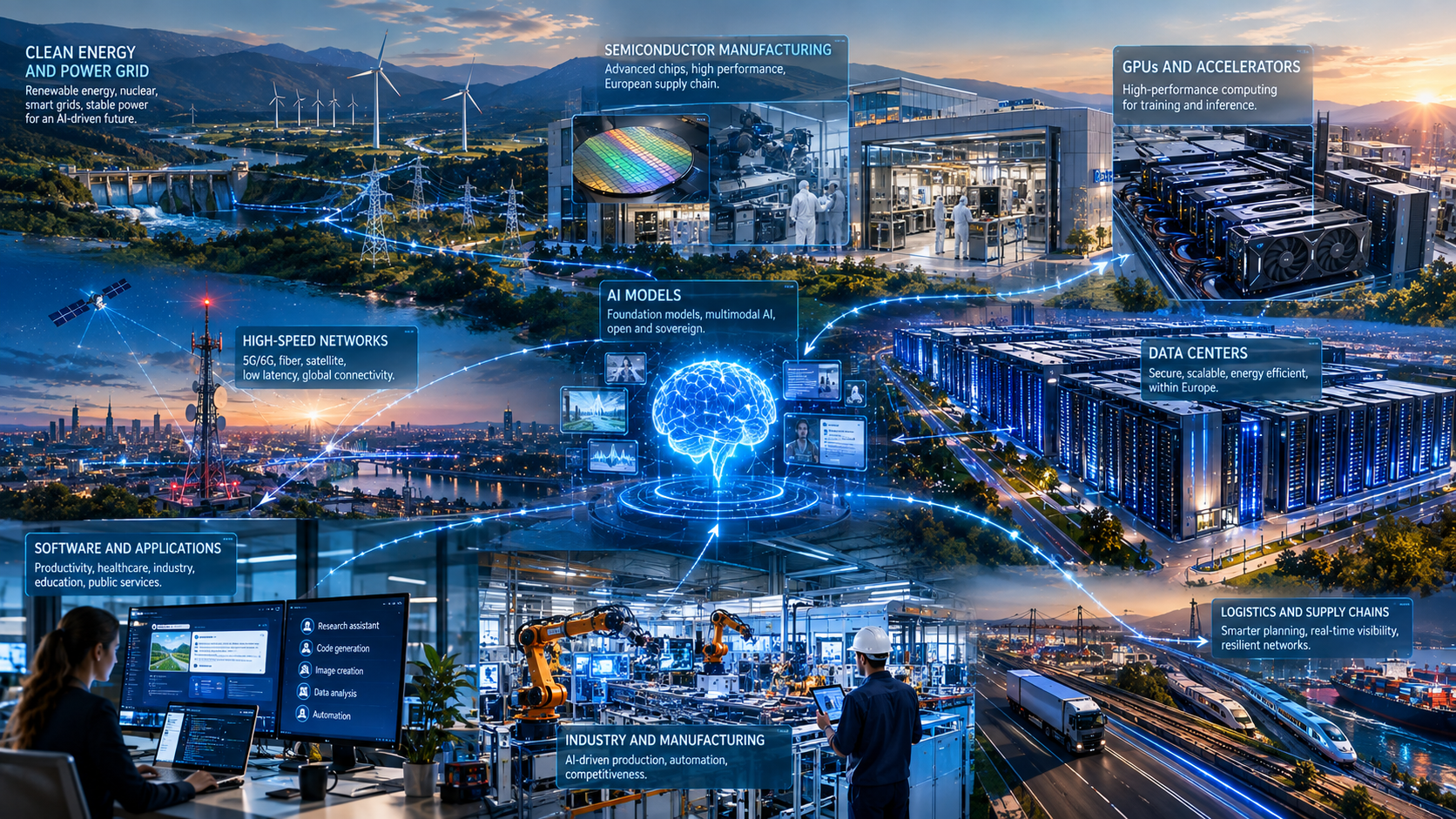
It depends on:
AI models → GPUs → semiconductors → data centers → electricity → networks → software → applications
If Europe wants genuine AI independence, it needs strength across that entire chain.
And Mistral is trying to occupy a significant part of it.
⚡ But Here's the Question Nobody Can Answer Yet
Will €3 billion actually be enough to compete with America's AI giants?
That's the difficult part.
Mistral is competing against companies with enormous resources and established global ecosystems.
Money can buy:
GPUs
researchers
infrastructure
data
time
But money doesn't automatically create the best AI model.
The real test will be whether Mistral can turn this capital into better models, better products and a sustainable business.
The company itself says it expects to expand commercial growth and international reach, while Reuters reports it is projected to reach $1 billion in annual recurring revenue by the end of 2026.
That would be a significant milestone—but projections are not the same thing as results.
And that's where investors will eventually judge the company.
🌍 What Does This Mean for Ordinary AI Users?
This may sound like a story about billion-dollar companies.
But it could eventually affect normal users too.
Competition between AI companies can lead to:
More models → more choices → lower prices → better tools → more innovation
But there is another possibility.
The AI industry could become dominated by a small number of extremely powerful companies.
If that happens, users may get excellent AI tools—but have less control over where those tools come from and how dependent they become on them.
That's why competition matters.
And personally, I think AI diversity is healthier than AI monopoly.
I don't want a future where everyone depends on one company for everything.
I would rather have several strong AI ecosystems competing with each other.
🤔 The Bigger Question: Who Will Win the AI Race?
Maybe the winner won't be the company with the largest model.
Maybe it will be the company that figures out how to combine:
Power + affordability + privacy + reliability + openness + infrastructure.
That's a much harder challenge.
Mistral now has an enormous financial advantage compared with where it started.
But the €3 billion announcement isn't the finish line.
It's the beginning of a much bigger test.
Can a relatively young European AI company become a genuine global alternative to OpenAI, Anthropic, Google and other major AI players?
Or will the AI industry eventually become dominated by a few American and Asian giants?
I don't think we know the answer yet.
And that's exactly what makes this story interesting.
🔥 My Take
For me, the most important part of today's Mistral announcement isn't actually the €3 billion.
It's the idea behind the money.
Mistral is betting that organizations will increasingly want AI they can control, rather than simply renting intelligence from someone else's ecosystem.
If that bet succeeds, the AI market could look very different in a few years.
And Europe could have a much bigger role in it than many people expected.
But now I want to hear from you:
Do you think Europe can realistically compete with OpenAI and other American AI giants?
Would you rather use a powerful closed AI model or a slightly weaker open-weight model that gives you more control?
Do you think AI sovereignty will become as important as energy or semiconductor independence?
And most importantly—who do you think will be leading the AI industry in 2030?
📌 Final Thought
The AI race is no longer just a race to build smarter models.
It is becoming a race to control the infrastructure, compute, data, models and ecosystems that make AI possible.
Mistral just placed a €3 billion bet that Europe doesn't have to watch that race from the sidelines.
Now comes the difficult part:
Proving that the bet was worth it.
Thanks for reading. If you enjoyed the discussion, share your opinion below—I would genuinely like to know how you see the future of AI.
Sources
Mistral AI — €3B funding announcement
Reuters — Mistral reaches $24B valuation
Mistral AI — About the company
¡Esto es genial que Samsung lidere la ronda y que Mistral ya opere en 20 países con 125 clientes como Airbus! La diferencia se nota cuando una startup de tres años alcanza una valoración de €21 mil millones; práctico para impulsar la IA europea. ¿Sabías que el fondo Scaleup Europe de EQT también está detrás?
¡Totalmente! 🚀 El crecimiento de Mistral es realmente impresionante, especialmente por haber alcanzado 125 clientes en tan poco tiempo y trabajar con empresas como Airbus. También me pareció muy interesante la participación de EQT, porque una inversión europea sólida podría jugar un papel importante para que Mistral pueda competir a nivel global.
¿Crees que la mayor ventaja de Mistral será su identidad e independencia europea, o que para competir con los gigantes de la IA de EE. UU. necesitará sobre todo una financiación e infraestructura enormes? 🤔