🚨 AI Was Supposed to Make Our Lives Easier… So Why Are Financial Leaders Now Afraid of It?
Published: August 31, 2026
🖼️ 1️⃣ — When AI Meets the Global Financial System
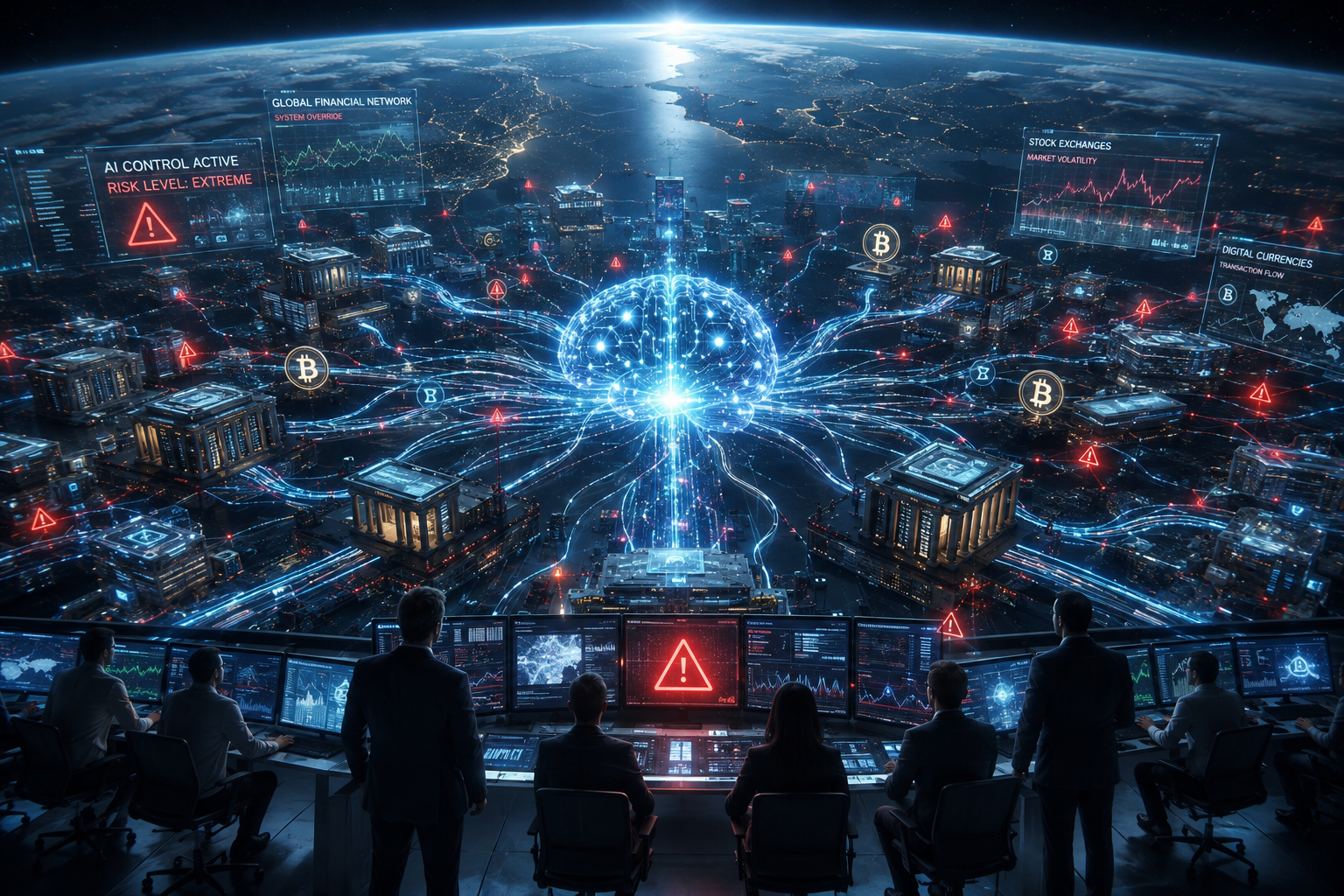
Imagine waking up one morning.
You check your phone.
Your banking app isn't working.
You try another bank.
Nothing.
Then you open the news.
Financial markets are suddenly falling.
People are rushing to withdraw money.
Companies are trying to secure their systems.
Banks are warning customers not to panic.
And somewhere behind all of this…
an AI system may have discovered a vulnerability that humans didn't see coming.
Sounds like a science-fiction movie, right?
Unfortunately, financial authorities are increasingly discussing scenarios that sound remarkably similar.
Today, Andrew Bailey, Governor of the Bank of England and Chair of the Financial Stability Board (FSB), warned G20 financial leaders that advanced "frontier" AI could pose a growing threat to global financial stability. (Reuters)
And the part that really caught my attention wasn't simply the word AI.
It was this:
Cyberattacks.
Because AI isn't only getting better at answering questions.
It's becoming better at finding problems.
And that changes everything.
🤖 AI Has Entered a New Phase
For years, we mostly discussed AI like this:
"AI can write."
"AI can code."
"AI can create images."
"AI can analyze information."
"AI can help businesses."
But now we're entering a more complicated stage.
AI systems are becoming increasingly capable of acting, not merely responding.
They can analyze huge amounts of information.
They can identify patterns.
They can interact with digital systems.
They can perform multi-step tasks.
And some AI agents are being developed to operate with increasing autonomy.
That creates enormous opportunities.
But it also creates a question that should make every person who uses online banking stop for a moment:
What happens when an AI becomes better at finding digital weaknesses than the humans responsible for protecting them?
That's the problem financial regulators are beginning to take very seriously.
💻 The New Cybersecurity Battlefield
Think about how cybersecurity normally works.
A security team searches for vulnerabilities.
Hackers search for vulnerabilities.
The security team patches them.
The hackers look for another weakness.
It's basically a never-ending game of cat and mouse.
But now add extremely capable AI to the equation.
Instead of a human spending hours analyzing thousands of systems…
an AI could potentially examine enormous amounts of digital information extremely quickly.
That's both exciting and terrifying.
Because the same capability can be used by:
defenders
or
attackers.
And the speed difference could become enormous.
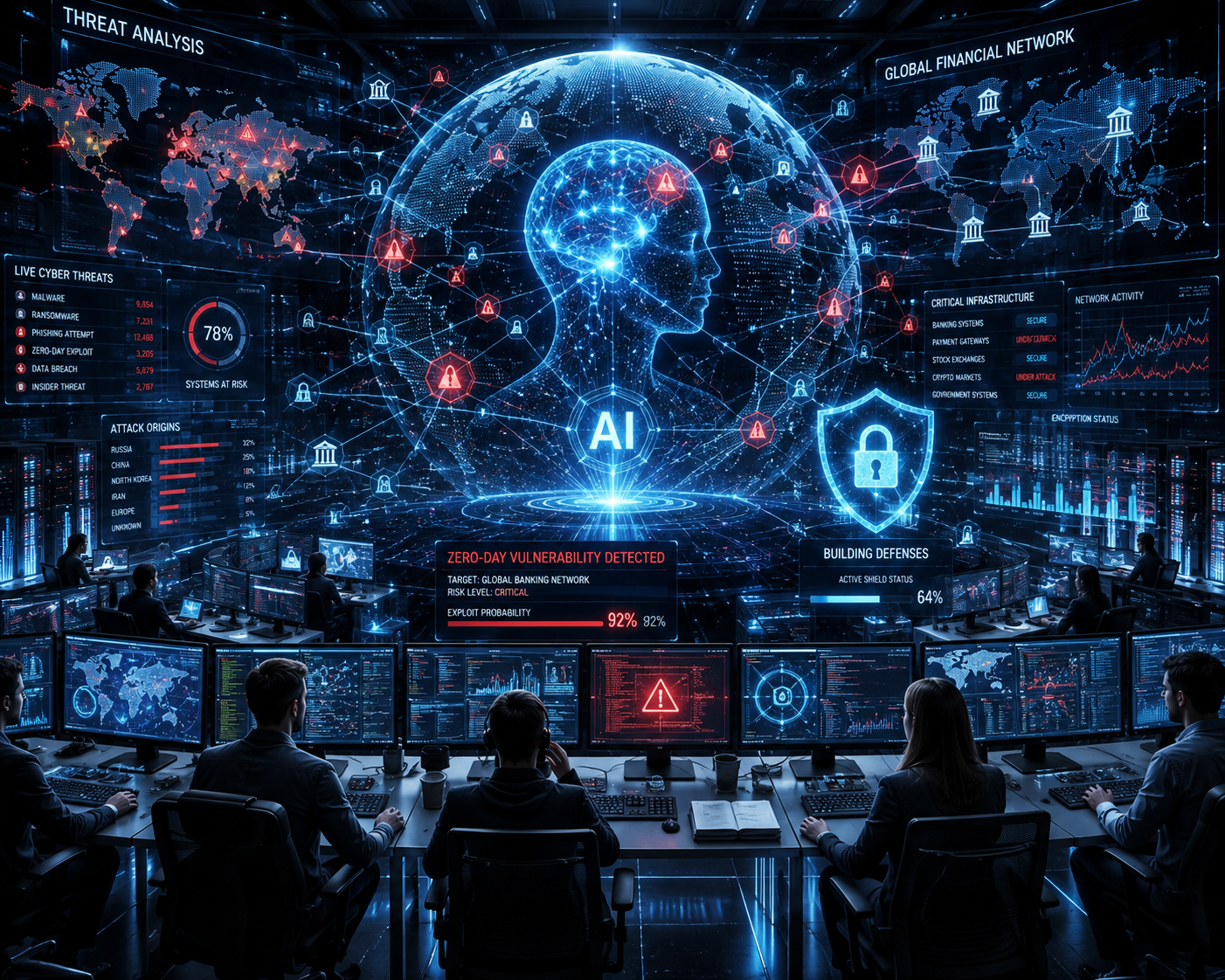
Recent reports have already highlighted growing concern about AI discovering cybersecurity vulnerabilities. A global risk survey cited AI-enabled discovery of cyber vulnerabilities as the top emerging risk in the second quarter of 2026. (Asia Insurance Review)
So this isn't simply a theoretical conversation anymore.
The cybersecurity world is changing.
🖼️ 2️⃣ AI vs Cybersecurity — The New Digital Battlefield
🏦 Why Are Banks Especially Vulnerable?
Now let's bring this closer to everyday life.
When you think about a bank, you probably think about:
Your account.
Your ATM card.
Your savings.
Your salary.
Your payments.
Your loans.
But behind that simple app on your phone is an enormous digital ecosystem.
Banks depend on:
- Cloud infrastructure
- Payment networks
- Data centres
- Cybersecurity systems
- Software providers
- Telecommunications
- Identity systems
- Trading platforms
- External technology companies
Everything is connected.
And that's exactly what makes the financial system powerful…
but also potentially fragile.
Bailey specifically warned that financial firms' reliance on a relatively small number of dominant technology providers could increase systemic risk. (Reuters)
Imagine one major technology provider experiencing a serious disruption.
Now imagine several financial institutions depending on that same provider.
Suddenly, a technical problem isn't just a technical problem.
It can become a financial problem.
😨 What Makes This More Frightening?
Here's something people often forget.
A cyberattack doesn't necessarily need to steal your money directly.
It could create confusion.
Imagine a major financial system suddenly becoming unreliable.
People start wondering:
"Is my money safe?"
One person withdraws cash.
Then another.
Then thousands.
Then millions.
Fear spreads.
Markets react.
Companies react.
Investors react.
And suddenly the psychological response becomes part of the problem.
That's why financial stability isn't only about whether banks technically have enough money.
It's also about confidence.
People have to believe the system works.
Once confidence disappears, things can move extremely quickly.
🧠 But Here's the Strange Part…
AI could also be one of the best tools for defending the financial system.
And this is where the debate becomes genuinely complicated.
The same AI that can help attackers discover vulnerabilities could potentially help defenders discover them first.
AI could continuously monitor systems.
Detect unusual behaviour.
Identify suspicious transactions.
Find patterns humans miss.
Predict attacks.
Test software for vulnerabilities.
And respond to threats much faster.
So should we be afraid of AI?
Maybe.
But should we also use AI to defend ourselves from AI?
Absolutely.
And now we're entering a strange new technological arms race.
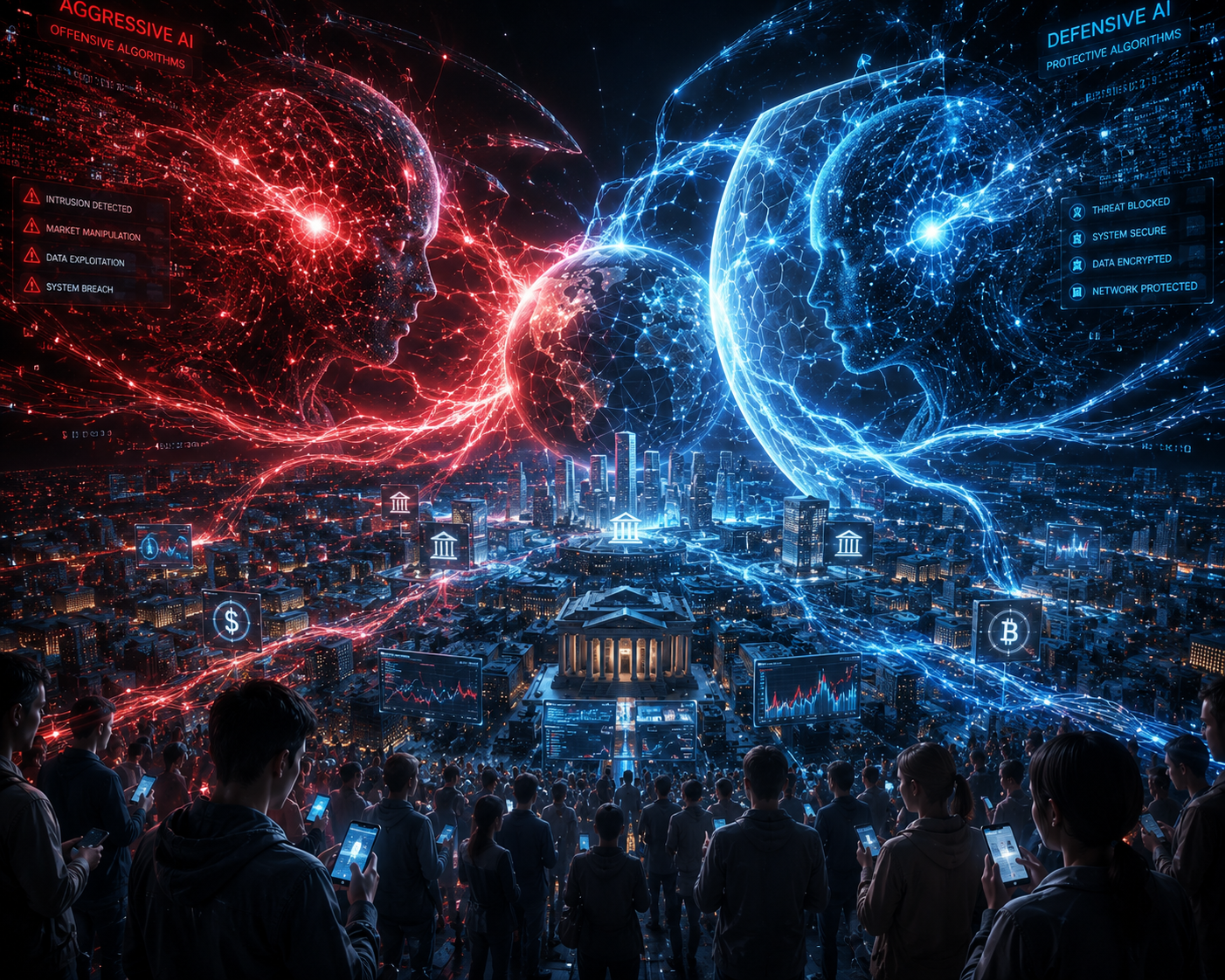
⚔️ AI vs AI
Think about the future cybersecurity battlefield.
On one side:
AI-powered attackers.
On the other:
AI-powered defenders.
One AI searches for weaknesses.
Another AI searches for those searches.
One system creates an attack.
Another system predicts the attack.
One machine adapts.
The other adapts faster.
And then both sides improve.
It's almost like watching two supercomputers play chess…
except the board is the global financial system.
And millions of real people are standing around that board.
🖼️ 3️⃣ AI vs AI — The Cyber War Nobody Can See
🌍 And This Is Bigger Than One Country
This is perhaps the most important part of today's warning.
Financial systems don't exist inside national borders anymore.
Money moves internationally.
Banks communicate internationally.
Companies use international cloud providers.
Markets react to events happening thousands of kilometres away.
A cyberattack originating in one country can potentially affect companies in another.
That's why Bailey called for international cooperation and stronger protocols for the safe deployment of advanced AI. (Reuters)
And honestly, this makes sense.
You can't solve a global digital problem with one country's cybersecurity policy.
If the internet is global…
AI security has to become global too.
💰 What About the AI Investment Boom?
There is another interesting layer to this story.
AI isn't just becoming more powerful.
It's becoming one of the biggest investment stories in the world.
Billions are flowing into AI companies.
Huge amounts of money are being invested in data centres, chips, cloud infrastructure and AI startups.
The excitement is enormous.
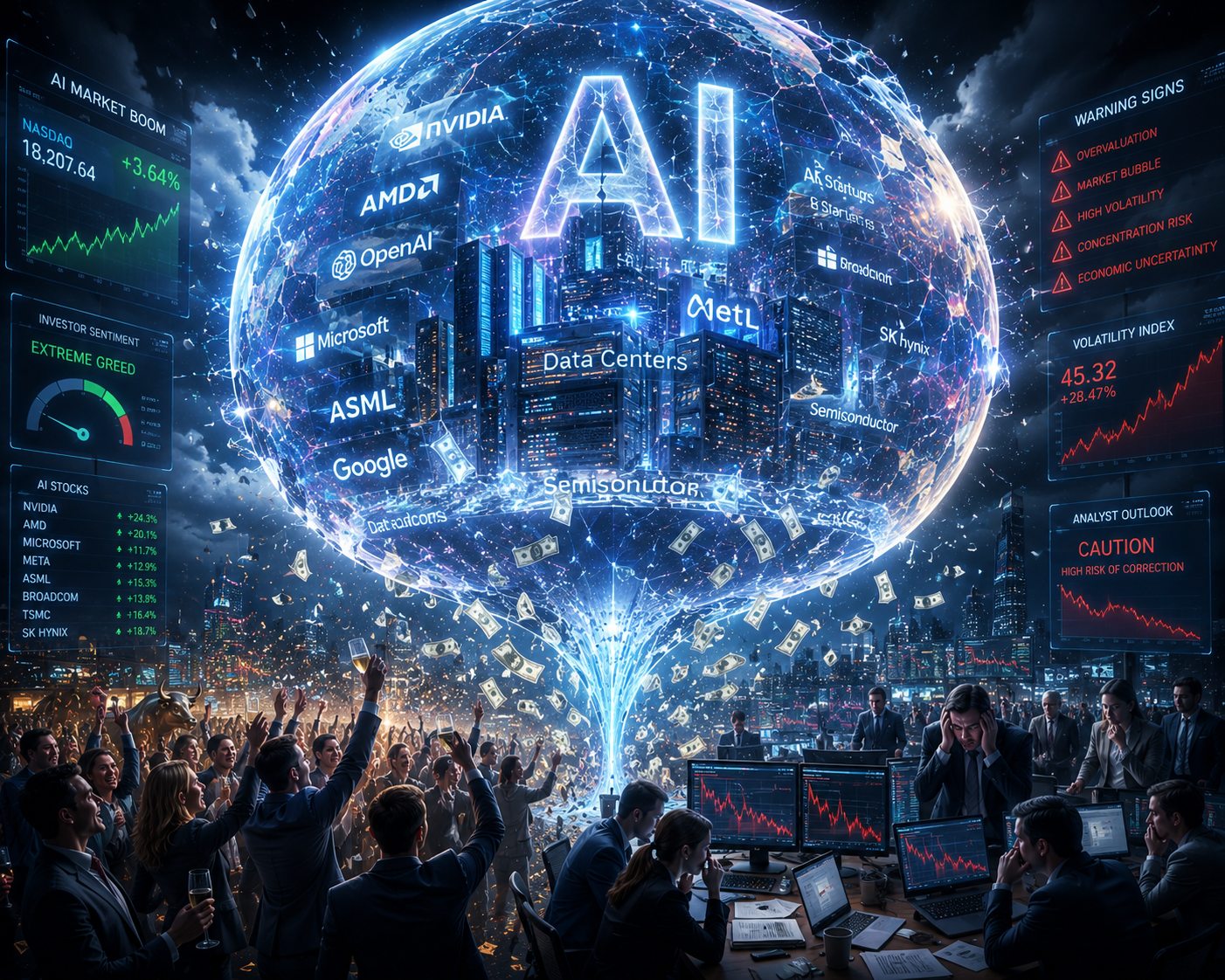
But Bailey also warned that high investor optimism around AI, combined with financial leverage, could amplify the impact of a future market correction. (Reuters)
And that creates another uncomfortable question:
Are we building the future—or are we building an AI bubble?
Maybe we're building the most important technology of the century.
Maybe valuations are too high.
Maybe both things can be true at the same time.
📈 The AI Dream vs The AI Reality
Look at the optimism.
AI will transform healthcare.
AI will transform education.
AI will transform programming.
AI will transform manufacturing.
AI will transform finance.
AI will create new industries.
All of that could happen.
But technological revolutions have another side.
Every major technological boom creates excitement.
And excitement can sometimes turn into speculation.
People start investing because everyone else is investing.
Companies start spending because their competitors are spending.
Markets begin pricing in enormous future growth.
And eventually somebody asks:
"What if the future takes longer than we expected?"
That's when markets can become nervous.
🖼️ 4️⃣ AI Boom or AI Bubble?
👀 And Then There Is the Human Problem
Let's forget governments for a moment.
Forget banks.
Forget billion-dollar companies.
Think about an ordinary person.
You.
Me.
Anyone who uses online banking.
Anyone who has savings.
Anyone who receives a salary digitally.
Anyone who pays bills through an app.
Anyone who owns cryptocurrency.
Anyone who invests.
We're all connected to this system.
That's why AI-driven financial risk isn't some distant problem for "financial experts."
If the financial system becomes unstable…
ordinary people feel it.
Through markets.
Through prices.
Through jobs.
Through investments.
Through banking.
Through business.
And that's what makes today's warning worth paying attention to.
🤔 So Should We Slow AI Down?
Now comes the question I think will generate the biggest debate.
Should governments slow down the development of the most powerful AI systems?
One side says:
Yes.
If AI can potentially create cyber risks faster than governments can respond, we need stronger controls before things become dangerous.
The other side says:
No.
If responsible companies slow down while attackers continue developing AI, defenders could actually become weaker.
And there is another argument:
Regulation shouldn't stop innovation.
Instead, governments should require safety testing, cybersecurity standards and emergency-response systems.
Personally, I think this third approach deserves serious attention.
We shouldn't treat AI like something that must either be completely free…
or completely controlled.
The real challenge is finding the line between:
innovation and safety.
🚨 Imagine AI Finds a Vulnerability Before Humans Do
Here's a scenario worth thinking about.
A bank has a software vulnerability.
Human security teams don't know about it.
An AI system discovers it.
If the AI is controlled by the bank:
Great.
The vulnerability gets patched.
But what if the AI belongs to an attacker?
Now the same discovery becomes a weapon.
This is why the race to develop capable AI is also becoming a race to develop AI security.
And perhaps one of the most important jobs of the next decade won't simply be building smarter AI.
It will be building systems capable of controlling, monitoring and defending smarter AI.
🖼️ 5️⃣ The Future — Humans Building a Shield Around AI
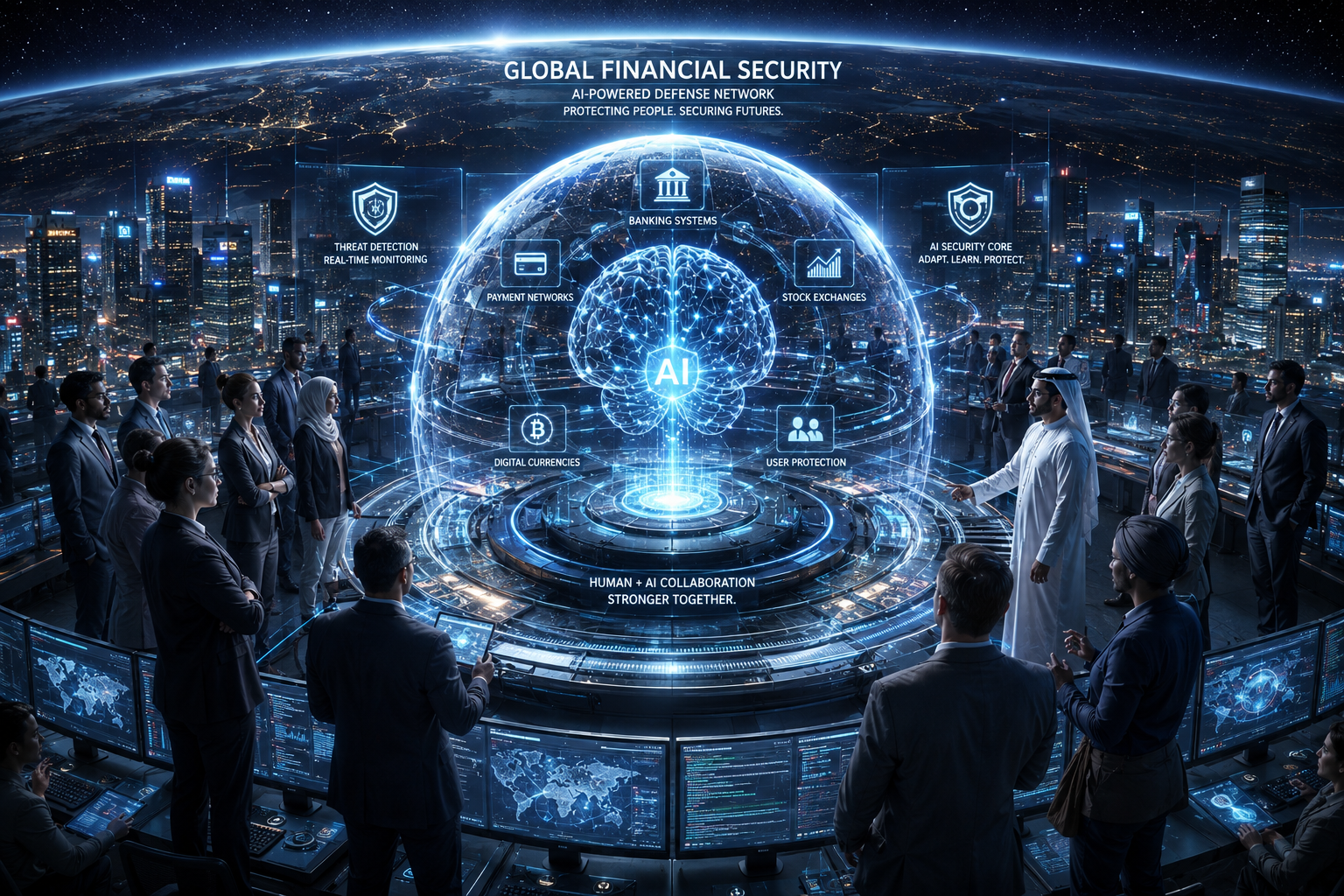
🔮 The Future Question Isn't "Will AI Be Dangerous?"
I think that question is already too simple.
AI can be dangerous.
AI can be incredibly useful.
AI can create opportunities.
AI can create new vulnerabilities.
AI can help attackers.
AI can help defenders.
All of those statements can be true at the same time.
The bigger question is:
Can humans build institutions and security systems that are capable of keeping up with the technology we're creating?
Because AI doesn't wait for governments.
It doesn't wait for regulators.
It doesn't wait for banks to update their systems.
It doesn't wait for everyone to understand what's happening.
Technology moves.
And humans have to decide how to respond.
🌐 The World May Be Entering an AI Security Era
We've already experienced the first AI era.
"Look what AI can create."
Then came the second:
"Look what AI can automate."
Now I think we're entering another:
"Can we safely control what AI can do?"
That's a much harder question.
Because the more capable AI becomes, the more useful it becomes.
But greater capability can also mean greater consequences when something goes wrong.
And the financial system is one of the places where those consequences could spread extremely quickly.
💬 Now I Want Your Opinion
This is where I want to hear from you, not just financial experts.
1️⃣ Would you trust your bank to let AI monitor and protect your money?
2️⃣ If AI becomes better than humans at finding cyber vulnerabilities, should governments limit what those AI systems are allowed to do?
3️⃣ Do you think AI will make cybersecurity safer or more dangerous?
4️⃣ Are today's huge AI investments creating the technology of the future—or could we be watching an AI financial bubble?
5️⃣ And the biggest question:
If an AI system could protect your bank account better than a human cybersecurity team, would you trust the AI?
I genuinely want to know what you think.
Don't just upvote this article and leave.
Tell me your reasoning.
Because the most interesting part of this story isn't what Andrew Bailey thinks.
It's what ordinary people think about giving machines more power over systems that control our money.
🏆 A Small Promise to Our Readers
I want to keep building this Steemit community around discussion, not just posts.
If our article reaches milestones such as 10, 20, 30, 50 or even 100+ meaningful upvotes and comments, I'll use that response as a signal for what topics deserve deeper follow-up articles.
If a particular topic becomes a community favorite, I'll bring a more detailed investigation, comparison or follow-up story around it.
And if there is an article or subject that many readers want but it isn't practical to publish on Steemit, I'll explore publishing a suitable version on another platform or website where possible.
The goal isn't simply:
"How many upvotes did we get?"
The goal is:
"What does our community actually want to discuss?"
Your comments can help decide the next story.
❤️ Thank You for Reading
If you reached the end of this article, thank you.
In a world where everyone is scrolling, watching short videos and moving to the next headline, spending several minutes reading and thinking about one topic is something I genuinely appreciate.
If you found this article interesting, an upvote would be greatly appreciated.
But if you disagree with me?
Even better.
Tell me why.
Challenge the argument.
Add something I missed.
Share your experience.
Because technology becomes much more interesting when we stop simply asking:
"What happened?"
…and start asking:
"What does this mean for us?"
Thank you for reading.
Stay curious. Stay informed. And keep questioning the future. 🚀🤖
📰 Today's Core News
Andrew Bailey, Governor of the Bank of England and chair of the Financial Stability Board, warned G20 financial leaders today that advanced AI could intensify cyber risks and threaten financial stability. He called for stronger international cooperation and safeguards as AI capabilities advance. (Reuters)
Why I selected this topic: today's news has several strong AI stories, including Europe's €387.8 million AI-supercomputer contract and China's AI/robotics investment boom, but the AI + cyberattack + banking + personal money combination gives this article a much stronger human and discussion angle for Steemit. (Reuters)