🚨 Stripe Just Made an $8 Billion AI Bet — But What Does It Really Mean for the Future of AI?
Published: August 20, 2026
"What if the future of AI isn't about choosing one AI model—but having an intelligent system choose the best model for you?"

Imagine waking up tomorrow and discovering that one of the biggest technology bets of the year wasn't about building a new AI model.
It wasn't about creating another chatbot.
It wasn't even about building a giant data center.
Instead…
A financial technology company just made a multibillion-dollar bet on the infrastructure sitting between you and AI.
And suddenly, one question comes to mind:
What does Stripe see in the future of artificial intelligence that the rest of us may still be missing?
On August 19, OpenRouter officially announced that it was joining Stripe. Reuters reports that sources estimate the value of the deal at more than $8 billion, although the companies did not officially disclose a purchase price.
And this isn't some tiny AI startup being quietly absorbed into a much larger company.
OpenRouter says its platform now handles more than 10 trillion tokens every day, connects developers to 400+ AI models, and serves a community of more than 10 million developers and companies.
So…
Why would Stripe spend billions on something that most ordinary AI users have probably never even heard of?
Let's look at what is really happening.
🤯 Wait… What Exactly Is OpenRouter?
Here's where the story becomes interesting.
Imagine you are a developer.
You want to build an AI application.
But you don't want to depend on only one AI model.
Maybe one model is better at coding.
Another is better at reasoning.
Another is cheaper.
Another is faster.
Another is better at images.
And another might perform better for a particular business task.
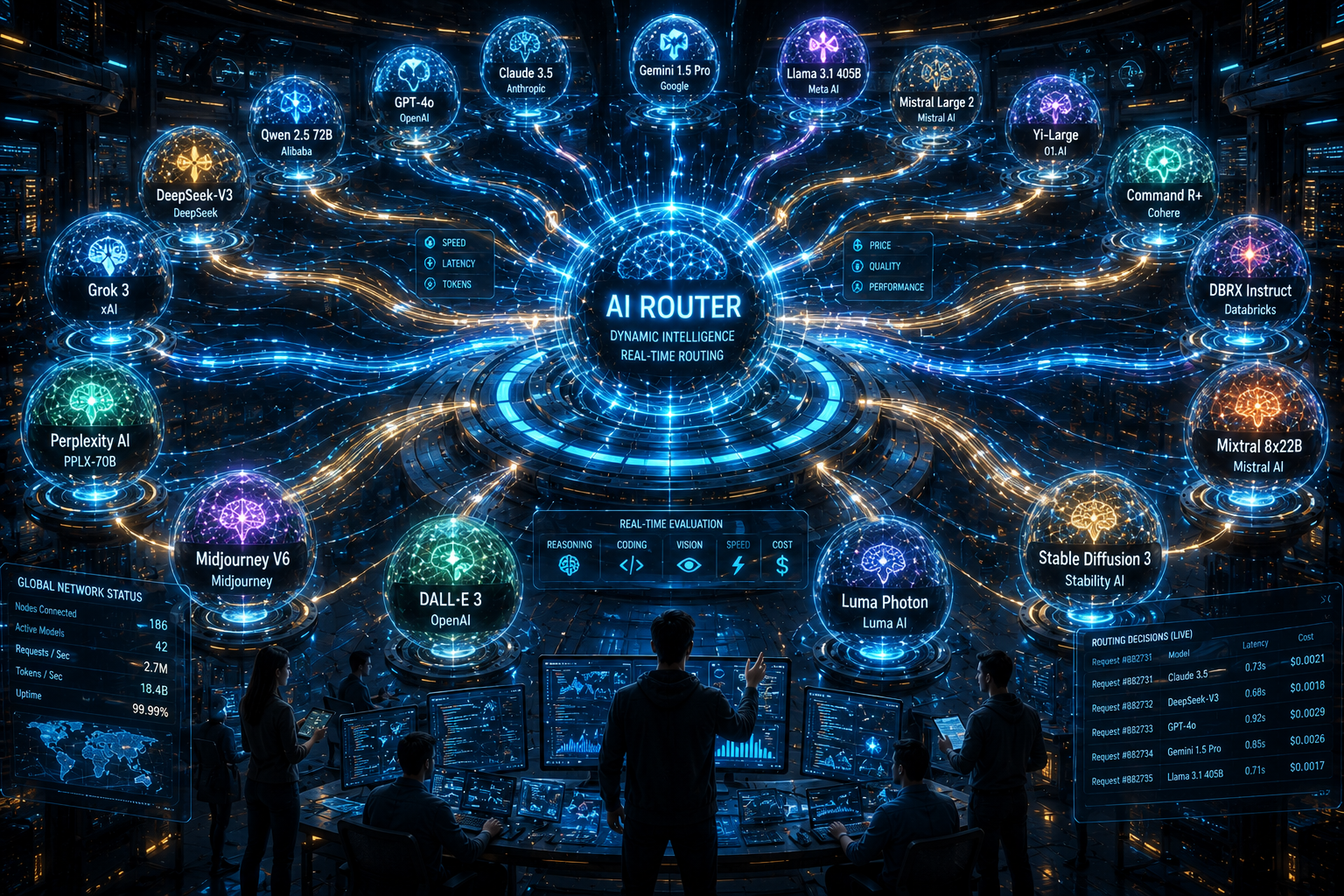
Instead of building completely separate integrations for every model, OpenRouter provides a unified interface that lets developers access and route requests across many models.
In simple words:
OpenRouter is like a traffic-control system for AI models.
Your application sends a request.
The system can help determine which model should handle it.
And suddenly, AI becomes less about:
"Which model do I use?"
and more about:
"Which model is best for this particular job?"
That difference may sound small.
It isn't.
It could become one of the most important changes in the AI economy.
🧠 The AI World Is Changing
Think back to the early days of smartphones.
People used to ask:
"Which phone should I buy?"
Then the ecosystem became much more complicated.
Different apps.
Different operating systems.
Cloud services.
Payment systems.
Developer platforms.
App stores.
Infrastructure.
The smartphone itself became only one part of a much larger ecosystem.
AI may be heading toward something similar.
Instead of one giant AI model doing everything, we could eventually have hundreds—or thousands—of specialized models working together.
One handles reasoning.
Another handles coding.
Another handles speech.
Another handles vision.
Another handles research.
Another handles business automation.
Another handles cybersecurity.
And something needs to coordinate all of them.
That's where AI routing becomes extremely important.
🖼️ 2️⃣ One Application, Hundreds of AI Models

💰 Why Would Stripe Want This?
Now we reach the really interesting part.
Stripe is famous for something very different from AI models.
Payments.
But payments are only one part of what businesses need.
As AI becomes more deeply integrated into companies, businesses will need to manage enormous amounts of AI usage.
Every AI request consumes tokens.
Every token has a cost.
Different models have different prices.
Different providers have different performance.
And companies need to know:
- How much AI are we using?
- Which model is being used?
- How much does each request cost?
- Which model is fastest?
- Which model produces better results?
- Can we automatically switch models?
- How do we control spending?
- How do we integrate AI into business payments?
Suddenly, the connection between AI infrastructure and financial infrastructure becomes obvious.
Stripe already has experience with economic transactions.
OpenRouter has experience with AI model routing and usage.
Put the two together…
And you get something potentially much bigger.
🔥 AI Tokens Could Become a New Economic Layer
Here's an idea I find particularly fascinating.
For decades, businesses measured computing in things like:
CPU usage.
Then:
Cloud usage.
Now increasingly:
AI inference and tokens.
A company might have thousands of employees using AI.
Its software agents might make millions of AI requests.
Customer-service bots could operate 24/7.
Coding agents could continuously generate and review code.
Research agents could search, summarize and analyze information.
And every one of those activities consumes computational resources.
So imagine a future where a company's AI infrastructure looks something like this:
User → AI Agent → Model Router → AI Model → Result → Payment/Billing
That isn't just a chatbot anymore.
That's an AI economy.
😳 And Then Stripe Said Something Even Bigger…
Stripe's leadership has described 2026 as the beginning of what it calls the "singularity" in an investor letter, arguing that major technological and economic changes are already underway.
Now, let's be careful here.
The word "singularity" is controversial.
Different people define it differently.
For some, it means AI surpassing human intelligence.
For others, it means a period where technological progress becomes extremely rapid and difficult to predict.
So I wouldn't simply say:
"The singularity has arrived."
That's a much bigger claim than the evidence can prove.
But Stripe's decision to make a multibillion-dollar move into AI infrastructure tells us something important:
The company clearly believes AI is going to reshape the economy at an enormous scale.
And that deserves our attention.
⚔️ The Real AI Battle May Not Be About Chatbots
This is where I think the story gets really interesting.
When most people hear "AI competition," they imagine:
ChatGPT vs Gemini vs Claude vs Qwen vs other models.
But businesses may eventually care less about which single model wins.
Instead, they may care about:
Who can connect all these models together most efficiently?
Think about the difference.
A model company says:
"Use our AI."
An infrastructure company says:
"Use whichever AI is best."
That second approach could become extremely powerful.
Because AI progress is moving incredibly fast.
Today's best model might not be tomorrow's best model.
If a company builds its entire business around one model, it risks becoming dependent on that provider.
But if its infrastructure can automatically switch between models…
It becomes much more flexible.
🖼️ 3️⃣ The End of the One-Model Era?
🤔 But Is There a Risk?
Absolutely.
And this is where we should stop celebrating the numbers for a moment.
Because putting enormous amounts of AI infrastructure under fewer companies can create new forms of concentration.
If one platform becomes the gateway through which millions of developers access hundreds of AI models…
How much influence does that platform eventually gain?
Could it affect pricing?
Could it influence which models receive visibility?
Could businesses become dependent on the infrastructure?
Could the AI ecosystem become centralized again?
OpenRouter itself says it intends to keep models on equal footing and that routing decisions will continue to be based on what is best for users. It also says OpenRouter will continue operating with the same name, mission and product under Stripe.
That's reassuring.
But the bigger question remains:
Can an AI marketplace remain truly neutral after becoming part of a giant financial technology company?
That's something worth watching.
🌎 The Global AI Infrastructure Race
And this isn't happening in isolation.
Around the world, companies are racing to build the infrastructure required for AI.
Data centers.
GPUs.
Networking.
Cloud platforms.
AI models.
Agent systems.
Security.
Payment infrastructure.
Model routing.
Memory.
Data pipelines.
Everything is becoming connected.
This means the next major AI winners may not necessarily be the companies with the most famous chatbot.
They could be the companies quietly building the infrastructure underneath everything.
And that's why this Stripe–OpenRouter deal matters.
It may be less about buying an AI company…
and more about buying a position inside the future economic plumbing of AI.
🧑💻 What Does This Mean for Developers?
If you're a developer, this trend could actually be good news.
Imagine being able to build an application without worrying too much about which single AI company will dominate five years from now.
You could design your system around multiple models.
If one becomes too expensive, switch.
If another becomes better at reasoning, switch.
If a new open-weight model becomes powerful, add it.
If a specialized model becomes available, connect it.
That creates something developers have wanted for a long time:
Choice.
And choice creates competition.
Competition can create lower prices.
Lower prices can make AI accessible to more people.
And more accessibility can lead to more innovation.
💼 What Does This Mean for Ordinary People?
You might be thinking:
"Okay, but I'm not a developer. Why should I care?"
You should.
Because eventually, these infrastructure decisions reach ordinary users.
Your banking app could use AI.
Your workplace could use AI agents.
Your online shopping could use AI.
Your customer support could be AI-powered.
Your education platform could use several AI models simultaneously.
Your phone could automatically select different AI systems depending on what you ask it to do.
You might never see OpenRouter.
You might never see the model router.
You might never even know which model answered your question.
But the infrastructure underneath could determine how fast, affordable and capable that experience becomes.
🖼️ 4️⃣ AI Becomes Invisible Infrastructure

❤️ And This Is Where the Story Becomes Human
Imagine a small business owner who cannot afford a team of ten employees.
What if AI agents eventually allow that person to handle customer service, accounting, marketing, research and basic software development?
Imagine a student who cannot afford expensive tutoring.
What if multiple AI models working together provide a personalized teacher?
Imagine a programmer working alone.
What if they can build software with a team of AI agents?
That's the optimistic version of this future.
But there's another side.
What happens to jobs?
What happens to companies that cannot adapt?
What happens when AI becomes so cheap that businesses replace entire workflows?
And what happens when people become dependent on AI infrastructure they don't control?
These aren't theoretical questions anymore.
They're becoming economic questions.
🚨 The Most Interesting Question: Who Controls the AI Gateway?
This may be the question I want you to think about most.
If AI models are the brains…
Then companies like OpenRouter are helping build the roads between those brains and the applications using them.
And Stripe is deeply involved in the economic system surrounding those applications.
So what happens when a major financial infrastructure company owns a major AI routing platform?
Does this create a stronger AI ecosystem?
Or does it create too much concentration?
Could it accelerate innovation?
Or could it eventually reduce competition?
Maybe the answer will be somewhere in between.
🖼️ 5️⃣ The Future AI Economy
🔮 So… What Happens Next?
I don't think the Stripe–OpenRouter deal is simply another acquisition story.
It represents something bigger.
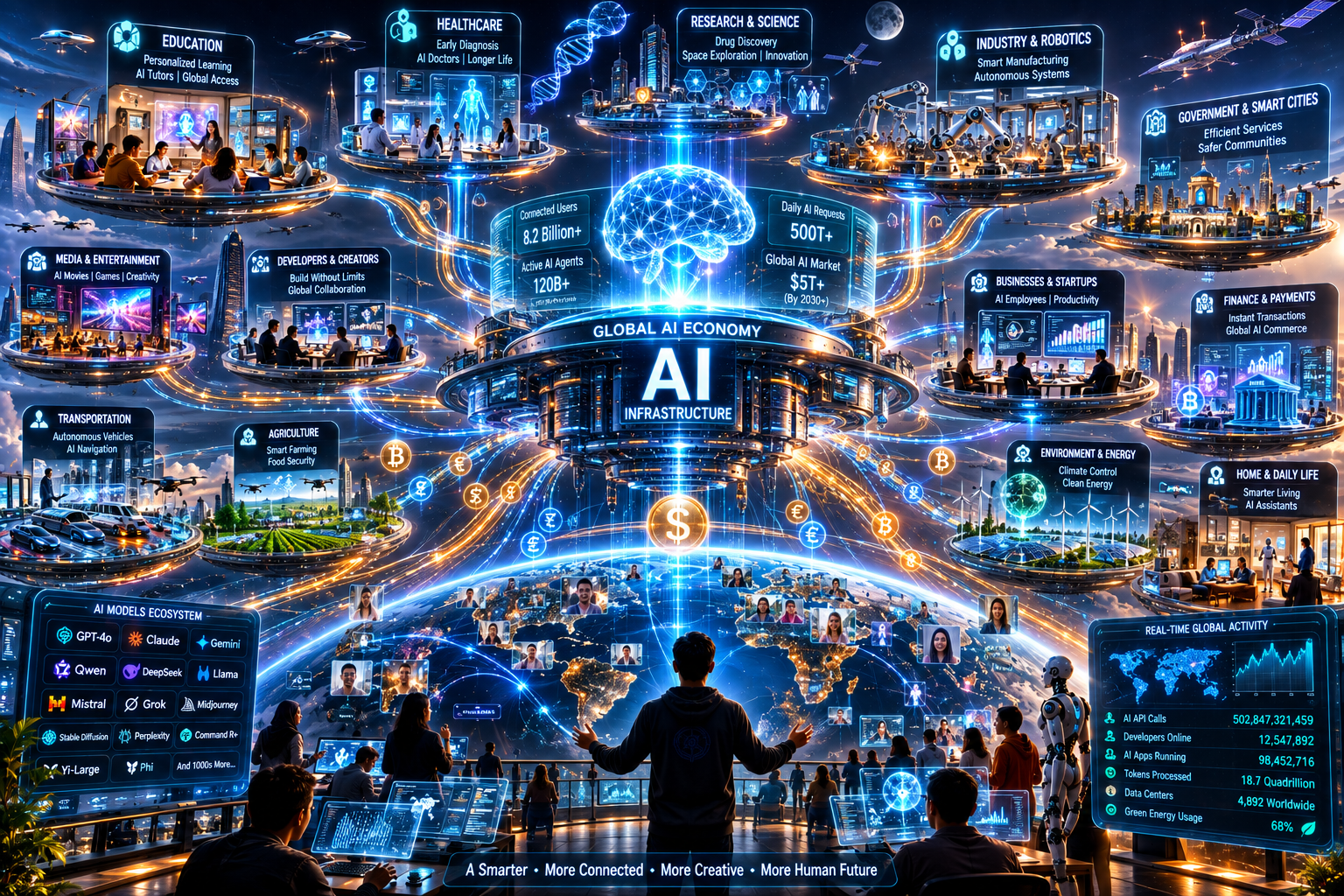
AI is becoming an industry with layers.
At the top:
AI applications.
Underneath:
AI agents.
Underneath:
AI models.
Underneath:
Model routing and inference.
Underneath:
Cloud computing, GPUs and data centers.
And underneath everything:
Money.
That's why this deal caught my attention.
Because perhaps the next phase of AI won't be won only by the company that creates the smartest model.
Maybe it will also be won by the companies that figure out how to make millions of AI systems work together economically.
💬 Now I Want Your Opinion
This is where I want to hear from you, not just repeat what companies and analysts are saying.
1️⃣ Do you think Stripe made a smart decision by acquiring OpenRouter?
2️⃣ Would you rather have one extremely powerful AI model—or access to hundreds of models through one platform?
3️⃣ Do you think AI routing will become as important as AI models themselves?
4️⃣ Could AI infrastructure eventually become more valuable than individual AI chatbots?
5️⃣ And the biggest question:
If one platform could automatically choose the best AI model for every task you give it, would you trust it to make that decision for you?
I especially want to hear different opinions here.
Agree with me. Disagree with me. Challenge the argument.
That's exactly what makes these discussions interesting.
🏆 A Small Promise to Our Readers
I want to make this community more than just a place where I publish articles.
I want it to become a place where your opinions influence what I write next.
If an article reaches milestones such as 10, 20, 30, 50 or 100+ meaningful comments and upvotes, I will pay special attention to the topics and ideas that the community responds to most strongly.
If there is a topic or article that many readers want but I cannot reasonably publish on Steemit, I can also explore creating a suitable version for another platform or website and sharing it with the community where appropriate.
The goal isn't simply to chase numbers.
The goal is to discover what people genuinely want to read, discuss and learn about.
Your comments can help decide the next story.
🙏 Thank You for Reading
If you reached this final section, thank you for giving me your time.
There are countless articles competing for your attention every day, and I genuinely appreciate you choosing to spend some of that time here.
If you found the article useful or interesting, an upvote is always appreciated.
But honestly, your comment may be even more valuable.
Tell me what you think.
Tell me where you agree.
Tell me where you disagree.
And most importantly…
Tell me what you want me to investigate next.
Let's keep learning, questioning and exploring the AI revolution together.
Thank you for reading. See you in the next article. 🚀🤖
📰 Main News Sources
- Reuters — Stripe's acquisition of OpenRouter and reported valuation.
- OpenRouter — Official announcement and current platform statistics.
- Financial Times — Acquisition and the strategic importance of AI infrastructure.
- Axios — Stripe's "singularity" comments and AI strategy.