Juvenile Bald Eagles at the Conowingo Dam on October 17, 2026
Prelude
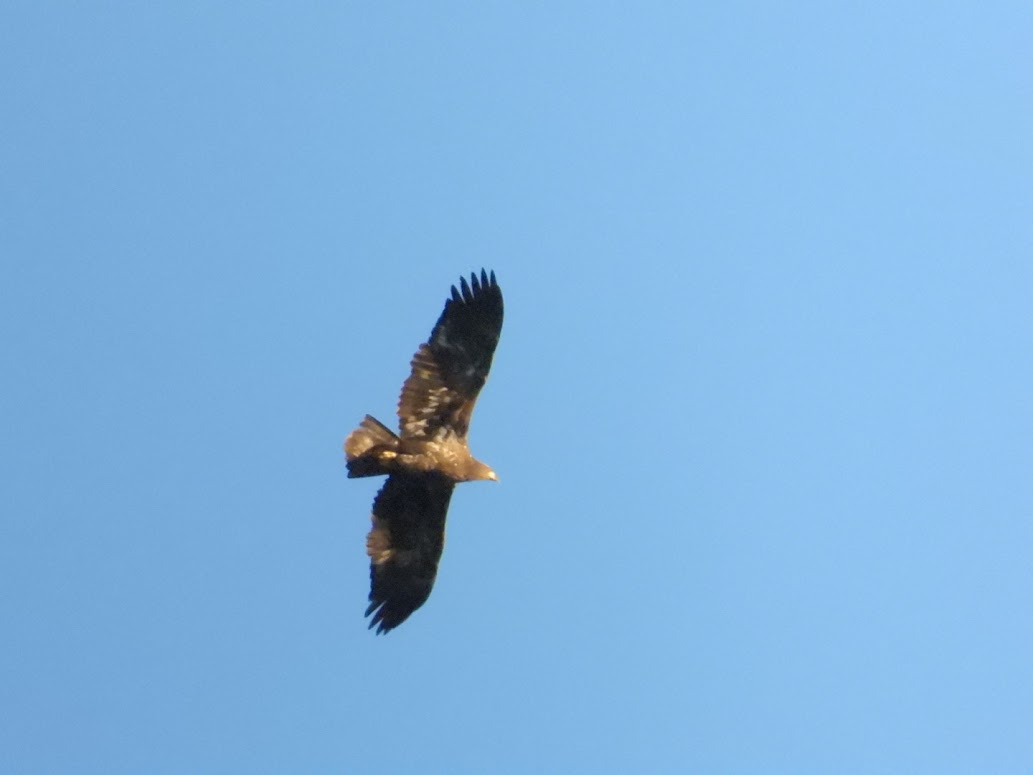
Juvenile Bald Eagle flying in the blue sky over the Conowingo Fisherman's Park
Something relevant for this post that slipped my mind for the overview post for October is that my Nikon P1000 camera broke early in the month. I had bought it, used, last November, and after less than 10 months of use the mode dial that selects among choices for manual, auto, my saved settings, customized scenes, and so on stopped working.
My first response was to buy a replacement. I was satisfied with the camera and didn't want to spend the kind of money that it would take to upgrade to a 35mm camera with a 600 or 800mm lens, so I replaced it with a refurbished P1000 (and a one-year warranty this time. ;-).
However, when I was talking to Gemini about getting the original camera repaired, it suggested that the repair wouldn't be worth the cost, and that if it happened to be stuck in "Manual" mode, then I should just use it like that. As luck would have it, the camera is stuck in Manual mode. So, this means two things: First, I have a new P1000 that I can loan to @cmp2020 if we go on day trips together; and second, I'm learning to shoot with manual settings.
Also, until this happened, I had thought the camera's ISO setting maxed out at 1600. When experimenting with manual settings, though, I discovered that it's also possible to choose 3200 or 6400 if I scroll down to the second page of the menu. When capped at 1600, I had struggled with getting enough light in my photos as sunset approaches, so I've been putting these newfound settings to use.
Introduction
All of this is relevant because today's post covers photos from a day trip to the Conowingo Dam on October 17. The first three photos were taken by @cmp2020 (posted here with permission) and the rest were taken by me. All were taken with the previously mentioned pair of Nikon P1000 cameras.
We arrived later than I had intended, and only spent about two hours taking photos at the dam. In that short time, between the two of us we still captured more than 700 photos including multiple juvenile and adult Bald Eagles as well as some other birds that hang out in or near the water.
So, along with the normal posts for October, maybe I'll also try to throw in three posts that are dedicated to our Conowingo day trip: this one, with photos of juvenile Bald Eagles, another with the other birds (gulls, cormorants, and vultures), and a third with the adult Bald Eagles. On the other hand, we're planning one or two more trips to the dam this fall/winter, so it all depends on timing. Maybe photos from later trips will supersede the remaining ones from this trip.
Juvenile Bald Eagles
Of course we're all familiar with the iconic white head and white tail of the Bald Eagle, but something that I only learned last year is that it's only the adults who have that coloring. The juveniles have dark heads and tails and mottled undersides.
As the juveniles age into subadults, they start to get the white heads and tails, but some color mixing remains with white on the chest and wings and brown feathers in the heads and tails. Finally, by about five years old, they're fully mature and they get the look that we're all familiar with.
I actually only logged a single Bald Eagle observation with iNaturalist for the day, so this post is basically just to start sharing some of the other photographs from that trip.
Photos by @cmp2020
These were all taken with the new P1000 that I haven't really used much. It's interesting to contrast the 1600 ISO here and slower shutter speed against the 3200 and even 6400 ISO settings that I had used with a faster shutter speed at roughly the same times. It's also interesting to see how the wider aperture (lower f-stop) setting let in more light an hour later when comparing the photos at 4:45 PM and 5:42/5:44 PM.
It's hard to tell here if the bird in the 4:45 photo was really a juvenile or just a silhouette of an adult. After turning up the brightness and boosting the shadows in Google Photos, however, it's clear that it was a juvenile.
| 4:45 PM | 5:44 PM |
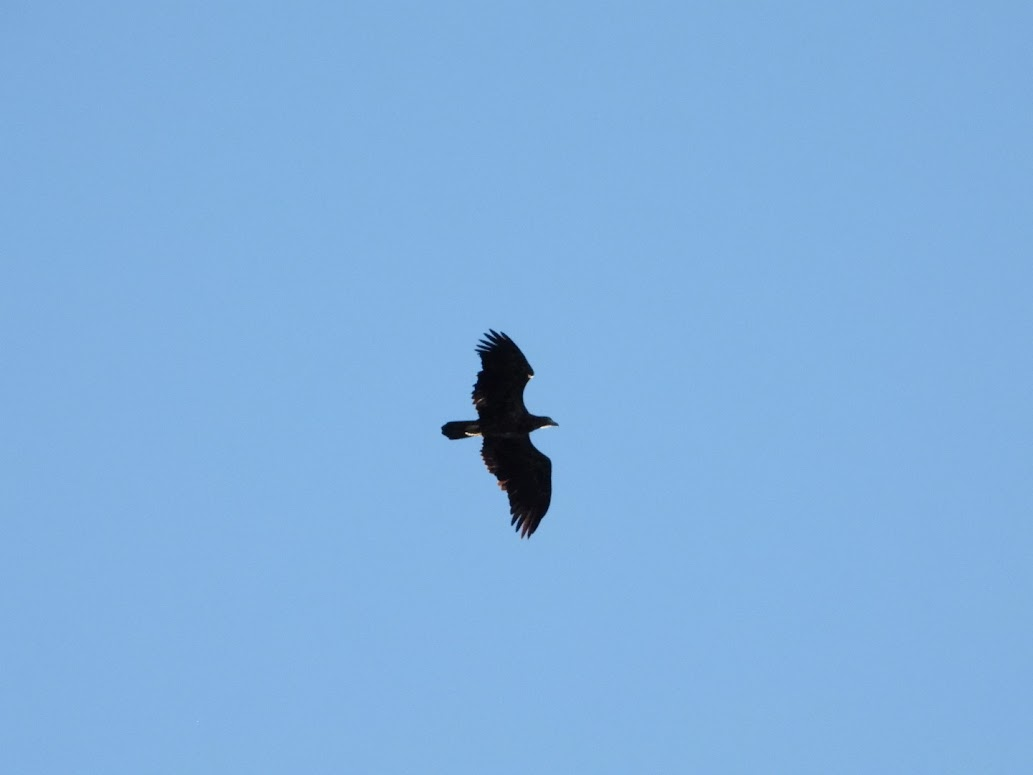 | 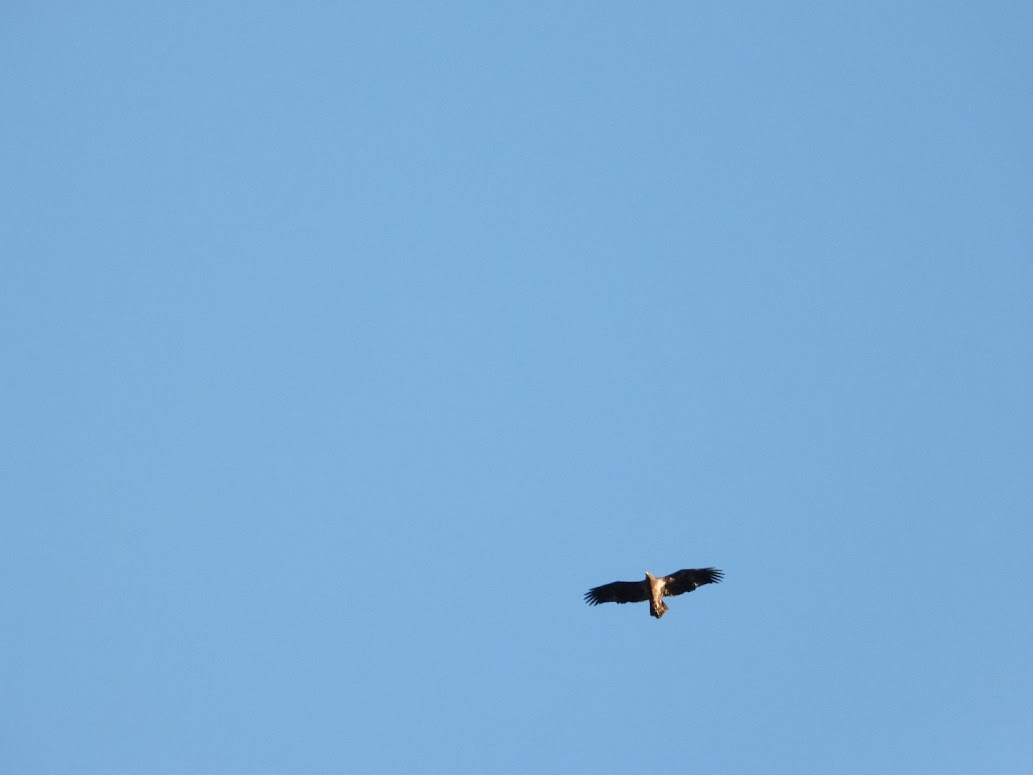 |
| ƒ/8, 1/1600, ISO1600, 144mm (800mm equiv, 33X) | ƒ/5.6, 1/1600, ISO1600, 144mm (800mm equiv, 33X) |
| 5:42 PM | |
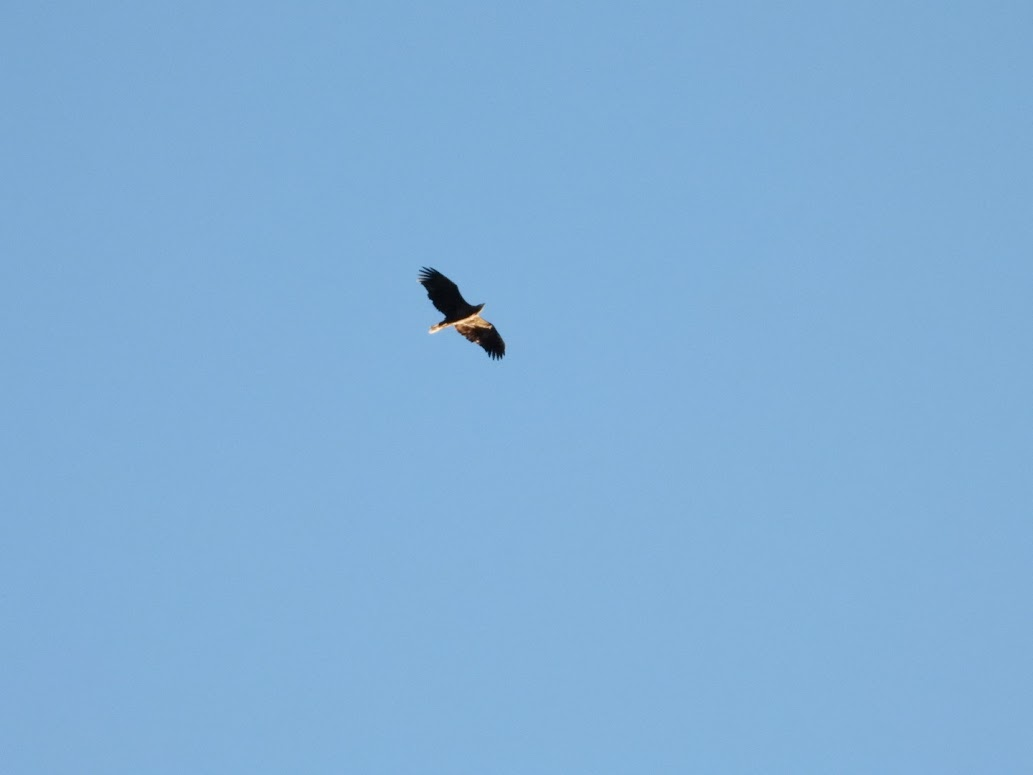 | |
| ƒ/6.3, 1/1600, ISO1600, 89.9mm (500mm equiv, 21X) | |
Photos by me
You can judge the falling sun by the increasing ISO settings in these photos. Earlier in the day I had been using ISO 1600. By the time of these photos, I was up to ISO 3200 and 6400. Of course, it also depended on where the sun and shadows were in relation to the bird, so I was flipping back and forth quite frequently for the last hour or so. It looks like a smooth progression here, but it really wasn't.
Overall, my photos are an improvement over last year's photos at the same location. In large part, that's because of clear skies, but hopefully my photography skills have also improved a little. There's definitely still plenty of room for improvement, though. ;-)
According to this video, "luck" for bird-in-flight photography is a combination of skill & preparation multiplied by patience. In my own head, I've redefined that as ( skill + preparation ) * persistence. So, when I happen to get an occasional good shot, it still feels lucky, but I'm trying to do some things to improve my luck.
| 5:08 PM | 5:09 PM |
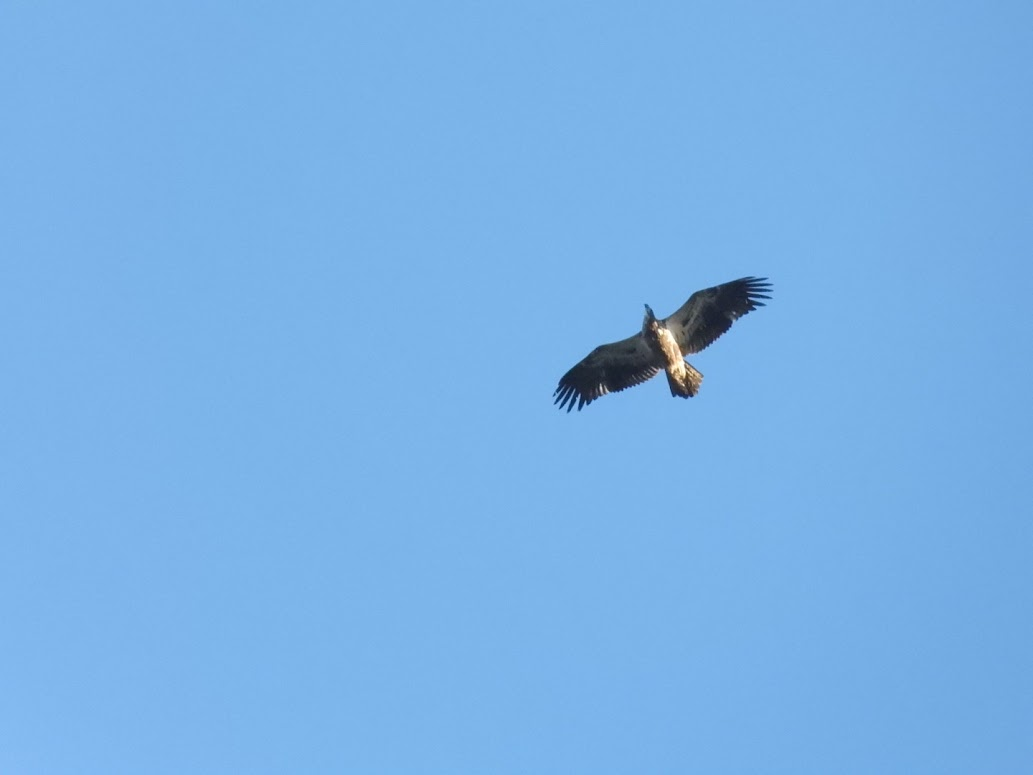 | 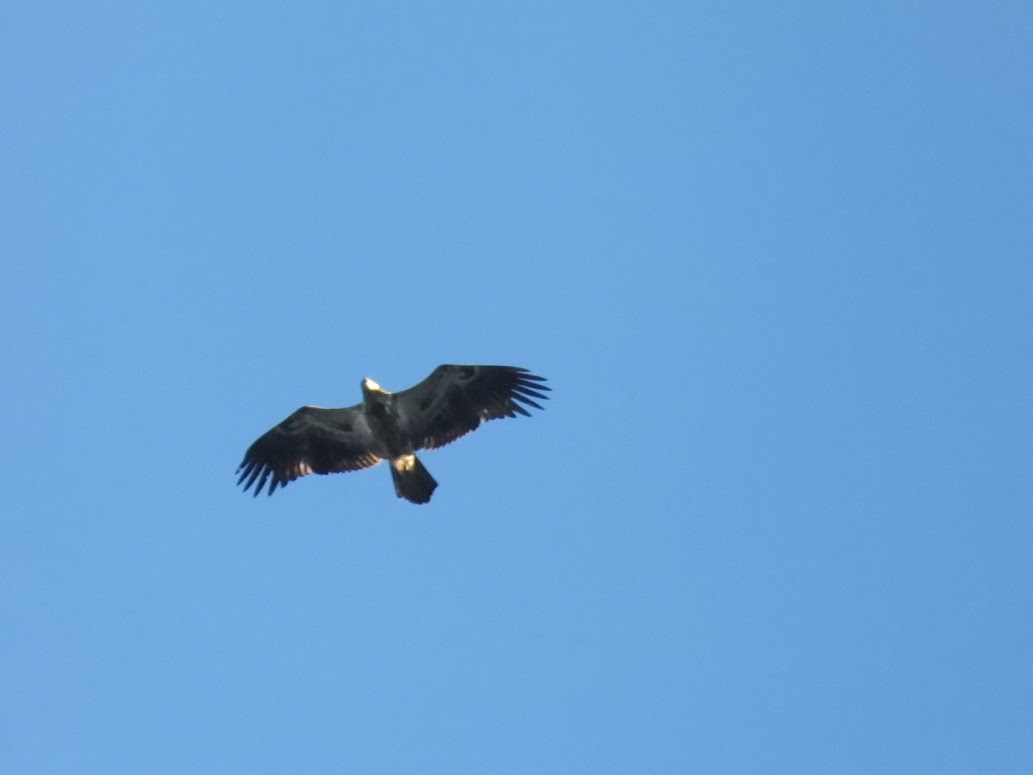 |
| ƒ/7.1, 1/2000, ISO3200, 288mm (1600mm equiv, 67X) | ƒ/7.1, 1/2000, ISO3200, 395mm (2200mm equiv, 92X) |
| 5:43 PM | 5:44 PM |
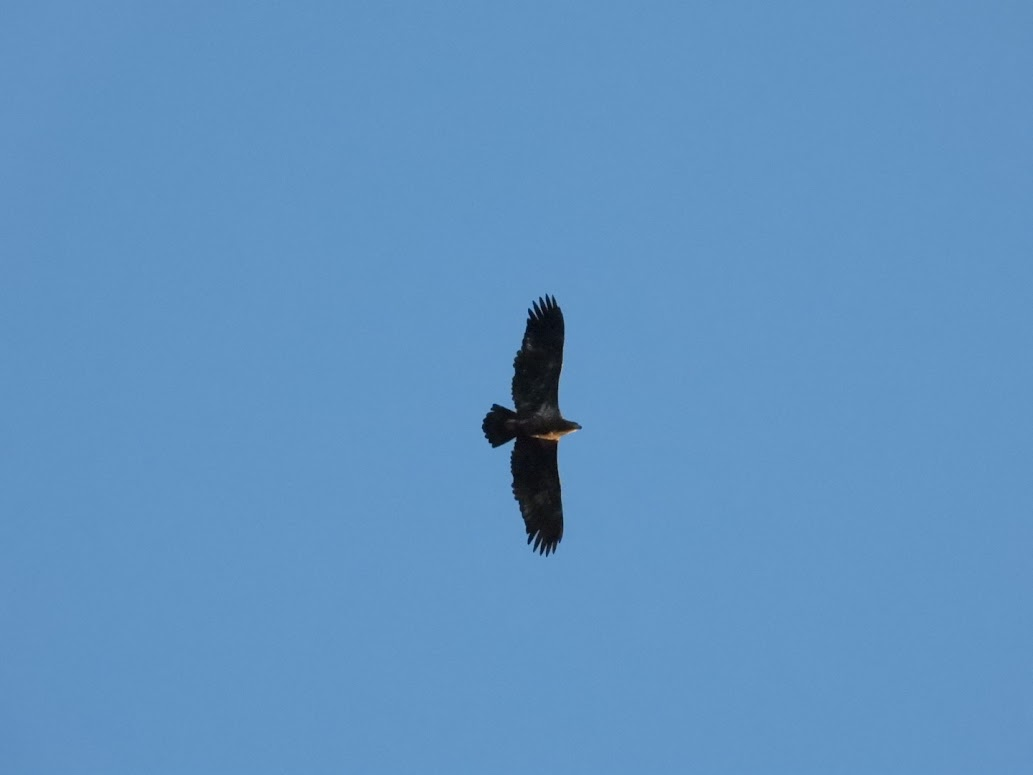 | 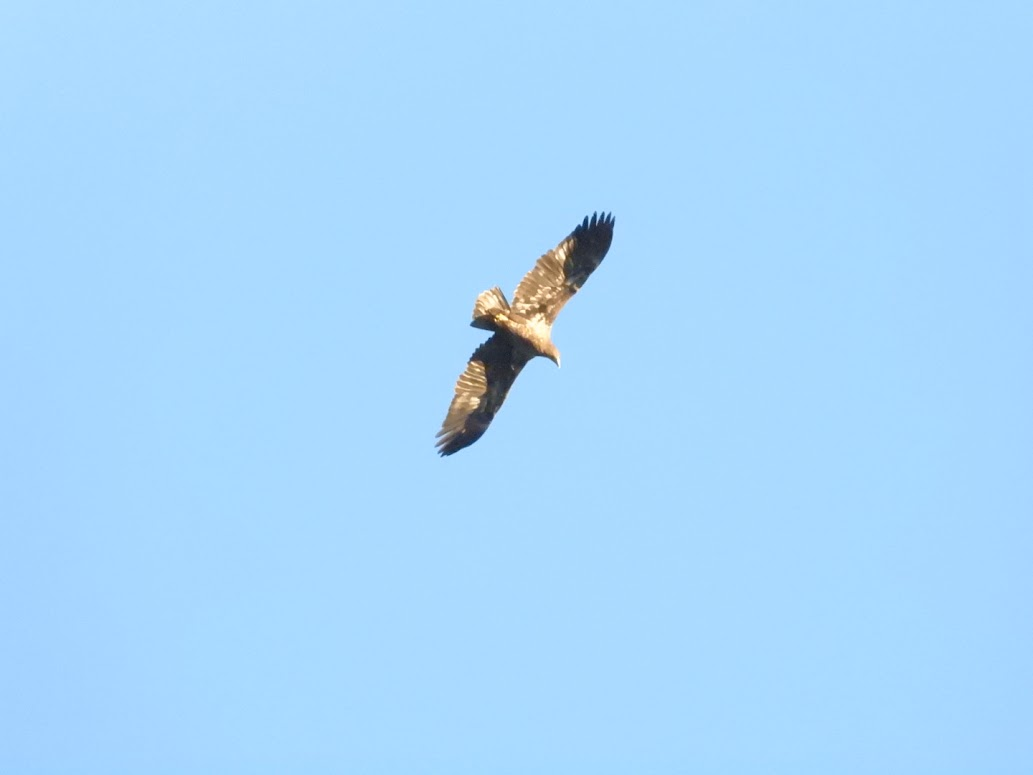 |
| ƒ/7.1, 1/2500, ISO3200, 144mm (800mm equiv, 33X) | ƒ/7.1, 1/2500, ISO6400, 288mm (1600mm equiv, 67X) |
| 5:44 PM | |
| |
| ƒ/8, 1/2500, ISO6400, 539mm (3000mm equiv, 125X) | |
Wrap-up
If you want to see really good Bald Eagle pics from the dam, I still recommend this Facebook group. Also, if you are in the region, you may want to take a day trip to the Conowingo Dam. For driving directions, put the Conowingo Fisherman's Park into your GPS.
As I understand it, peak action is in the first week after Thanksgiving and into December, but based on posts that went up in that group last year, it seems like there will be decent activity at the dam from now until sometime around May.
What hotspots are near you for Bald Eagle viewing, and what are their best times of year? Or, if you are outside North America, do you have a place for viewing the large eagles in your region: White-tailed Eagle in Europe, Steller's Sea Eagle in Asia, African Fish Eagle in Africa, White-bellied Sea Eagle in Australia, or Harpy Eagle in Central and South America?
Appendix
| A full index of my posts about wildlife photography and citizen science is here: WILDLIFE PHOTOGRAPHY INDEX |
|---|
Notes on the use of AI
As previously noted, I use AI for the following purposes in creating this series:
- Wildlife identification (Merlin, iNaturalist, Meta AI, Claude, Gemini)
- Formatting iNaturalist observations, photographs, dates, and camera settings into markdown tables (Claude)
- Proofreading and editorial advice (Claude, Gemini, Meta AI, ChatGPT, Grok)
Thank you for your attention!
Unless otherwise specified in the text, all photos above were taken by me with a (handheld) Nikon P1000 camera. I'm sharing them under the CC BY 4.0 license (share & adapt freely with attribution to the original source).
Photos by @cmp2020 are shared with permission here and are not covered by that license.
- A 25% beneficiary setting has been applied to this post for @cmp2020.