West Chester Wildlife in October 2026: Fall migrants; two day trips; streaks lost, continued, and nearly broken
Welcome to the next post in my series of backyard wildlife photography posts.
Overview
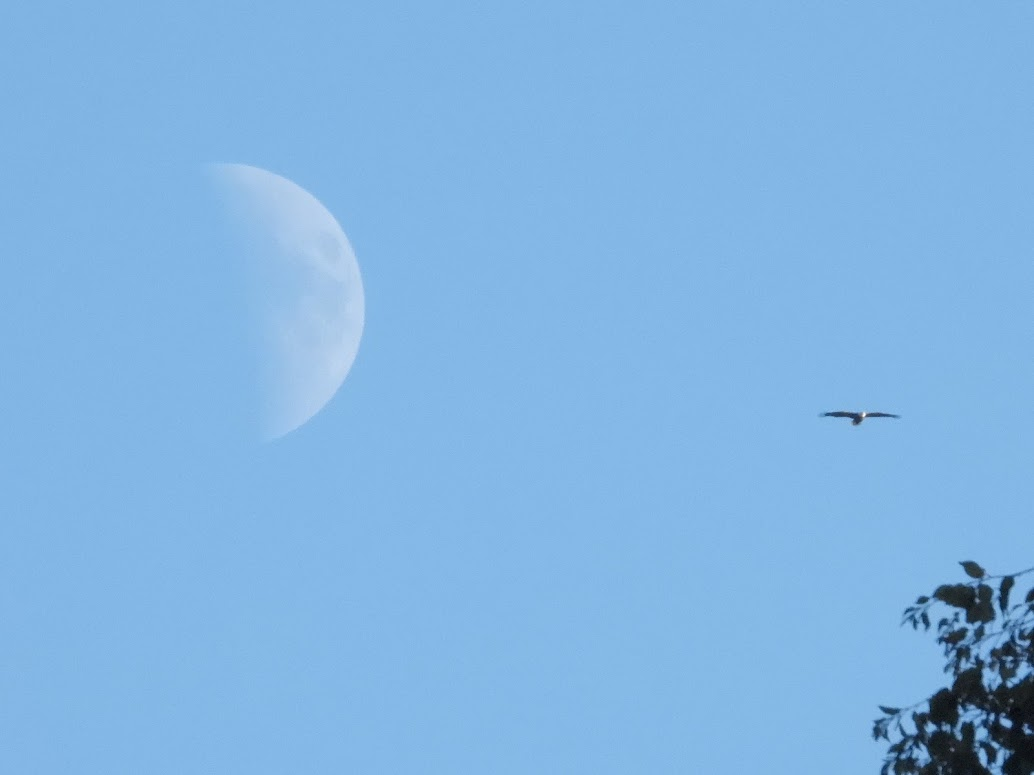
A Bald Eagle flying over a tree, past the moon, and towards the camera at the Conowingo Dam. The sky is clear and blue, and the moon is a waxing crescent, at around 40%.
This post covers the animals that I encountered during the month of October. As with previous months, I'll start off with this overview of the month and then move on to some additional posts with more detail about the individual species that I encountered.
The total observation count for October was 64, and the species count was somewhere between 33 and 35. There are two species that haven't been identified yet. Of all species observed, five to seven are new species that I hadn't encountered before (depending on the two that haven't been identified yet).
Here's a summary table with all of my October observations on iNaturalist. New for this month, the "Streak" column shows the number of consecutive months with at least one observation of the species.
| Common Name | First Observed | Same Month Observations | Streak | Observation Dates |
|---|---|---|---|---|
| Turkey Vulture | 2026-03-24 | 5 | 8 | 2026-10-05, 2026-10-13, 2026-10-17, 2026-10-25, 2026-10-30 |
| American Robin | 2026-04-10 | 4 | 3 | 2026-10-02, 2026-10-09, 2026-10-19, 2026-10-26 |
| Black Vulture | 2026-03-17 | 4 | 6 | 2026-10-02, 2026-10-13, 2026-10-17, 2026-10-27 |
| Northern Cardinal | 2026-03-30 | 4 | 1 | 2026-10-12, 2026-10-16, 2026-10-29, 2026-10-29 |
| American Goldfinch | 2026-08-23 | 3 | 3 | 2026-10-01, 2026-10-08, 2026-10-20 |
| American Red Squirrel | 2026-03-22 | 3 | 8 | 2026-10-01, 2026-10-09, 2026-10-20 |
| Bald Eagle | 2026-03-26 | 3 | 3 | 2026-10-17, 2026-10-23, 2026-10-30 |
| House Finch | 2026-04-26 | 3 | 3 | 2026-10-10, 2026-10-18, 2026-10-26 |
| American Crow | 2026-04-28 | 2 | 3 | 2026-10-19, 2026-10-26 |
| Blue Jay | 2026-03-21 | 2 | 8 | 2026-10-10, 2026-10-16 |
| Cooper's Hawk | 2026-04-26 | 2 | 2 | 2026-10-10, 2026-10-16 |
| European Starling | 2026-05-12 | 2 | 4 | 2026-10-03, 2026-10-09 |
| House Sparrow | 2026-06-26 | 2 | 2 | 2026-10-19, 2026-10-29 |
| Red-bellied Woodpecker | 2026-03-01 | 2 | 4 | 2026-10-10, 2026-10-28 |
| Red-tailed Hawk | 2026-03-19 | 2 | 8 | 2026-10-20, 2026-10-23 |
| White-throated Sparrow | 2026-04-04 | 2 | 1 | 2026-10-15, 2026-10-26 |
| Blackpoll Warbler | 2026-10-16 | 1 | 1 | 2026-10-16 |
| Canada Goose | 2026-08-17 | 1 | 3 | 2026-10-09 |
| Carolina Wren | 2026-04-27 | 1 | 2 | 2026-10-24 |
| Cedar Waxwing | 2026-05-12 | 1 | 2 | 2026-10-01 |
| Double-crested Cormorant | 2026-10-17 | 1 | 1 | 2026-10-17 |
| Downy Woodpecker | 2026-04-03 | 1 | 2 | 2026-10-15 |
| Eastern Bluebird | 2026-04-28 | 1 | 3 | 2026-10-09 |
| Eastern Towhee | 2026-10-12 | 1 | 1 | 2026-10-12 |
| Great Blue Heron | 2026-02-28 | 1 | 1 | 2026-10-17 |
| Gulls, Terns, and Skimmers | 2026-10-19 | 1 | 1 | 2026-10-19 |
| Mourning Dove | 2026-03-21 | 1 | 8 | 2026-10-09 |
| Northern Mockingbird | 2026-07-25 | 1 | 4 | 2026-10-09 |
| Osprey | 2026-04-20 | 1 | 1 | 2026-10-02 |
| Ring-billed Gull | 2026-10-17 | 1 | 1 | 2026-10-17 |
| Setophaga Warblers | 2026-10-20 | 1 | 1 | 2026-10-20 |
| Song Sparrow | 2026-05-22 | 1 | 1 | 2026-10-25 |
| Tree Swallow | 2026-10-10 | 1 | 1 | 2026-10-10 |
| White-breasted Nuthatch | 2026-03-29 | 1 | 4 | 2026-10-10 |
| White-tailed Deer | 2026-05-29 | 1 | 6 | 2026-10-18 |
In addition to the iNaturalist observations, I saved 2,091 photos in my album on Google Photos (and deleted many others), and also saved Merlin's audio IDs for many of my walks in the yard.
My impression is that October got a bit busier than August or September, but I'm not really sure about that.
Also, I took day trips to The Conowingo Dam and to the Hawk Mountain Sanctuary, so that might have influenced my perception.
Trends
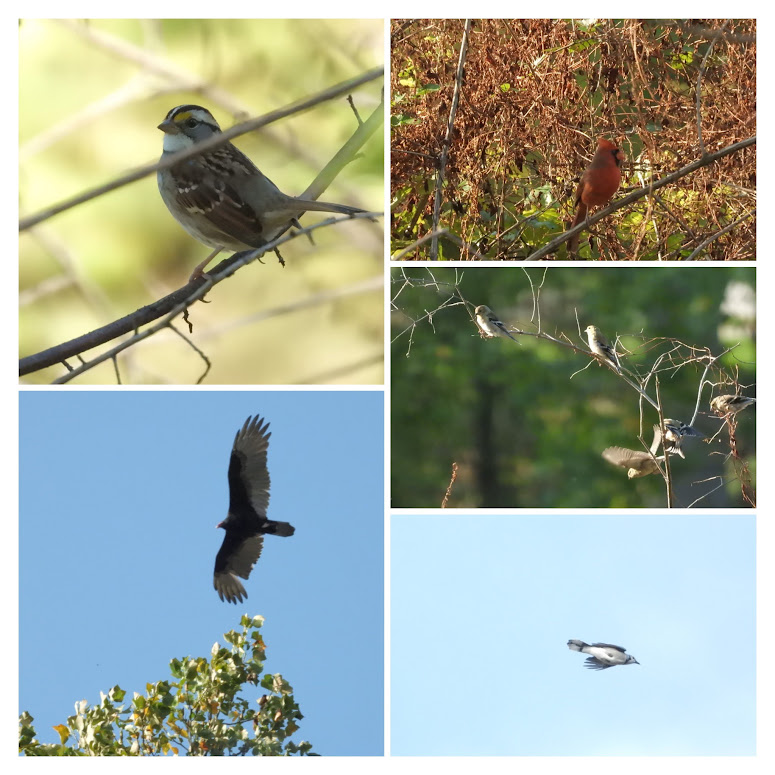
One of the animals that I had seen every month through September did not make an appearance in October. That was the Northern Flicker. The other five species that had been observed every month were seen again for October. These included the Turkey Vulture, the American Red Squirrel, the Blue Jay, the Red-tailed Hawk, and the Mourning Dove. By the time I saw the first Red-tailed Hawk of the month, on October 20, I had actually started to worry that its streak might be coming to an end.
The top four by observation count were the Turkey Vulture, the American Robin, the Black Vulture, and the Northern Cardinal. So, two of the top four were vultures.
Of course, the bird that started all this was the Bald Eagle. I submitted three Bald Eagle observations during the month, which is more than most other months, but it's down from September's five observations. The three observations included one at the Conowingo Dam and one at Hawk Mountain, so the backyard sighting count was basically back to normal.
Late summer cohort
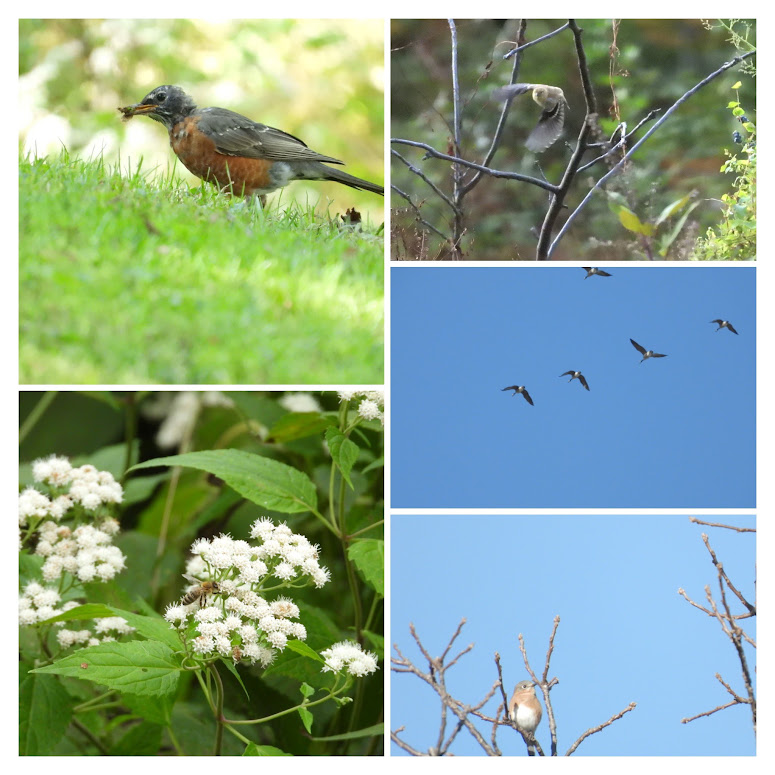
One interesting trend that Claude picked out from the streaks is that there are seven birds with three-month streaks, August-September-October: they are the American Robin, the American Goldfinch, the Bald Eagle, the House Finch, the American Crow, the Canada Goose, and the Eastern Bluebird. Most of them had been seen earlier in the year, but were not observed during one or more intervening months, except maybe by Merlin's audio detection.
In the opposite direction, in addition to missing the Northern Flicker for the first time since starting this series, October was also the first month without a Gray Catbird observation after they first appeared in May. The Northern Flickers migrate, but Pennsylvania is in their year-round range, so we might still see them in winter. I guess the Gray Catbirds have left for a warmer climate, though.
First observations
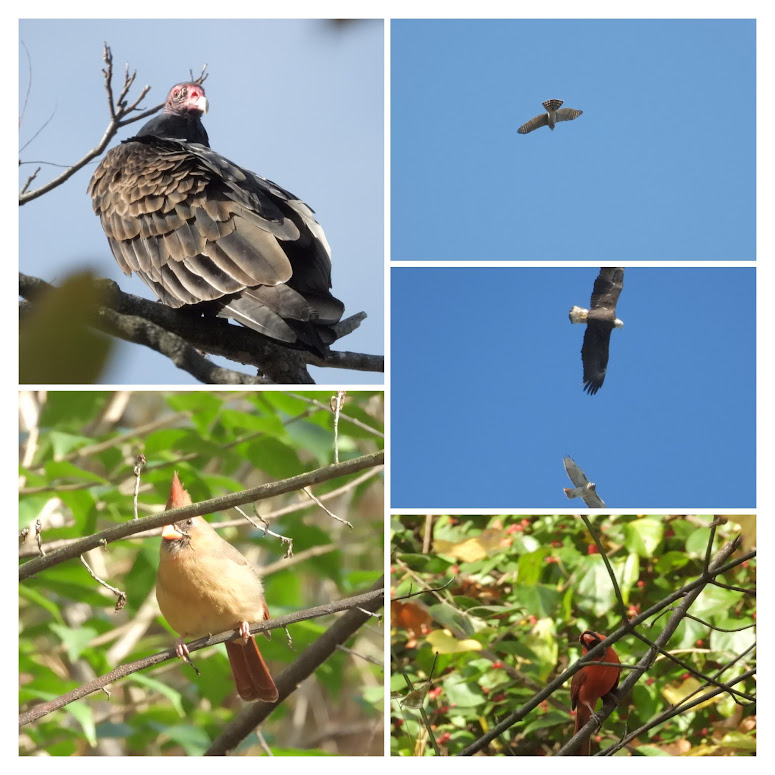
Another point of interest is that there were five to seven new species that I hadn't observed before. Some of these species were probably migrating through, including the Blackpoll Warbler, Eastern Towhee, and the Tree Swallow. Two others, the Double-crested Cormorant and Ring-billed Gull, were new because I observed them at the Conowingo Dam. I have no idea whether they were migrating. Obviously, I can't tell about the two unidentified species since the iNaturalist identifiers haven't agreed on an identification yet. One of them is probably another Blackpoll Warbler, so my bet is that it's a migrant, but not another new species. (To be clear, there is one or maybe two Blackpoll Warbler observation(s). It's definitely a new species, but if that unidentified bird is also a Blackpoll Warbler, it's not new twice.)
Upcoming posts
I assume things will be slowing down for winter, so I'm not going to rush to finish the October photos by the end of November. Maybe I'll include fewer species than usual in each post and write an extra post or two to cover the month.
I expect there will be the usual posts covering small birds, mammals, and raptors that were encountered locally, and I'll probably dedicate a post or two to our Conowingo Dam day trip (we took a lot of pictures that day). We also saw some Bald Eagles at Hawk Mountain, but they were all distant shots without much detail, so I'm not sure if I'll do a dedicated post for the Hawk Mountain trip or not.
Wrap-up
That closes up the overview of October's wildlife photography and citizen-science activities. Overall, the month brought five to seven new species, while seven species dropped from the September scorecard.
Watch this space for follow-up posts with more photographs and dedicated posts for the animal species that were seen during October.
Addendum: Late breaking migration update
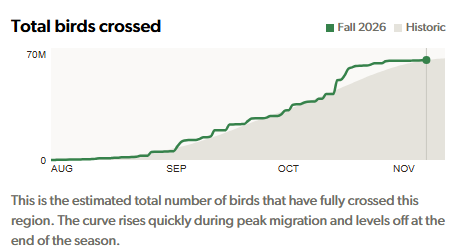
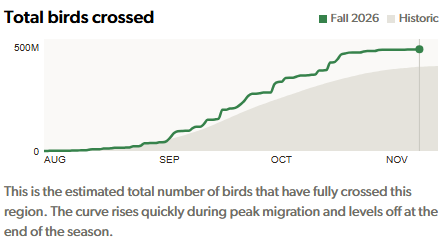
I also happened to notice on BirdCast this morning that the migration season in my county seems to be mostly over now. The peak, apparently, happened on or around October 19. Migration for the state peaked around the same time, and it has been basically flat since then. For my county, migration this fall was near the historical average. Migration for the state was above the historical average.
For whatever it's worth, all of the newly encountered species were observed between October 10 and October 20.
| Chester County, PA | Pennsylvania |
|---|---|
 |  |
Appendix
| A full index of my posts about wildlife photography and citizen science is here: WILDLIFE PHOTOGRAPHY INDEX |
|---|
Notes on the use of AI
As previously noted, I use AI for the following purposes in creating this series:
- Wildlife identification (Merlin, iNaturalist, Meta AI, Claude, Gemini)
- Formatting iNaturalist observations, photographs, dates, and camera settings into markdown tables (Claude)
- Proofreading and editorial advice (Claude, Gemini, Meta AI, ChatGPT, Grok)
Thank you for your attention!
Unless otherwise specified in the text, all photos above were taken by me with a (handheld) Nikon P1000 camera. I'm sharing them under the CC BY 4.0 license (share & adapt freely with attribution to the original source).
El dato que me engancha es el Bald Eagle del 17/10 en Conowingo Dam, con la luna creciente al 40%: eso no se improvisa, hay que estar en el lugar y a la hora justa. ¿Los streaks de 8 meses (Turkey Vulture, Red Squirrel, Blue Jay) los tenés mapeados o vas viendo sobre la marcha qué especie te rompe la racha primero?