Photography meets citizen science: August's wildlife in southeastern Pennsylvania
It was the best of times, it was the worst of times...
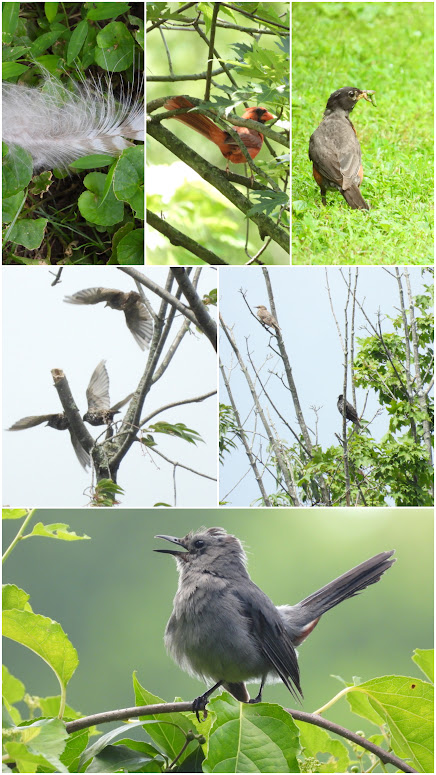
As repeat visitors will know, in March I started taking "wildlife walks" in my yard to start teaching myself photography. The goal was simply to practice photography using whatever animals I happened to see in the yard as my subjects. Along the way, I also adapted the hobby to also include Citizen Science posting on the iNaturalist web site and blogging about it here on Steem.
With August now finished and September started, it's time to start the next post in my backyard wildlife photography series.
I commented many times in my July blog posts that July and August were both slow months. And it was true. In some ways, August was even slower than July, with more than a few days in August where I spent 1/4 or 1/2 hour in the yard and didn't see any animals at all.
However, as I was reviewing the photos and observation records to prepare for this post, I realized that August was a good month in a lot of ways, too.
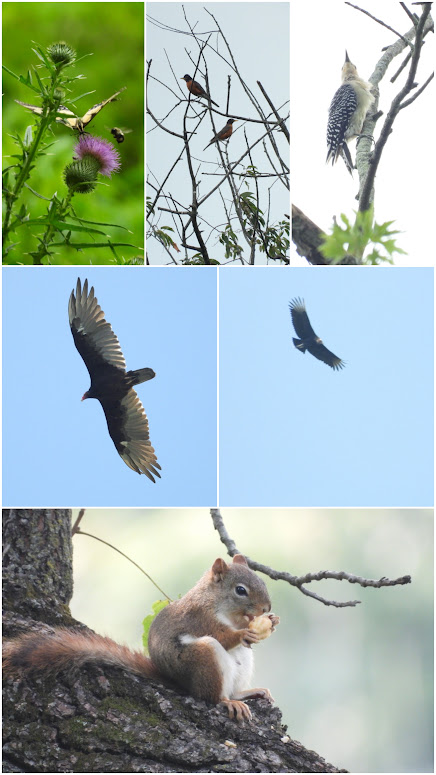
Here are some highlights that will be covered in more depth in future posts this month:
- It was the first month since May where I saw a Bald Eagle from the back yard.
- I saw 6 species of animals that I hadn't seen before, including the elusive American goldfinch which had been a source of frustration, because it shows up frequently in the Merlin bird app, but remained invisible to me until August 23.
- I had my first sightings of juvenile American Crows and juvenile European Starlings.
- I learned of a 500 acre wildlife preserve just 10 or 15 minutes from my house, the Stroud Preserve and I made my first visits to the 100 acre Robert B. Gordon Natural Area, which is even closer.
- I also got another "mating sequence" in a photo burst, this time from a song sparrow.
- I got my first shots of a Red-shouldered Hawk in flight.
As far as numbers, the Google Photos album I'm using for August has 3,278 photos, and I made 68 iNaturalist submissions that covered 30 species. In total, since I started, that brings me up to 325 observations and 54 species.
Moving on to the details, the table below shows all of my iNaturalist observations from the month (feel free to skip or skim). As with previous months, I was mostly limiting my submissions to one observation per species per week, so there were more encounters than reported here with some of the species.
All Observations
| Common Name | Total Observations | First Observation | August Observations | Observations |
|---|---|---|---|---|
| Northern Cardinal | 23 | 03/30/26 | 4 | 08/04/26, 08/08/26, 08/08/26, 08/19/26 |
| Red-tailed Hawk | 36 | 03/19/26 | 4 | 08/02/26, 08/06/26, 08/18/26, 08/30/26 |
| Turkey Vulture | 38 | 03/24/26 | 4 | 08/06/26, 08/09/26, 08/18/26, 08/25/26 |
| American Crow | 5 | 04/28/26 | 3 | 08/16/26, 08/23/26, 08/28/26 |
| American Red Squirrel | 16 | 03/22/26 | 3 | 08/08/26, 08/17/26, 08/26/26 |
| Blue Jay | 18 | 03/21/26 | 3 | 08/17/26, 08/24/26, 08/31/26 |
| Eastern Cottontail | 9 | 05/26/26 | 3 | 08/02/26, 08/09/26, 08/18/26 |
| Eastern Tiger Swallowtail | 3 | 08/10/26 | 3 | 08/10/26, 08/20/26, 08/29/26 |
| European Starling | 5 | 05/12/26 | 3 | 08/01/26, 08/06/26, 08/14/26 |
| House Finch | 15 | 04/26/26 | 3 | 08/02/26, 08/16/26, 08/27/26 |
| Northern Flicker | 13 | 03/25/26 | 3 | 08/10/26, 08/27/26, 08/27/26 |
| Red-bellied Woodpecker | 10 | 03/01/26 | 3 | 08/07/26, 08/20/26, 08/25/26 |
| White-tailed Deer | 6 | 05/29/26 | 3 | 08/02/26, 08/14/26, 08/29/26 |
| American Goldfinch | 2 | 08/23/26 | 2 | 08/23/26, 08/29/26 |
| American Robin | 12 | 04/10/26 | 2 | 08/14/26, 08/24/26 |
| Black Vulture | 11 | 03/17/26 | 2 | 08/06/26, 08/26/26 |
| Eastern Kingbird | 6 | 05/15/26 | 2 | 08/12/26, 08/18/26 |
| Eastern Wood-Pewee | 2 | 08/16/26 | 2 | 08/16/26, 08/22/26 |
| Gray Catbird | 15 | 05/01/26 | 2 | 08/04/26, 08/31/26 |
| Mourning Dove | 15 | 03/21/26 | 2 | 08/14/26, 08/23/26 |
| Northern Mockingbird | 3 | 07/25/26 | 2 | 08/16/26, 08/29/26 |
| Red-shouldered Hawk | 3 | 05/30/26 | 2 | 08/21/26, 08/25/26 |
| Bald Eagle | 5 | 03/26/26 | 1 | 08/30/26 |
| Baltimore Oriole | 3 | 05/17/26 | 1 | 08/25/26 |
| Canada Goose | 1 | 08/17/26 | 1 | 08/17/26 |
| Chipping Sparrow | 1 | 08/04/26 | 1 | 08/04/26 |
| Eastern Bluebird | 3 | 04/28/26 | 1 | 08/25/26 |
| Song Sparrow | 8 | 05/22/26 | 1 | 08/25/26 |
| Spicebush Swallowtail | 1 | 08/29/26 | 1 | 08/29/26 |
| White-breasted Nuthatch | 4 | 03/29/26 | 1 | 08/29/26 |
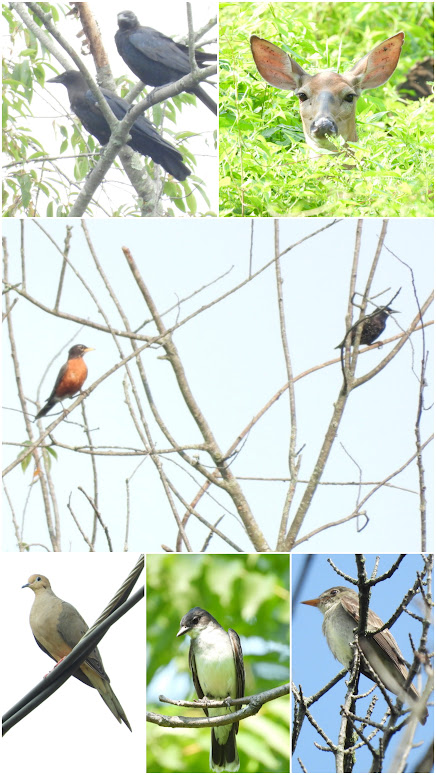
One thing that changed from previous months is that I actually submitted a couple of the American Robin observations in ordinary situations. You may recall that I was previously only submitting them in unusual situations like nesting, or feeding a juvenile. During late July and through the entirety of August, Robins became far more elusive than they had been in previous months. The AIs tell me that this is because they switch their diet from earthworms to berries after the end of nesting season.
First Observations in August
Breaking out from the table above, the table below repeats the species that I had not stumbled across before August. There were six of them, including two varieties of butterflies.
On one hand, running up the species count is good, but on the other hand the simple fact that I was photographing butterflies, instead of just birds & mammals, also tells you how slow things were at some times during the month. I also took some photos of Honey Mushrooms (and a leopard slug, but let's just forget about that).
| Common Name | Total Observations | First Observation | August Observations | Observations |
|---|---|---|---|---|
| Eastern Tiger Swallowtail | 3 | 08/10/26 | 3 | 08/10/26, 08/20/26, 08/29/26 |
| American Goldfinch | 2 | 08/23/26 | 2 | 08/23/26, 08/29/26 |
| Eastern Wood-Pewee | 2 | 08/16/26 | 2 | 08/16/26, 08/22/26 |
| Canada Goose | 1 | 08/17/26 | 1 | 08/17/26 |
| Chipping Sparrow | 1 | 08/04/26 | 1 | 08/04/26 |
| Spicebush Swallowtail | 1 | 08/29/26 | 1 | 08/29/26 |
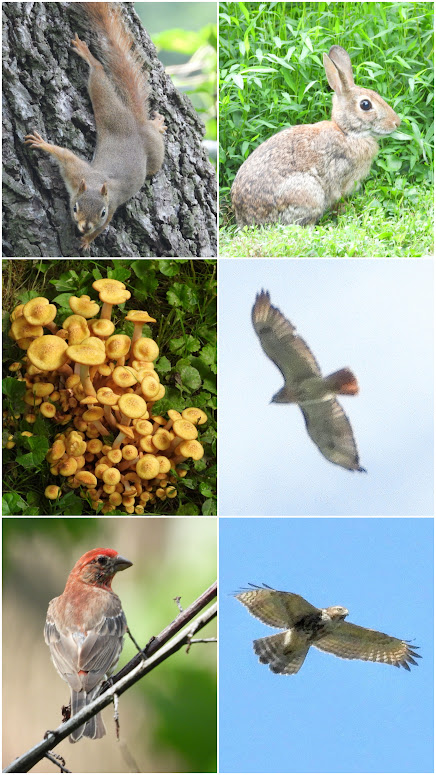
The only bird that seemed to be almost as common as any of the previous months was the Turkey Vulture. In general, I'd say I probably encountered them every two or three days, which is only slightly less frequently than earlier in the year.
On August 16, Hawk Mountain announced that they were starting up the fall migration count, so I had hoped that maybe things would pick up during the second half of the month, but that didn't really seem to happen. Hopefully, that'll change in September, but it remains to be seen.
I'm planning to make some more short trips to the Stroud Preserve and the Gordon Natural Area throughout the fall migration season since both places have much better visibility of the sky than my yard, which is screened by trees in many places. I'm also expecting to take at least one trip each to Conowingo Dam and Hawk Mountain.
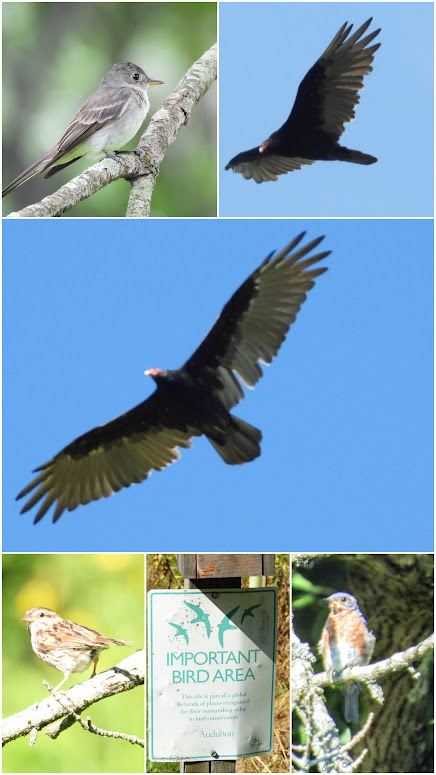
Wrap-up
In addition to the wildlife slowdown during July and August, our weather was unusually wet and cloudy for summertime - or at least it seemed that way to me. As a result, many of the photographs were in low-light and disappointing quality.
When I was putting together these collages, though, I was pleasantly surprised by the number of pictures that were not too bad. Looking through the collages now, I'm looking forward to future posts when I'll be able to tell some of the stories that go with these photos.
Follow my account if you don't want to miss any of them. ;-)
On a side note: I'm still looking for public domain photographs of mammals, fish, reptiles, and amphibians from Steem photographers for the animalCards collectible card game. Check out this post for the details about that.
Appendix
A full index of my posts about wildlife photography is here: wildlife photography index
Notes on the use of AI
As previously noted, I use AI for the following purposes in creating this series:
- Wildlife identification (Merlin, iNaturalist, Meta AI, Claude, Gemini)
- Formatting iNaturalist observations, photographs, dates, and camera settings into markdown tables (Claude)
- Proof-reading and editorial advice (Claude, Gemini, Meta AI, ChatGPT, Grok)
Thank you for your attention!
Unless otherwise specified in the text, all photos above were taken by me with a (handheld) Nikon P1000 camera. I'm sharing them under the CC BY 4.0 license (share & adapt freely with attribution to the original source).
(In addition to the wildlife slowdown during July and August, our weather was unusually wet and cloudy for summertime - or at least it seemed that way to me. ) You're right, the weather was as you described, and obviously the wildlife behaves differently; in fact, even we humans—almost everything in nature, really. I listen to the news while I work from my apartment; it's become a habit. Sometimes the reporters laugh when the weatherman comes in with his forecasts. He smiles a little too and says, "This is my job, and I do it well, but the weather makes me look bad." I like hearing this; he always says something funny. The weather can't be predicted accurately these days.
Have a happy Friday.